Increasing night-time glare has forced almost half of all drivers off the road at night because they no longer feel safe to drive in the dark, studies have shown.
Two studies from leading high-performance lens maker Shamir Optical found night-time glare has become so severe that it causes significant safety problems, vision problems and increased night-time myopia.
Night-time glare in modern cars has become such a serious issue that 48% of surveyed drivers admitted it prevented them from driving at night, leaving them unable to lead normal lives and limiting their mobility because of safety fears.
Almost three quarters of those polled (aged from 30 to 85) in Shamir’s White Paper survey admitted glare – either generated from outside the car or from digital screens in the car itself – had become a significant issue for them at night.
Shamir Optical CEO Yagen Moshe explained that 40% of drivers also had trouble reading the digital touchscreens quickly and safely, forcing them to keep their eyes off the road and on the screens for longer periods of time.
“It’s clear that digital screens in cars have lead to an entirely new problem that reduces the visual performance of drivers, particularly at night, and significantly reduces their safety,” Shamir Optical CEO Yagen Moshe said.
“Glare from the sun during the day and from headlights and road and traffic lights has always been an issue, but now they are confronted with a growing problem from inside their cars.
“Dash glare is a new type of glare and, increasingly, it’s something that can’t be avoided by drivers. Two out of five people say they no longer have a choice and are forced to engage with digital screens.”
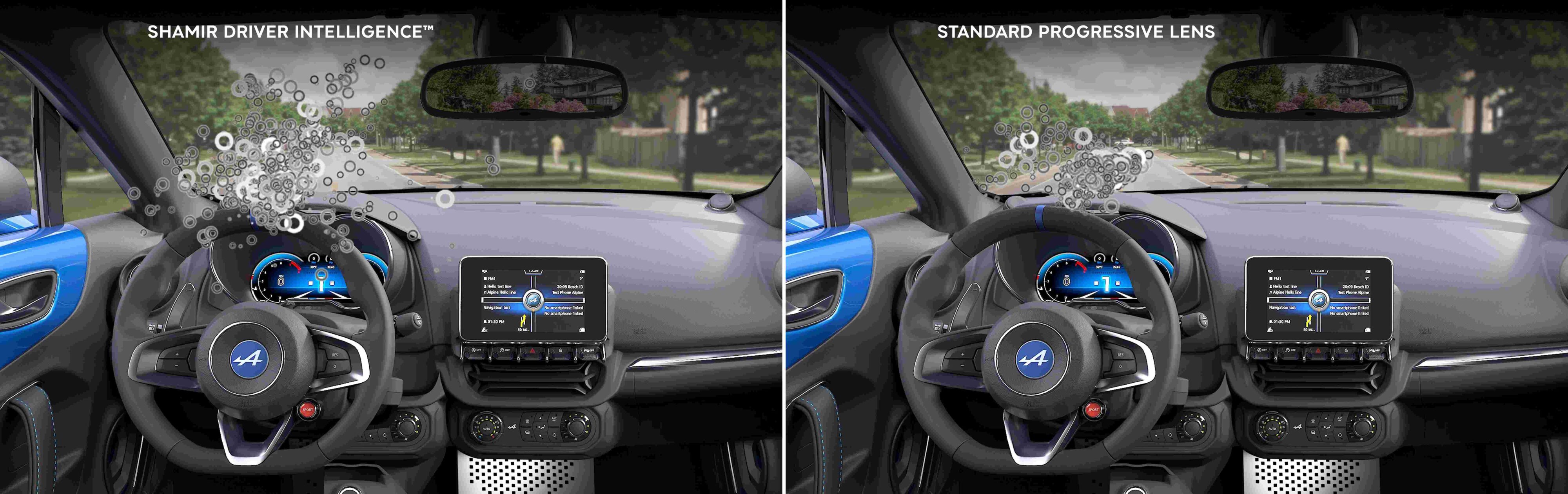
More than 70% of drivers surveyed admitted night glare was an issue regardless of the weather conditions, and 71% said they had trouble identifying road signs at night or in poor weather.
The high-performance lens maker followed up its White Paper with a quantitative study that conclusively proved that in-car digital screens were connected to sharp increases in glare and reflections. This type of glare unnaturally alters pupil dilation and reduces visual performance, leading to reduced safety, visual acuity and driving confidence.
Shamir’s Chief Technical Officer Zohar Katzman admitted to being stunned by the findings of the White Paper survey, and explained why glare had taken away the night from so many drivers.
“Night myopia happens when light focuses in front of the retina, instead of on it. It’s a larger problem than many people think, and it’s worse in younger drivers than older drivers,” Katzman explained.
“If someone tells you they don’t need glasses but they don’t see well at night, that is almost certainly night myopia. The pupil dilates more, and to dilate more it changes the muscles.”
It also showed that 62% of drivers admitted their eyes became strained and tired at night after less than an hour.
However, the problem of glare was not isolated to the night, with 43% of drivers insisting their eyes became tired from glare after less than two hours of driving during the day as well.
“It’s not just glare or night myopia or fatigue,” Katzman said. “The problem is the unrelenting combination of all leads to high cognitive load and this exhausts our brains and reduces our awareness when we are driving.”
Shamir Optical followed up the White Paper survey with a qualitative analysis of race and road drivers, with more than 14 million data points, and supported that with simulator driving.
“Visual acuity is lower at night, so drivers detect fewer details and that increases reaction time. Reaction time is always larger at night,” Shamir CEO Moshe said.
“We took feedback from the survey information and then validated them – from real-time focus and reaction times – with reverse testing as well as testing.”