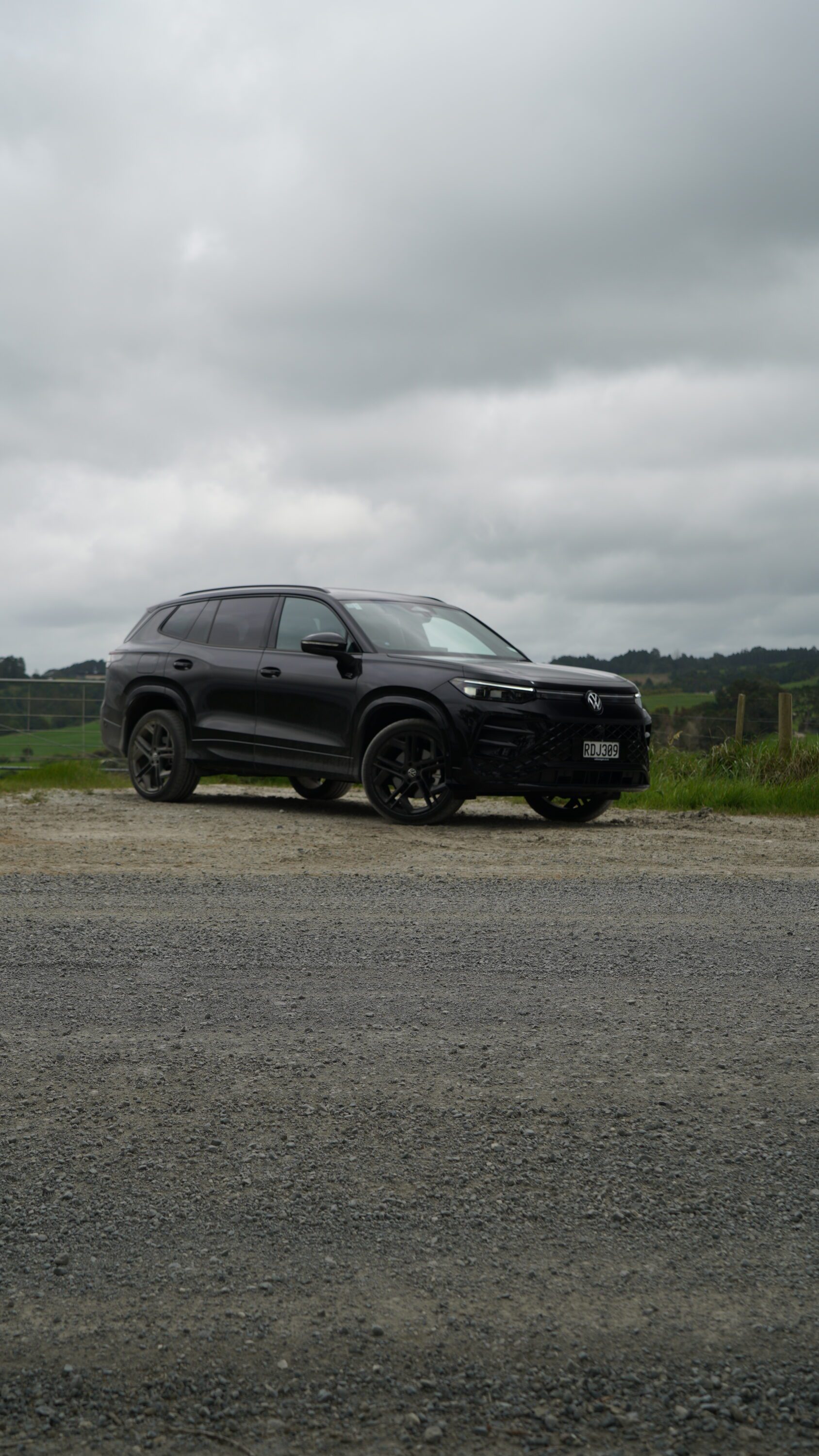
Volkswagen’s SUV lineup just got bigger, and a lot more strategic. The brand’s newest model, the Tayron, officially joins the family as a seven-seat option to bridge the gap between the Tiguan and the Touareg. The name might be new to some, but the mission is clear: to “bring room to live large” and that distinctive Volkswagen composure into a more family-focused format. Having seen it up close (and driven it) at its New Zealand debut, it’s clear the Tayron is more than just a stretched Tiguan.
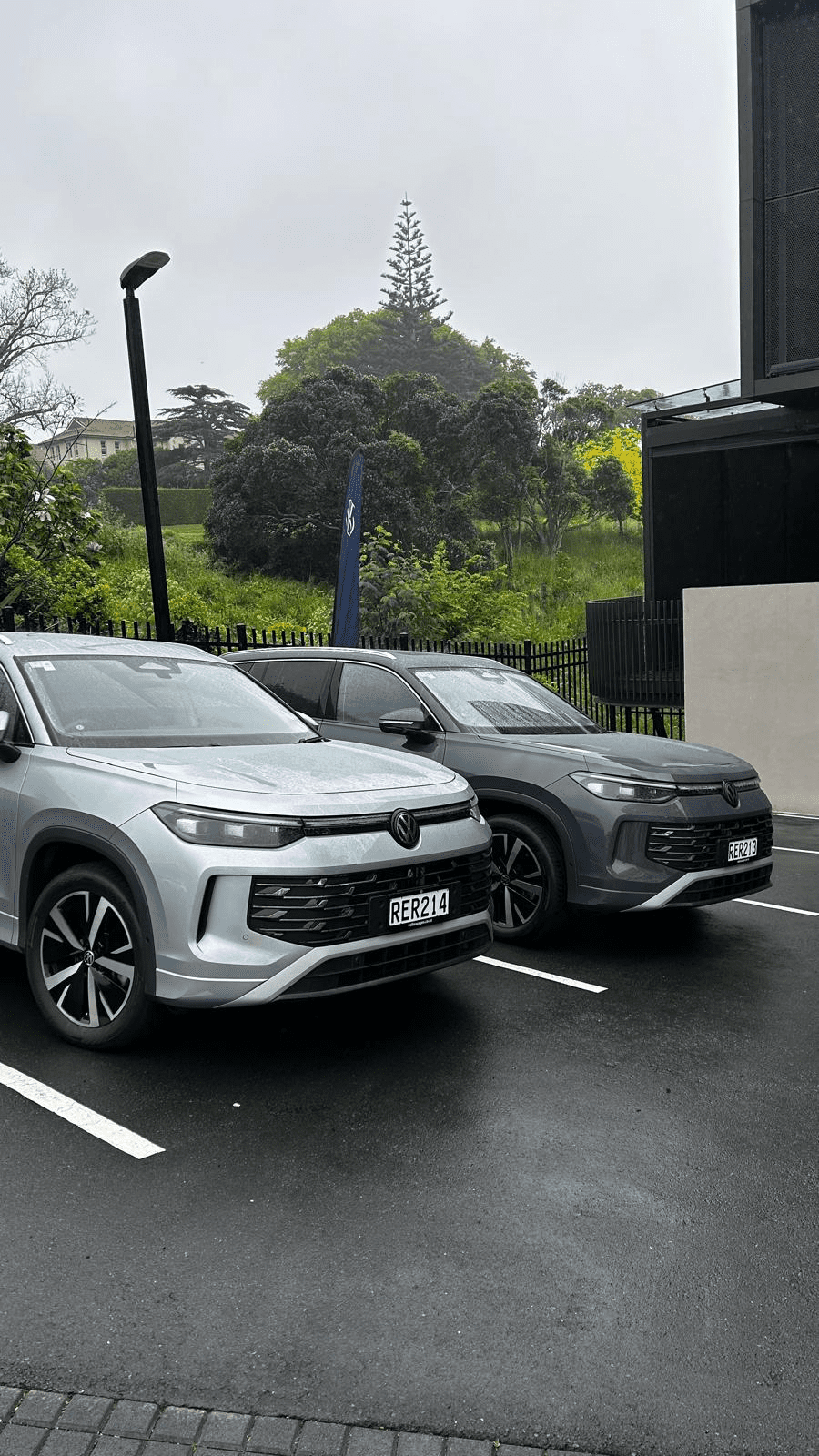
The context for the Tayron’s arrival is interesting. Volkswagen has been rationalising and globalising its SUV range, moving away from market-specific models like the old Chinese-market Tayron and the previous Tiguan Allspace. What we get now is a single, global model that sits right in the middle of the family SUV sweet spot. It shares the MQB Evo platform with the new-generation Tiguan, but everything about its stance, silhouette, and cabin packaging suggests it’s been designed with longer journeys and larger families in mind. With the Tiguan going slightly more dynamic and compact this generation, the Tayron steps in to handle the heavier lifting.
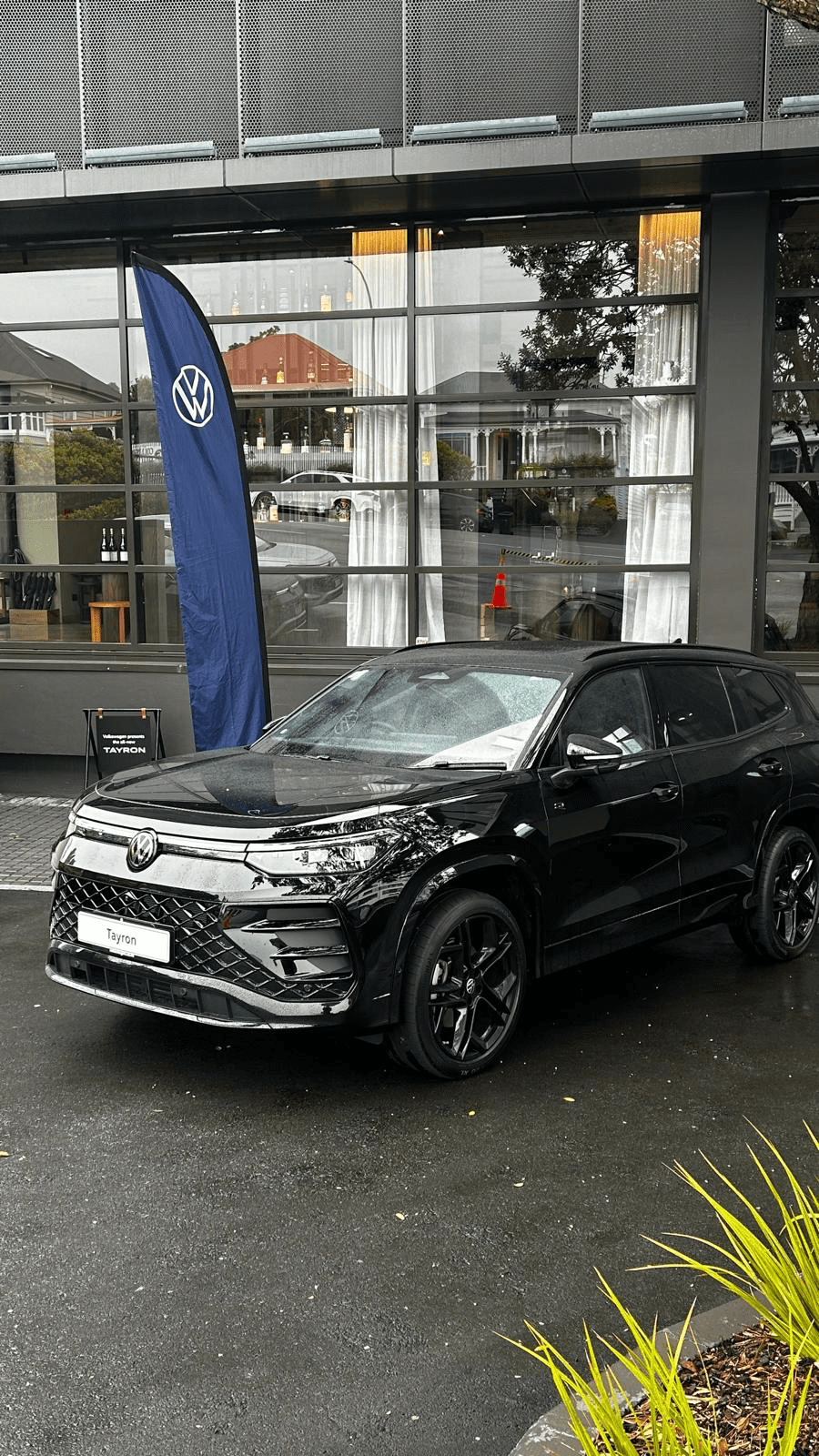
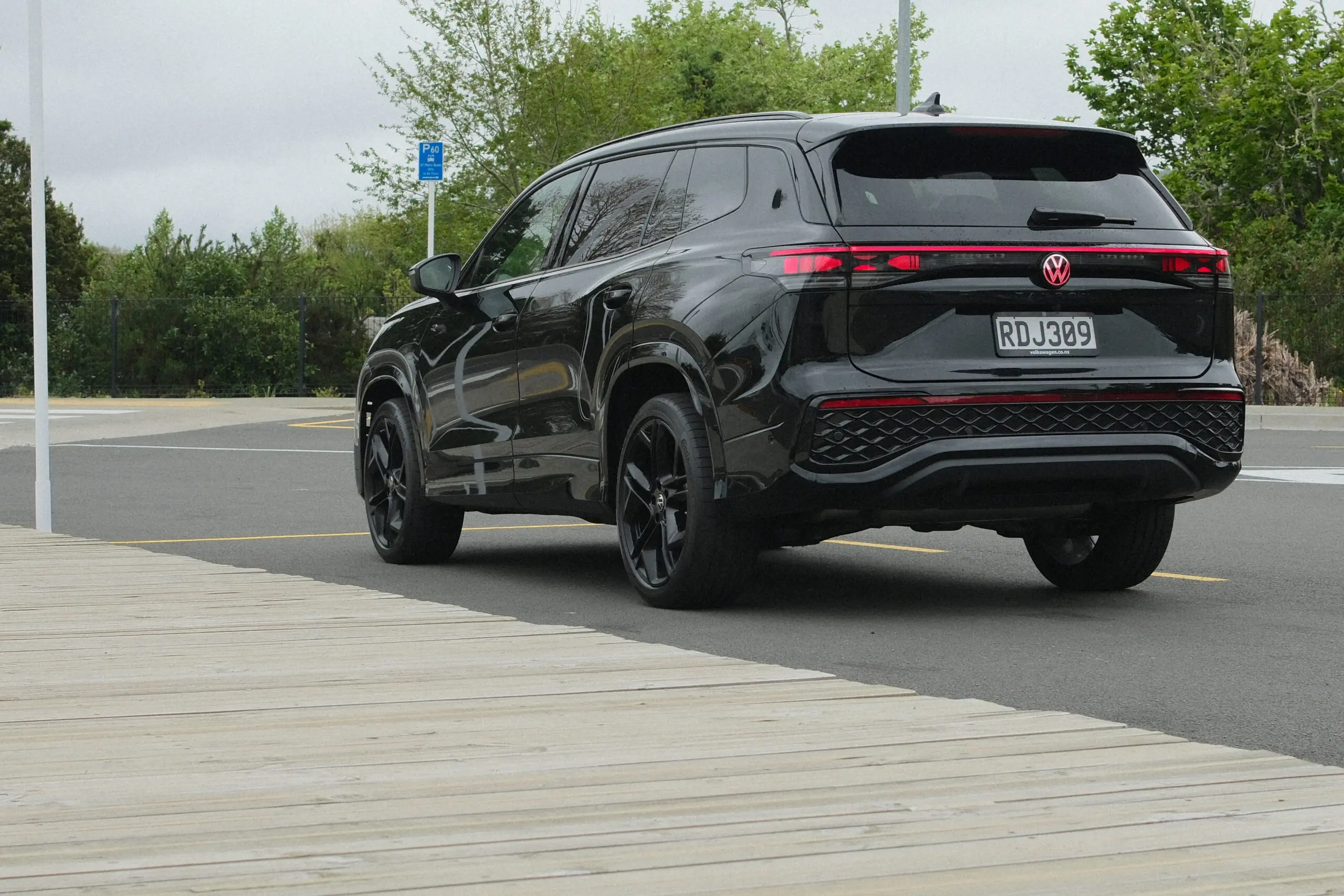
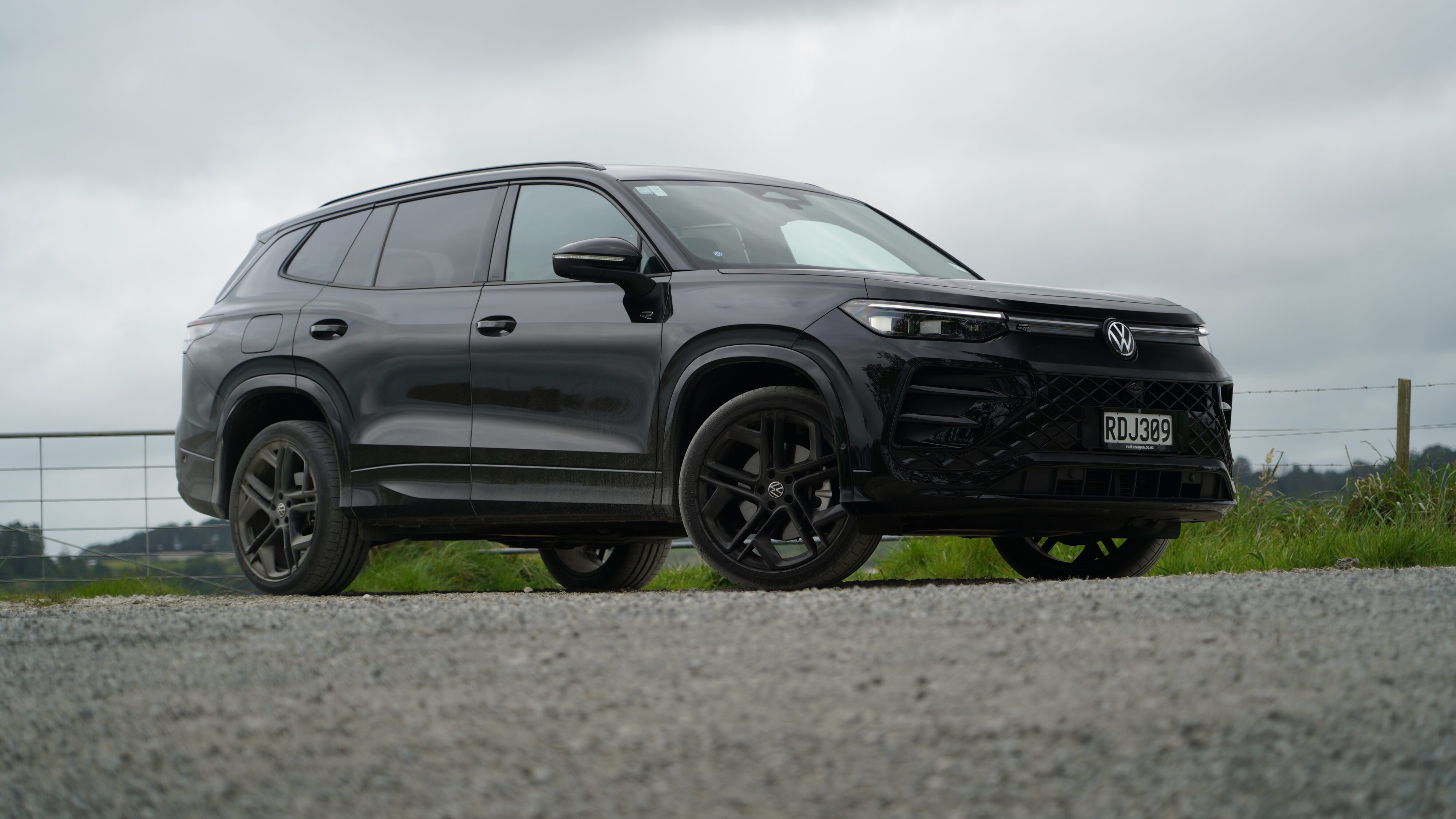
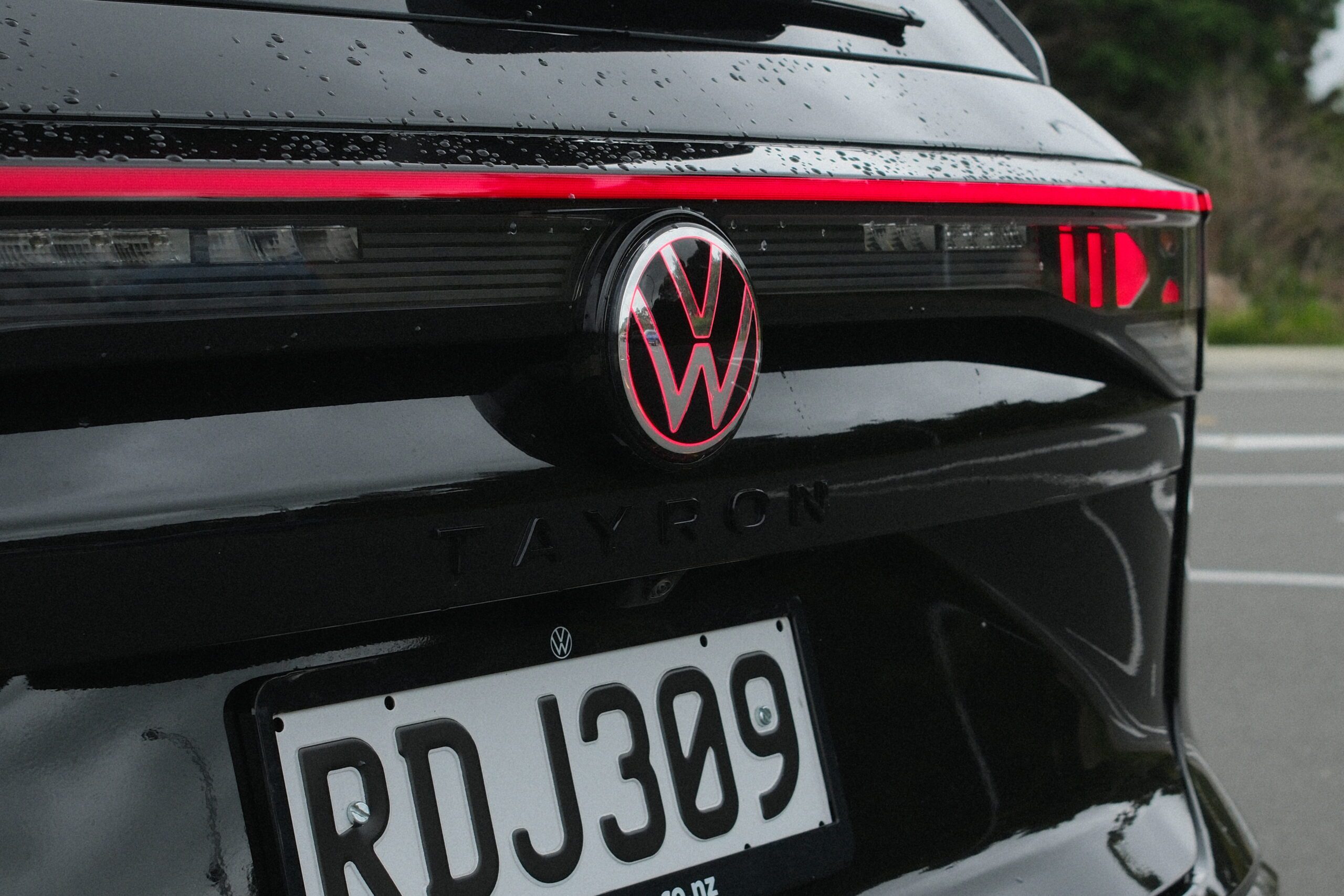
Visually, it feels Volkswagen from the jump, with a balance between restraint and presence that I got to discuss in length with the brand’s Product Manager earlier today. The front end wears the brand’s new design language with clean lines, a slim illuminated grille bar, and sharp LED headlights that give it a precise look. Around the back, the full-width tail light treatment and the subtle taper of the roofline add some flair without compromising interior headroom. You can tell Volkswagen wanted it to look premium from the creased lines, the hockey stick line or even the rear windows with no moulding on the rear quarter glass. In person, the Tayron uses its well-judged proportions to carry itself as a better thought through package for a 7 seater.
Inside, things get more interesting. The cabin feels like a remix of Volkswagen’s latest design ideas, with the digital cockpit taking centre stage. There’s a large floating touchscreen, up to comical 15 inches in higher trims, running the brand’s updated infotainment interface, alongside a neat, driver-focused layout. It’s familiar to anyone who’s spent time in the new Tiguan, but scaled up slightly, and with their best software implementation yet. Material quality is typically solid, and the mix of textures helps avoid that flat, plasticky feel some older VWs suffered from. What really defines the Tayron’s cabin, though, is flexibility. With three rows of seating and ample second-row space and 820L of boot capacity, it’s designed to adapt to changing needs, showing VW has been listening.

Available in two different trim levels, Elegance and R-Line, the Tayron changes quite dramatically inside and out design wise, depending on your choice. The price jump demanded by the R-Line gets you all the visual niceties in the shape of 20″ inch wheels, different fascia, IQ lights, but the list of kit also takes a big jump: electric, ventilated leather seats, head up display and a 360 camera, and a 195kW/400Nm under the bonnet (whereas the Elegance gets 150kW and 320Nm). Both trims come standard with a 7 speed DSG automated gearbox and all wheel drive for that confidence inspiring driving experience we’ve come to expect from this combo.
Tech-wise, the Tayron brings all the expected Volkswagen toys. There’s Travel Assist, the semi-autonomous suite that manages steering, braking, and acceleration in highway traffic; wireless Apple CarPlay and Android Auto; Ambient lighting that stretches across the dashboard, door cards and that subtly changes depending on drive mode, and “atmospheres”, which tailor lights, sound and visuals depending on how you’re feeling then and there. But what really stood out seeing it in person was the usability of everything. Controls feel well thought out, and Volkswagen has addressed most of the gripes people had in the past: no more touch sensitive steering wheels, and an easier to use infotainment.

We had the opportunity to take both trim levels on a drive for the launch event today, and our impressions will be published shortly in a follow-up post. But, in essence, the Tayron feels like Volkswagen doing what it does best: refining the middle ground. It’s neither too large nor too small, too flashy nor too plain. It’s a car designed to meet the needs of people who want their SUV to feel substantial but manageable, tech-savvy but not overcomplicated. For families who’ve outgrown a Tiguan but don’t want to stretch to a Touareg, or for those who simply want more seats without losing that European composure, the Tayron hits a sweet spot.
Pricing on the Tayron has been shared and is as follows: 78,990 for the Elegance and 96,990 for the R-Line. With 4.8m in length and with almost 2.8m of wheelbase, there is generous space for stories here. The moving to a dedicated nameplate for a 7 seater, this time built in Wolfsburg, debuting their newest software implementation and in such a competitive segment shows VW’s commitment to the Tayron and the SUV market. It is a calculated step from the brand into a busy segment that demands proper market differentiation, and one we’re keen to review! Thanks, Volkswagen, for the opportunity, and thank you for reading this far!