For decades, the Kentucky bourbon industry was a finely tuned, high-performance engine, roaring down the highway of global demand. It was a $9 billion machine, the pride of the state, with a heritage built over centuries. But now, that engine is sputtering, backfiring, and threatening to seize up completely. The legendary business is facing its worst crisis in decades, a perfect storm of overproduction, trade wars, and a new generation of drinkers who would rather have a hard seltzer than a high-proof spirit.
The wreckage is already piling up. Over the past eight months, three prominent distilleries have collapsed into bankruptcy. LMD Holdings (Luca Mariano Distillery) is saddled with over $25 million in debt, Garrard County Distilling owes nearly $26 million, and even the internationally-owned Kentucky Owl has filed for bankruptcy protection. This isn’t just affecting the smaller players. Established giants like Brown-Forman have cut hundreds of jobs, and major producer Diageo has temporarily shut down operations at its Kentucky facilities. The bottling lines are standing idle, a stark visual of an industry in deep trouble.
Under the Hood: A Flooded Engine and a New Driver
So, what caused this sudden breakdown? The crisis stems from two major issues running in parallel.
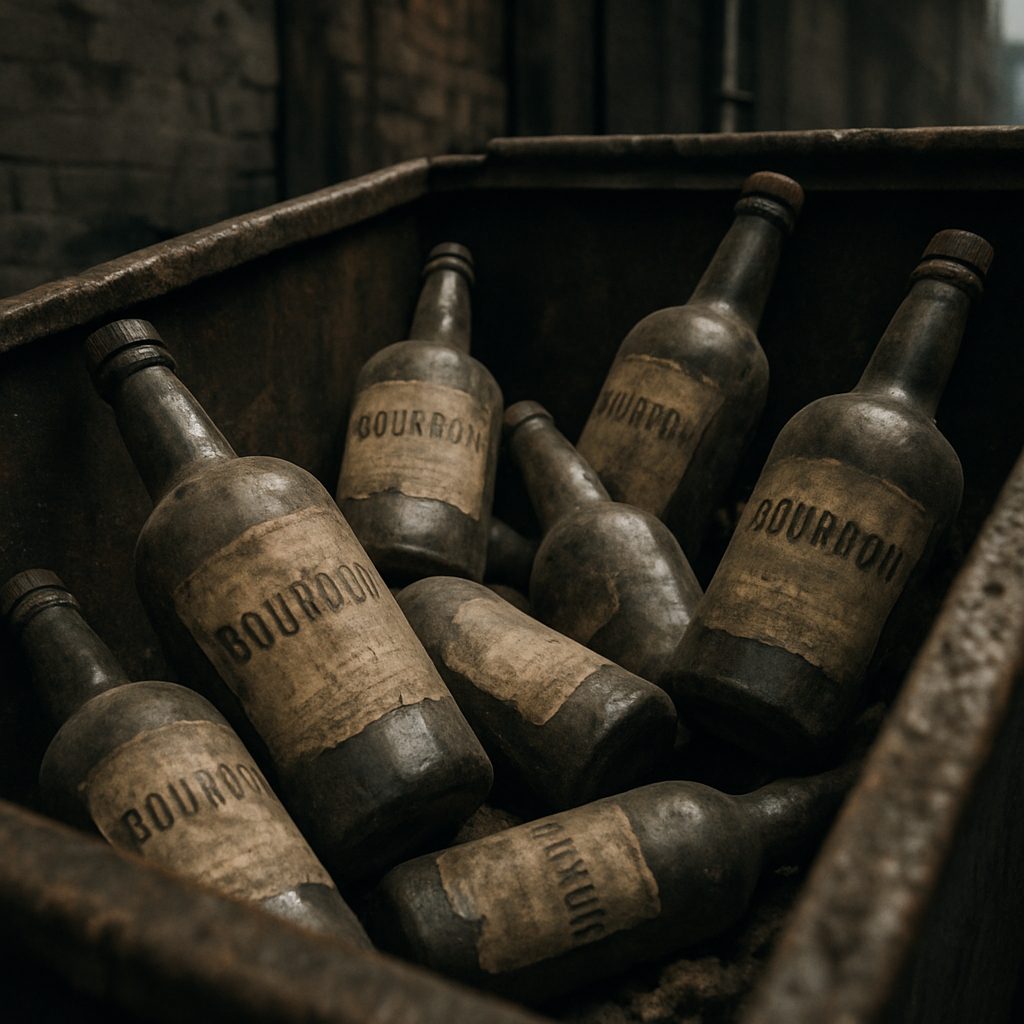
First, the industry simply got ahead of itself. During the bourbon boom of the 2000s, distilleries went into overdrive, dramatically expanding production in what experts now call an “unsustainable bubble”. The result? Kentucky is currently sitting on over 14.3 million aging barrels of whiskey. To put that in perspective, that’s more than two barrels for every single person living in the state. This massive glut of inventory coincided with a sudden drop in demand, with American whiskey sales falling 1.8% to $5.2 billion in 2024.
Second, the driver has changed, and they have different tastes. Gen Z consumers are turning away from traditional, high-proof bourbon. Their preference leans towards lighter alcoholic beverages, especially ready-to-drink (RTD) canned cocktails and hard seltzers. Social media platforms like TikTok have fueled this trend, making sweeter, lower-alcohol drinks the fashionable choice. This isn’t just a fad; it’s a fundamental cultural shift. The number of adults under 35 who drink has fallen from 72% in the early 2000s to 62% today, and Gen Z consumes 20% less alcohol per person than Millennials did at the same age.
Global Roadblocks and Trade War Tolls
As if internal problems weren’t enough, the industry is hitting major international roadblocks. Trade disputes have thrown a wrench in the works for producers who rely on export markets. In response to US tariffs, Canada, a $40 million annual market, hit back with its own levies. Retailers in Ontario went so far as to pull American spirits from their shelves, costing one distillery, Michter’s, $115,000 in cancelled orders alone.
An even bigger threat looms across the Atlantic. The European Union has threatened a crippling 50% tariff on American whiskey, a move that has been delayed but still hangs over the industry like a dark cloud. A previous 35% EU tariff in 2020 caused exports to plummet, showing just how vulnerable distilleries are to these global economic battles.
The Pit Crew’s Plan for a Long Road Ahead
The fallout from this crisis extends far beyond the distillery walls. It threatens the livelihoods of over 23,000 workers, the grain farmers who supply the raw materials, and the tourism businesses that rely on the famed bourbon trail.
Industry leaders know that dramatic adaptation is the only way to survive. Proposed solutions include a pivot towards more sustainable production, enhancing bourbon tourism experiences, and, crucially, developing their own RTD products to capture the attention of younger consumers.
Without a major shift in strategy or a resolution to damaging trade disputes, Kentucky’s signature industry faces a period of painful shrinkage. The state’s bourbon heritage, built over generations, is now a classic machine confronting a modern world. It will require a significant overhaul to keep its place on the road, or risk becoming a relic of a bygone era.