
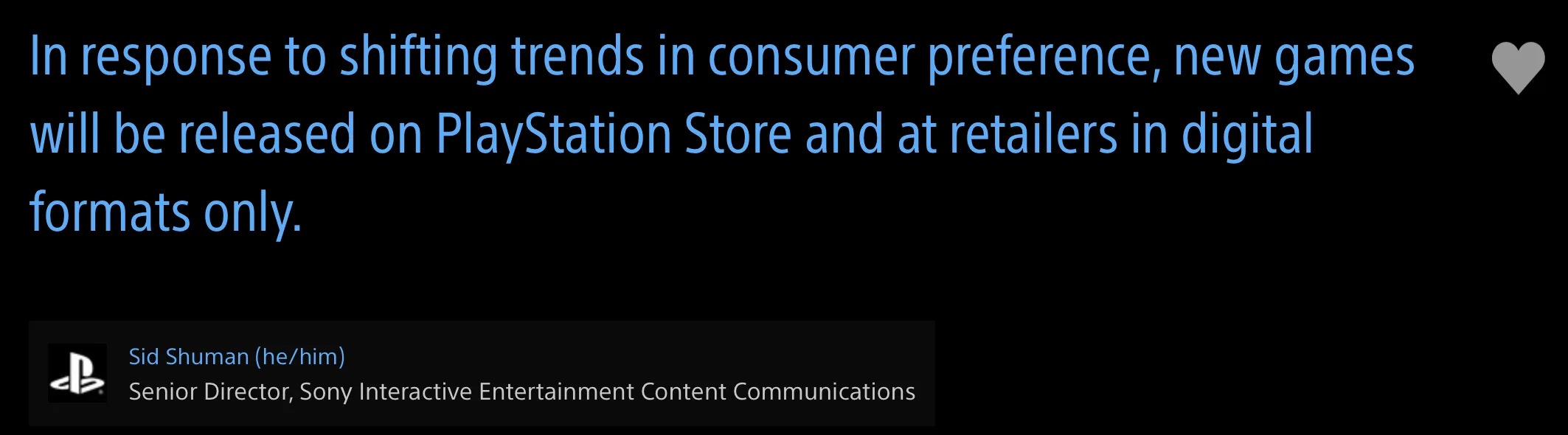
Sony has confirmed that physical disc production for new PlayStation games will end from January 2028, meaning new releases on PlayStation consoles will be sold through the PlayStation Store and through retailers in digital formats only. Existing games, and titles already due to release on disc before that point are not affected. Sony says the move reflects consumer behaviour, with the company positioning the change as an adaptation to a market where digital media now significantly outpaces physical discs… Some would call it a self fulfilling prophecy.
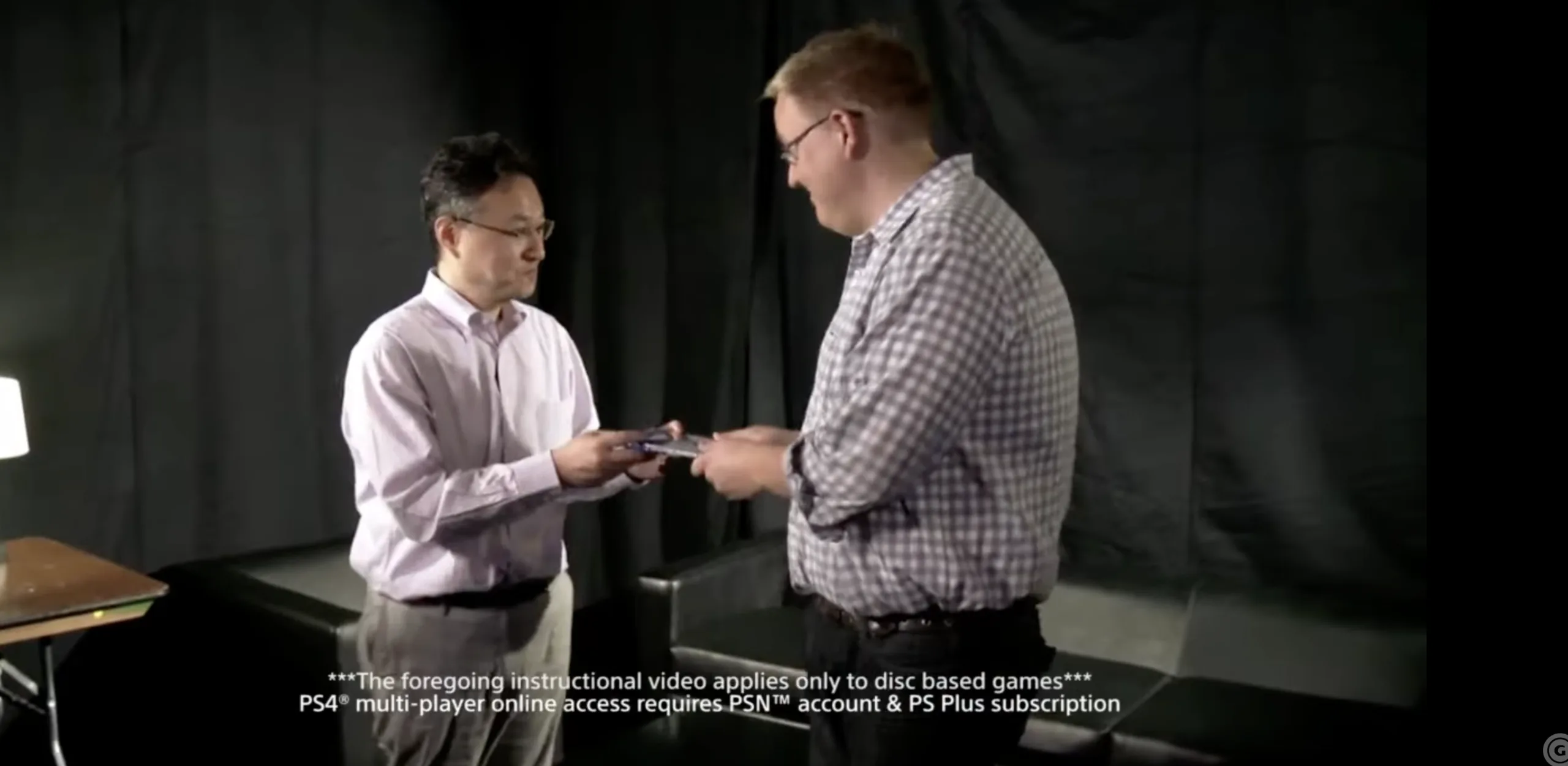
On its own, this would already be a major moment: PlayStation has been one of the defining brands of disc based gaming since the original console arrived in the 1990s, and the idea of a PlayStation generation without shelves full of blue cases feels like more than just a technical shift. How could the brand that got famous for the ads dishing on Xbox that showed their owners lending their friends their discs do this? It feels like the end of a ritual: buying the game, opening the case, lending it to a mate, selling it later, finding it years down the line, or simply knowing that you have a copy that exists outside someone else’s server.
But the timing is what makes the news so inflammatory. Sony is not making this announcement in isolation, arriving right after another reminder that digital “ownership” is a loose concept. From September 1, 2026, PlayStation users in affected regions will no longer be able to access previously purchased StudioCanal video content, with Sony’s own legal notice saying the content will be removed from users video libraries due to licensing agreements. No refund, no store credit, nothing.
This is not that a streaming service is losing a film, or that a rental is expiring. These were purchases, choices that customers made with their wallets to own digital movies and TV shows that, in normal human language, appeared to be theirs. Yet the reality is that digital stores generally sell access under a licence, and that access can depend on commercial agreements between platform holders, studios, distributors, and rights owners.
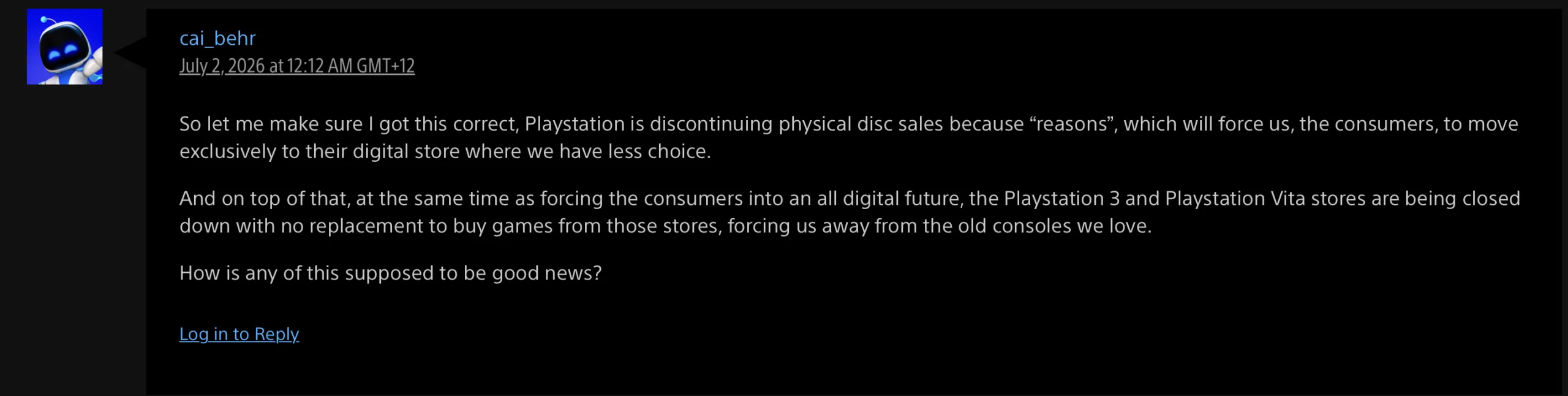
Now the company is also winding down parts of its older digital gaming infrastructure. Sony has announced that the PlayStation Store on PS3 will close in selected markets from August 2026, with more markets following later in the year, before PS3 and PS Vita store closures expand globally in July 2027. Players will no longer be able to buy new content through those stores once they close, although Sony says previously purchased content will remain downloadable “for the foreseeable future.” More vague language, with the corporate jargon doing a lot of work.
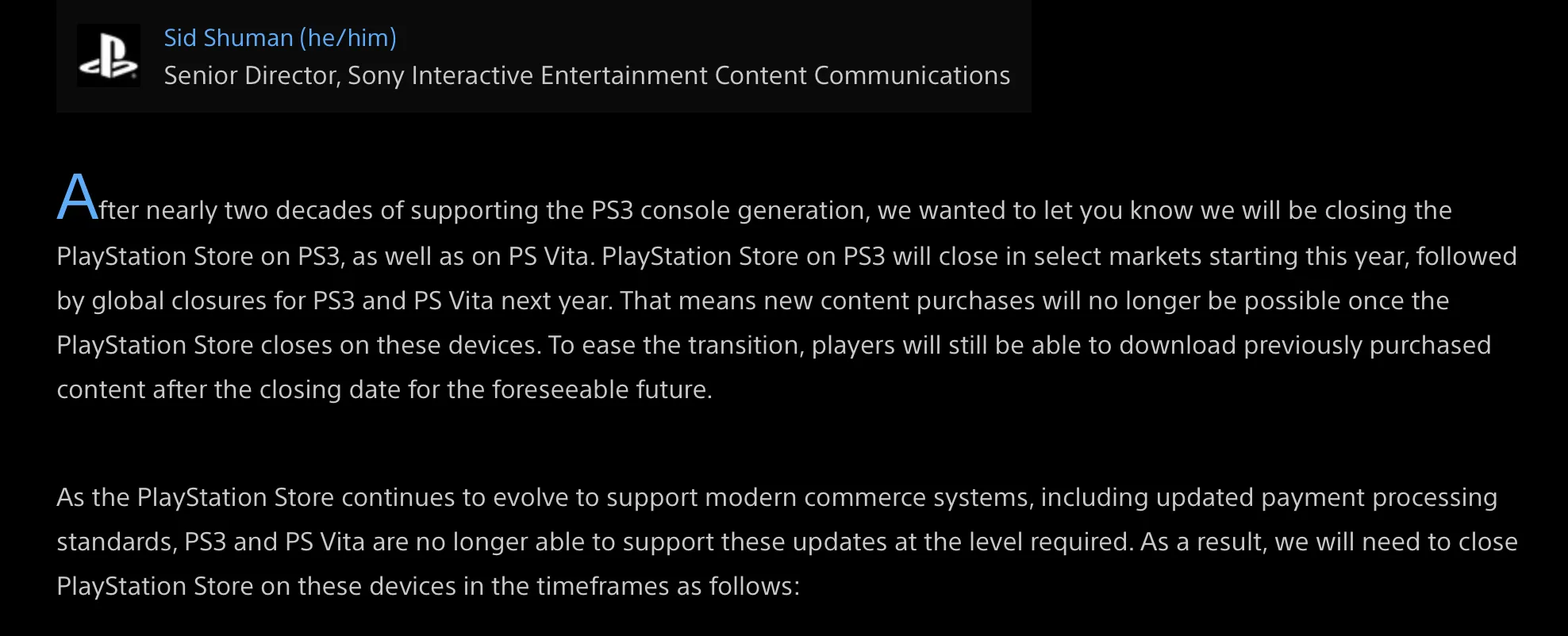
“For the foreseeable future” is not the same thing as “forever”. It may be legalese, and Sony may well intend to keep downloads available for a long time, but it also captures the anxiety at the centre of the whole debate. If the future of games is digital only, then what happens when the storefront closes, the licence changes, the account is lost, the servers are switched off, or the company decides the old infrastructure is no longer worth maintaining?
This is why the end of new PlayStation discs from 2028 feels like a writing on the wall, bigger than a format change. Physical games are not perfect: many modern discs are not truly complete archives, with day-one patches, online requirements, partial installs and dependencies already complicating the idea of preservation. A disc is no longer always the whole game in the way it once was, and I get all that. But physical media gives players something digital media often does not: leverage.

You can buy, sell, lend a used disc. You can keep it after a platform’s commercial focus has moved elsewhere. You can discover a game years later without needing it to still be listed on a storefront. This was the reason why I have always bought consoles with a physical drive when the option existed and, in many cases, a physical copy acts as a practical fallback against the impermanence of the medium. A digital only PlayStation future removes that layer of consumer control, concentrating more power in the platform holder’s hands. Pricing, availability, regional access, refunds, account bans, delistings and long term preservation all become more dependent on Sony’s systems and policies than ever. Retailers may still sell digital codes, but that is not the same as a secondary market for discs, that is DOA now.
Playing Devil’s advocate, their business case is easy to understand: digital distribution is cleaner, faster and margins are better in an already struggling industry. There are no discs to manufacture, ship, stock or return. Players increasingly buy digital games already, and Reuters reports that digital downloads accounted for about 80 percent of Sony’s full-game software sales in fiscal 2025. For many people, especially those with fast internet and little interest in collecting, the change may barely register. But the controversy is not really about whether downloads are convenient, because of course they are. The controversy is about whether convenience is being traded for permanence, ownership and consumer rights, which is a trend we are seeing everywhere.

There is also a preservation issue. Games are not just products, they are culture. They are art, software, design, music, memory and history. If future PlayStation releases exist only as digital licences distributed through controlled storefronts, then preserving them becomes more fragile. It depends on corporate continuity, server access, emulation policy, rights clearance and whether future hardware remains compatible with today’s purchases.
And, in all fairness, Sony is far from alone in this. The entire entertainment industry has been moving in the same direction for years. We gladly killed Blockbuster in exchange for Netflix, and got rid of our CD collections for the convenience of Spotify. Games have been drifting towards the same model through digital stores, live service design and subscription catalogues. The difference is that Sony has now placed several uncomfortable examples side by side in breakneck succession. Purchased movies are being removed from libraries, older digital stores are being closed, and now new physical game discs are being phased out from 2028.
Each decision may have its own explanation, and make sense in isolation. But together, they create a very clear message: access is replacing ownership. That may be the future the market has chosen, but it is not necessarily the future consumers fully understood they were buying into, and while I must admit I have only opened my eyes to this somewhat recently, this is definitely not a discussion being had widely enough.

So what now, PlayStation? If the comments on the post are anything to go by, the challenge now is trust. If Sony wants players to double down on their digital only future, they need to do more than tell them that preferences have changed. We need stronger guarantees around long term access, clearer language around what a “purchase” actually means, better preservation commitments, and more consumer friendly policies when licensing issues remove content people paid for.
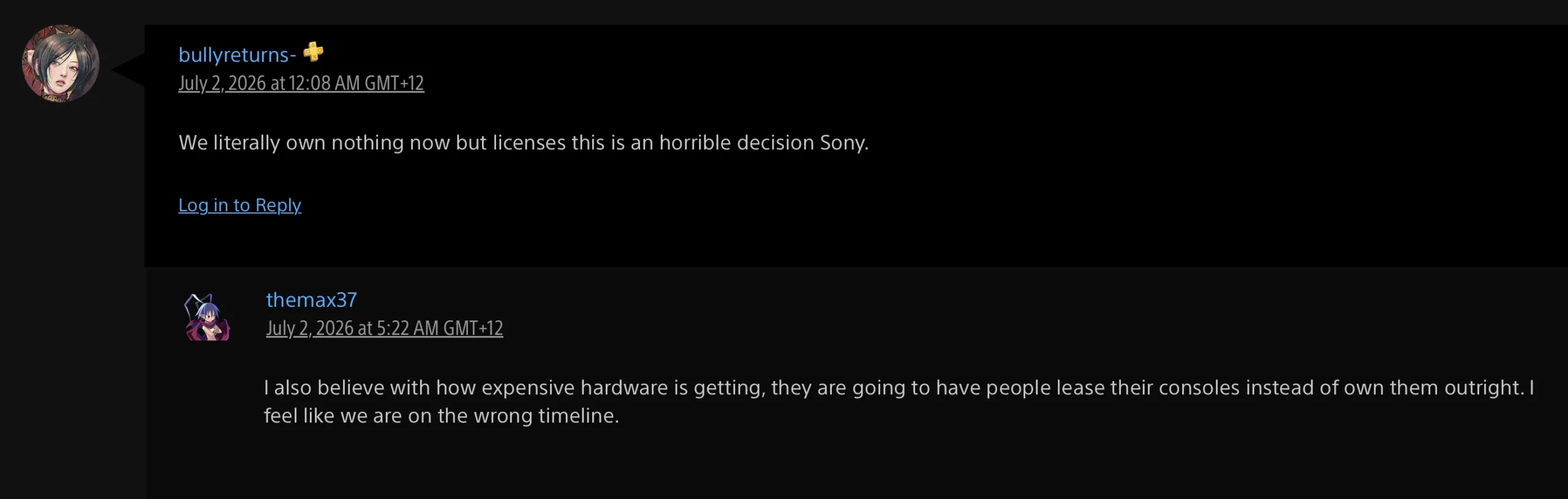
Otherwise, the company risks turning every digital only announcement into an advert for the very thing it is moving away from. And there will not be enough wabisabi to repair this broken vase.