Nearly eight million units across four generations. The Škoda Octavia has been the brand’s bestseller for three decades, and its reputation for practicality and value is well established. What is less well known is just how far Mladá Boleslav’s engineers pushed the platform over the years, into government limousines, salt-flat record attempts, and early electric prototypes.

To mark the 30th anniversary of the modern Octavia’s premiere, Škoda has released a retrospective of some of the model’s more unusual derivatives. The timing also coincides with a limited-edition 30th Anniversary model, available in both Liftback and Combi body styles in selected markets.
The Rarest Octavias You’ve Never Heard Of
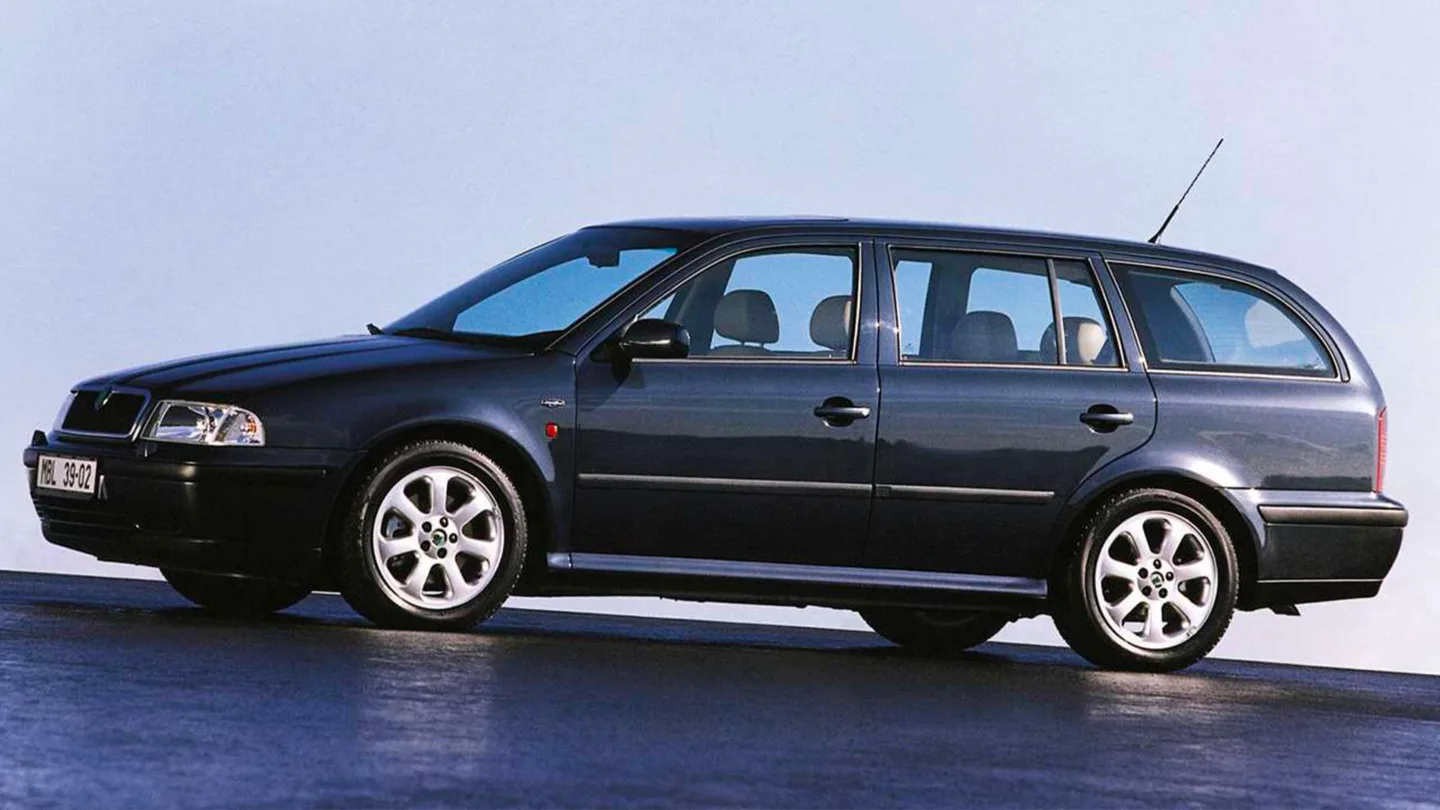
The Laurin & Klement trim (reserved at Škoda for its most premium specifications) formed the basis for one of the strangest Octavias ever built. Unveiled at the 1998 Paris Motor Show, the Octavia Long stretched the wheelbase by 80 mm, requiring new brake lines and an entirely new roof structure. It was never sold through dealerships; instead, all 19 examples went to government services and select business users before the first-generation Superb took over that role.
The Octavia also holds a notable place in Škoda’s technical history as the first model in the brand’s modern era to offer all-wheel drive. The system used a Haldex coupling to electronically engage the rear axle under front-wheel slip, technology that arrived via the Volkswagen Group partnership and later underpinned the Scout variant, which added raised ground clearance and protective body cladding.
Performance, Records, and an Early EV
The RS line has run through all four generations. The original used a 1.8-litre 20-valve turbocharged engine producing 180 hp, and Škoda marked its centenary with a limited WRC Edition, just 100 cars, 37 of them right-hand drive. The second-generation RS stepped up to a 200 hp 2.0 TSI, capable of 240 km/h, and also offered a 170 hp diesel option, which was unusual for a performance-oriented car at the time.
One petrol RS went considerably further. A specially modified Octavia Bonneville ran 365 km/h on the Bonneville Salt Flats in Utah, a category record that still stands. Meanwhile, back in 2010, Škoda showed a fully functional electric Octavia prototype with a 26.5 kWh battery and around 140 km of range. That was well ahead of the mainstream conversation around electric cars.
The third-generation RS 245, introduced after the 2017 model update, remains a favourite among enthusiasts. Its 245 hp output was only part of the story; the real substance came from a VAQ limited-slip differential, a rear track widened by 30 mm, and standard Dynamic Chassis Control.
Efficiency, Gas, and the Fourth Generation
Not every Octavia variant chased performance. The third-generation GreenLine, shown at Frankfurt in 2013, used a 110 hp 1.6 TDI with low-resistance tyres, revised gearing, and a partially closed front grille to achieve 3.3 litres per 100 km on the NEDC cycle. The G-TEC compressed natural gas variant went further still, its combination of CNG tanks and a 50-litre petrol reserve gave a total range exceeding 1,300 km. In 2015, one completed a Prague-to-Norway run covering 1,700 km.
The fourth generation, launched in 2019, brought mild-hybrid and plug-in hybrid options for the first time. The RS iV added an E-Booster function that delivered instant electric torque to reduce turbo lag, plus a sound generator for Sport mode. A China-specific Octavia Pro also appeared in 2021, with a 44 mm wheelbase extension dedicated entirely to rear-seat space.
Taken together, the Octavia’s history reads less like a single model’s story and more like a platform that Škoda used to quietly test ideas the rest of the range wasn’t ready for yet. That’s a reasonable legacy for a car that, on the surface, just looks like a very sensible family hatchback.