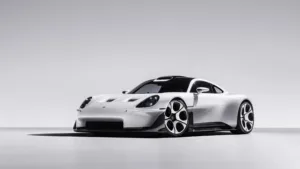
Porsche’s Mission S vision model introduces the brand’s next design direction and confirms a new mid-engined super sports car platform positioned above the 911.
Porsche has rarely sold anything above the 911 for long. Its super sports cars usually arrive as limited runs and then disappear. The new Mission S vision model points to a change, because Porsche says it will develop a mid-engined super sports car platform as a permanent part of its range.
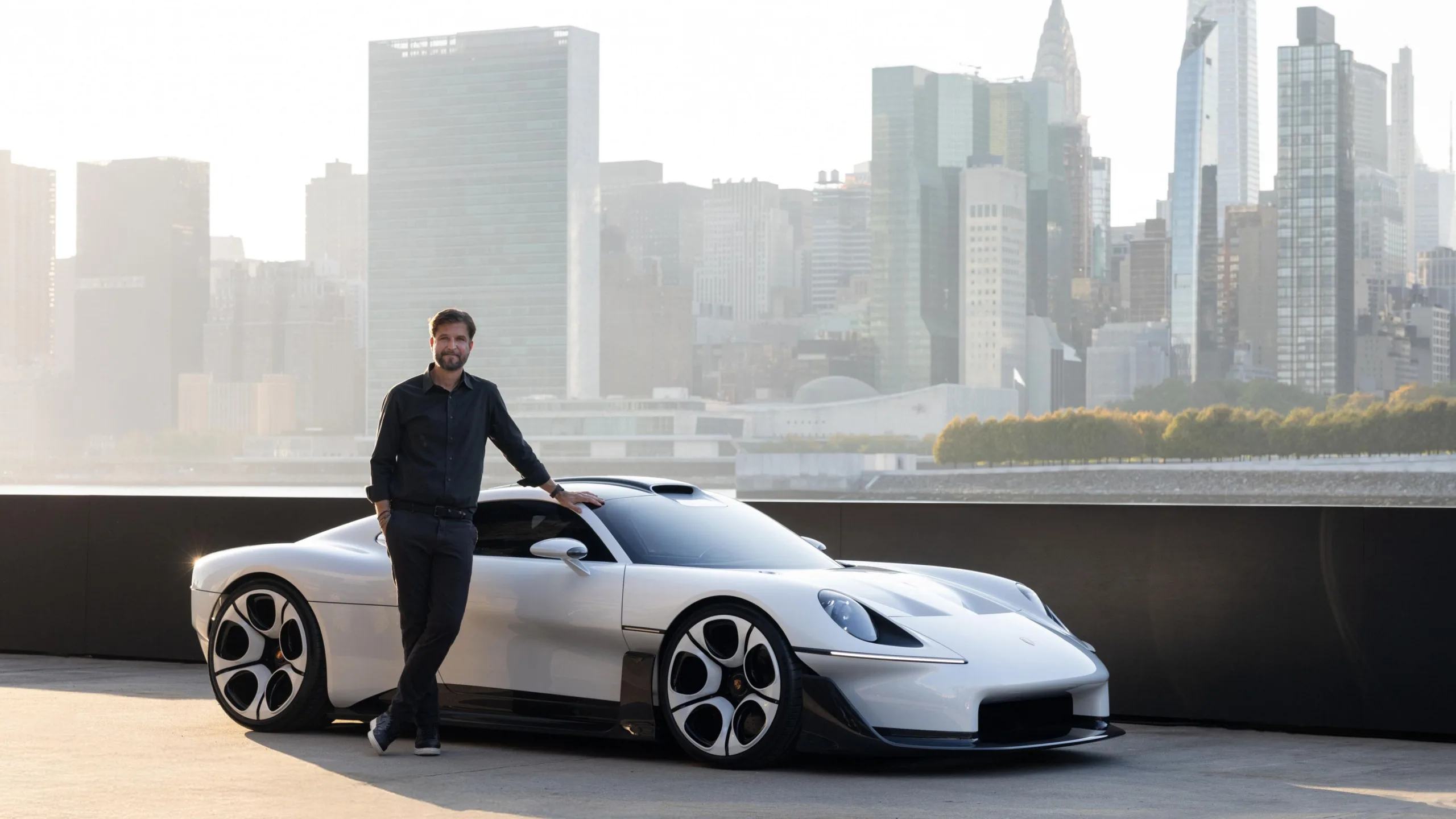
Porsche revealed the Mission S on 15 October as part of its “Sportwagenschmiede ’35” strategic realignment. Chairman Dr Michael Leiters said the platform will sit above the 911 “not as a one-off hypercar”. He described it as a lasting, versatile addition to the line-up.
A Pier With Some History
Porsche picked its venue with care. The premiere took place on a pier in Queens, New York, with Manhattan in the background. In 1953, the first widely published photos of the mid-engined 550 Spyder were taken on that same pier.
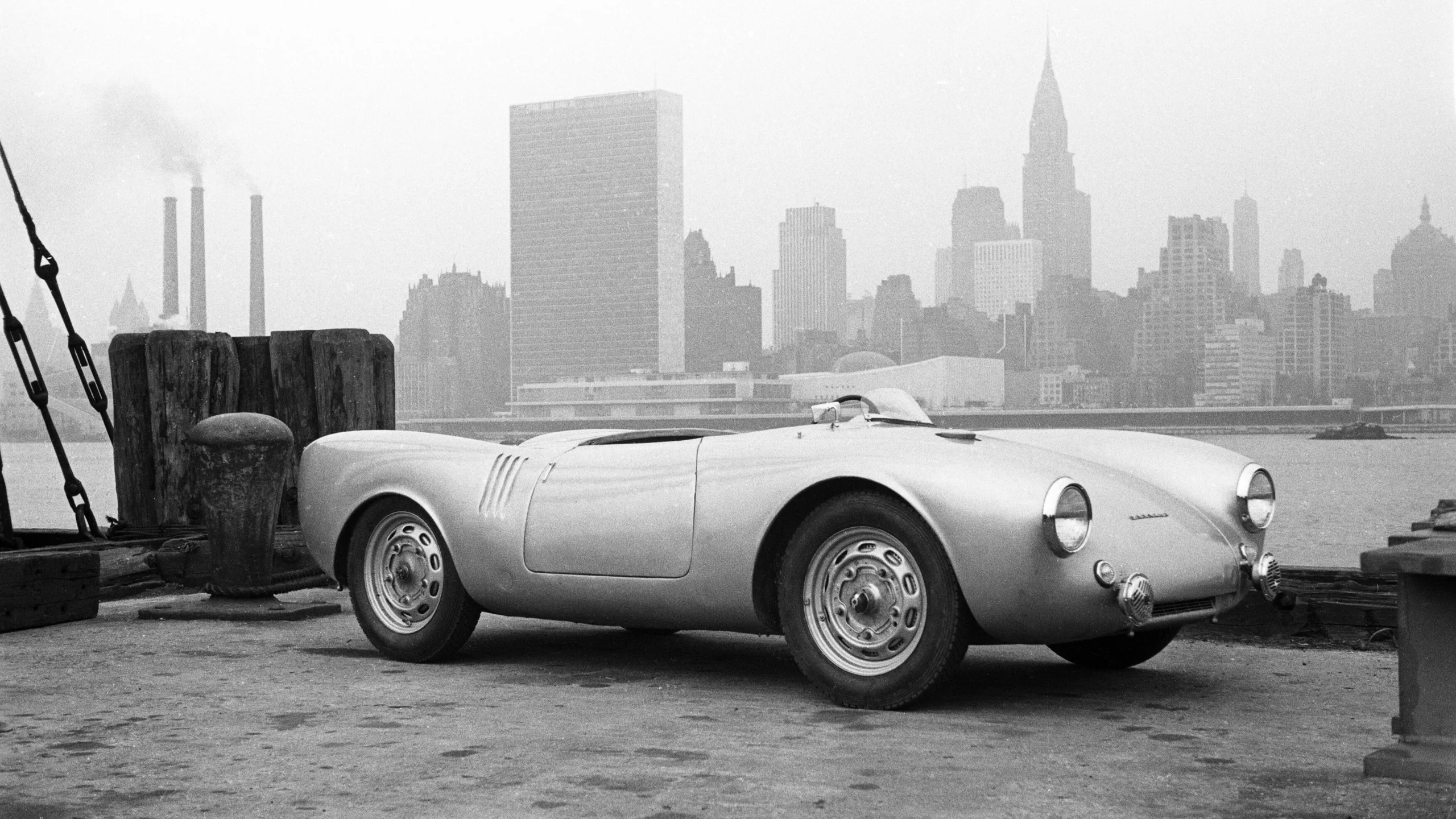
Porsche calls the 550 its first super sports car and credits it with laying early groundwork for the brand’s success in the US. The link back to it is intentional.
A Greatest-Hits Exterior
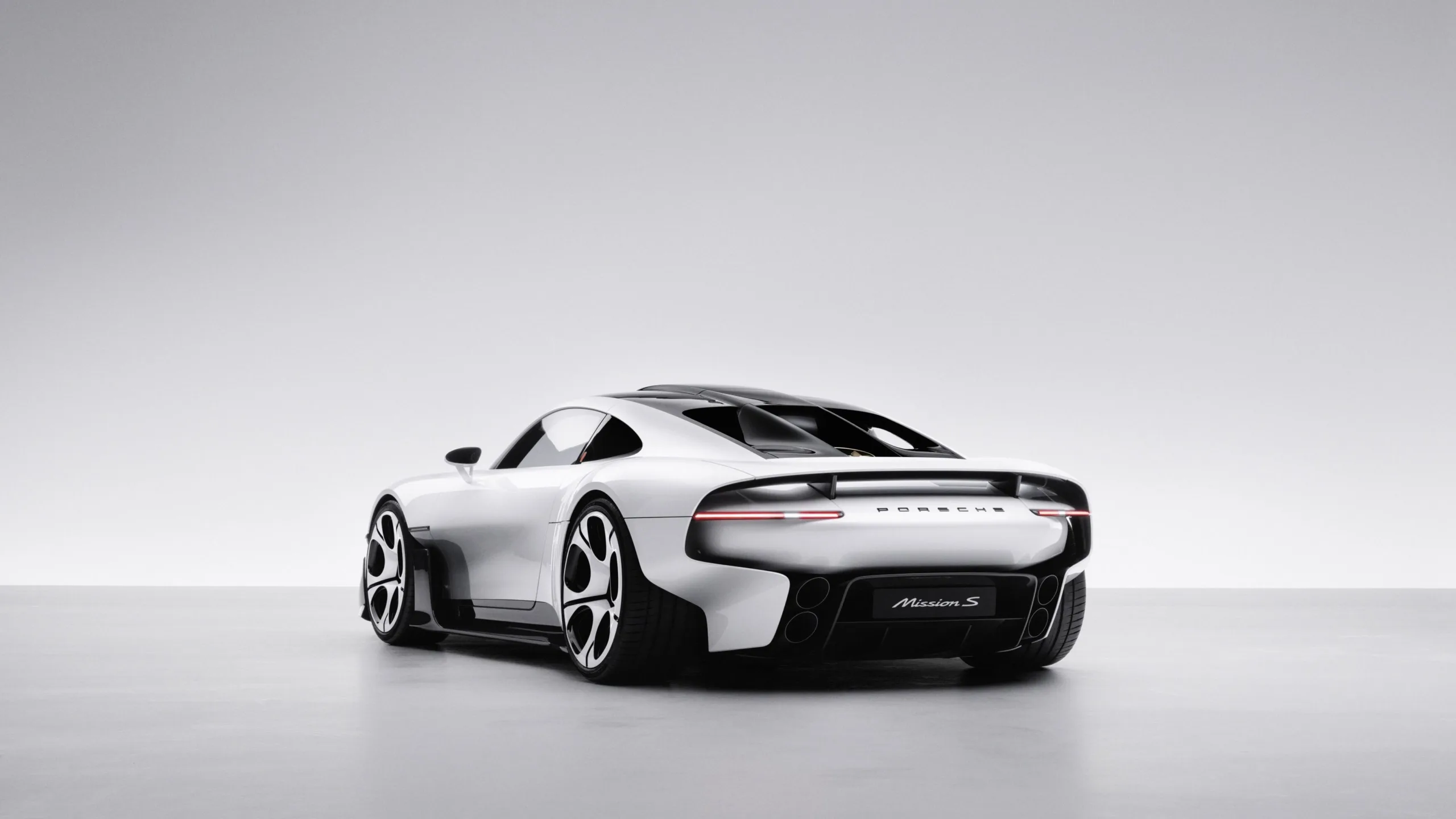
Porsche says the design follows three principles: authentic, consequent and timeless. In practice, that means a long list of references to past models. The round headlights and torpedo fenders recall the 911. The shut lines run into the light graphics, a nod to the G model.
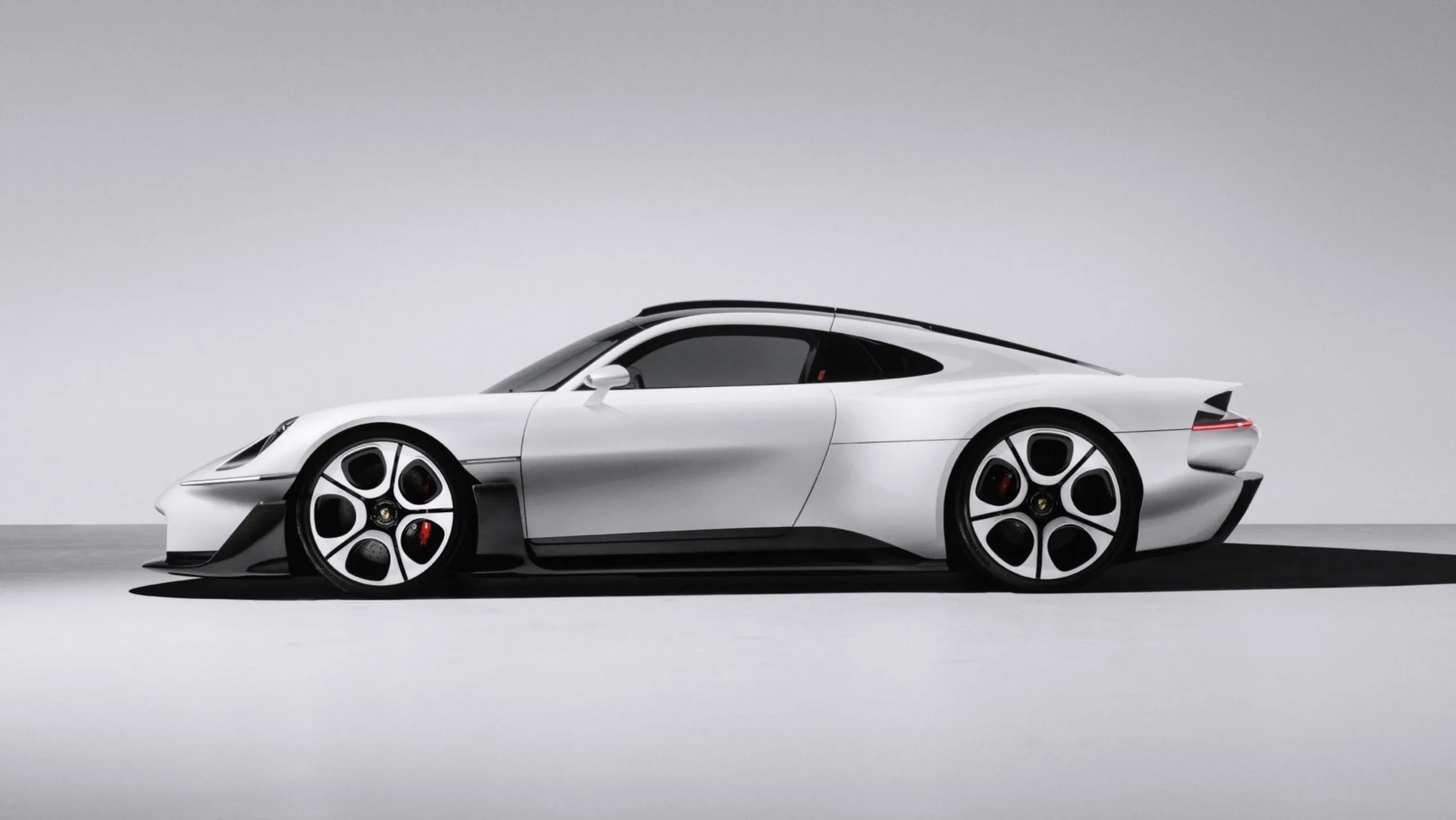
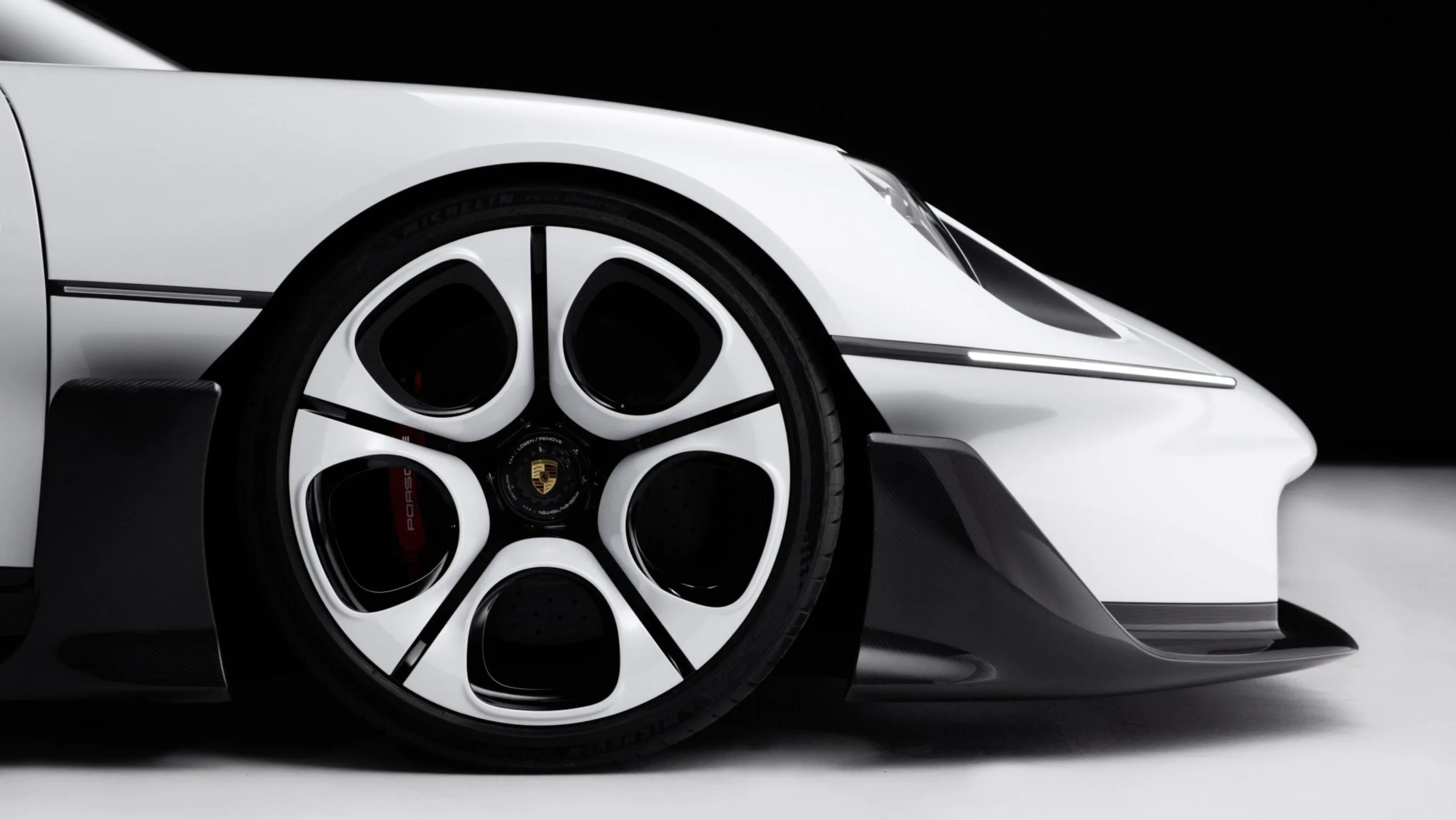
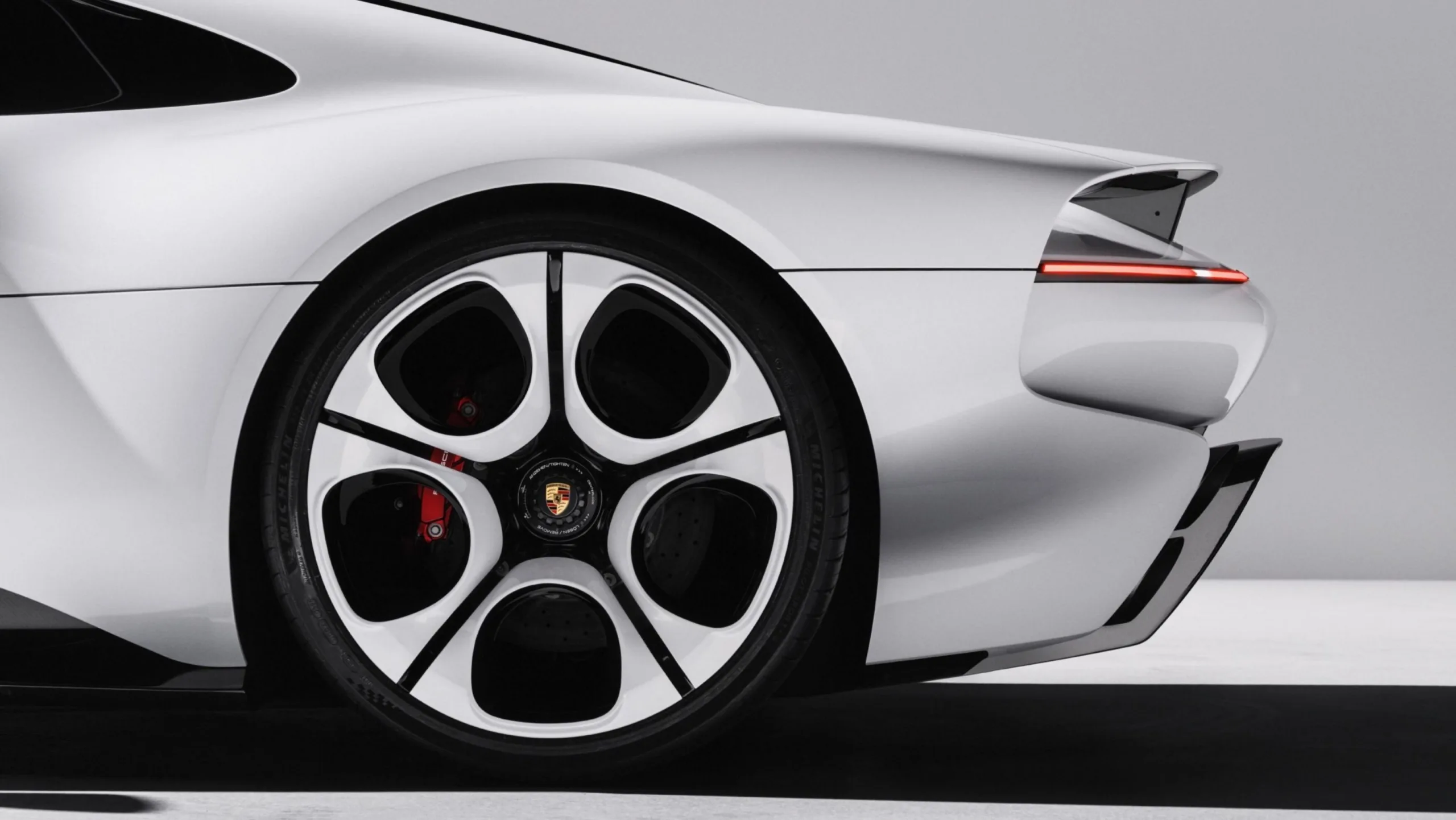
The flat front and the car-in-car rear section both borrow from the GT1. The roofline beneath the rear wing references the 959 and carries on to the tail. The cooling solution echoes the radiator fan of the 917, while the lightweight wheels reinterpret the 928’s “dial” design. The rear wing is active and fully integrated.
A wraparound line ties the front and rear lighting together. Porsche says the surfaces above it emphasise muscle, while the areas below expose technical functions.
Fewer Screens, More Dials
Inside, the sharpest break from current industry habits is what Porsche has left out. There is no fixed centre display and no passenger screen. Instead, a retractable MagSafe-compatible mount holds the driver’s own phone for navigation or information when needed.
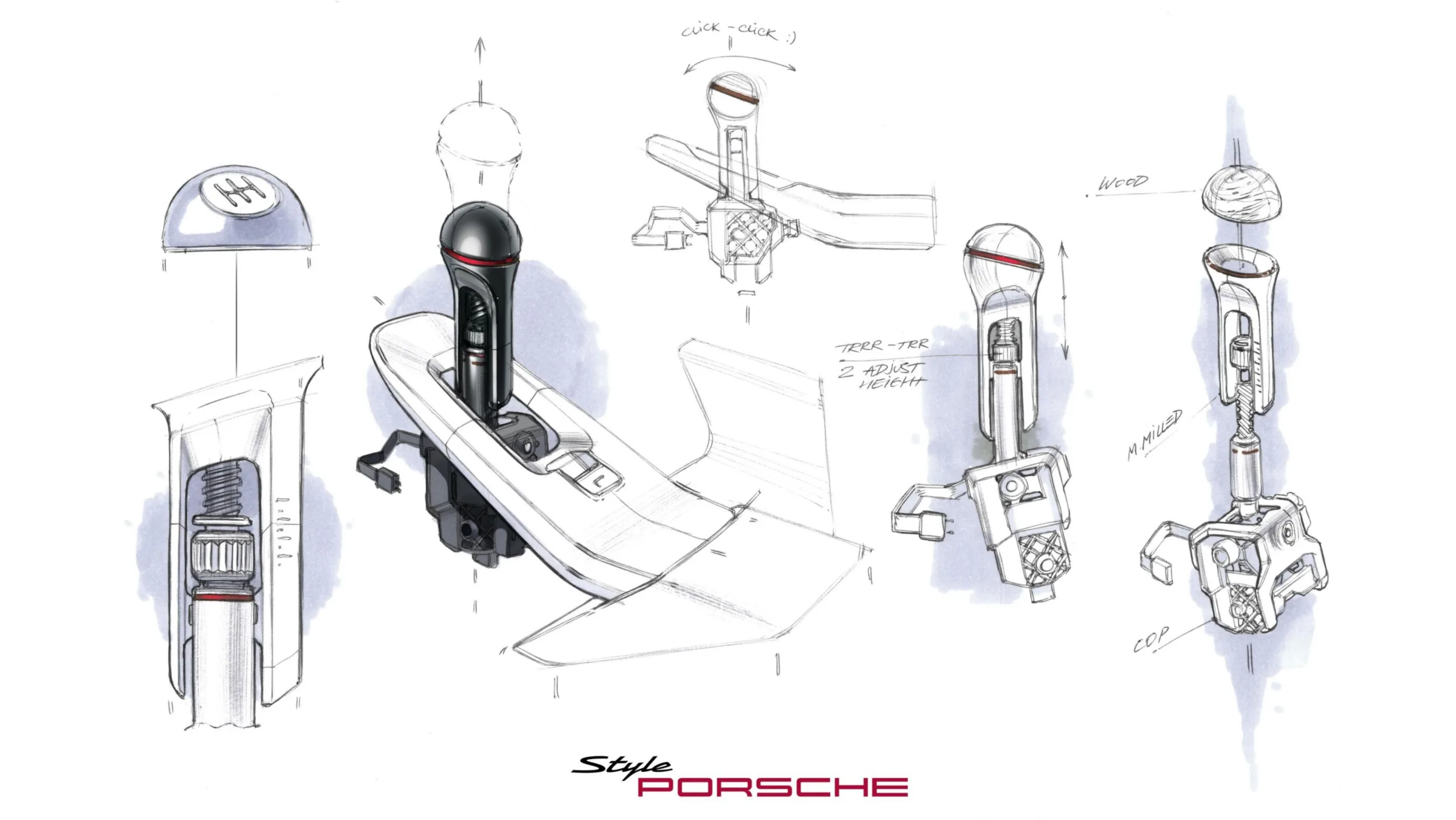
Five round instruments sit behind the steering wheel, with an analogue-needle rev counter in the centre. Depending on the drive mode, the rev counter moves closer to the driver. The instruments can also rearrange themselves side by side or one behind another.
Other details include:
- A key holder to the left of the wheel, as Porsche tradition demands
- Push-pull dashboard controls for comfort and driving functions
- A reworked Sport Chrono element
- A seatbelt buckle built into the centre panel
- Instrument designs with a historic theme, selectable through the My Porsche App
The cabin layout draws on the 550 Spyder and the 356, and the colours reference Porsche’s racing cars. They include Firn White Metallic, Light Red Metallic and Black Chrome, with Special Black for the interior.
What We Still Don’t Know
For now, this is a design study. Porsche has given no details on the powertrain, performance, pricing or timing. Style Porsche vice president Tobias Sühlmann said the ideas will “soon” carry over into future products.
The design language is the headline in the press material, but the real news is the commitment behind it. Porsche is planning a permanent super sports car above the 911 for the first time. The Mission S shows how it might look, but nothing yet about what will power it.