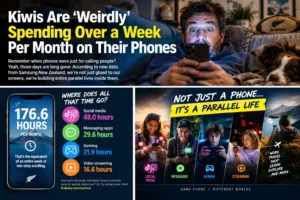
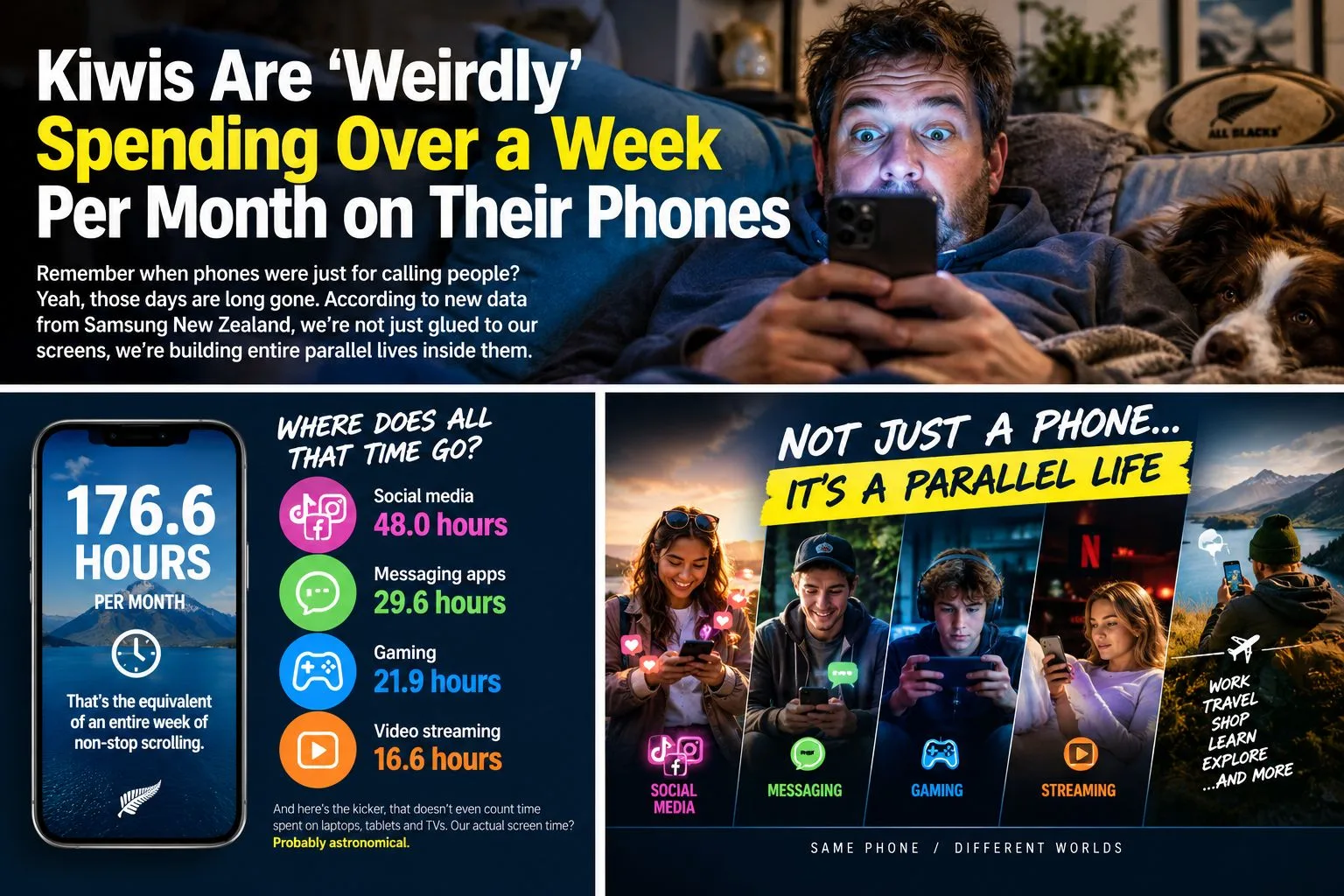
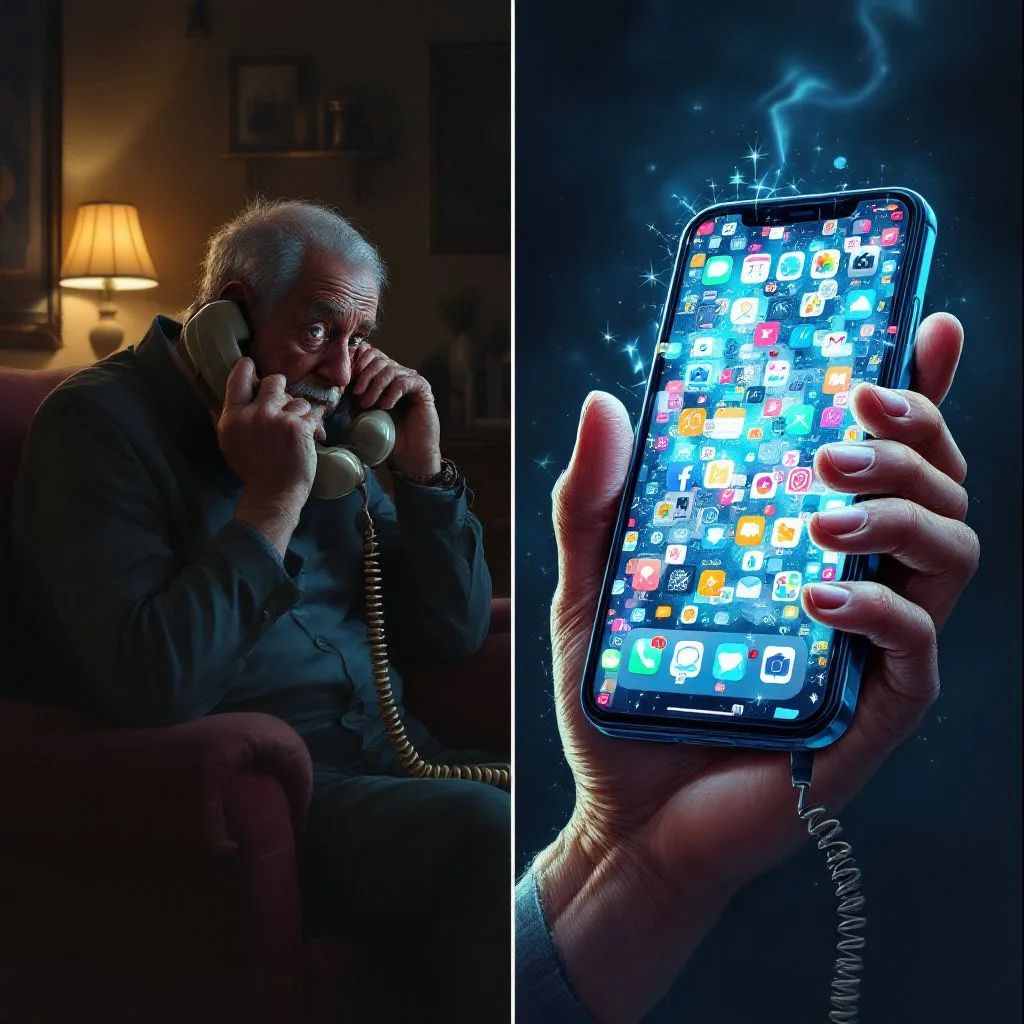
Remember when phones were just for calling people? Yeah, those days are long gone. According to new data from Samsung New Zealand, we’re not just glued to our screens, we’re building entire parallel lives inside them.
The Numbers Are Absolutely Mental
Let’s start with the jaw-dropper: Kiwis are spending a staggering 176.6 hours per month on their phones, that’s equivalent to an entire week of non-stop scrolling. Social media dominates our time at 48 hours monthly, followed by messaging apps (29.6 hours), gaming (21.9 hours), and video streaming (16.6 hours).And here’s the kicker, that doesn’t even count time spent on laptops, tablets, and TVs. Our actual screen time? Probably astronomical.
The Loneliness App Boom: AI Companions Are the New BFFs
Here’s where things get genuinely interesting (and slightly unsettling). While Netflix ranks as the most popular entertainment app with a measly 22 opens per month, it’s getting absolutely demolished by AI chatbot apps. Chai tops the list with a staggering 361 opens per month, followed by Character AI (268), Emochi (262), PolyBuzz (223), and Talkie (162). So while everyone’s claiming to be “so busy” and “so social,” Kiwis are quietly building emotional connections with algorithms. It’s a fascinating (and slightly dystopian) reflection of modern isolation.
The 73-Second Romance: Speed Dating in the Digital Age
When it comes to finding love, Kiwis aren’t messing around—literally. The average Tinder session lasts just 1 minute and 13 seconds, which means you’ve got a 73-second window to make an impression. But here’s the plot twist: singles are playing the numbers game hard, using an average of 4.98 dating apps simultaneously to cast the widest net possible. And if you’re feeling adventurous, the data reveals Kiwis have a wilder side than meets the eye. Feeld—an app designed for ethical non-monogamy, polyamory, and queer-inclusive spaces—ranks in the top five.Meanwhile, about 350 Kiwis have outsourced their flirtation entirely using Rizzler AI (a “texting wingman”), and another 300 are turning to Umax to rate their attractiveness and get improvement tips. The most interesting finding? Goodnight, a voice-first dating app featuring 7-minute random calls instead of text swiping, averages 20 hours per month in user engagement, significantly more than traditional swipe apps.
The Quirk Factor: There’s an App for EVERYTHING
Beyond dating and AI companions, Kiwis’ app choices reveal a nation obsessed with hyper-specific interests. Some standouts include:
- Finch: A self-care app where you raise a virtual pet bird by completing real-life wellness tasks (331,139 users)
- Sniffspot: The Airbnb of dog parks—rent other people’s backyards for off-leash playtime (1,710 users)
- Be My Eyes: A wholesome app connecting blind and low-vision people with sighted volunteers for everyday assistance (795 users)
- Necrometer: A “ghost hunting” app that allegedly detects paranormal activity and connects with spirits (292 users)
- Rock Identifier: Does exactly what it says on the tin—identifies rocks from photos (2,976 users)
- Snap Send Solve: Turn your phone into a community watchdog by reporting potholes, graffiti, and broken streetlights (14,198 users).
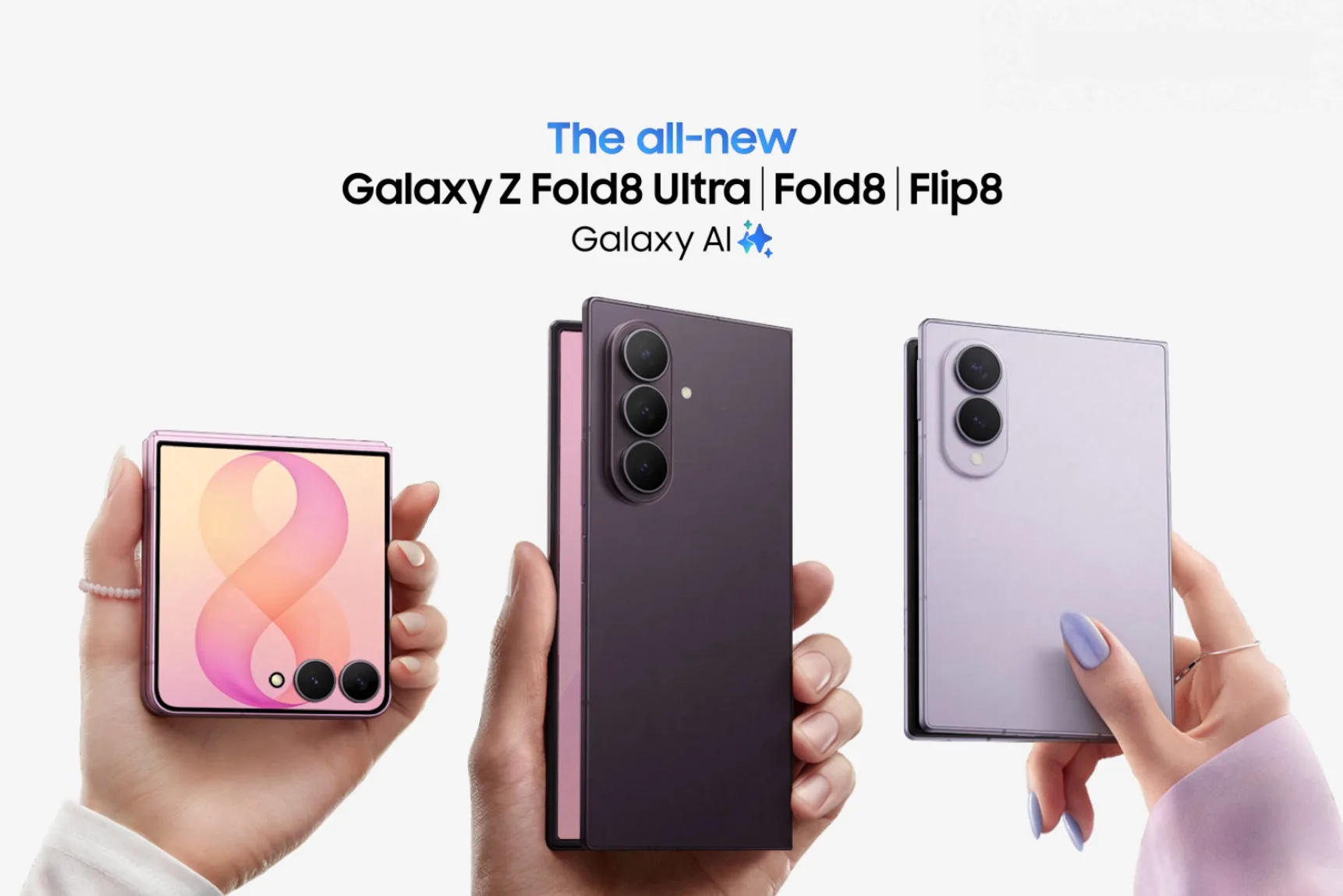
Why Your Phone Needs to Fold Now
The shift in how we use phones is forcing hardware manufacturers to reimagine what a phone even is. Samsung’s response? The Galaxy Z8 series—featuring foldables engineered specifically for how we actually use our devices. “The camera used to be the biggest factor people looked for. Now we need our phones to be pocket cinemas, gaming devices, e-readers, photo editors, and even companions,” says Simon Smith, Head of Brand Marketing at Samsung Electronics New Zealand.
The Bottom Line
We’re not just scrolling anymore, we’re living. Our phones are our dating coaches, our therapists, our fitness trackers, our ghost detectors, and our community activists all rolled into one. We’re spending over a week per month inside these devices, and the apps we’re choosing tell a far more honest story about modern Kiwi life than any marketing campaign ever could.
The real question isn’t whether we’re addicted to our phones. It’s whether phones have become an essential part of how we address genuine human needs, connection, companionship, and purpose. And honestly? That’s worth thinking about.