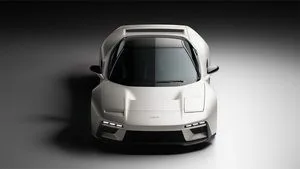
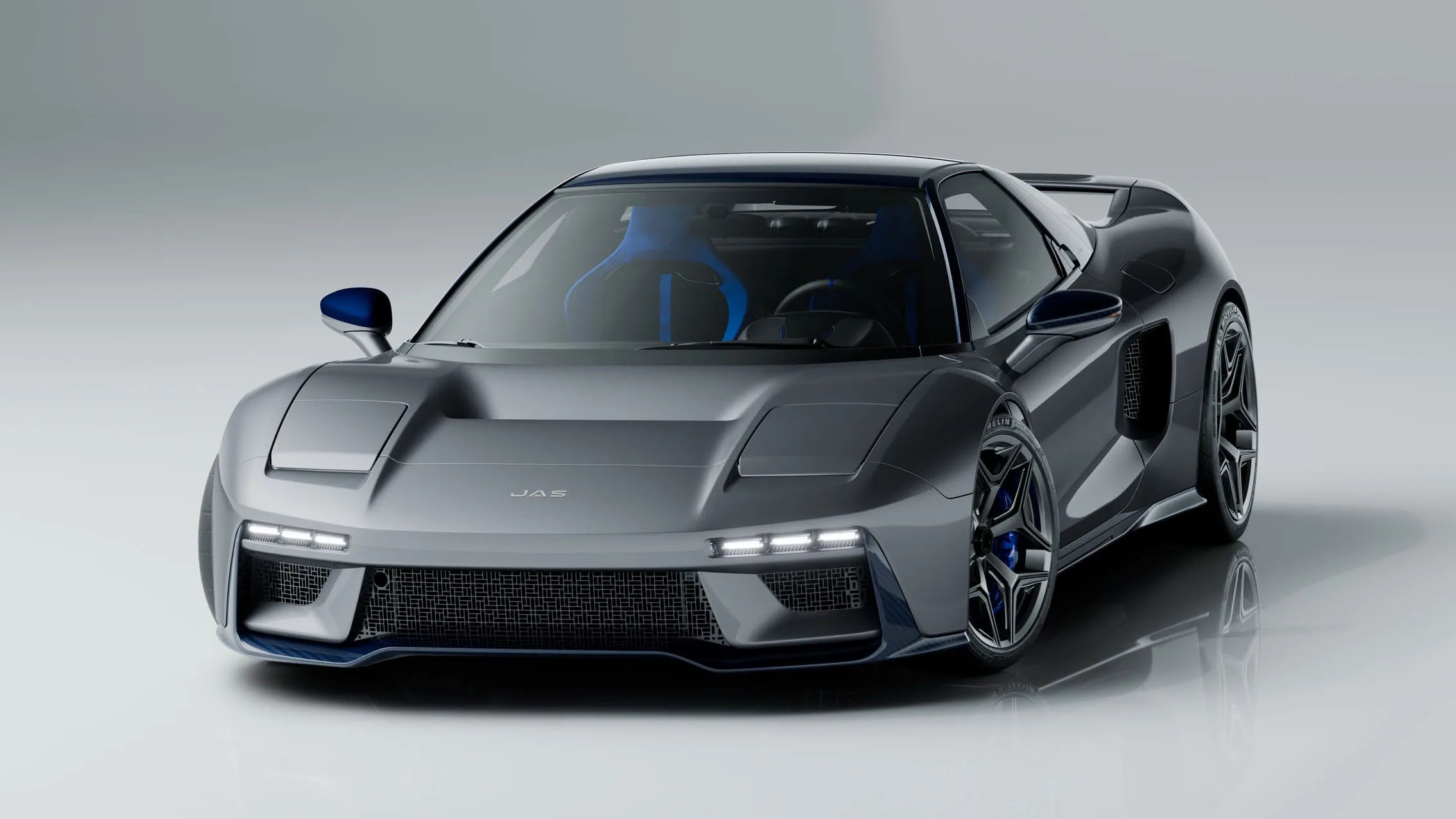
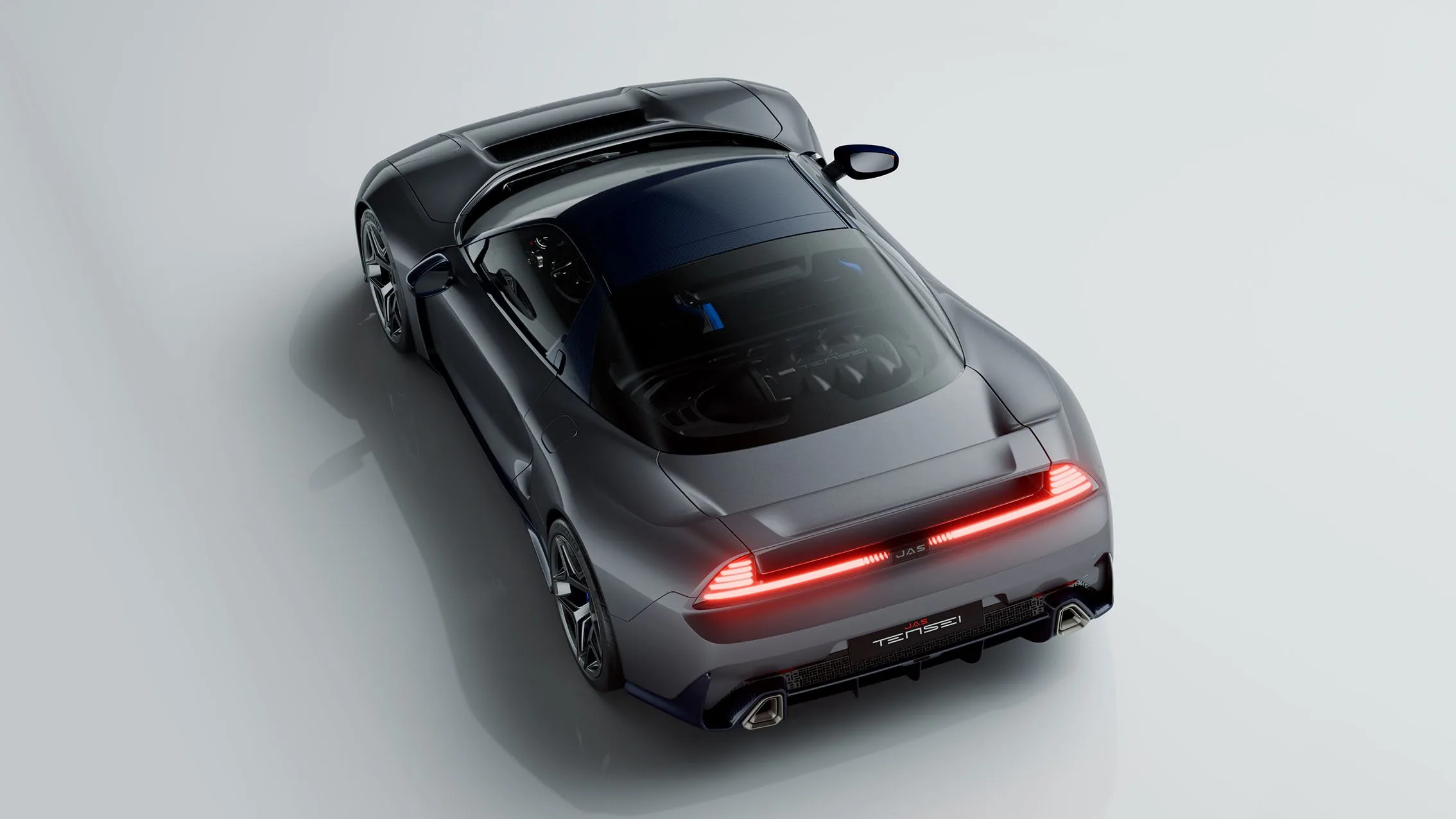
Italian Honda racing team JAS Motorsport and Pininfarina have revealed the Tensei, a rebuilt 1990 NSX with carbon bodywork, a 3.5-litre V6 built by Judd and a run of just 35 cars.
Reimagined Porsche 911s are everywhere these days, so it’s good to see the restomod treatment land on a different icon. JAS Motorsport and Pininfarina have now fully revealed the Tensei. It’s a rebuilt first gen Honda NSX with a carbon body, a much stronger V6 and a six speed manual.
The car comes from people who know their Hondas. JAS is an Italian racing team that has run Honda programmes for nearly 30 years. It brought in Pininfarina for the design and British engine specialist Judd Power for the drivetrain.
A Stiffer Start Point
Each car begins as an original 1990 NSX, as most restomods do. JAS scans the chassis with laser, then reinforces it with carbon-Kevlar sections on the pillars and centre tunnel. The aim is a structure stiff enough for modern tyres and modern expectations.
The track grows by roughly 170mm at the front and 190mm at the rear. The wheelbase is also about 53mm longer, which cuts the overhangs. Underneath sits a fully adjustable suspension with billet-machined aluminium wishbones, a multilink rear end and four way adjustable KW dampers. There’s even a front lift system for kerbs and driveways.
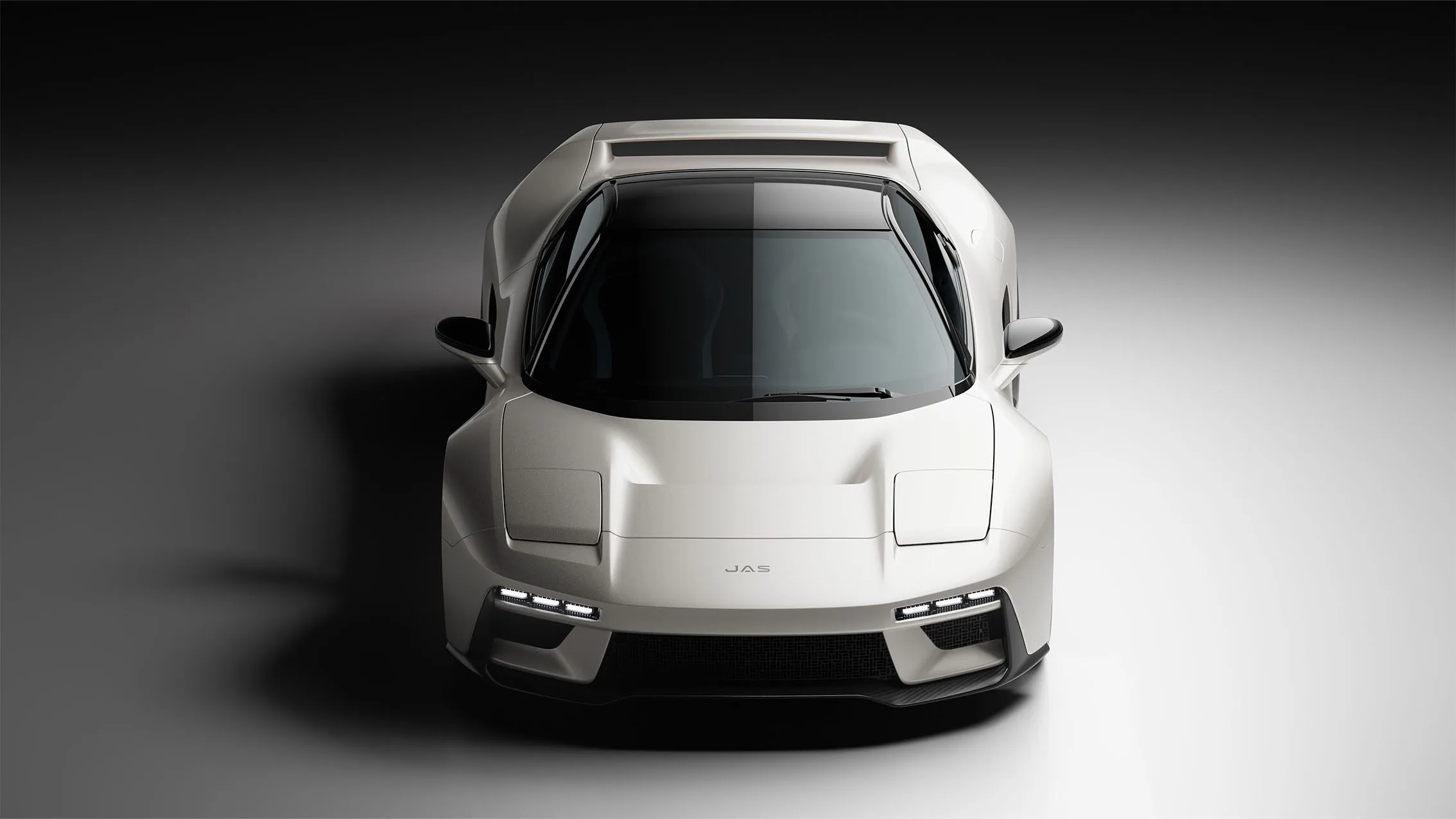
Pininfarina has kept the NSX’s outline but replaced its late-1980s sharp edges with softer, more rounded surfaces. According to the design house, it wanted a car that is instantly recognisable as an NSX but still entirely new. Pure nostalgia bait, love it.
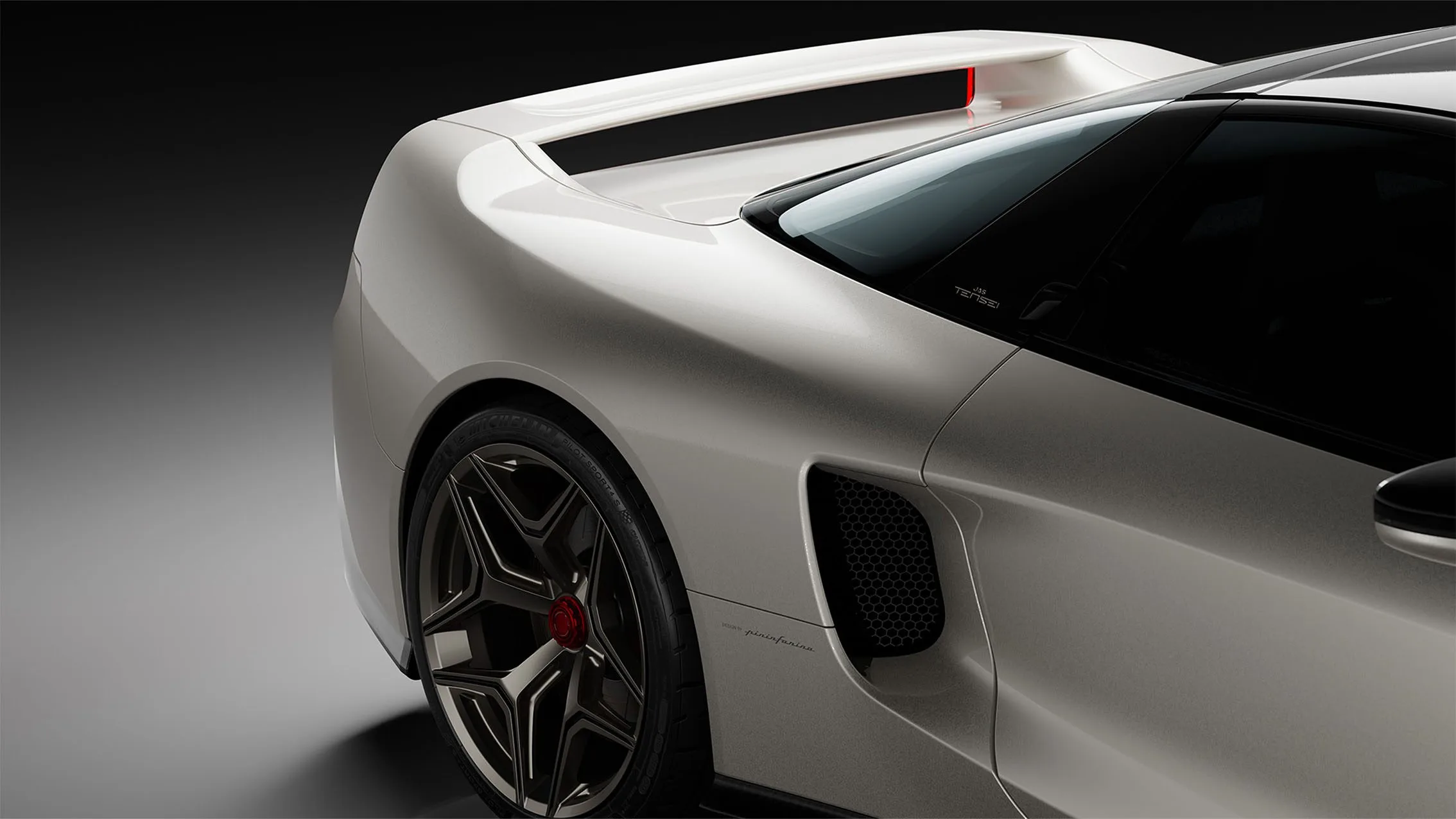
The familiar details are still there in updated form. The rear wing returns in a new shape, and the side ducts are deeper. Best of all, the pop-up headlights survive. They now use smaller LED units on a titanium mechanism.
Judd Takes On the V6
This is where things get serious. Judd has built racing engines for Formula 1 and IndyCar, among other series. It started with Honda’s 3.0-litre C30A V6 and enlarged it to 3.5 litres.
In factory form, the engine made 200kW and revved to 8,000rpm. Judd’s version is still naturally aspirated, and thanks to a new crankshaft, new camshafts and titanium valves, it now makes 320kW and revs to 8,500rpm. Now we’re talking.
There’s one catch for purists: VTEC didn’t make the cut. To make up for it, the engine gets an Inconel exhaust and a six-speed manual with a Torsen limited-slip differential. The car runs Brembo CCM-R carbon-ceramic brakes behind centre-lock wheels (19-inch front, 20-inch rear) wearing Pirelli tyres.
Cabin and Production
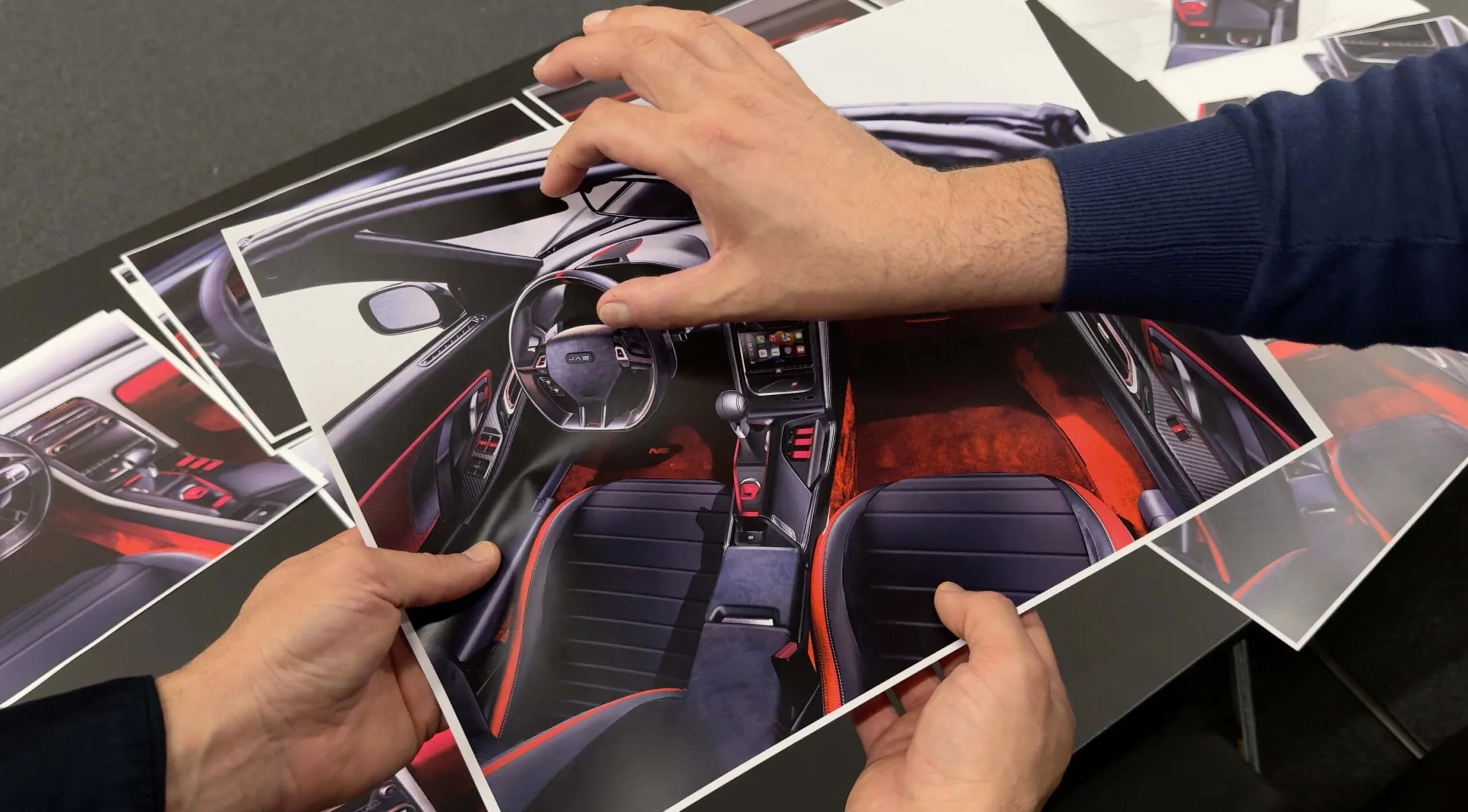
JAS says an F-16 fighter jet inspired the cockpit design. That’s a lofty comparison, but the materials are a clear step up from early-1990s Honda plastics. The cabin gets exposed carbon, full-grain leather, Alcantara, new seats and a simplified steering wheel.
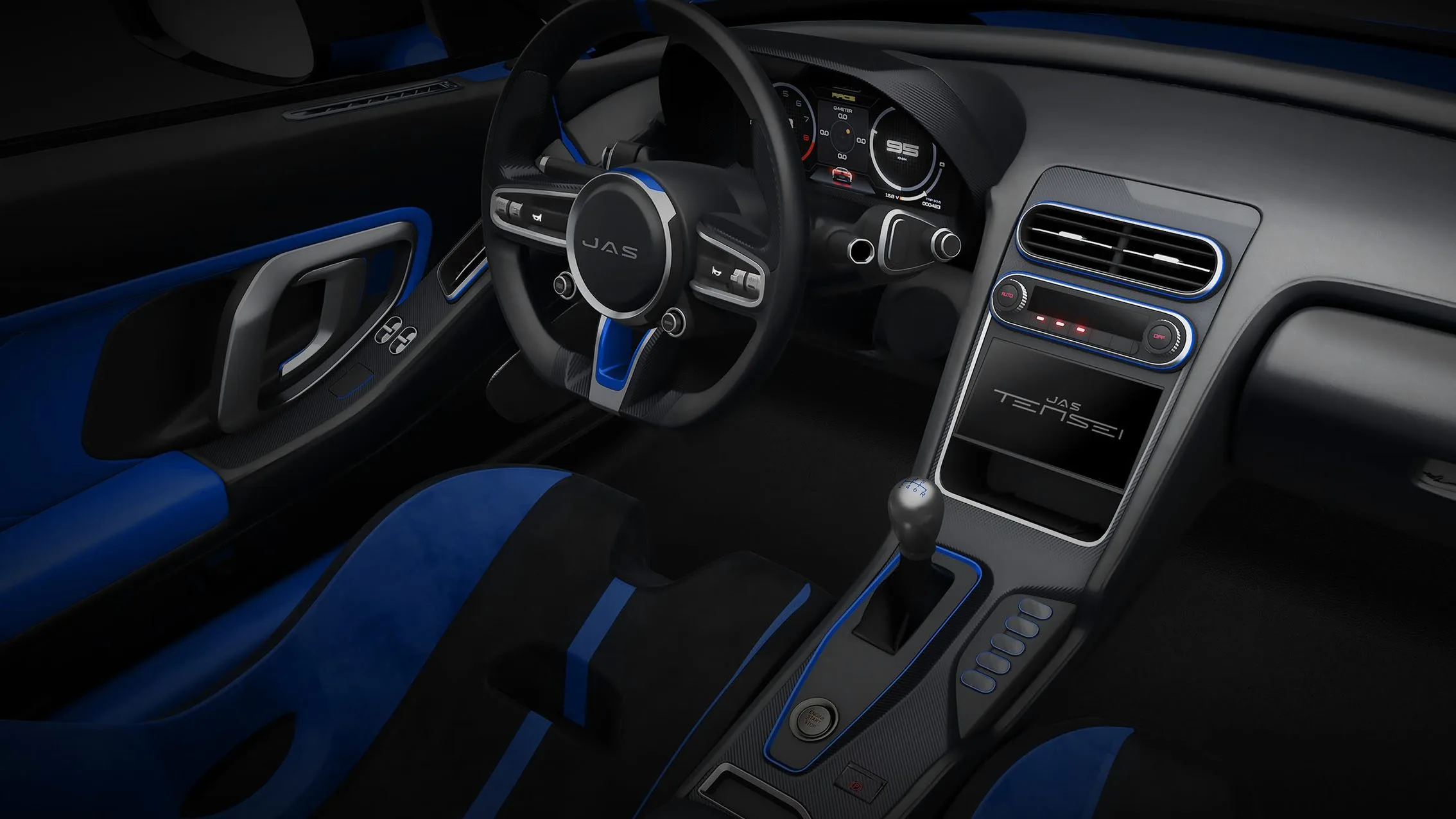
Only 35 cars will be built, and each will be specified to its buyer’s taste. Neither company has announced a price. The Tensei is interesting for maintaining the NSX formula alive: not being about power figures, but character and balance. It gives the NSX a stiffer chassis, a high-revving engine with no turbos and a manual gearbox. For a car first sold on balance and usability, that seems the right way to keep the legend alive and kicking!