
In the theatre of space, the spotlight has long been on brute force, bigger rockets, bolder missions, and sprawling constellations. But in a plot twist worthy of a sci-fi thriller, China appears to have just won a major battle with the celestial equivalent of a nightlight. According to a recent report, Chinese scientists have used a laser with the feeble power of just two watts to transmit data from a satellite 36,000 kilometres away, not only succeeding but allegedly outperforming SpaceX’s formidable Starlink network. It’s a stunning development that suggests the next space race might be won not with a bang, but with a whisper-faint beam of light.
This achievement reads like a classic David vs. Goliath tale, if David were floating in geostationary orbit and Goliath was a swarm of thousands of low-orbit satellites. The Chinese satellite, operating from an altitude more than 60 times higher than Starlink’s network, managed to push data at an incredible 1 gigabit per second (Gbps). To put that in perspective, the source claims this is five times faster than Starlink’s capabilities of “a few megabits per second”. Doing so with a 2-watt laser over such a vast distance is more than just innovative; it’s ingenious.
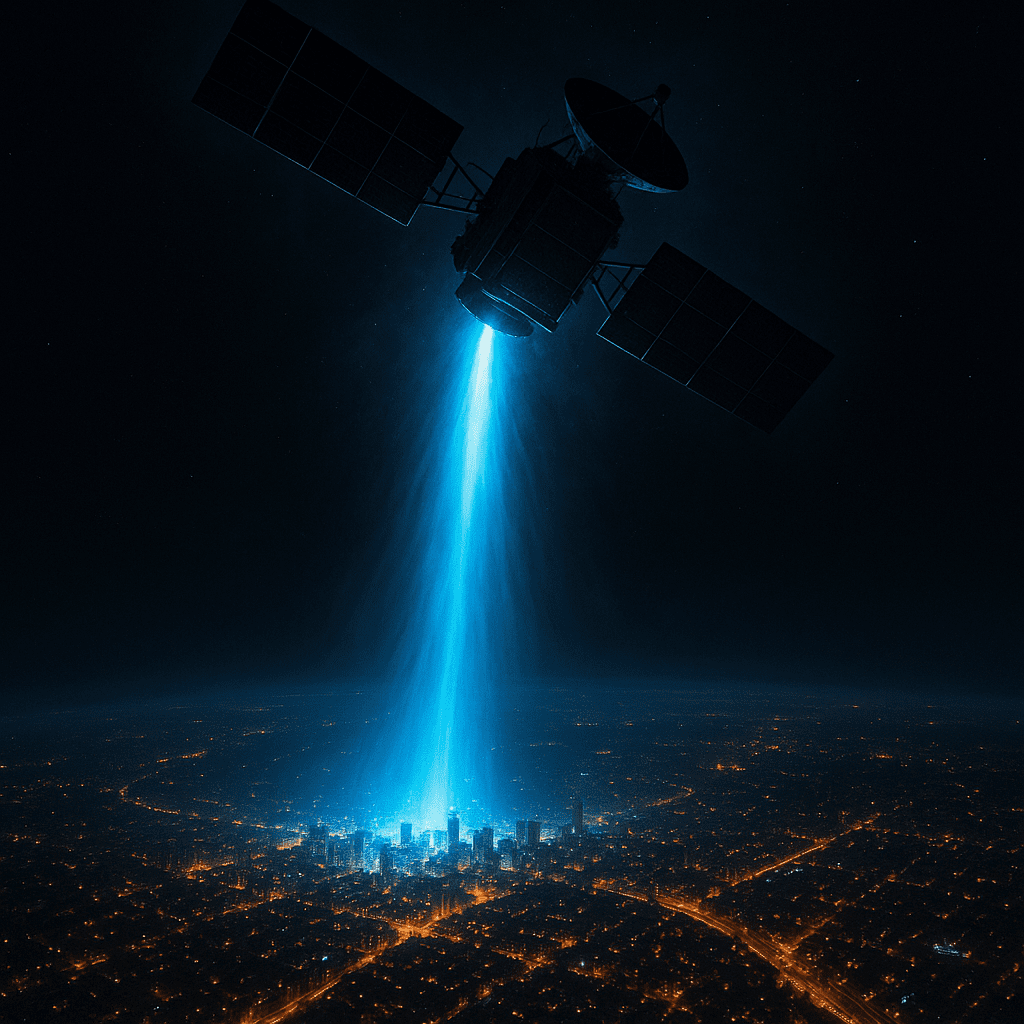
The secret to this seemingly impossible feat lies in cracking a problem that has long plagued laser communications: Earth’s chaotic and turbulent atmosphere. The Chinese scientists reportedly developed a sophisticated “AO-MDR synergy technique” to cut through the atmospheric distortion, turning a fundamental weakness of laser-based systems into a triumphant strength. This breakthrough is a decisive turning point, placing China at the forefront of a potential revolution in how we connect our world.
This success challenges the prevailing wisdom of satellite internet, which has been dominated by the Starlink model of launching thousands of satellites into Low Earth Orbit (LEO) to ensure coverage. The Chinese approach suggests a different path—one with fewer, lighter, and more powerful satellites in higher orbits. This “less is more” strategy could have profound benefits, including a significant reduction in the growing hazard of space debris and a more sustainable model than blanketing the skies with thousands of satellites. For consumers on the ground, this could eventually translate to quicker and more reliable internet in rural and remote areas, along with improved connectivity during global crises.
Ultimately, this is far more than a technical achievement; it’s a powerful geopolitical statement. China’s success sends a “strong message to the international community regarding its emerging leadership role in space technology” and could play a role in shifting the global balance of power for the next generation of digital infrastructure. As governments and corporations race to stake their claim in the cosmos, this breakthrough serves as a clear reminder that innovation rewards those who dare to defy boundaries.