Electric vehicles (EVs) are not just transforming your commute—they’re sparking innovation in fire safety (pun intended). Enter aerogels: the featherweight champions of insulation that are making EV fires, well, less fiery. With the aerogels market set to exceed $1 billion in 2025 (according to IDTechEX) thanks to their unique properties like low thermal conductivity, fire retardancy, and lightweight design, these materials are cruising toward dominance in the EV sector.
Why Aerogels Are the Fire Brigade Your EV Needs
If you haven’t heard of aerogels, think of them as the “foam, but make it sci-fi” of materials. These ultra-thin, lightweight, hydrophobic substances are unmatched when it comes to thermal insulation and fireproofing. While aerogels have long been used in industrial settings like liquefied natural gas (LNG) and energy infrastructure, their role in EVs is turning heads in the materials world. Their ability to prevent thermal runaway—the catastrophic chain reaction of overheating in EV battery packs—is their star turn. This isn’t just fireproofing; it’s redefining how EV safety is engineered.
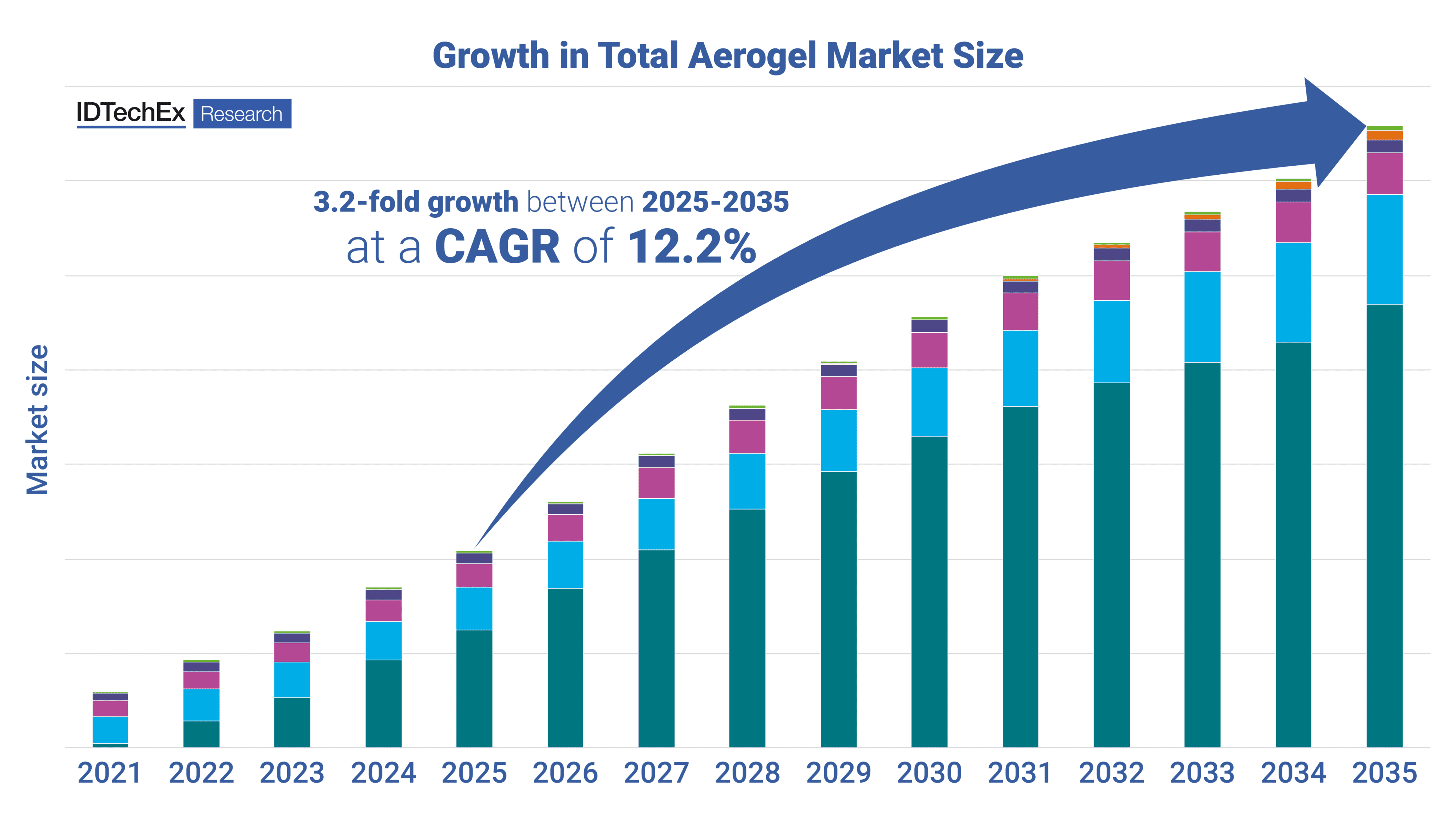
Aspen Aerogels, a market leader, has reaped the benefits. Their revenue grew 90% in FY2024, largely due to their EV thermal barrier segment, which nearly tripled year-over-year. In fact, the aerogels market for EVs grew twentyfold between 2021 and 2024. Meanwhile, automakers like BYD, CATL, GM, Toyota, and Audi are all racing to incorporate aerogels into their battery designs, making this the dominant application for the material over the next decade .
What Sets Aerogels Apart from the Pack?
What makes aerogels worth the hype? For starters, their extraordinarily low thermal conductivity and virtually weightless composition provides fire protection without adding significant mass. And with polymer aerogels now entering the arena, the potential applications stretch even further. These variants, still in their early stages, are ultralight and mechanically durable, creating opportunities for future sectors like aerospace and advanced aircraft (hello, eVTOLs!).
Globally, production capacity is ramping up, with China accounting for a staggering 97% of manufacturing. As demand for EVs and other high-performance applications soars, manufacturers like Aspen Aerogels, Blueshift, and LG Chem are rising to the challenge. However, the high cost of production remains a speed bump; aerogels will need to prove they can play in the budget-friendly lane while still delivering top-tier performance.
From Foam to Fuel Efficiency
Here’s the kicker: as standards evolve to prioritise EV fire protection and safety, aerogels aren’t just an add-on—they’re set to be a necessity. Regulations that address thermal runaway, fire propagation, and passenger escape times are pushing automakers to adopt revolutionary materials like aerogels. Combined with a growth forecast of 3.2-fold between 2025 and 2035 at a CAGR of 12.2%, aerogels are poised to reshape the safety protocols of EVs, all without compromising their sleek aesthetics.
But aerogels’ potential doesn’t stop there. Their fire suppression chops, combined with soundproofing and energy insulation capabilities, are opening doors beyond EVs to industries like oil & gas, construction, and even daylighting and window applications. It’s like having a Swiss Army knife made out of foam—only cooler (literally) .
A Final Thought: The Aerogel Revolution Is Just Beginning
Despite their current high production costs, the aerogels industry seems determined to make them the fire-and-ice heroes of high-performance materials. Companies and researchers alike are working to lower costs, increase scalability, and innovate ways to outpace competing insulation options. The next decade will likely be one of explosive (but controlled) growth, with aerogels lighting the way. This market is just getting warmed up, but rest assured, it’s flame-resistant.