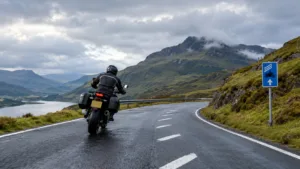
Fancy a ride through some of England’s finest twisty roads? Derbyshire has plenty to offer. But those glorious bends can turn from grin-inducing to grip-testing in a heartbeat. Now, a pioneering road-marking system is aiming to make them safer for riders, without taking the fun out of the ride.
There’s something special about a great motorcycle road. A sequence of sweeping bends, a decent stretch of tarmac and a motorcycle that feels like an extension of your own body. It’s the sort of riding that reminds you why two wheels can be so addictive.
But there’s a catch. A bend that looks perfectly manageable on approach can quickly become a rather different proposition if you enter too fast, choose the wrong road position or discover that your braking point arrived several seconds ago. That’s where Derbyshire County Council hopes a new approach to motorcycle safety can make a difference.
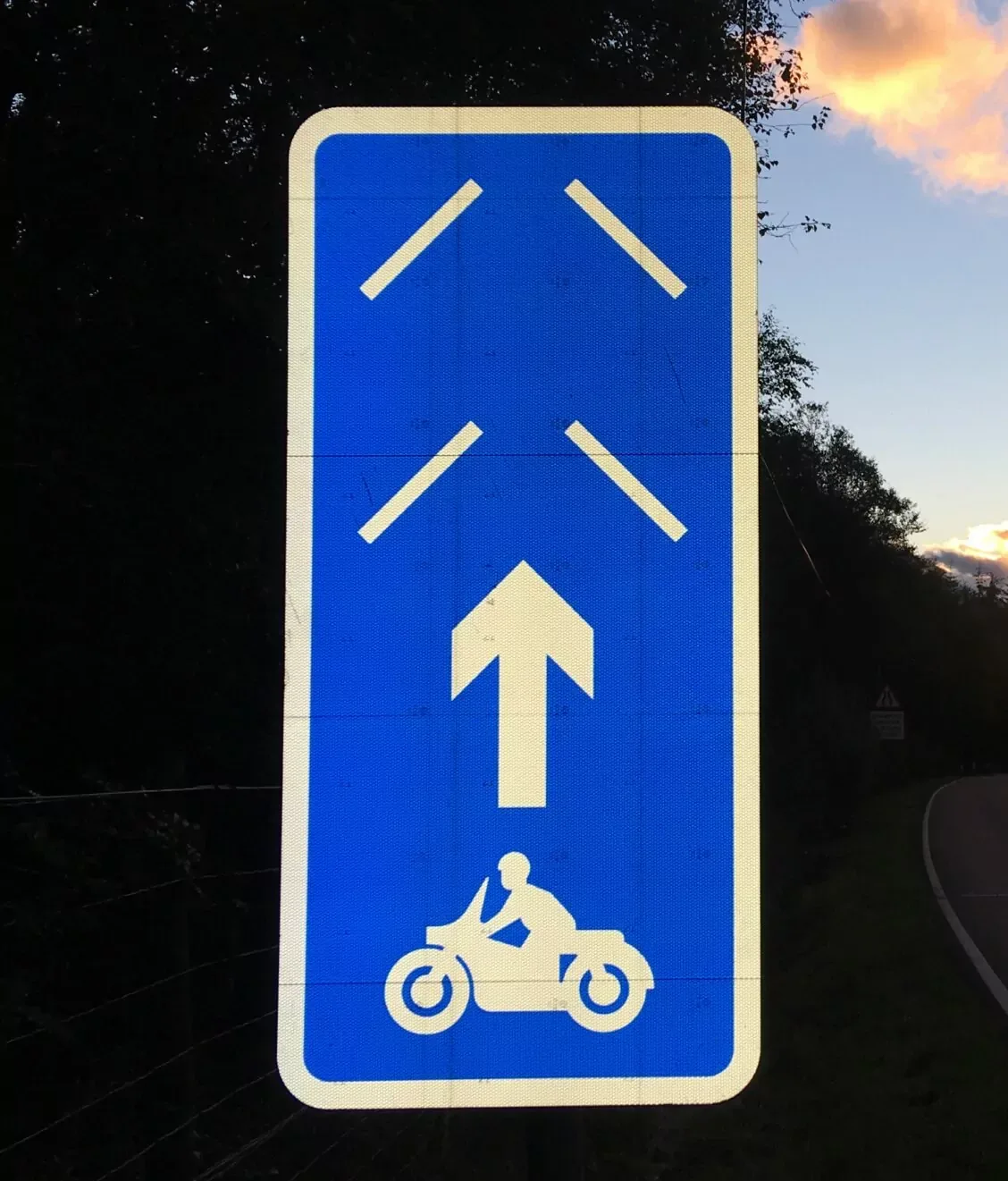
Derbyshire has become the first county in England to introduce a pioneering system of motorcycle safety signs and road markings designed to help riders negotiate challenging bends more safely. The system, known as PRIME, has already been used in Scotland and Wales and is now being introduced on some of Derbyshire’s best-known motorcycle routes.
And no, it doesn’t involve painting enormous arrows on the road or asking bikers to ride around at walking pace, instead, it uses visual cues to help riders make better decisions before they reach the bend.
PRIME Time for Motorcycle Safety
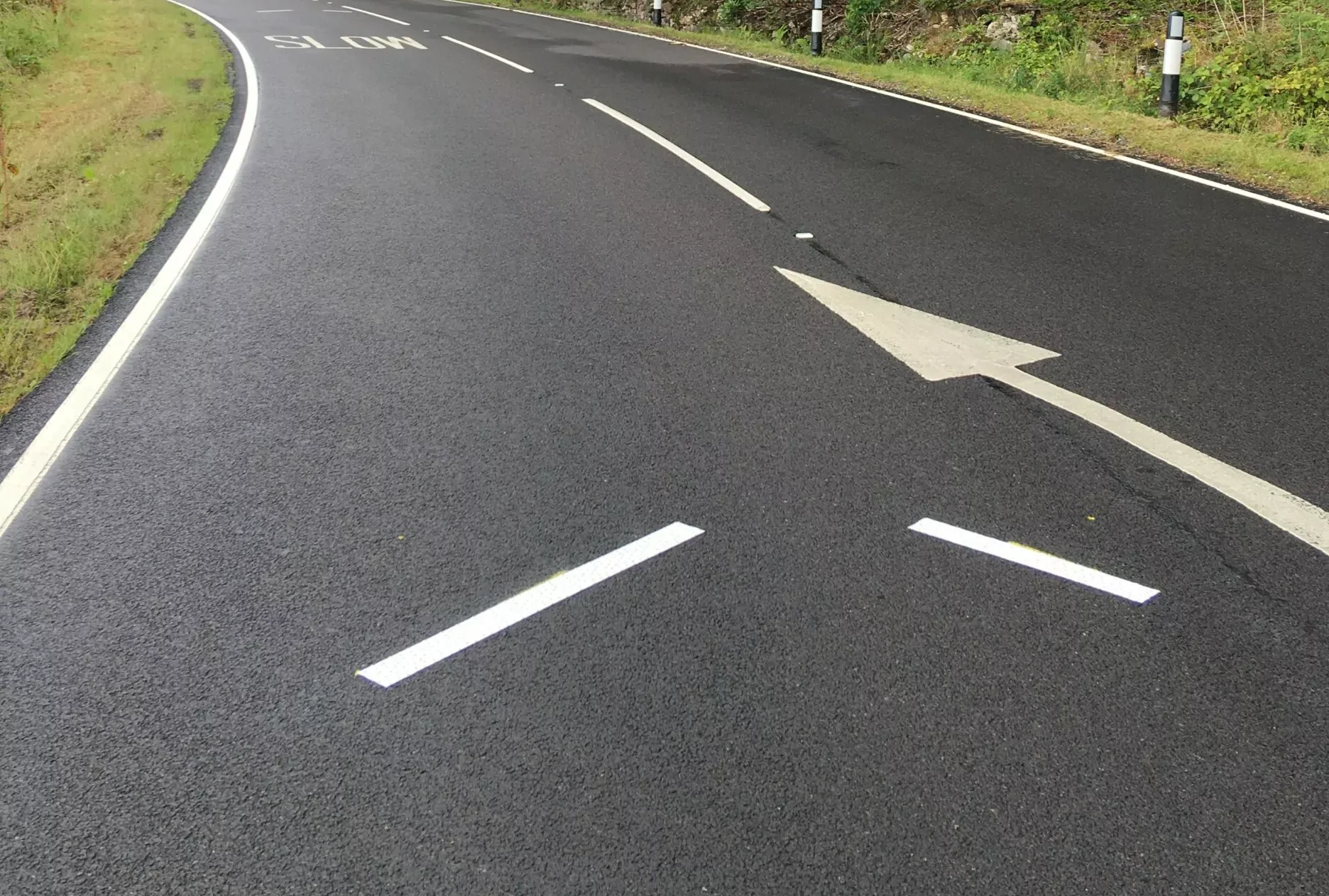
PRIME stands for Perceptual Rider Information for Maximising Expertise and Enjoyment. The system combines specialist signs with a series of road markings known as ‘gateways’.
The idea is relatively straightforward. As riders approach a challenging bend, the markings provide visual guidance, encouraging them to travel through the gaps between them. This helps riders assess their speed and road position before entering the corner, reducing the need to brake while negotiating it. In other words, the aim is to encourage smoother, more considered riding before things get complicated.
For experienced motorcyclists, that might sound like common sense. Look ahead, position yourself correctly, get your speed sorted and avoid doing anything dramatic halfway around a corner. But even experienced riders can misjudge a bend, particularly on unfamiliar roads, where changing surfaces, restricted visibility and unexpected tightening curves can catch people out.
The markings are designed to give riders another visual reference point, helping them make those crucial decisions earlier. The system was developed through motorcycle safety research and first introduced on trunk roads in Scotland. It was subsequently installed at four locations in North and Mid Wales, with research indicating that the approach can positively influence rider behaviour. Now, England is getting its first county-wide application.
Where Will You Find Them?
The first PRIME markings have been installed on the B6015 Woodhead Road at Devil’s Elbow, near Glossop, and on the A6 between Buxton and Bakewell. These are just the beginning. Further installations are planned for approved locations across Derbyshire, including some roads familiar to riders who enjoy exploring the Peak District and surrounding countryside.
The planned rollout includes: A57 Snake Pass, A54 Macclesfield Main Road, A53 Axe Edge, B6015 Woodhead Road, A623 Peak Forest, A6 between Buxton and Bakewell, B5035 Middleton-by-Wirksworth. The locations weren’t selected simply because they look good on a motorcycle-tour itinerary. Derbyshire County Council analysed motorcycle collision data from 2015 to 2024, identifying clusters of crashes on rural roads and paying particular attention to incidents where bends or loss of control appeared to be contributing factors.
That makes this a targeted safety initiative rather than a case of throwing a few road markings at the problem and hoping for the best. The programme is being delivered in partnership with Derbyshire Constabulary and National Highways, with special authorisation granted by the UK’s Department for Transport to use the markings at approved locations.
The Numbers Suggest This Could Be a Big Deal
PRIME isn’t simply a clever-looking set of road markings with a catchy acronym. Research carried out in Scotland has produced some encouraging results, suggesting the system could make a measurable difference to motorcycle safety.
During the initial trial between 2020 and 2022, researchers observed more than 32,000 motorcyclists across 22 trial sites and two comparison sites. The findings showed statistically significant reductions in speed at 10 trial locations, improvements in riders’ positioning at the final approach markings at 15 sites, and reduced braking at nine locations. Researchers also recorded increased use of the markings at 18 of the 22 trial sites.
The subsequent phase, running from 2023 to 2025, expanded the research to 35 sites and analysed more than 47,000 motorcycle movements. The results were even more encouraging. According to Transport Scotland, annual average motorcycle injury collisions fell by 61% across the trial sites, while collisions involving death or serious injury dropped by 46%. The research also found evidence that improvements in rider behaviour could persist over time.
Of course, these are findings from the Scottish programme, not a guarantee that every bend equipped with PRIME markings will suddenly become accident-proof. But they offer a compelling reason to investigate whether the same approach can deliver similar benefits elsewhere. And that’s precisely what Derbyshire intends to do.
Big Brother Is Watching — For a Good Reason
Derbyshire Constabulary plans to use existing roadside camera equipment to observe rider behaviour before and after the markings are installed at selected locations. Researchers will examine factors including speed, road positioning and braking behaviour to establish whether the markings influence how motorcyclists approach and negotiate bends. The results will help determine whether the Scottish findings can be replicated on Derbyshire’s roads.
The aim isn’t simply to install the markings and declare victory. The authorities want evidence that they work in local conditions before considering any wider rollout. The programme also honours the work of the late Professor Alex Stedmon, who played a central role in developing PRIME and demonstrating how visual cues could influence rider behaviour.
For Derbyshire, the project has added significance because Professor Stedmon lived in the county whose roads will now benefit from his research. It’s a reminder that sometimes the most useful road-safety innovations aren’t necessarily expensive new technologies or complicated electronic systems. Sometimes, a better understanding of how people see and respond to the road can make a meaningful difference.
Could New Zealand Learn Something From This?
Now there’s a question worth asking. New Zealand has no shortage of spectacular motorcycle roads. From the Coromandel’s twisting coastal routes to the sweeping roads around Central Otago, our landscapes offer the sort of riding that attracts motorcyclists from home and overseas.
But beautiful scenery doesn’t necessarily make for forgiving roads. Blind corners, changing road surfaces, loose gravel, roadside obstacles and the occasional campervan occupying more of the road than you’d ideally like can turn a relaxing ride into a serious challenge.
And while PRIME has been developed specifically around the approach to demanding bends, the underlying principle is relevant well beyond the UK: help riders make better decisions before they reach the point where a mistake becomes difficult to correct.
That doesn’t mean New Zealand should automatically copy and paste the Derbyshire scheme onto every popular motorcycle route. Any local application would need to consider our road geometry, riding conditions, existing markings and the evidence supporting its effectiveness in New Zealand.
However, with the Scottish trials producing encouraging results and Derbyshire now beginning its own evaluation, PRIME offers a practical example of how road design can potentially support safer riding. It’s also a reminder that motorcycle safety isn’t solely about rider training, enforcement or protective equipment. The road environment itself can play a role.
Making the Ride Safer Without Taking Away the Fun
Let’s be honest: nobody buys a motorcycle because they dream of spending Sunday afternoon following a council-approved set of painted lines. The appeal is freedom, enjoyment and the experience of riding a great road. But safety and enjoyment don’t have to be opposing forces.
If PRIME can help riders judge their speed earlier, choose a better position and negotiate challenging corners more smoothly, it could deliver exactly the sort of improvement that matters: helping people enjoy their rides while reducing the risk of serious consequences.
The markings won’t replace experience, training or common sense. They won’t eliminate the need to adjust speed for visibility, weather, road conditions or available grip. And they certainly won’t make it sensible to charge into a blind bend simply because the road has been given a fresh coat of paint. What they could do is provide another useful tool in a motorcyclist’s decision-making process.
Derbyshire’s first installations are now in place, with more approved locations to follow as the programme progresses. The results will determine whether the system delivers the same encouraging outcomes seen in Scotland.
For now, it’s an intriguing development in motorcycle safety — and one that deserves attention from road authorities well beyond England. Because the best motorcycle ride isn’t necessarily the one where you take every corner fastest. It’s the one where you get home, park the bike, take off your helmet and start planning the next ride.