Thursday, 30 July 2026. Welcome back to another instalment of Cardle of the Day, the series where we play through the daily puzzle at Cardle and then spend a little time with whatever car the algorithm has decided to throw at us. Today it threw something rather special.
How Cardle works
If you haven’t played before, the premise is simple and quietly addictive. Each day, one car is hidden behind five progressively less-cropped photographs. Clue one is almost abstract — a sliver of bodywork, a fragment of trim, a hint of a curve that could belong to almost anything.
By clue five, enough of the car is visible to make a confident guess. You can skip clues you find too ambiguous, or commit early if something clicks. One car, five chances, no second chances once the day rolls over.
How it went today

Today’s puzzle was a patient one. The opening clues offered little to work with, showing clean lines and a colour that immediately harks to something very vintage, or very modern. A few of the other clues led to what were the actual identifying features of this incredible machine, one that was easy for me considering how much I like French quirkiness. It was, indeed, the SM, from Citroen.
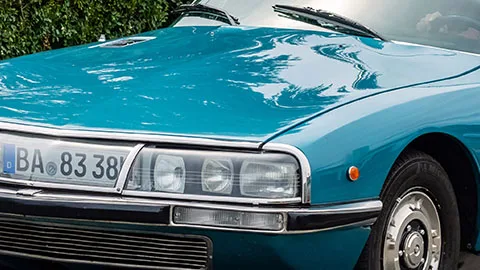
In hindsight, perhaps we should have spotted it sooner. The SM is like nothing else on earth, which paradoxically makes it hard to identify from a fragment, as there’s no familiar reference point to anchor the eye.
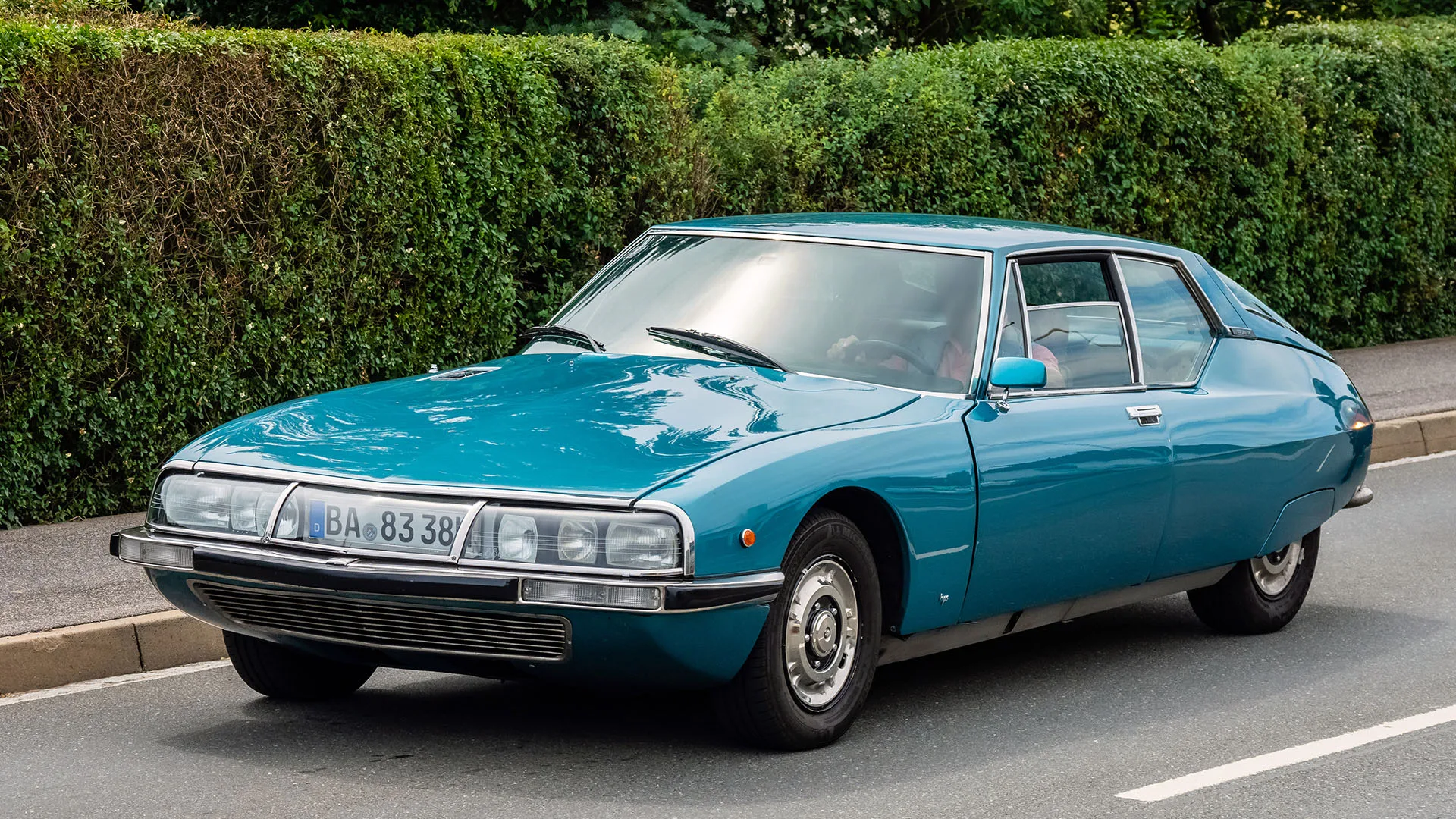
Oui, oui
The SM was produced between 1970 and 1975, a collaboration between Citroen and Maserati following Citroen’s acquisition of the Italian manufacturer in 1968. Maserati supplied the engine, a 2.7-litre V6 derived from the Maserati Merak unit, while Citroen contributed everything else, leading to a genuinely extraordinary vehicle: the hydropneumatic self-levelling suspension, the speed sensitive power steering, and the single spoke steering wheel that became one of the most recognisable interiors of the era.
The SM used Citroen’s DIRAVI power steering system, which centred the wheel automatically and weighted up with speed, a concept that felt futuristic in 1970 and still feels clever now. Approximately 13,000 SMs were sold in the United States before emissions and safety regulations, combined with the 1973 oil crisis, effectively ended its American run. The car went ahead to win the 1971 European Car of the Year award, beating a strong field at a time when European motoring journalism took that prize very seriously.
The SM occupied an unusual space in the market, with grand touring ambitions, avant-garde engineering, and a price point that put it within reach of many buyers, even though it was never a volume seller. Sad.
Oddity is interesting
What makes the SM endure in the conversation is precisely what made it difficult in period: it was too strange to be comfortable, too clever to be mistaken. The hydropneumatic suspension that bewildered mechanics in 1972 is now the thing collectors specifically seek out. The Maserati V6, temperamental as it could be, gives the car a sound and a character that no modern replacement could replicate. It remains one of those cars that is full of character and a great experience. See you tomorrow!