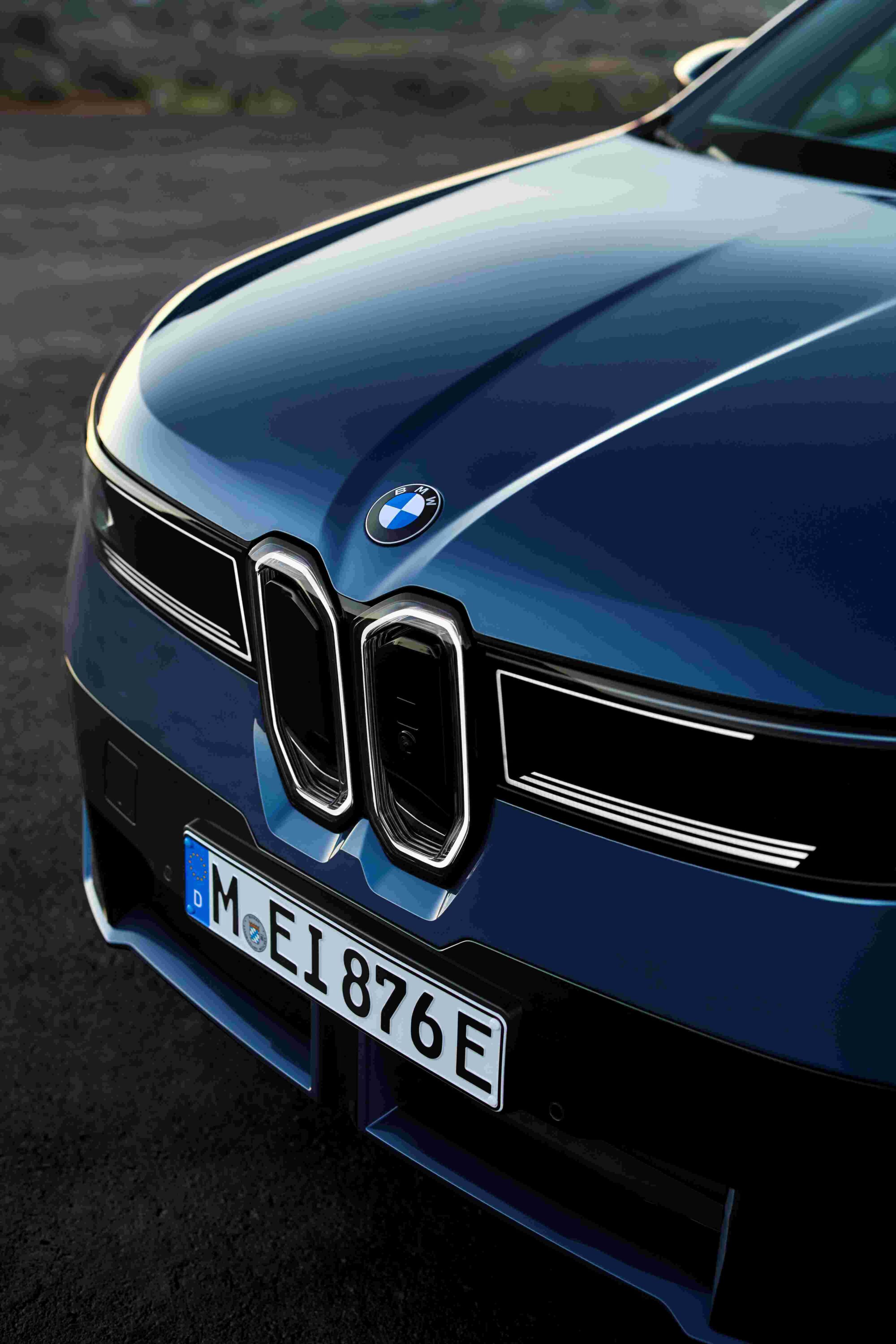
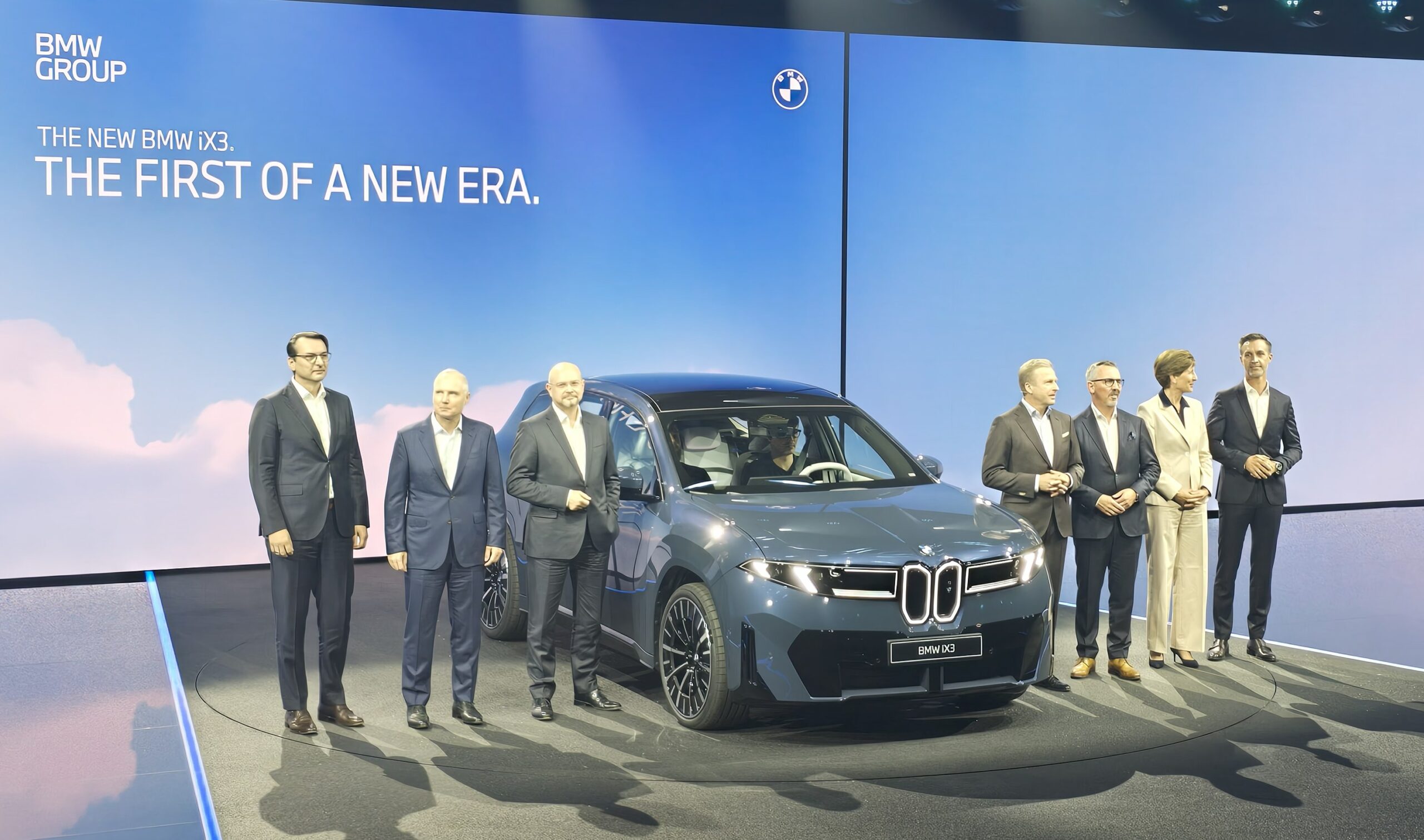
Although we’re in Munich for the all-new iX3 global reveal, it’s fair to say that BMW is not just launching a new car; it’s launching a revolution. Dubbed the Neue Klasse (New Class), this is a ground-up reinvention of the Bavarian brand, marking what one of its lead architects calls the “start of a new era” for the company. Even so, at the heart of this transformation is the iX3, a model poised to bring this futuristic vision to the brand’s core segment.
In an intimate interview, Mike Reichelt, Head of BMW Neue Klasse, explained that this isn’t merely a model update but a fundamental shift born out of necessity. He says, it’s the “biggest investment in the history of BMW,” a decision made to secure the brand’s future in a rapidly evolving automotive landscape.
A Necessary Revolution
The seeds of this monumental project were sown in the middle of the 2020 pandemic, a time when BMW realised that incremental development was no longer enough. “If we only make incremental developments, we are not competitive for the future,” Reichelt stated, highlighting the urgency behind the move.
The team concluded that to integrate the necessary breakthrough technologies, they couldn’t simply update the existing portfolio. The technological jump was too significant. This led to the decision to restart from scratch, with every piece of technology “completely restarted on a blank piece of paper”. Reichelt describes it as a “quantum leap” for the company, a step so significant that they are now integrating Neue Klasse technology across the entire 40-model portfolio through 2027.
What is Neue Klasse? More Than an EV Platform
While the Neue Klasse architecture is engineered for fully electric vehicles, calling it just an EV platform would be a disservice. It represents a complete overhaul of BMW’s philosophy, built on several key pillars:
- Next-Level Driving Dynamics: The new electronic architecture and fully-electric powertrain create a car that feels like it “knows what you are trying to do”. A key innovation is a new recuperation system where over 95% of braking is handled by energy recovery, (not physical braking) allowing the car to coast to a complete standstill with a smoothness previously unattainable in automatic vehicles. Reichelt boasts, “combined with the ADAS system, you close your eyes and you can’t say the car has stopped, you can’t feel it. It’s so smooth”.
- Future-Proof Architecture: The design anticipates the fastest-changing technologies, namely batteries and computing power. The battery pack was specifically developed to be independent of the vehicle’s core structure. This means that as battery cell formats and chemistries evolve (e.g., LFP or other technologies), they can be integrated without redesigning the entire car.
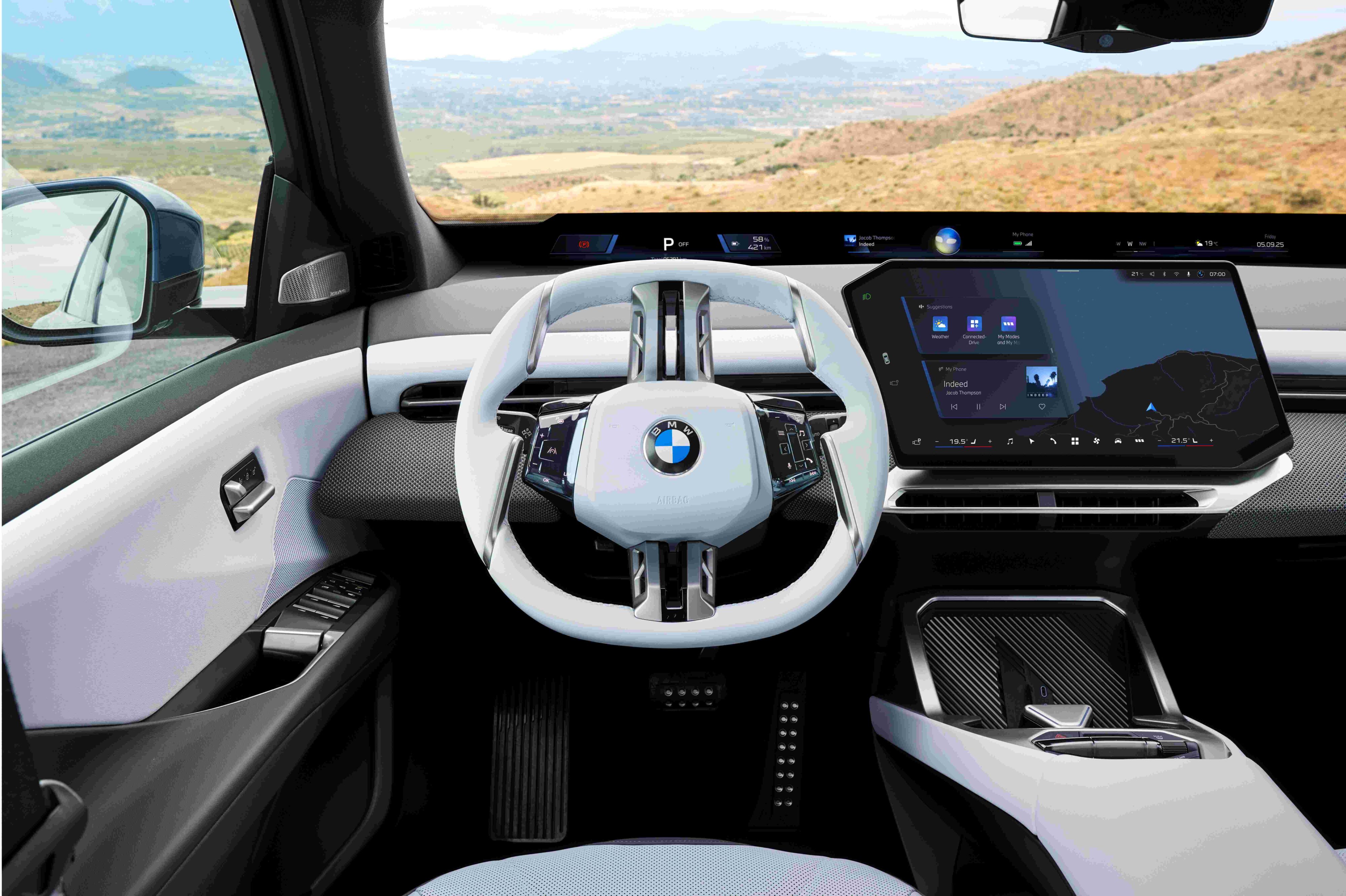
- Advanced Digital Experience: Neue Klasse introduces the BMW Panoramic vision display and a completely new user interface, backed by a massive increase in computing power. This digital ecosystem is designed to be open, with BMW prepared to integrate third-party systems and large language models to meet market-specific needs, such as their partnership with Momenta for the Chinese market.
The iX3 and a Strategic Rollout
The Neue Klasse has debuted with the iX3 SAV but at the reveal we also saw the i3 sedan. The decision to start in the crucial mid-size class was deliberate. “We start in the middle in mid-size class, that’s our core brand it’s also not a niche in the middle of the portfolio,” Reichelt explained. This strategy allows BMW to scale the massive investment across its most important segment before rolling the technology out to other vehicles.
He added that while the Neue Klasse architecture itself is purely electric, its technological DNA, from the design language to the latest digital features, will be shared across the entire BMW lineup, including combustion engine models, by the end of 2027.

Tackling Global Challenges and Ensuring Reliability
BMW is keenly aware of the global landscape, particularly the rapid pace of technological change in China. Rather than a threat, Reichelt sees it as a hub of innovation. “We look at technology and where around the fastest changing,” he says, noting that BMW’s team in China develops “for China, but sometimes also for the world”.
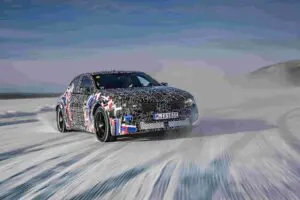
Undertaking such a massive technological leap comes with inherent risks, and Reichelt admits “it was not easy”. Saying that when you are on the edge of technology sometimes things go wrong. However, to guarantee the quality and reliability BMW is known for, the company has put the new technology through its paces. “We have done millions of kilometres tests drives and multiple prototypes all around the world,” he said. The key is to “find out the problems early and fast so that you have time to solve it”.
He offered assurance to future customers, stating, “we are here today, we are ready to launch and ready to roll out. We guarantee quality from the first car for our customers, that is the history and legacy of BMW, the promise of quality and durability. So I think Yes, we are ready”.
Internally, BMW compares the significance of the Neue Klasse to the legendary 1962 BMW 1500 ‘Neue Klasse’, the car that saved the company and defined its modern identity. It was a promise then, and it’s a promise now: to make a “big step” that redefines the future of driving.