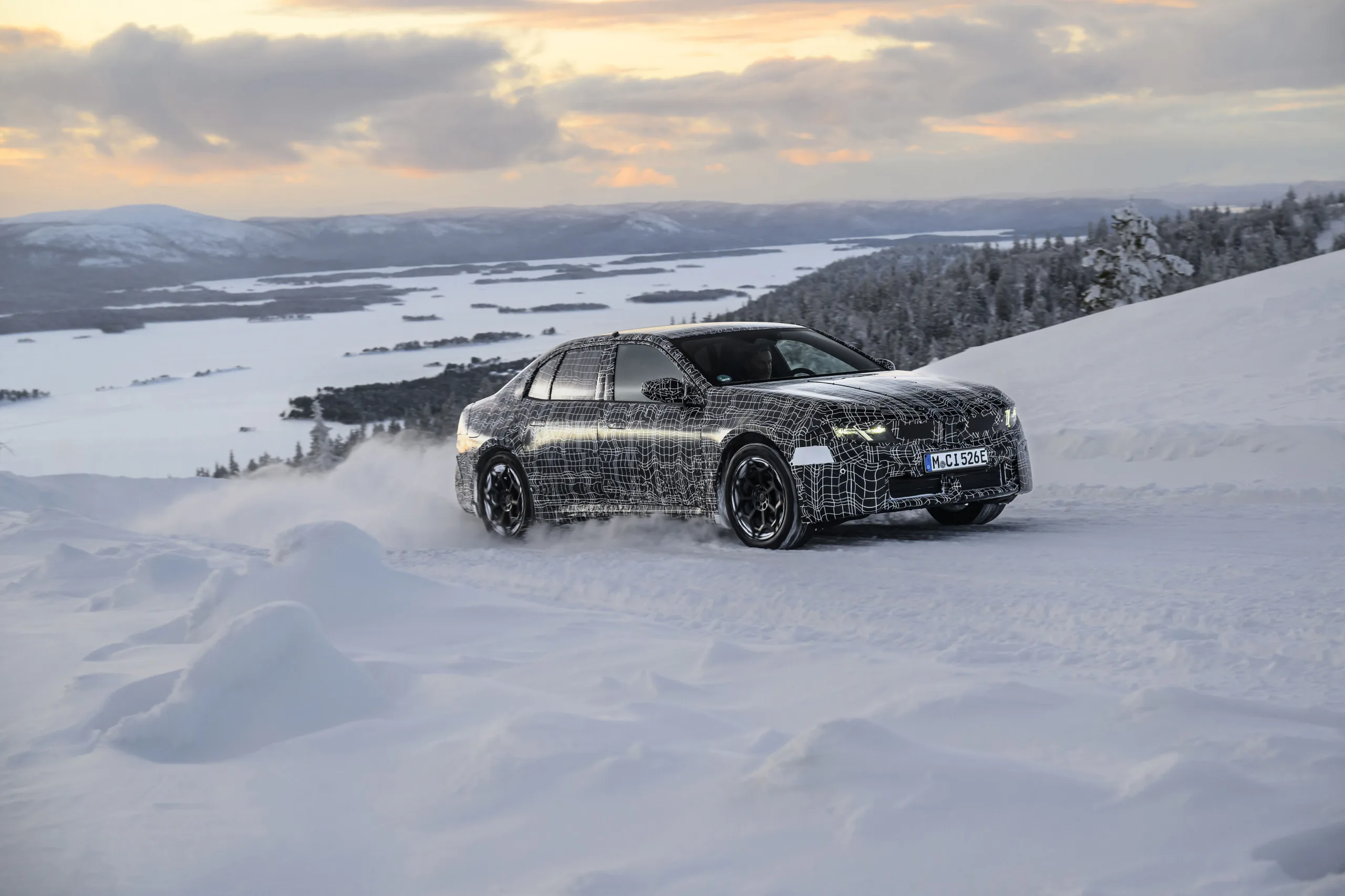
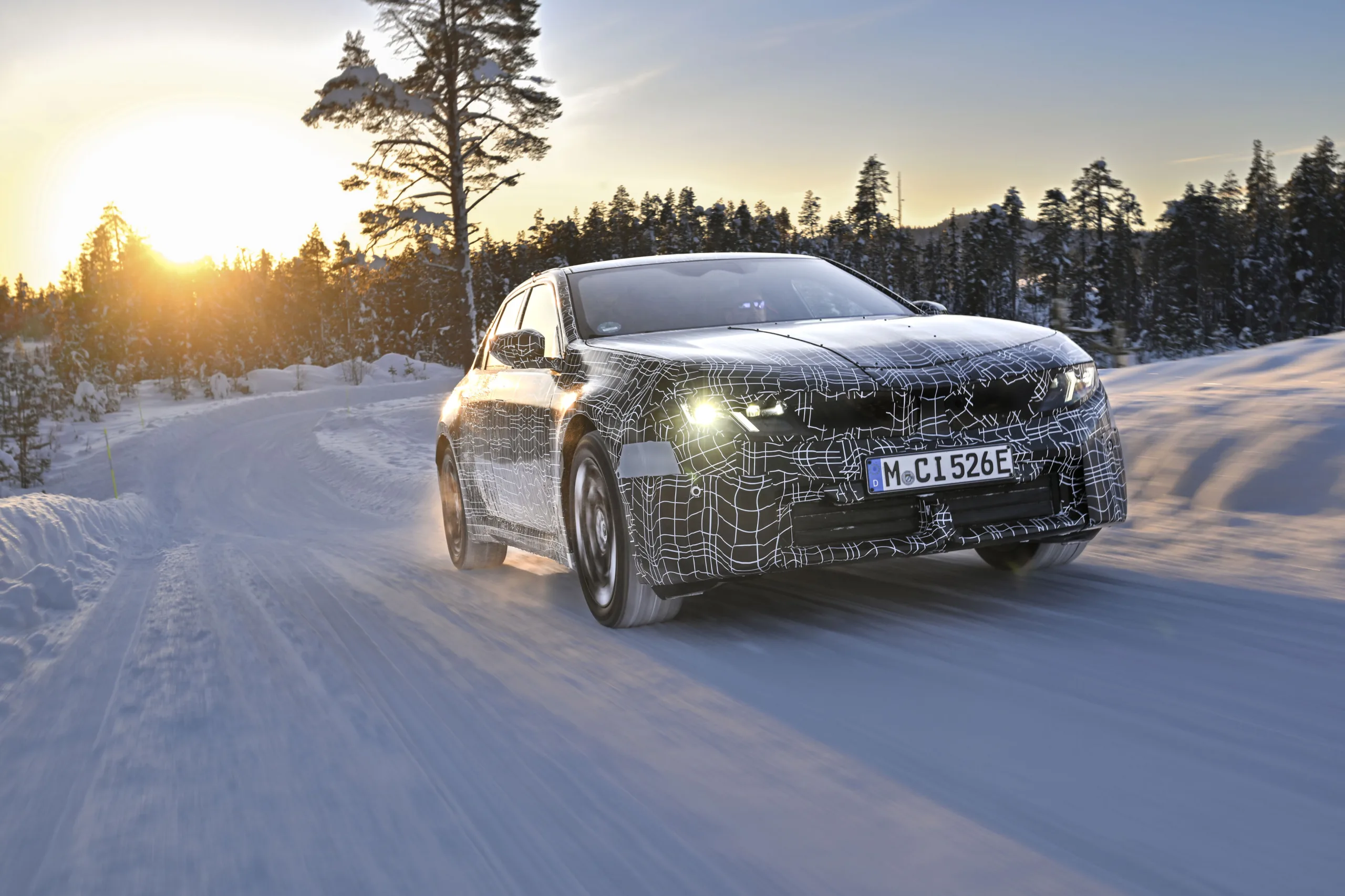
In the far north of Sweden, where frozen lakes stretch into the horizon and the air itself seems engineered for extremes, BMW is finalizing what may become one of its most defining EVs yet: the fully electric BMW i3 Neue Klasse sedan. As prototypes carve across the icy testing grounds of Arjeplog, engineers are putting the finishing touches on a model that promises both a technological leap forward and a return to the sporty soul that has defined five decades of the BMW 3 Series. With its global design premiere scheduled for 18 March 2026, the i3 Neue Klasse is gearing up to set new benchmarks in electric driving pleasure.
Built on a Legacy, Engineered for the Future
The BMW 3 Series has carried the torch for driving dynamics for nearly fifty years, earning a global reputation for agility, balance, and long-distance comfort. The Neue Klasse generation (BMW’s next major design and technology platform) aims to translate that DNA directly into a new era of mobility. The upcoming BMW i3 embodies this transformation, merging decades of sports‑sedan mastery with cutting‑edge EV innovation.
While the name “i3” may resurrect memories of BMW’s earlier carbon-bodied compact EV, this Neue Klasse edition is an entirely different beast: a full-size electric sports sedan positioned as the 3 Series of the future. Its mission is clear, push electric mobility into new territory while maintaining the essence of BMW driving pleasure.
Winter Testing: Extreme Inputs, Precise Outputs
Arjeplog is no casual proving ground. For decades, BMW engineers have traveled north to subject their prototypes to conditions that challenge every component of the powertrain and chassis. Snow-covered roads and frozen lakes offer an environment where physics are unforgiving, and precisely that makes them perfect for fine‑tuning handling balance, traction, and electric torque delivery.
In these environments, the BMW i3’s engineers are dialing in the final interactions between suspension, power delivery, recuperation, braking, and stability control. Low‑friction surfaces allow the team to recreate specific scenarios over and over, offering deep insight into how control systems behave in the most challenging real-world situations. The result is a foundation for what BMW calls “hallmark driving pleasure.”

The Technological Quantum Leap: Heart of Joy + Dynamic Performance Control
What truly sets the Neue Klasse i3 apart is a massive leap in vehicle intelligence. BMW describes the new “Heart of Joy” as one of four major “superbrains” powering the brand’s next generation of vehicles. Paired with BMW Dynamic Performance Control (software developed fully in-house) the system serves as the driving dynamics command center, orchestrating powertrain, braking, steering, and recuperation in ways never before possible in a BMW.
The company claims responses up to ten times faster than previous systems, a staggering improvement that redefines how quickly the car can interpret and react to changing traction conditions. On ice, this results in immediate propulsion control, superior stability, and impressively agile behavior, even at the limit.
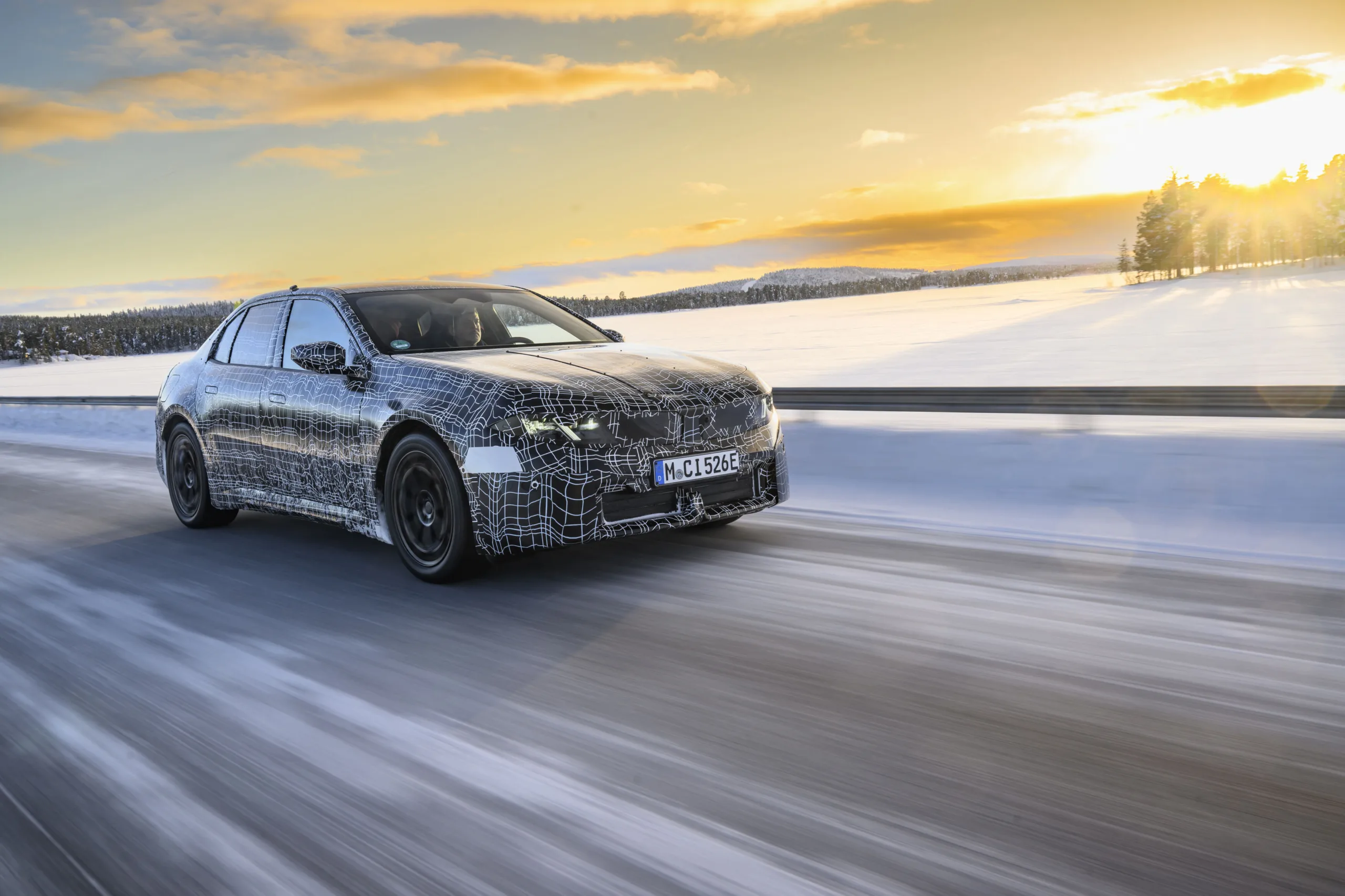
Crucially, the Heart of Joy also reduces the need for corrections from traditional stability systems like DSC, which means smoother cornering, more natural feedback, and a more confidence‑inspiring drive. Drivers can expect immediate responses to steering inputs and a feeling of effortlessness that remains consistent even when the car is pushed to its boundaries.
BMW also highlights a new Soft‑Stop function enabled by precision electric motor control. It’s described as the smoothest stopping process ever in a BMW 3 Series history (no jerks, no brake noise) just controlled deceleration that blends elegance with engineering.
The Heart of Joy advances efficiency too. With its ultra-fast processing, the system maximizes recuperation—even during cornering, without compromising stability. The result? More energy reclaimed, fewer efficiency penalties, and a driving experience that feels both athletic and intelligent.
Provisional Specifications – Gen6 eDrive and Big Numbers
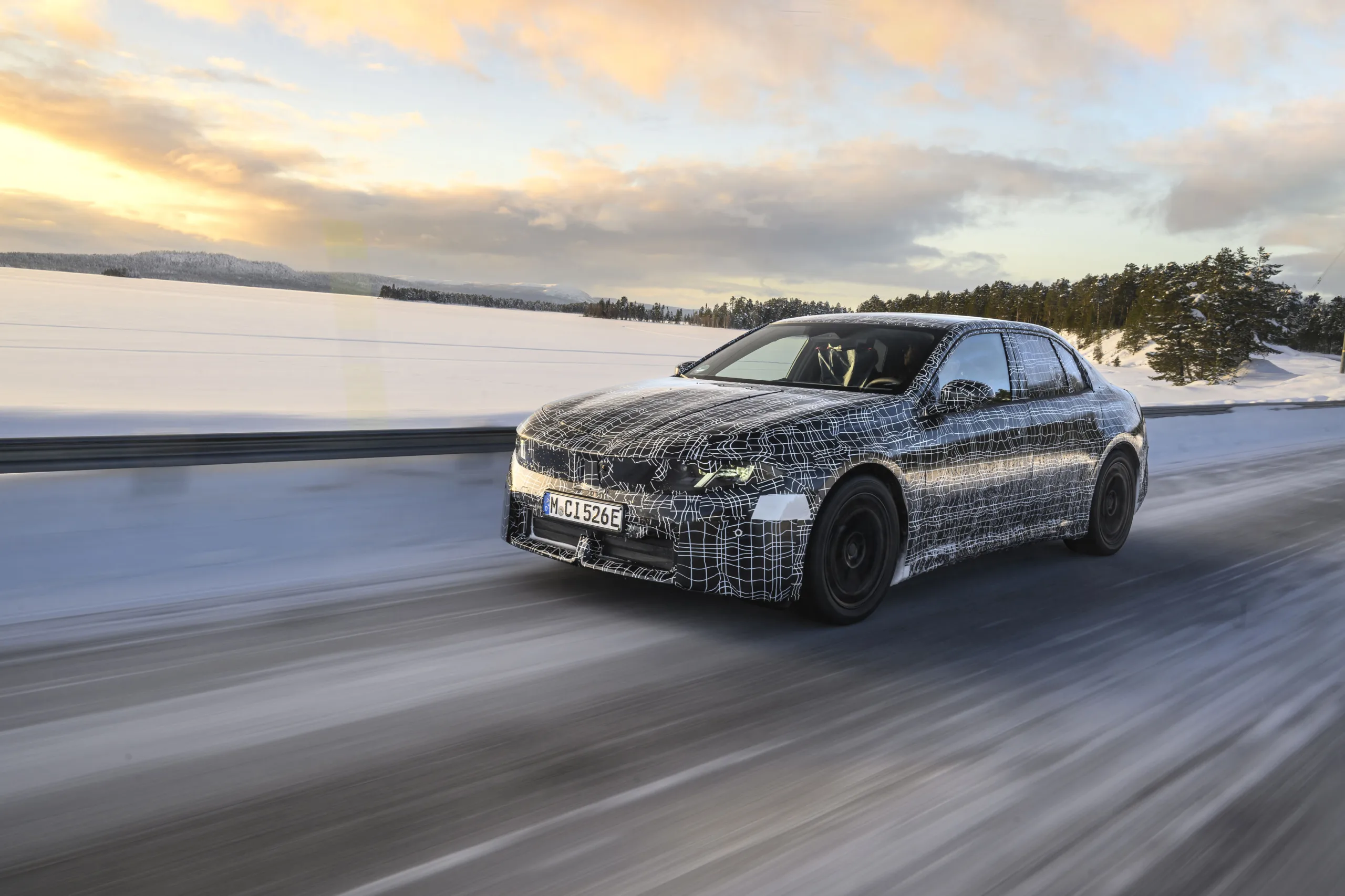
The BMW i3 50 xDrive, expected as the second Neue Klasse production model, brings with it several next‑generation EV technologies:
- Sixth-generation BMW eDrive with 800‑volt architecture
- Peak charging capability up to 400 kW
- Dual‑motor all‑wheel drive using EESM on the rear axle and ASM on the front
- Provisional max system output of 345 kW (469 hp) and 645 Nm of torque
While the final WLTP figures have not yet been released, this early data suggests the i3 50 xDrive will deliver power levels comparable to modern performance sedans, backed by ultra-fast charging to minimize downtime on long trips.

A New Benchmark in the Making
Enhancing BMW’s dynamic legacy while pioneering a fresh EV architecture is no small task, but the new i3 Neue Klasse appears ready for the challenge. After its Arctic tests conclude and its design premieres in March, expectations will shift quickly toward production, set for the second half of 2026.
If these early details are any indication, BMW is preparing to redefine what an electric sports sedan can be. Intelligent, agile, powerful, and precise, the i3 Neue Klasse brings a new heart and a new brain to the EV world. And it’s nearly ready.