How GAC is out to sell electric driving on two promises: that the battery will withstand whatever is thrown at it, and that the plug will be there
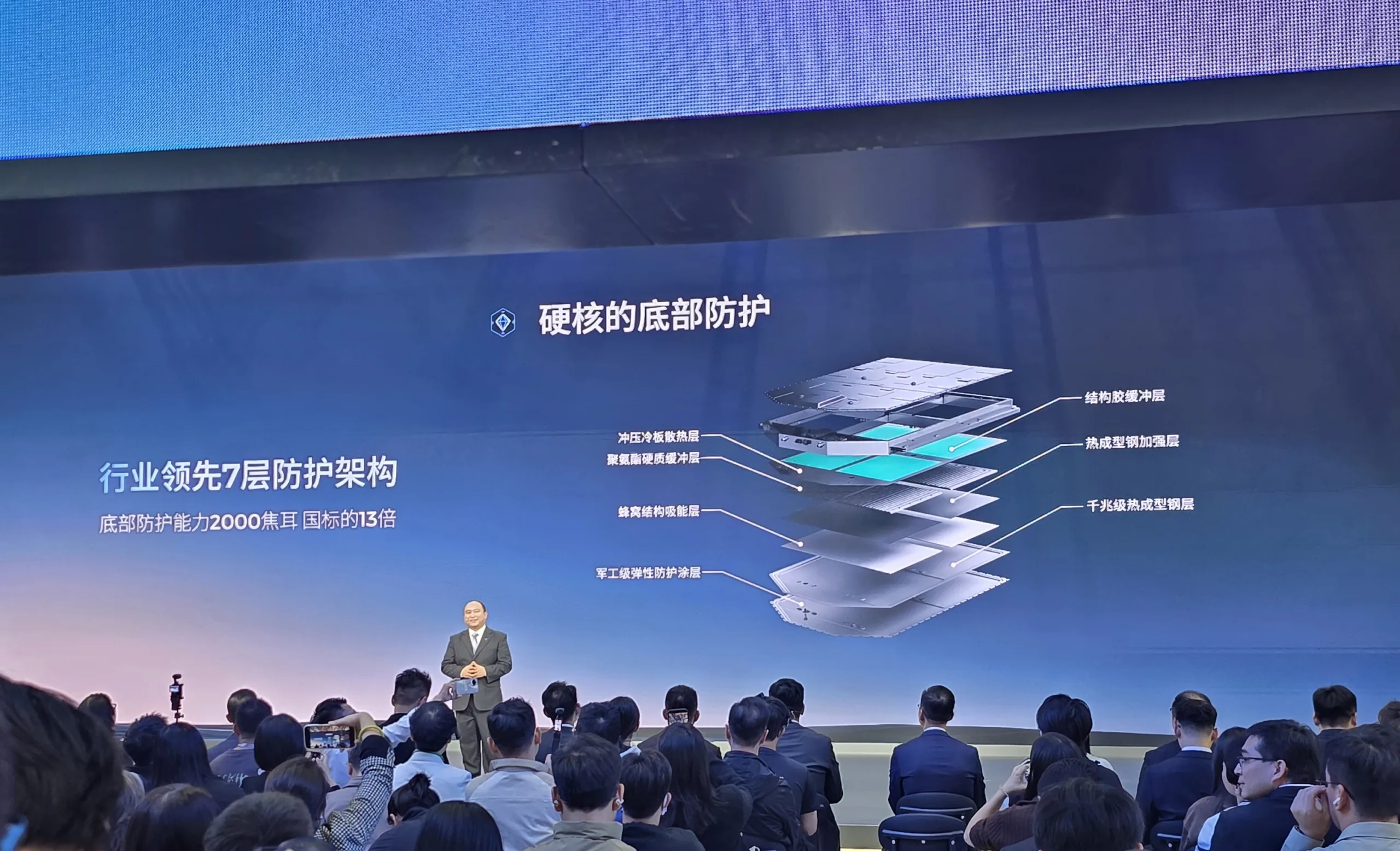
The EV battery demonstration begins with a number that sounds like a typo: 2,000 joules. That, the GAC presenter says, is how much impact the underside of GAC’s new Magazine Battery 3.0 can absorb. As a comparison, that’s thirteen times what China’s national standard requires. To make 2,000 joules feel like something, he offers a picture instead of a figure. A 10-kilogram iron hammer, dropped in free fall from the seventh floor, straight onto the bottom of the battery pack.
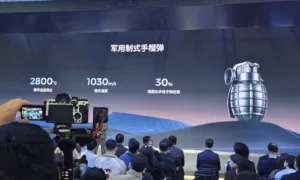
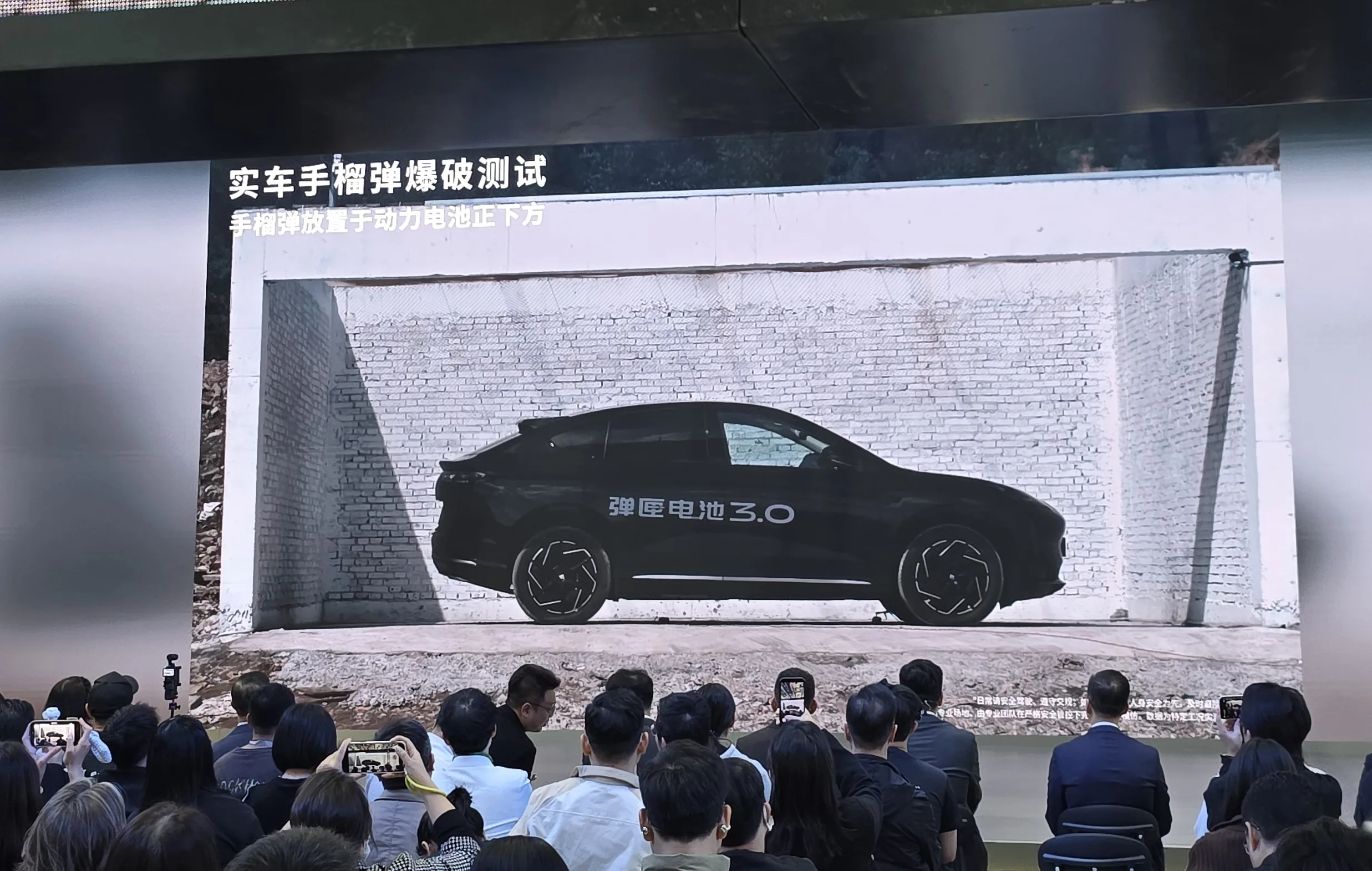
Then the grenade demonstration video plays. The pack takes the hit. And then, for good measure, the two-tonne car sitting on top of it is lifted off the ground by the force, and still powers up and drives away.
The escalation: nail, bullet, grenade
Battery safety marketing has a long history of one-upmanship, and GAC has leaned into it as a kind of trilogy.
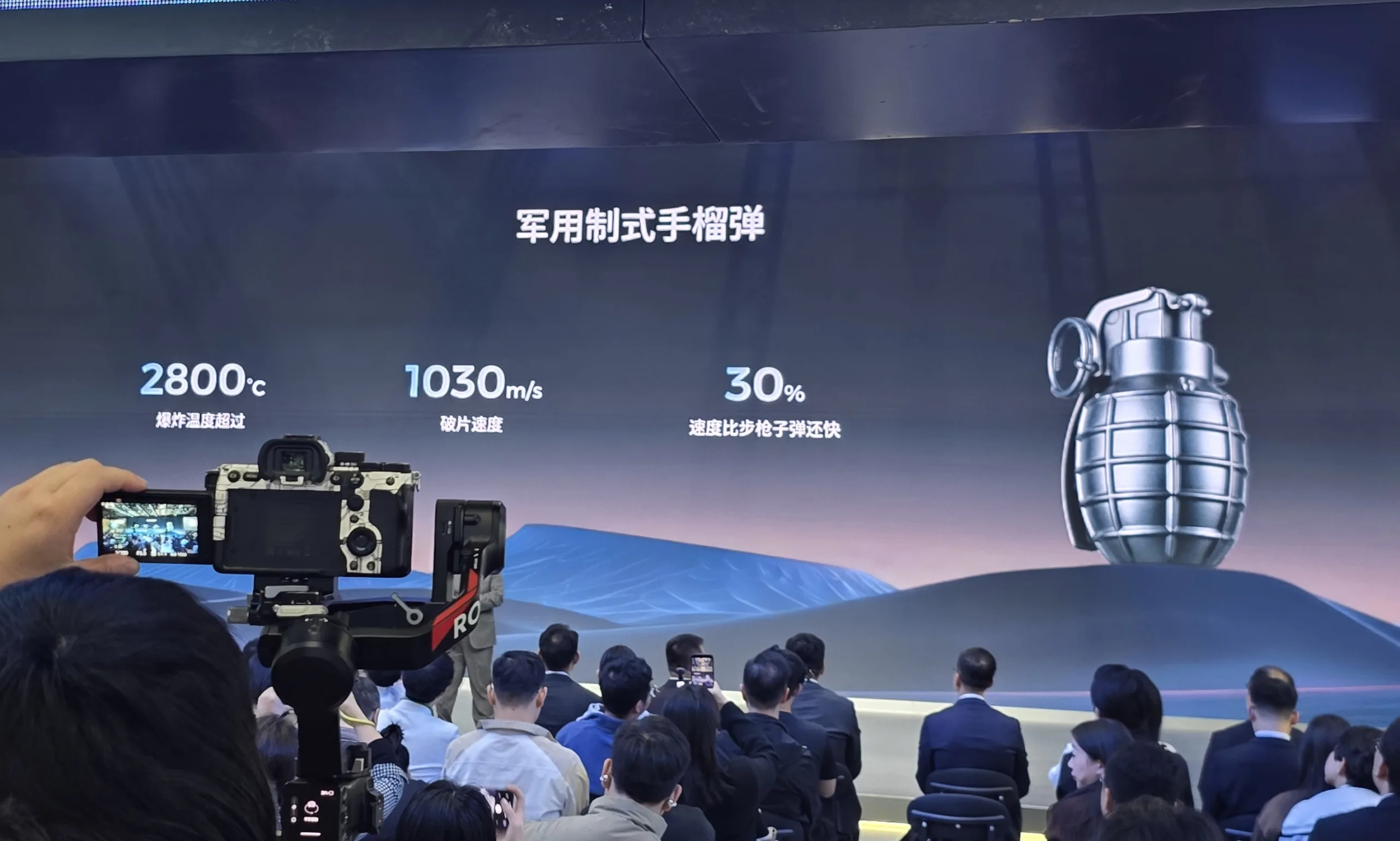
GAC’s Magazine Battery 1.0 passed the nail-penetration test without catching fire. Version 2.0 survived a gunshot without catching fire. For 3.0, the team needed a bigger verb, so they went to the military: a standard-issue hand grenade, detonated against the pack.
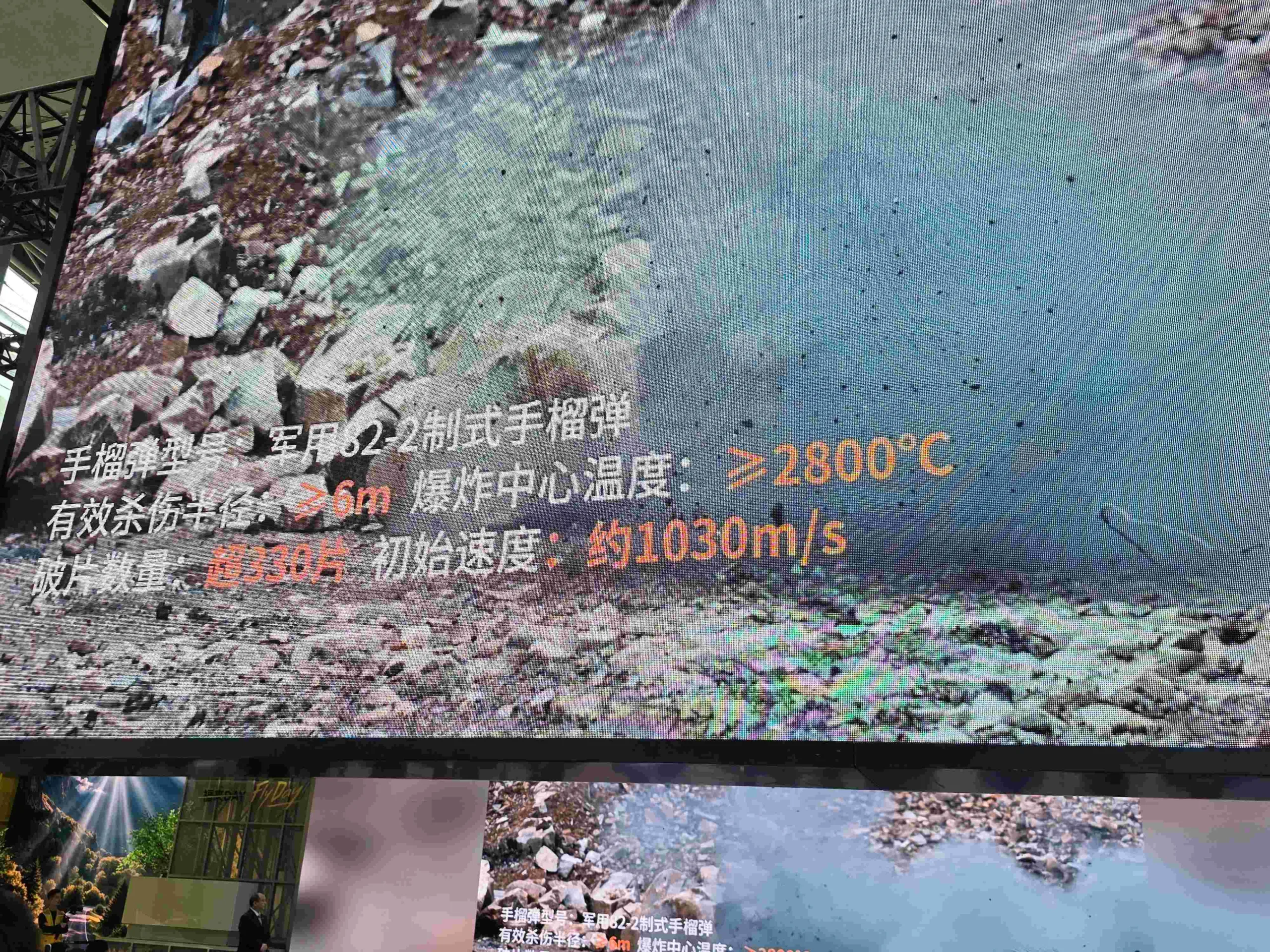
The details are the point. The blast temperature exceeds 2,800 °C. The fragments travel at 1,030 metres per second, around 30 percent faster than a rifle bullet. On screen it looks, as the presenter notes, less like a car test and more like a film stunt.
He then asks the question the audience is already thinking: no driver will ever encounter this, so why do it? His answer is the thesis of the whole session. “The limit of safety,” he says, “has to go beyond the one-in-ten-thousand possibility.” Or, in the line that follows: “National standards set the floor; GAC pushes for the limit.”
Whether one finds that persuasive or theatrical is a matter of taste. But it explains the engineering logic underneath, which is less about explosions than about the two directions a real crash can come from.
Armour underneath, armour at the sides
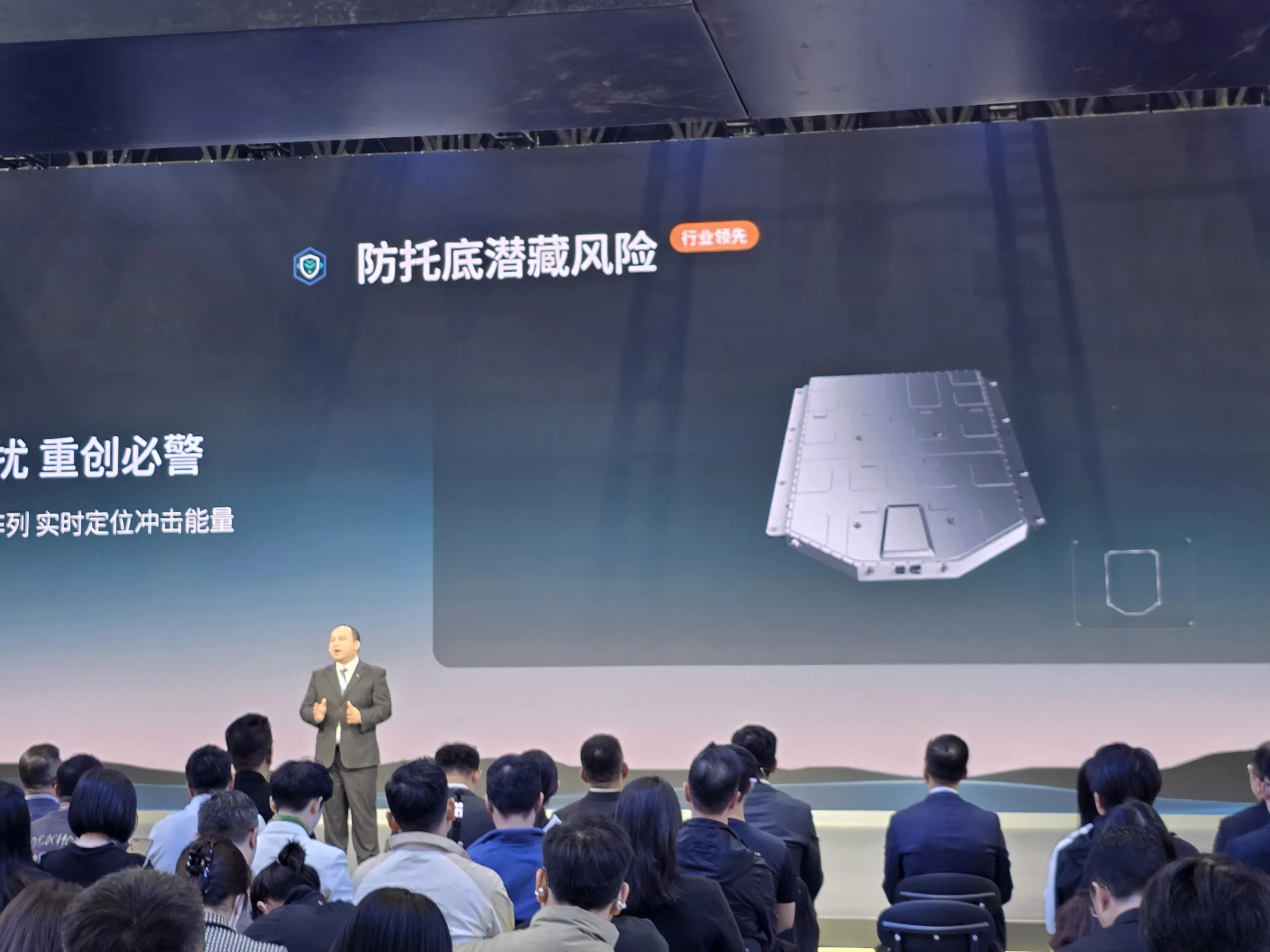
The bottom of an electric car is where the road lives, and it is the easiest place to hurt a battery: kerbs, rocks, speed bumps, the occasional piece of debris. GAC’s Magazine Battery 3.0 answers with a seven-layer protective architecture rated to that 2,000-joule figure.
The side is harder. The pack sits in the middle of the frame, which sounds safe until you measure the gap between the outside of the car and the battery: only 20 to 30 centimetres. In a side impact, that is almost no crumple zone at all, and the energy arrives directly at the pack.
So the team reversed the usual logic. Instead of relying on the body to shield the battery, they made the battery part of the shield: a substantially reinforced side structure, a redesigned load-transfer path to steer crash forces around the cells, and a microcellular structural filler that stiffens the whole assembly. The phrase used on stage is that the pack itself is turned into a suit of armour.
The test result quoted is a single pack, with no body-frame protection at all, hit from the side at 32 km/h: zero intrusion into the cells. For context, GAC adds that its new-generation body already achieved zero cell intrusion in a whole-vehicle side-impact test in 2025. Magazine Battery 3.0 is meant to add a second layer of insurance behind that.
Three senses that never sleep
Passive strength covers the crash you can see coming. The second half of the battery story is about the damage nobody notices — the slow kind. Magazine Battery 3.0 adds three active sensing defences, and each is aimed at a specific, unglamorous failure mode.
The underbody hit you didn’t feel. An array of elastic-wave sensors across the bottom of the pack, paired with AI algorithms, locates each impact and estimates its energy, then grades the alert. Minor knocks stay silent so drivers are not nagged; serious ones are escalated immediately. The stated goal is “no disturbance for a scratch, a warning for a real wound.”
The coolant leak you can’t see. A leaking coolant line can start a fire, and it is notoriously hard to spot. A surface-area leak sensor is claimed to detect seepage as small as 2 millilitres — roughly forty drops of water — and to make the call within three seconds, with an automatic drain valve and water-locking material handling the leak once it is found.
The pinhole you’d never find. Conventional packs are checked for airtightness once, before they leave the factory, and never again. Ageing components or an unnoticed underbody strike can open a path for moisture and a short circuit. Magazine Battery 3.0 monitors sealing across the whole life of the vehicle, claiming sensitivity to micron-scale pores and cracks, and sorts what it finds by risk level.
Together they form a closed loop: sense the impact, confirm the leak, assess the seal, respond by grade. The session’s summary is a four-character slogan “two wings, three defences” the wings being bottom and side protection, the defences being the three sensors. Hard where it must be hard; observant where hardness is not enough.
The other half: 330,000 plugs and a five-year head start
Liu Zhihui, taking the stage for GAC Energy, started in 2021 — a year he describes as the low point of the charging experience for China. Chargers were unevenly distributed, power output was low, and drivers faced the familiar pair of anxieties: finding a plug, and waiting at it.
GAC’s response was an initiative it calls “two to the sixth power,” built around constructing its own charging network rather than waiting for the market to fill in the gaps. From there the company expanded sideways into what it describes as a solar-storage-charge-swap-discharge microgrid, and backwards into lithium mining, battery manufacturing, charging and swapping services, and battery recycling. The claim that follows is a large one: GAC is the first automaker in the industry to close the loop on the energy ecosystem.
Five years on, the scoreboard is concrete. More than 33,000 charging piles across 31 provincial-level regions and 240 cities. Twelve provinces with more than 1,000 piles each; 43 cities with more than 100. In core cities, a charging station within one kilometre in a straight line. Every DC pile is a 1,000-volt ultra-fast unit — no mixed fleet of slow chargers padding the count.
The usage numbers are the ones that land. More than 100,000 charging users a day. More than 100 million kWh delivered a month. 13 million users served in total, and 2.3 billion kWh delivered cumulatively. Put another way, by GAC’s own estimate, one in every four new-energy vehicles in China has charged at one of its piles at some point.
From 240 cities to 300, and from plug to power plant
The forward plan has three layers. By 2027, the network is to cover 300 cities nationwide. Expansion will prioritise the places where coverage is thinnest and demand is highest — counties, motorways, and the north — filling out what Liu calls a point-line-surface system, with selected flagship stations upgraded to megawatt-class 10C chargers to serve vehicles that can actually absorb that rate.
By 2030, the target is 100,000 charging terminals forming a five-energy ecosystem network, extending the original charging business into a broader energy platform.
The third layer is the one that changes what a car is for. Vehicle-to-grid, or V2G, is already supported across GAC’s Hyper all-electric line-up and its newly launched AI models. By 2027 the company plans 10 demonstration parks and 1,000 V2G-enabled piles, drawing 10,000 vehicles into grid interaction and pushing more than 3 million kWh of discharge. The enabler is exactly the battery work from the first half of the session: long cycle life and high safety margins are what make it acceptable to cycle energy back out of a car and into the grid.
The pitch is neat enough to be a slogan: charging goes “from hunting for a pile to self-service, from spending money to earning money.” And the 300 cities, in this framing, are not just 300 service areas, they are nodes in one large intelligent network, part of a vision in which transport, energy and communications converge.
What the two halves add up to
Strip away the stagecraft (the hammer, the grenade, the slow-motion video) and the argument is fairly simple, and fairly sober.
An electric car has two fears attached to it. The first is that the battery is a fragile thing you are sitting on. The second is that the infrastructure is a promise that may not be kept where you happen to be. GAC’s session attacks both: armour and sensors for the first, 33,000 piles and a 300-city plan for the second.
None of it is verified by a stage demo, and a grenade test says more about marketing confidence than about Tuesday’s commute. But the details chosen for emphasis are telling. Two millilitres of coolant. Forty drops of water. Three seconds. A micron-scale pore. A 20-centimetre gap between the door and the cells. These are the numbers of people who have spent a long time thinking about how batteries actually fail — which is, in the end, a more reassuring signal than the explosion.
The closing line from the host ties the two presentations together: the shield protects not only the battery’s safety floor, but every driver’s peace of mind. It is a slogan, but it is also the brief. Safety is what lets you buy the car; charging is what lets you keep driving it.