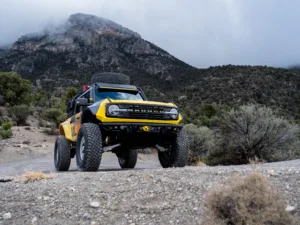
Ford Racing Parts has revealed Megazilla 2.0, a supercharged 7.3-litre V8 crate engine rated at over 1,200hp, and fitted it to a Bronco show build called Frostwarden.
How much power does a crate engine actually need? Ford Racing Parts seems to think there’s no ceiling. Its new Megazilla 2.0 is a supercharged 7.3-litre V8 rated at over 1,200hp and more than 1,000 lb-ft of torque. That’s roughly 895kW and 1,356Nm.
Ford calls it the most powerful crate engine ever created by an automaker. Note that the claim is Ford’s own. The figures come with plenty of fine print, too.
Not Just a Supercharger Bolted On
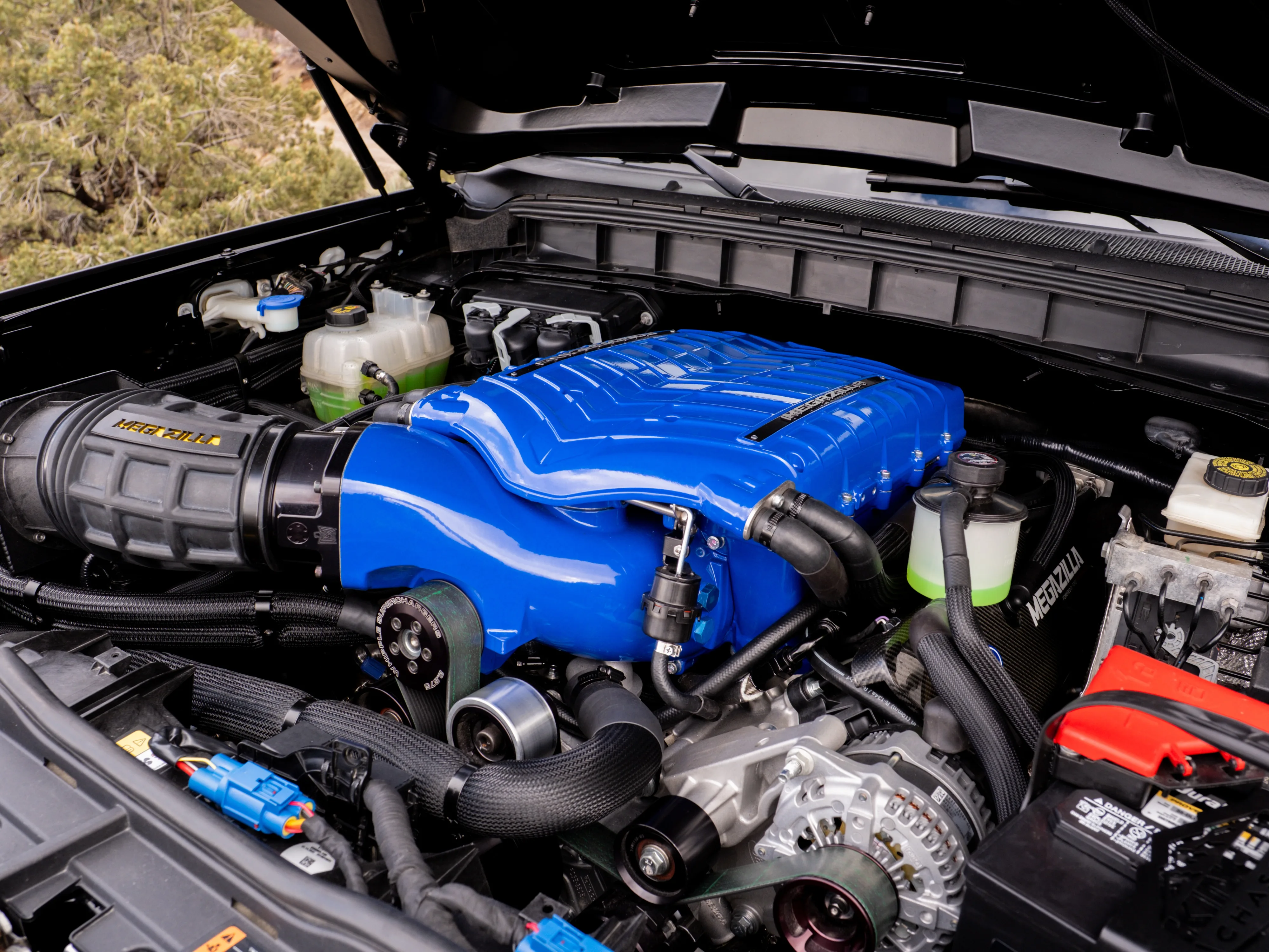
Megazilla 2.0 uses the same 7.3-litre engine family that anchors Ford’s big-displacement crate range. However, Ford stresses that this is a new development programme rather than the original Megazilla with forced induction added.
The changes run deep. They include:
- A stronger block
- A camshaft designed specifically for supercharging
- Upgraded pistons and larger fuel injectors
- A different belt drive and damper
- A 3.0-litre Gen 6 Whipple supercharger at the heart of the package
Now, about those numbers. Ford rates them on race fuel to the SAE J607 standard. It also notes that peak power and peak torque may not arrive together, and that results may vary. So treat 1,200hp as a ceiling under ideal conditions, not a pump-fuel promise.
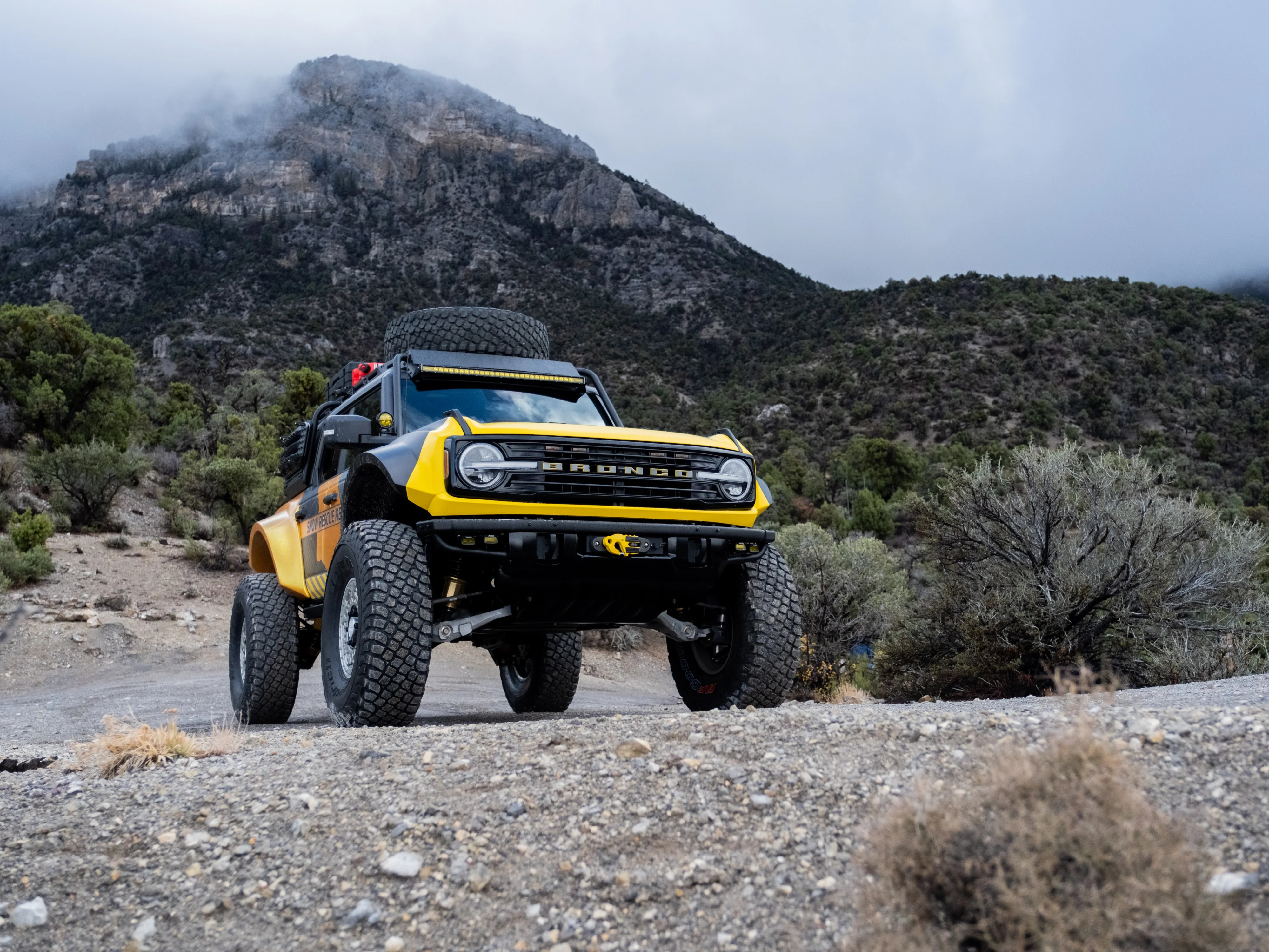
Frostwarden: A Bronco Built to Carry It
To show the engine off, Ford built Frostwarden, a Bronco imagined as an Arctic search-and-rescue rig. It’s the first vehicle to feature the Megazilla 2.0 swap.
The hardware matches the engine’s scale. Frostwarden rides on 42-inch BFGoodrich tyres and custom 18-inch Weld bead-lock wheels. It also gets 74Weld portal gear lifts, upgraded Dana driveline parts and custom Bilstein dampers. A wide stance completes the winter-recovery look.
Before anyone starts saving up, though, Frostwarden isn’t for sale. Ford describes it as a specialty modified concept with third-party components. It also warns that those modifications may affect compliance with safety standards and other laws.
A Classic SEMA Thrash
The build’s timeline will sound familiar to anyone who follows show cars. Work began in February, and the physical build picked up pace in June. By October, the finished engine came off the dyno and travelled overnight to Kincer’s shop in Tennessee. It then went straight into the truck ahead of first fire and calibration.
Michael Goodwin, a Ford Racing Parts planning analyst, pitched the project after years of talking with partners about a giant V8-powered Bronco. That’s a very enthusiast way to get a company project approved.
Why Ford Is Doing This
Crate engines have long been central to Ford Racing Parts. Builders use them in everything from heritage Mustangs and Broncos to F-100s, Fox-body Mustangs and custom chassis. Ford positions Megazilla 2.0 as the flagship of that catalogue, built to show how far the range can go.
The source doesn’t give pricing or an on-sale date for the engine. It also marks Ford’s return to SEMA, which the company sees as a place to learn what builders want next.
That’s the real point. Frostwarden will never see a showroom, but it puts a factory-engineered 1,200hp option in front of the people who build their own trucks. That gives Ford a direct way into one of the aftermarket’s most lucrative conversations.