XPeng’s G6 Performance coupe SUV is fast, plush and very clever, but the real surprise is how calmly it goes about all of it.
I was never much of a club-goer around 2010 (or this century for that matter), but put the letters ‘G’ and ‘6’ together and the Far East Movement starts playing in my head. Poppin’ bottles, feeling so fly… you know the one. And after a decent stint behind the wheel of the XPeng G6 Performance, I can tell you it’s not far off the mark, but just not in the way you’d expect.
Who are XPeng?
XPeng is a new name on Kiwi roads, so I’ll forgive you for asking what I’m talking about. But to fill in a couple of blanks, XPeng is a Chinese EV maker founded in 2014, they design and manufacture high-tech passenger cars and SUVs (such as the XPeng G6 and G9) and aimed squarely at tech-savvy consumers. So now you know.
Outside
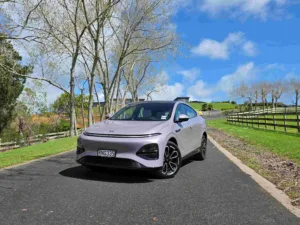
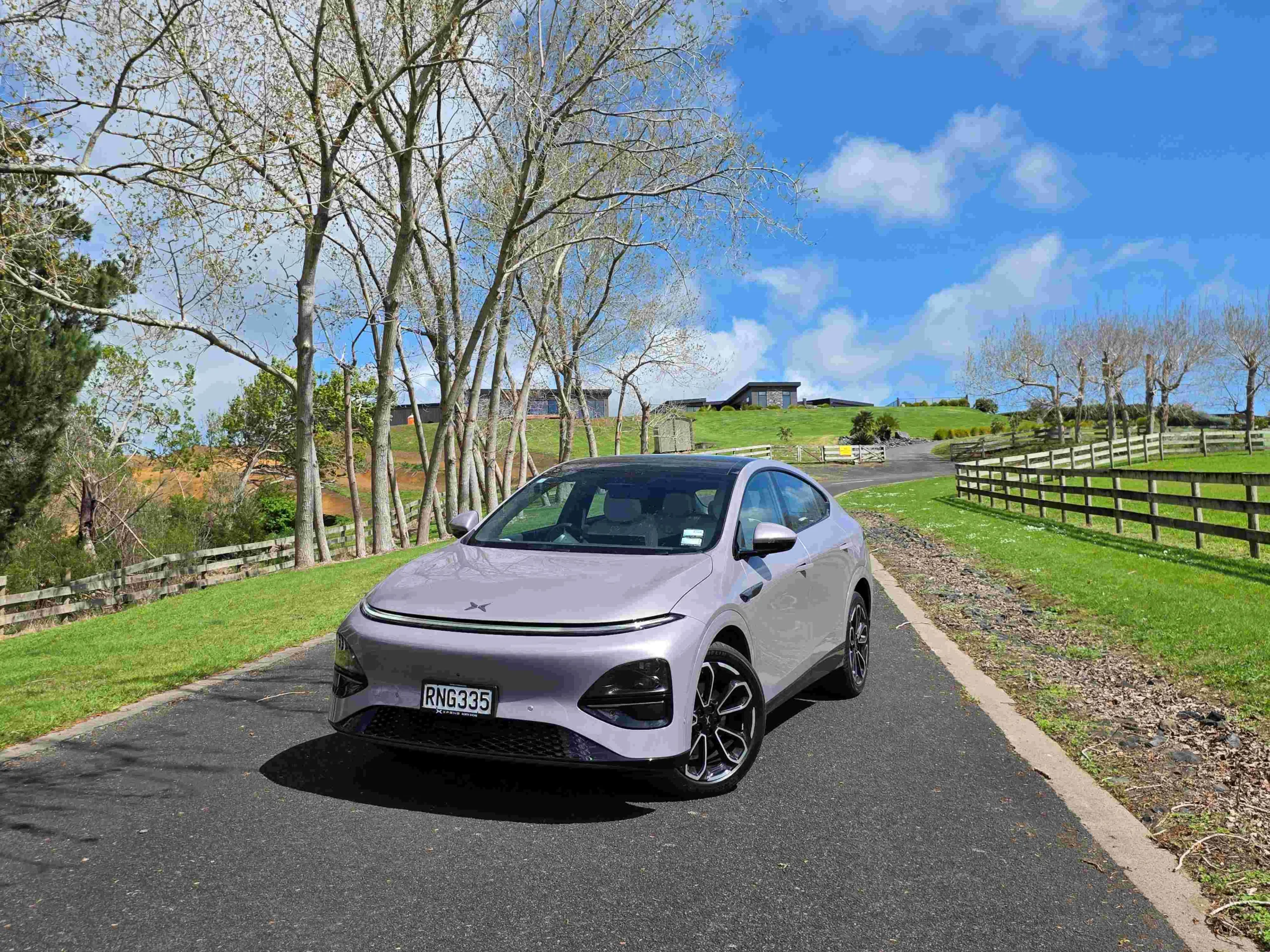
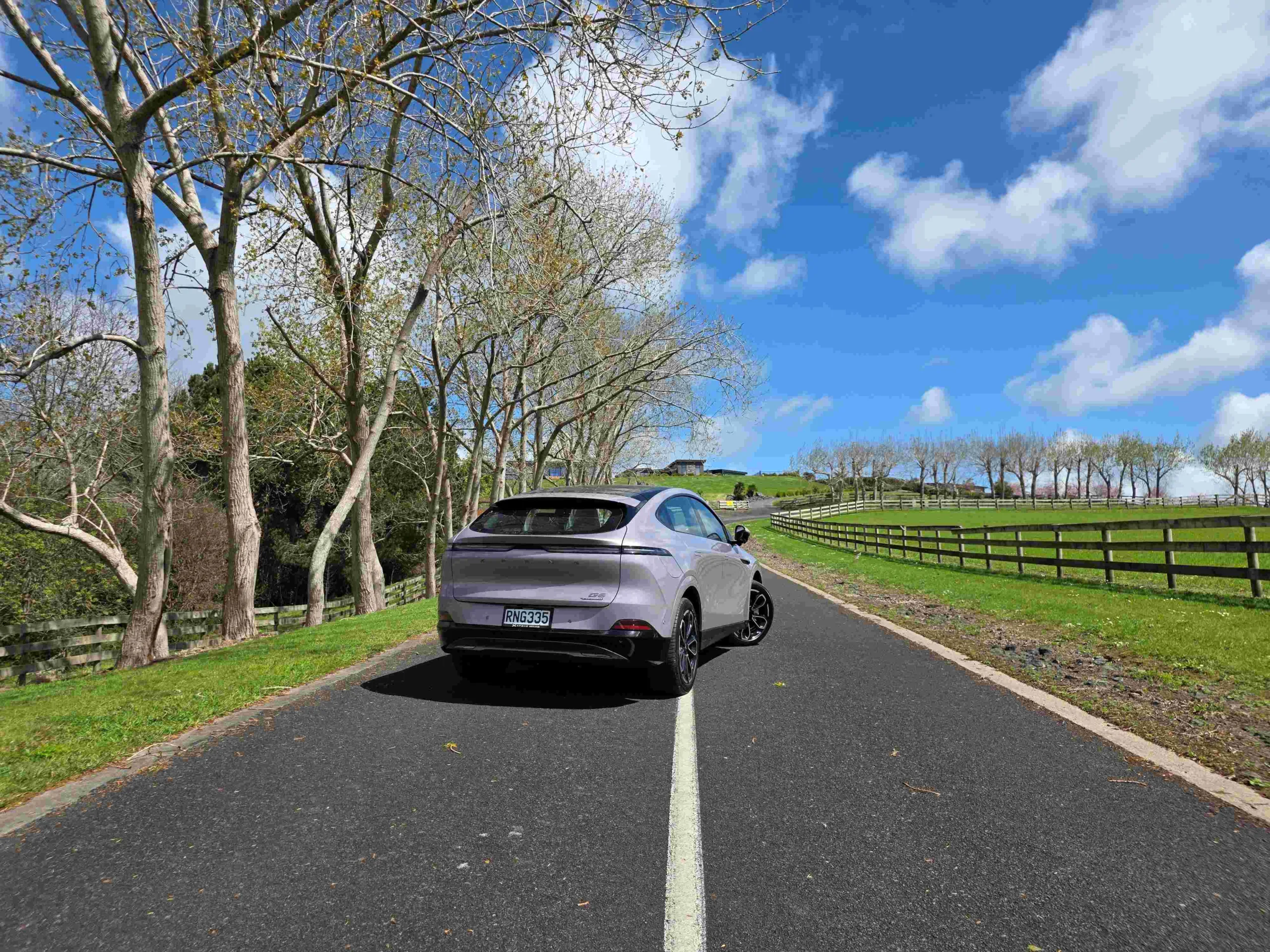
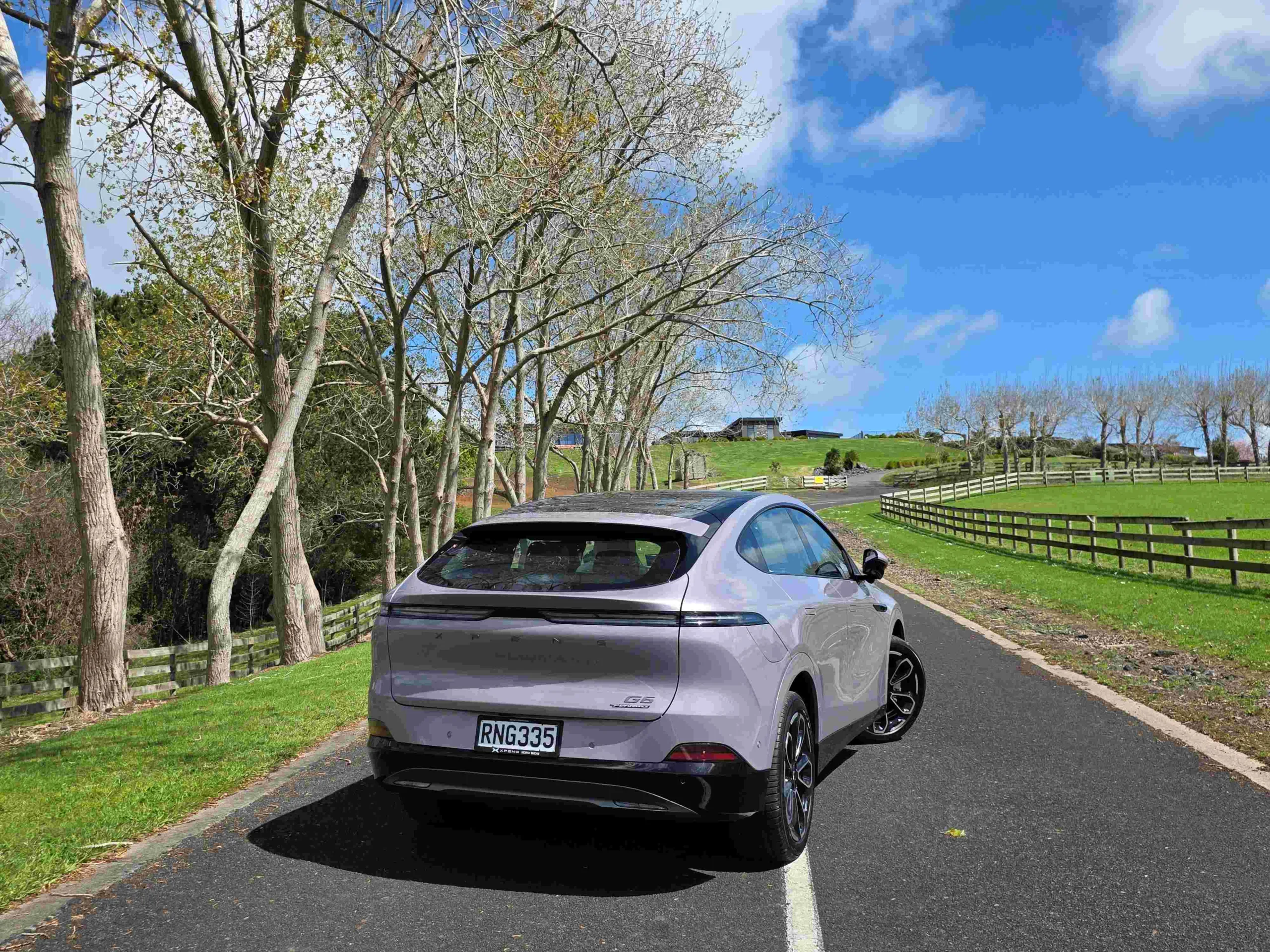
Let’s get the looks out of the way first. XPeng calls the exterior on the G6 ‘Starship inspired’, complete with a robot face. To me it looks a bit Tesla (just quietly), but I have to say I quite like it. The light bar across the front is lovely, and the whole thing has the slippery new jelly-bean shape that so many EVs are going for.
It’s 4.75m long and 1.65m high, with a long front overhang and a fastback rear, so it’s very much a coupe SUV. In fact, the rear profile is cleverly done, your eye follows the painted bodywork, but there’s extra body tucked in below it, and that frees up more room inside. The 20-inch wheels look great and are fitted front and rear. The only bit of the outside I’m not a fan of is the pop-out door handles, but they work, and I’m being picky.
There’s plenty going on at the back too. You get a roofline spoiler with the rear wiper hidden underneath it (very neat), a Porsche-inspired? ducktail flip spoiler below that, and some nice lights. Open the tailgate and there’s 571L of boot space, which is plenty for most families.
Under the skin are two motors, one per axle, making a combined 353kW/660Nm. In sport mode that gets you from zero to 100km/h in just over four seconds. Powering it all is an 80.8kWh battery good for around 510km on a full charge (as long as you’re not trying to break the land speed record), with official efficiency of 18.4kWh/100km. It also has vehicle-to-load (V2L), so it can power things outside the car, and DC fast charging up to 280kW. More on that later.
Inside
XPeng calls the cabin ‘Nebula inspired’, with a floating centre console, ambient starlight accents and layered geometric trim, all meant to evoke a futuristic, immersive space. In reality it’s a bit derivative and generic, but that doesn’t make it bad, because most of what it does is quite good. A veneer strip runs from pillar to pillar, separating the upper and lower dash with ambient lighting either side, and this adds some interest.
The door cards work even better. They have contrasting colours, perforated trim and ambient lighting that shows up better there than on the dash. Where your arm rests and you use the switches, things get clickier and feel more premium, and below that are very generous door pockets. The pillars and headliner are trimmed in suede, framing a big sunroof. It has no shade, but it lets lots of light in.
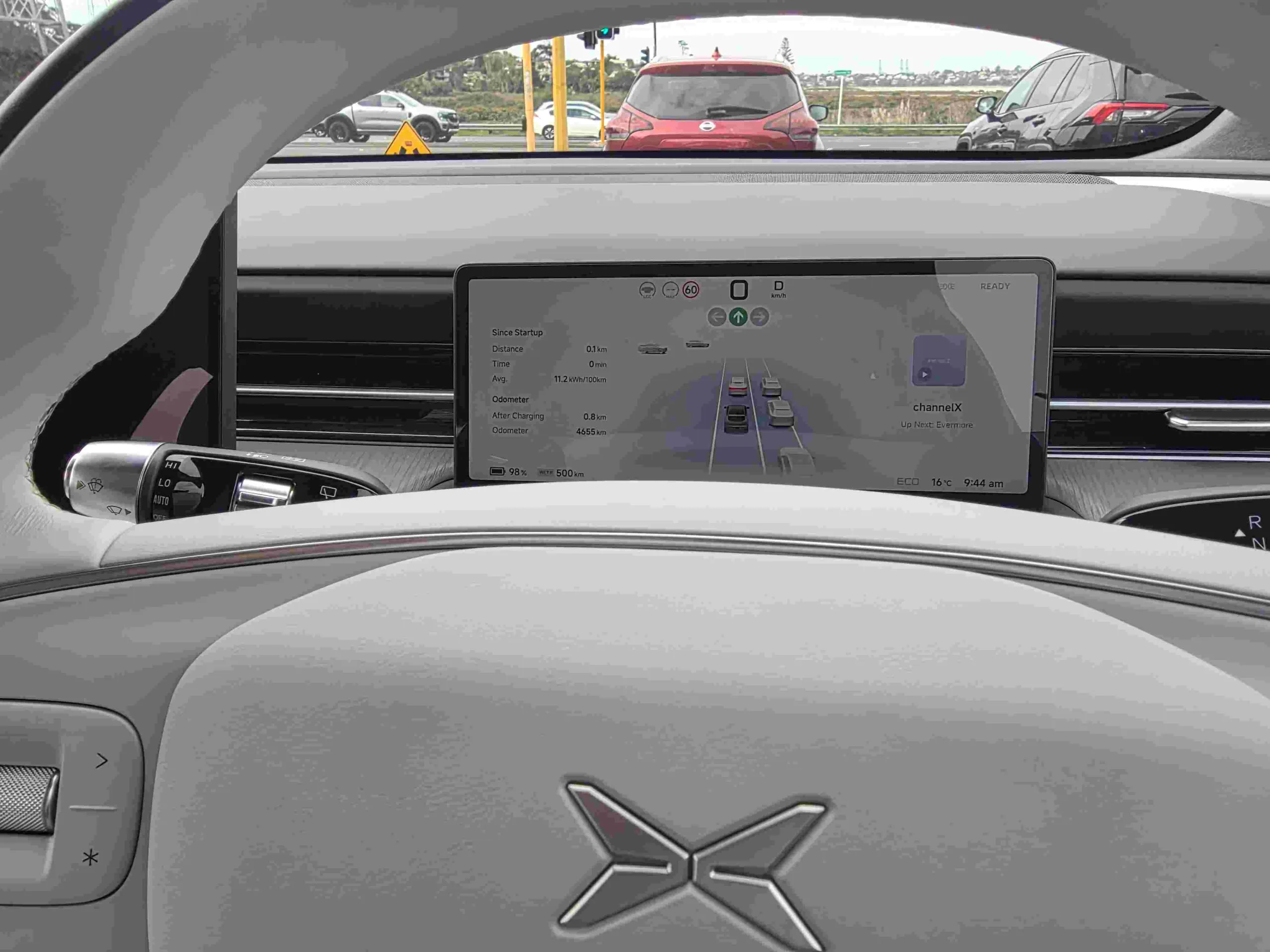
Rant alert. There isn’t a single physical button or anything with tactile feedback on the dashboard. The electric door releases inside are as unnecessary as the pop-out handles outside. There was no need to reinvent any of it, and I’d rather have buttons, but as you can gather from the start, I’m not of a younger generation. The front passenger loses out most. Nearly everything sits with the driver, and from their side the passenger can only change the temperature and turn the fan down. They can’t even (easily) switch the climate off. Thankfully the voice assistant is very good, and that softens the blow. Rant over.
The seats are a real talking point. Up front they’re heated and ventilated, with three memory settings and a very thorough massage function (and a good one too). The rear seats recline and get their own air vents, two USB-C ports and a fold-down armrest with two big cupholders. There’s plenty of space back there thanks to a flat floor, because the battery doesn’t eat much into the footwell. Storage is good all round. You get two wireless charging pads, a double cupholder, a very deep cubby under the armrest and lots of room beneath the floating console. There’s no glovebox, but the cabin is still very practical.
The big downside is the view out the back, which the coupe shape badly compromises. The streaming camera rear-view mirror makes up for that. It’s one of the best I’ve used, without the slow refresh and parallax effect some suffer from. The camera system also makes good use of the big central screen, with several views including a kerb view to protect those 20-inch rims.
That central screen is where you do most things. Wireless Apple CarPlay and Android Auto both make the most of the space, and Spotify and YouTube come built in, so you’ve got something to watch while you charge. There’s a built-in recorder that works as a dashcam and saves footage locally, and it doubles as a sentry mode borrowed from a certain other brand.
Some features are aimed more at more overseas buyers I assume, like X Sleep, a relaxation mode for a bit of me time. The really interesting one is X Combo, which suggests routines the car can automate for you, like setting the heating, helping with your commute or putting the seats in the comfiest position. Plenty of people automate their homes, so why not the car? Super cool (or is that fly). Then there’s split view, which shows several apps side by side, a bit like an Android phone. You can even shrink CarPlay or Android Auto into a smaller window and run other apps next to it. I haven’t seen that in any other car.
You can build custom drive modes that set the steering, brake pedal and regen to your liking, with a shortcut on the left spoke of the steering wheel. The driver aids (collision warnings, lane support and traffic light recognition) are all easy to set up the way you want them. The sound system is pretty kickass. You can also change the noise the car makes at low speed, which is quite loud, so pick one that won’t drive you mad long term.
The voice assistant is a real highlight. Press the audio button or just talk to it, and it holds a natural conversation, responds quickly and handled a deliberate curveball without a problem. Old dog, new tricks. The charging menu goes deep too. You can manage battery health, schedule charging, and have the range estimate use either WLTP or a dynamic figure based on how you’re actually driving.
On the move
As part of my time with the G6, I drove it down to Hampton Downs, did some track time (not in the G6), drove back and did some local running, all without plugging in. By the end it was down to 11%, which made me a little nervous, although nowadays, anything with over 100km left counts as hypermiling.
As for efficiency, when I first jumped in, the screen showed 14.2kWh/100km. That crept up with all the stopping and filming, but it’s still impressive for something this size with this much power. And boy does it have power. It’s quick in sport mode, but it’s never violent or queasy the way many performance EVs are. The power is delivered so smoothly that I’d call it phenomenal. Double-glazed windows and a very quiet cabin round out the refined feel.
The ride is tuned for comfort and relaxed driving, but on rougher roads, it gets a bit bouncy and busy, and there’s no hiding how heavy it is. The suspension feeds plenty back to the car but oddly very little to the steering wheel. Firmer suspension with proper feedback through the wheel would suit us better. The steering is so overboosted that the heavier setting just makes it artificially heavy. We didn’t push it to the limit in the corners, because physics will win eventually with this much weight, but with double-wishbone front suspension and good tyres all round it’s more than competent. It’s not a lap-record chaser, and despite the Performance badge it’s not one you’d buy for driving thrills, but day to day it handles very well.
Automated parking is where it really shines. In a reasonably busy car park, with other cars moving around, the G6 scanned the area and showed lots of spaces to choose from. Pick one, take your foot off the accelerator and it does its business without any help from you, quickly and confidently, while the screen shows you exactly where it’s going. It will drive itself out of a tight spot too. If you pair your phone as a key, you can even run the whole thing from the XPeng app while standing outside the car. Nervous parkers, take note.
Charging is the icing on the cake. At up to 280kW, I reckon the G6 is probably one of the fastest-charging cars in NZ right now, and on a charger that can keep up, 10–80% (good for around 440km) takes about 12 minutes. The catch is finding one. The BP charger we used was supposed to deliver 75kW and was only managing 50kW. Still, it’s good to know the car is ready for when those faster chargers arrive.
Tarmac Takeaway
Like a lot of EV SUVs, the G6 builds its premium image from nice touch points and wow-factor tech. A lot of it you’ll find elsewhere, but XPeng clearly had a brief and nailed it. It’s fast, plush and smart, it parks itself very well (even from an app), it delivers its power beautifully, and at $72,990 as tested it’s priced really well. Personally, though, I’d go for the non-Performance model. Unless you genuinely need all-wheel drive or want motorway on-ramp launches to impress a coworker on a lunch run, the cheaper single-motor car keeps the design, the features and the niceties, and it’s already a very good car. Does it fly like a G6? Not quite the way the song meant, but it does feel so fly. Thumbs up. Now I’m off to pop some bottles… of ginger beer.
You might also like: Norton VPN Standard Review – Privacy, Performance And Digital Cloaking · Wowser – 2026 Mercedes-AMG GLC 63 S E Performance Review · SWALK – BYD Seal Performance review