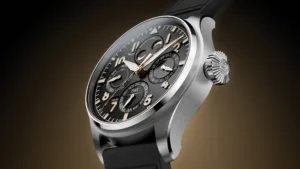
A thread on the WatchUSeek forums asks which affordable automatic movement collectors prefer, and whether a Seiko-made NH35 is worth US$20 more than a Miyota 8215.
Should an extra US$20 decide which engine sits inside your next affordable automatic? A new thread on the WatchUSeek forums asks exactly that. Its replies show that “best movement” depends heavily on what each owner values.
The discussion started with two questions. First, the original poster asked which mechanical automatic movement members prefer, and why. Second, they asked whether a watch with a Seiko NH35 is worth US$20 more than one with a Miyota 8215.
The Usual Suspects
The shortlist will look familiar to anyone who has browsed microbrand dive watches. It includes the Miyota 8215 and the Seiko/TMI family, made up of the NH35A (also sold as the 4R35), the NH36 and the NH38. The Chinese-made PT5000, described in the thread as high-beat, rounds out the list.
Members could also choose “something else”. As it turned out, that option drew one of the more detailed answers.
Rotor Noise and Honest Caveats
One member said the only downside they had heard raised was rotor noise. It has never bothered them. In fact, they enjoy flicking their wrist just to hear the rotor spin. It’s a nice reminder that one owner’s flaw can be another’s small pleasure.
Another reply took a more measured view. That member said each movement has its own strengths and weaknesses. However, they declined to judge the PT5000 because they had not yet owned one. In a forum thread, that kind of restraint is refreshingly rare.
Looking Further Up the Ladder
The “something else” voter argued that plenty of higher-specification three-hand automatics exist. They sorted their examples by beat rate:
- 3Hz: PM80, Seiko 6R3x
- 3.5Hz: L888, Omega 88xx
- 4Hz: ETA 28xx, Sellita SW2xx and SW3xx, Seiko 6R6x, Soprod C125, Miyota 9000
- 5Hz: Grand Seiko 9Sxx, Longines L83x, Rolex 71xx
Some context on those figures helps. Beat rate measures how many times the balance oscillates each second. So a 3Hz movement makes 21,600 beats per hour and a 5Hz movement makes 36,000. A higher rate gives a smoother seconds-hand sweep, but it is only one part of a movement’s quality.
Why the Debate Matters
WatchUSeek has been running since 2005. The site lists around 630,000 members and more than 25 million posts. As a result, threads like this one can shape how buyers view entry-level mechanical watches.
The thread doesn’t settle on a winner. Still, the US$20 question gets to the heart of how these watches are bought. In this price bracket, the movement is often the main thing separating two otherwise similar watches. Plenty of buyers will spend longer comparing calibres than case designs.