Active safety technology has long been a selling point for premium manufacturers, but it has just as often been a line item on an options list. With the Neue Klasse generation, BMW is changing that approach, making an expanded portfolio of driver assistance systems standard equipment across multiple model lines rather than optional extras.
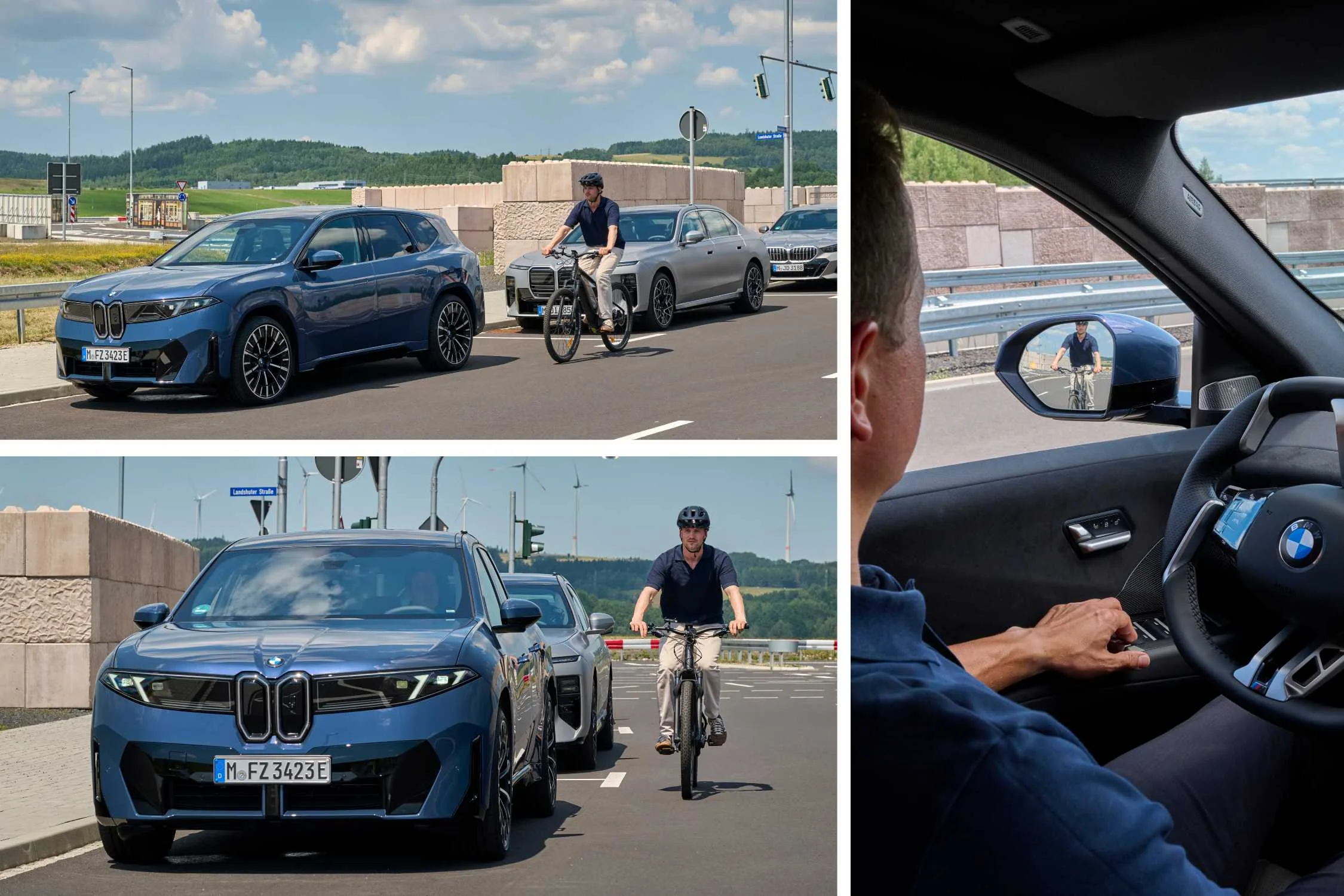
The BMW iX3 was the first Neue Klasse model to carry these systems, with the i3, X5, and 7 Series confirmed to follow.
The Dooring Problem Gets a Proper Solution
The headline addition is an enhanced exit warning function that goes beyond the audible and visual alerts already fitted to many BMW models. Using side radars, the system monitors the area around a parked vehicle for approaching cyclists, cars, or other road users. If it detects a collision risk, it actively delays the electronic door lock, holding the door shut until the danger has passed.
That distinction matters. A warning you can ignore is one thing; a door that physically will not open until it is safe is another. According to the German Insurance Association, dooring accidents accounted for roughly eight per cent of all bicycle accidents in Berlin in 2024 alone. A system that intervenes rather than merely alerts could make a meaningful difference in urban environments where cyclists and parked cars share tight spaces.
Symbiotic Drive: Assistance That Reads the Driver
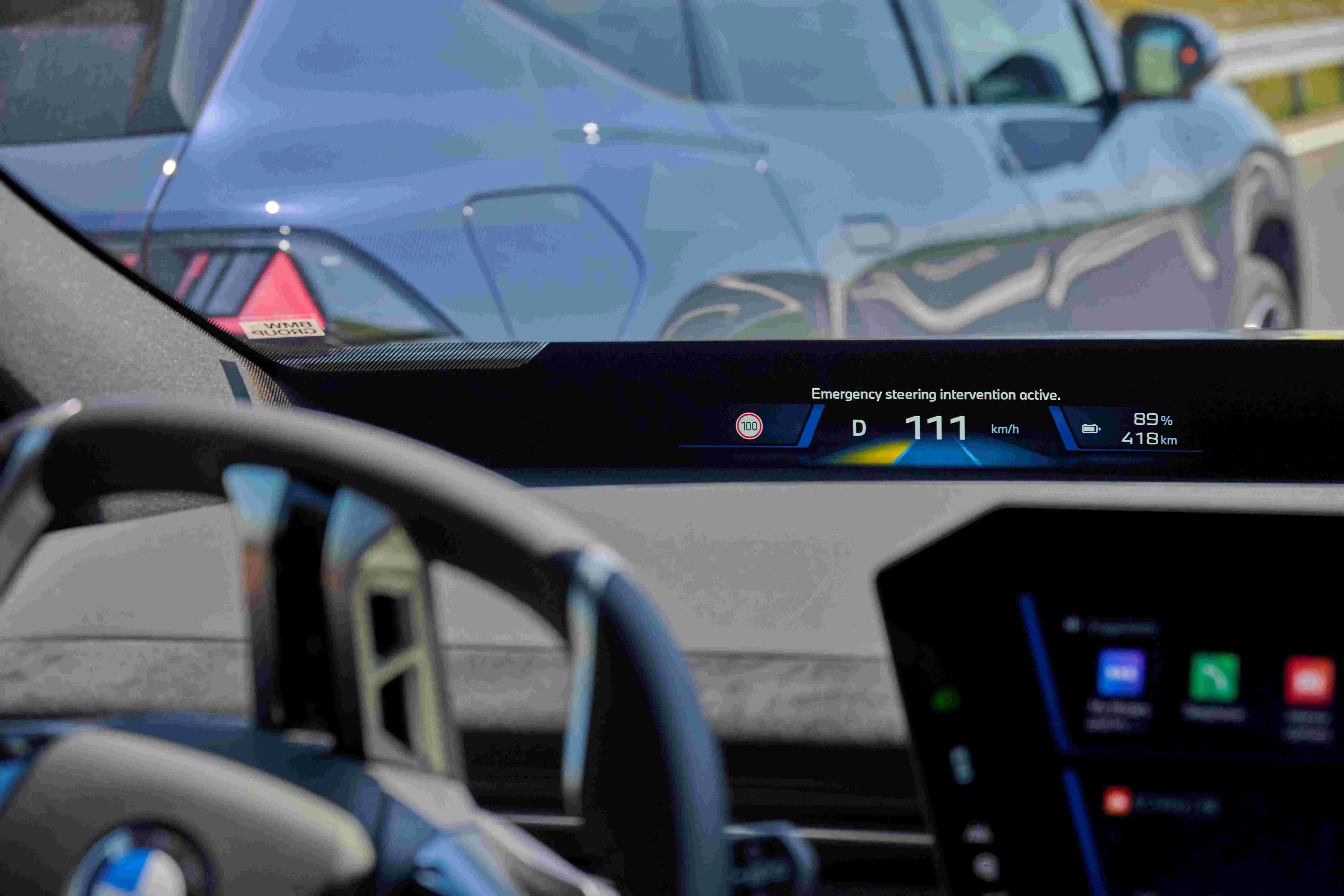
Alongside the exit warning, BMW is introducing what it calls BMW Symbiotic Drive. The idea is to make assistance systems less intrusive by giving them a better understanding of driver intent. The Lane Keeping Assistant, for example, will only intervene when it detects an unintended lane departure or an imminent collision risk.
If the driver signals, makes a deliberate steering input, or performs a shoulder check, the system recognises the manoeuvre as intentional and holds back. That kind of contextual awareness addresses one of the most common frustrations with modern driver assistance: systems that fight the driver rather than support them.
Underpinning all of this is a new central computing unit BMW describes as the “Superbrain of Automated Driving.” Water-cooled and carrying roughly 20 times the processing power of its predecessor, it manages active safety, automated driving, and automated parking functions from a single platform.
Real-World Numbers and Independent Validation
BMW points to data from its connected vehicle fleet to support the case for these systems. Across 1.3 million vehicles whose owners have consented to data sharing, the fleet covered 1.6 billion kilometres in Europe in a single month. During that period, drivers received around eight million collision warnings, and active steering or braking interventions prevented potential collisions in nearly 244,000 cases.
Independent validation has followed. The new BMW iX3 received a five-star Euro NCAP rating under the organisation’s revised 2026 test protocols, which BMW notes are more demanding than previous versions.
Much of the development work took place at BMW’s Future Mobility Development Centre in Sokolov, Czech Republic. The 600-hectare facility, which opened in 2023, offers around 25 kilometres of test tracks covering urban, motorway, and automated parking scenarios, complementing virtual simulations and on-road testing across multiple continents.
Why This Matters Beyond the Spec Sheet
Making these features standard rather than optional is the part of this announcement that deserves attention. Safety technology that sits behind a paywall reaches fewer people, which limits its real-world impact. Spreading it across an entire model generation changes the calculus considerably.
For cyclists sharing city streets with parked cars, a door that delays itself could prove more valuable than almost any other feature on the options list.