Driverless cars outperforming human drivers in crash statistics is a claim the autonomous vehicle industry has long wanted to make with confidence. Now, for the first time, there is rigorous independent research to back it up, at least for one operator, in specific cities, at a limited scale.
The Insurance Institute for Highway Safety (IIHS) has published a study showing that Waymo’s Level 4 autonomous vehicles were involved in 68% fewer crashes per vehicle mile travelled than human drivers across San Francisco, Phoenix, Los Angeles, and Austin. The finding covers crashes that a person would typically report to police.
What the Numbers Actually Mean
Waymo’s vehicles logged roughly 50 million driverless miles during the study period. Over the same period and locations, human drivers covered approximately 222 billion miles. That scale difference matters: the Waymo sample is real but still modest compared with the broader driving population.
The results varied by city. Waymo performed 76% better than humans in Phoenix and 71% better in Los Angeles, but only 35% better in San Francisco. In Austin, where the sample was small, the rate was actually 4% higher than human drivers, a figure the researchers flag as statistically unreliable given the limited data.
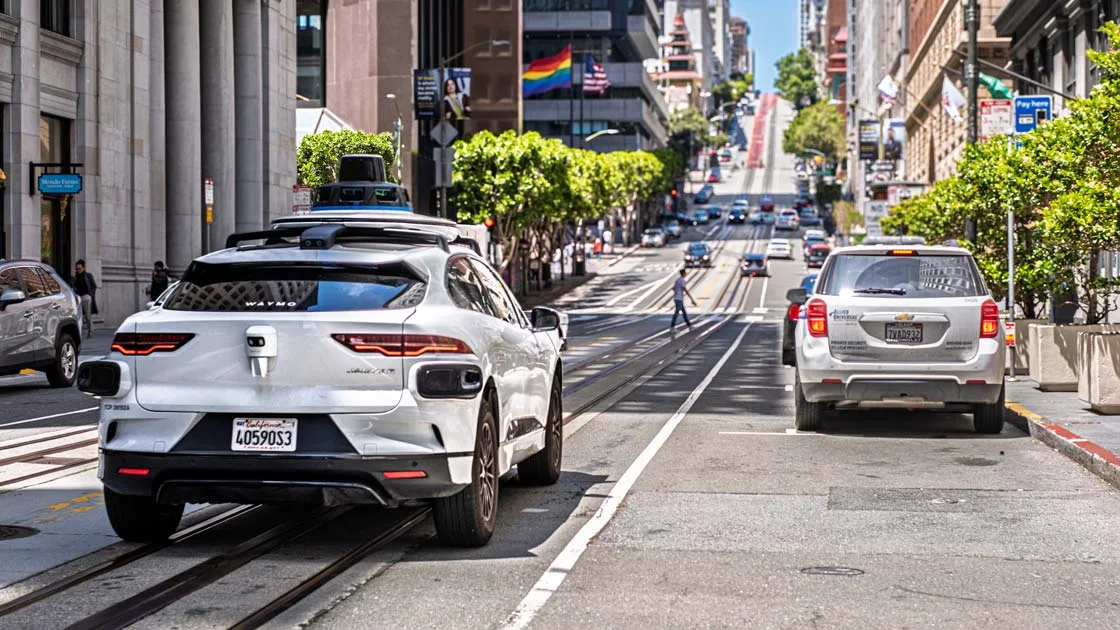
Waymo vehicles were involved in 85% fewer single-vehicle crashes and 81% fewer injury crashes per mile than human drivers. Those are the figures that matter most for public safety arguments.
The Data Problem Underneath the Headlines
The encouraging results come with a significant caveat. IIHS researchers had to do considerable work just to make a fair comparison possible. Federal reporting rules, under the National Highway Traffic Safety Administration’s Standing General Order, required autonomous vehicle operators to log minor incidents that human drivers would never report, a scraped undercarriage counted as a crash, for instance.
After removing redundant records, incidents where automation was not engaged, and crashes unlikely to meet a reasonable police-reporting threshold, researchers found that only around 22% of the 736 public-road crashes in the dataset were genuinely comparable to what humans report.
Crucially, only Waymo voluntarily discloses the miles its vehicles travel in driverless mode. Other operators (including Cruise and Zoox) do not, making it impossible to calculate their crash rates at all. Without mileage data, crash counts are meaningless for safety comparisons.
Why This Matters Beyond Waymo
Waymo has been operating driverless robotaxis commercially since 2020, expanding from Phoenix to San Francisco, Los Angeles, and Austin. Its vehicles operate at SAE Level 4, meaning the system handles all driving without human supervision under defined conditions, a meaningful step beyond the Level 2 driver-assistance systems, such as GM’s SuperCruise or Ford’s BlueCruise, that most consumers currently encounter.
IIHS president David Harkey noted that the results demonstrate these vehicles can be safer than human drivers on a limited scale, particularly given that humans can be impaired, drowsy, or inattentive. The institute’s concern, however, is forward-looking: as autonomous vehicle deployment expands, the existing data infrastructure is not capable of continuous, reliable safety monitoring.
The research is a genuine milestone, but it is also a prompt. The safety case for driverless vehicles will only hold up if the systems used to track that safety are fit for purpose, and right now, they are not.