ANCAP updates its test and rating requirements every three years, and the 2026 revision is the most significant overhaul in the organisation’s three-decade history. The BMW iX3 has become the first vehicle independently assessed under the new framework, earning a five-star rating in the process.
A New Way of Measuring Safety
The updated criteria introduce what ANCAP calls a Stages of Safety approach, which evaluates a vehicle across four distinct phases rather than focusing almost entirely on crash protection alone.
- Safe Driving – how well the vehicle supports the driver day to day
- Crash Avoidance – how effectively the car detects hazards and intervenes
- Crash Protection – structural integrity, airbags, and restraint systems in a collision
- Post Crash – systems that assist emergency responders after an incident
ANCAP chief executive Carla Hoorweg described it as the most comprehensive ratings framework the organisation has applied. Crucially, all traditional crash tests remain in place; the new criteria build on top of them rather than replacing them.
How the iX3 Performed
The iX3’s results were broadly strong across all four stages. Its autonomous emergency braking system exceeded Australian, New Zealand, and European regulatory requirements, performing well with cars, motorcycles, pedestrians, and cyclists. Lane departure avoidance was a particular standout.
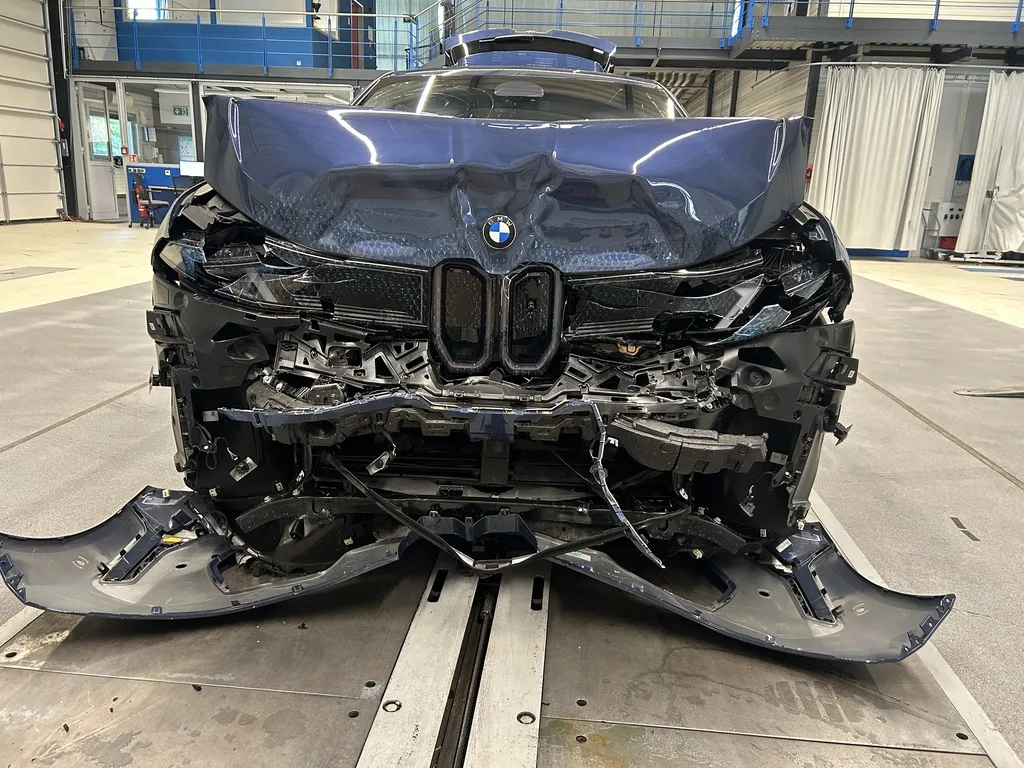
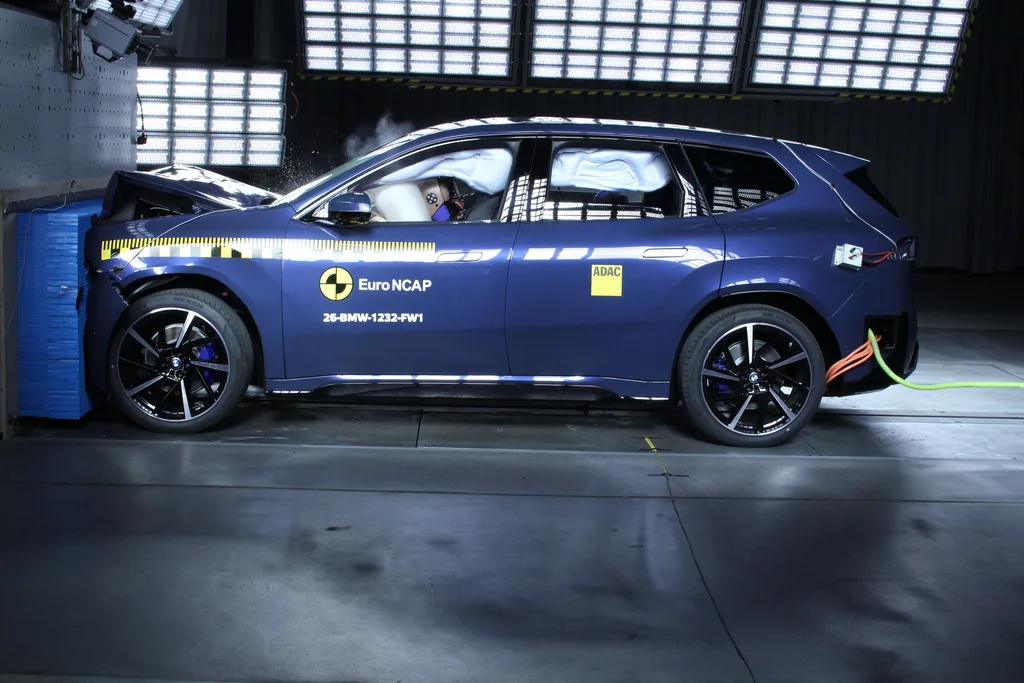
Crash protection scores were mature. The iX3 achieved maximum scores in all side-impact scenarios and in the newly expanded full-width frontal test, which now includes a third dummy in the front passenger seat for the first time. Rear-impact whiplash performance was rated very good.
On the Safe Driving assessment, the iX3 correctly identified 73 per cent of speed limit change events during on-road testing, equivalent to 92 per cent of the distance driven. Driver monitoring for fatigue and impairment performed better than its distraction detection, which is worth noting for buyers who rely heavily on that feature.
Post-crash capability scored 95 per cent. The iX3 is fitted with an eCall system that automatically transmits crash location and severity to emergency services, provided to Australian and New Zealand owners for the life of the vehicle. As an electric vehicle, it also demonstrated effective battery voltage isolation and fire risk management after impacts.
What Changes Under the New Criteria
Several meaningful additions distinguish the 2026–2028 framework from its predecessor. A new crash barrier in the full-width frontal test better reflects real-world collisions and reduces the scope for manufacturers to optimise airbag deployment for a single scenario.
Rollover protection is now assessed, examining whether curtain airbags stay inflated long enough and cover enough of the cabin. New pothole testing evaluates how well a vehicle helps the driver maintain control when steering around a road hazard, a scenario that rarely featured in formal safety assessments before.
There is also a notable shift in how driver assistance systems are judged. Systems that irritate drivers will be marked down; lane-keeping assist is now assessed on how naturally it interacts with steering, including how easily the driver can override it. The intent is to encourage technology that drivers actually leave switched on, which is where the real-world safety benefit lies.
A motorcycle T-bone test has been added to push manufacturers toward autonomous braking systems capable of preventing intersection crashes with motorcycles, a collision type that has historically been difficult for these systems to handle reliably.
Tarmac Takeaway
The iX3’s five-star result is significant not just for BMW, but because it sets the benchmark every manufacturer now has to meet. With fuel leakage and EV battery integrity formally incorporated into crash assessments, the framework is also catching up with the realities of an increasingly electric new-car market. Every model tested from here will be measured against these same standards.