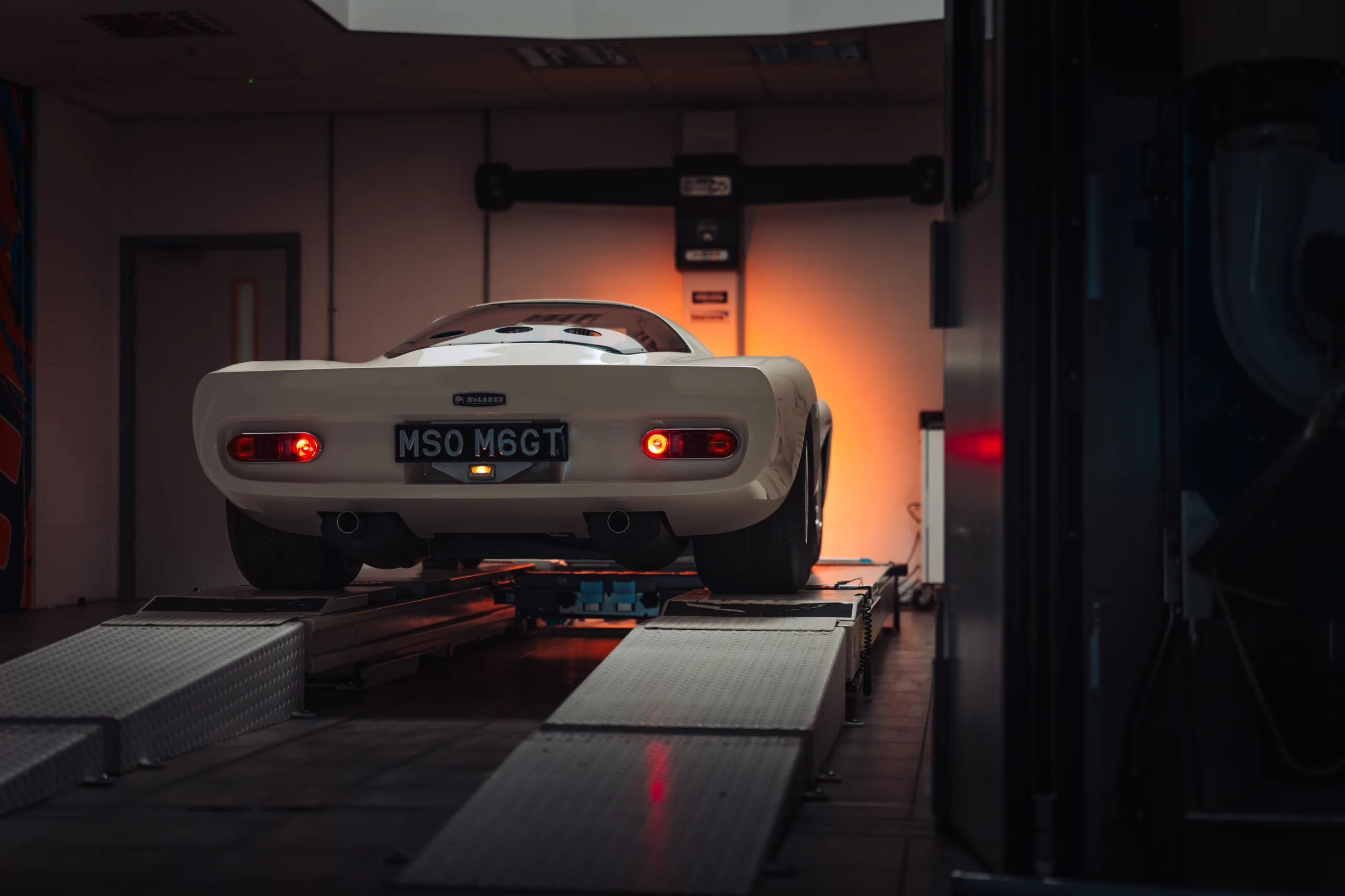
There’s a certain magic when a car carries the weight of history on its shoulders. The McLaren M6GT, debuting at Goodwood Festival of Speed 2026, is precisely that, a one-off restoration that connects the maverick spirit of founder Bruce McLaren to the high-performance machines we know today.
From Blueprint to Reality – A Labour of Love
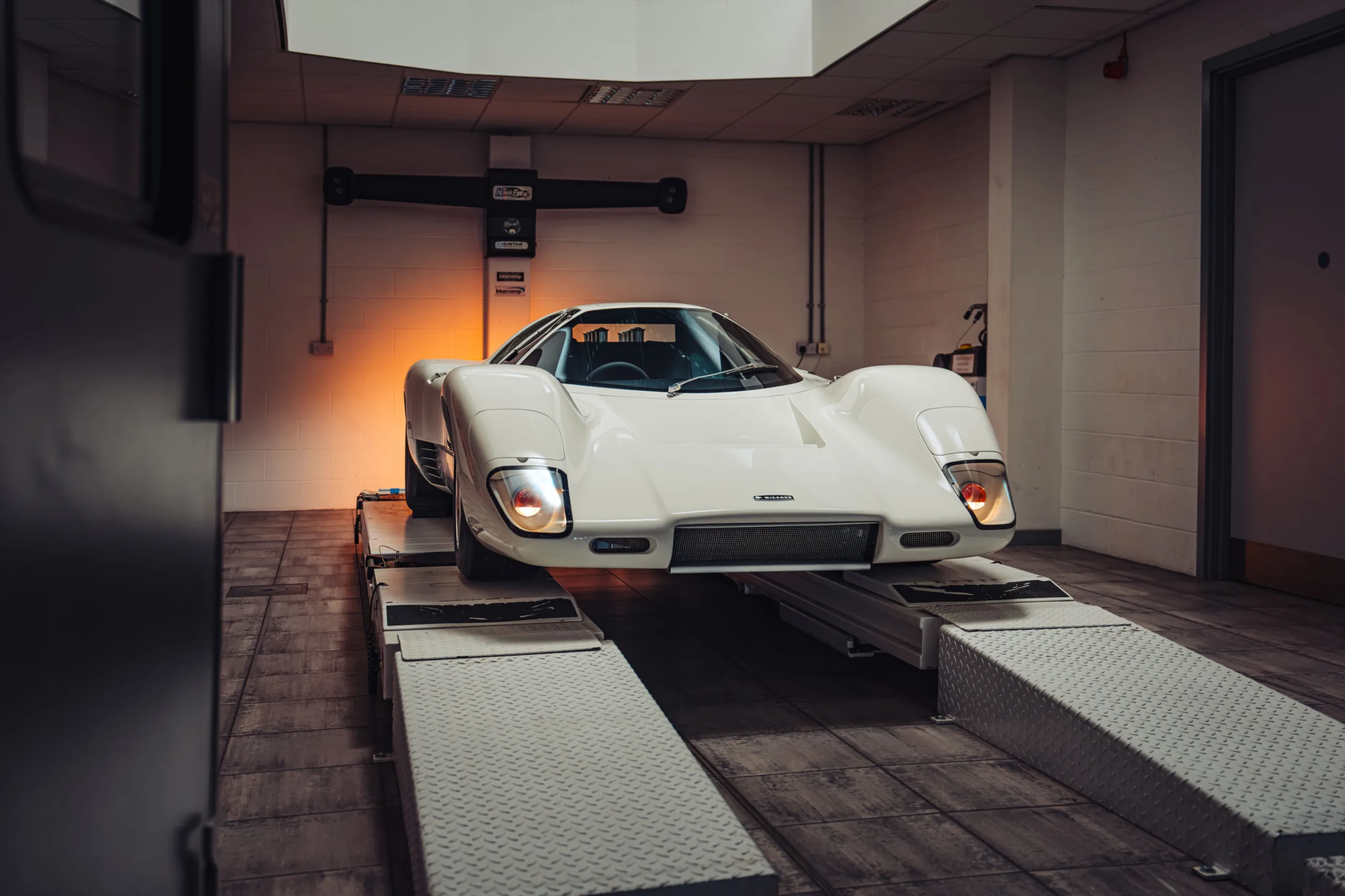
Imagine having the original moulds and blueprints from a legendary automotive visionary sitting in your archives. That’s exactly what McLaren Special Operations (MSO) discovered (and used) to resurrect the M6GT as an authentic tribute to Bruce McLaren’s original road-car ambition.
“The M6GT: Restored by MSO has been a labour of craft and care for the team and served as both a technical education and a living reminder of Bruce’s ambition to take McLaren beyond the racetrack,” explains Jon Simms, Director of MSO. Every decision in this build was treated as an act of custodianship—a philosophy that permeates every rivet, component, and finish.
Engineering Meets Heritage
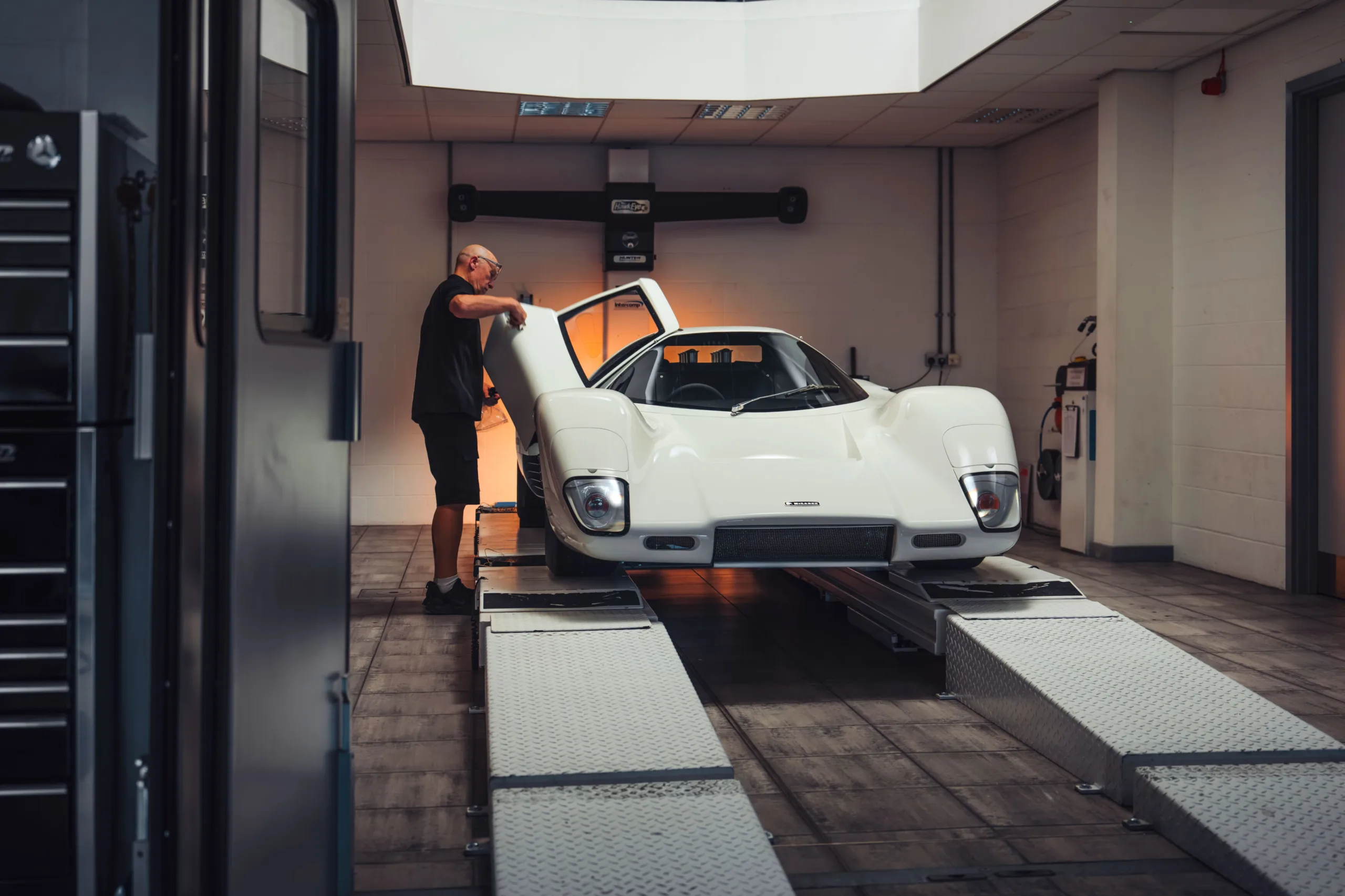
What makes the M6GT restoration truly remarkable isn’t just nostalgia; it’s the meticulous attention to authenticity. MSO constructed the car from the ground up, combining restored components with freshly engineered one-offs that remain faithful to Bruce’s original intent.
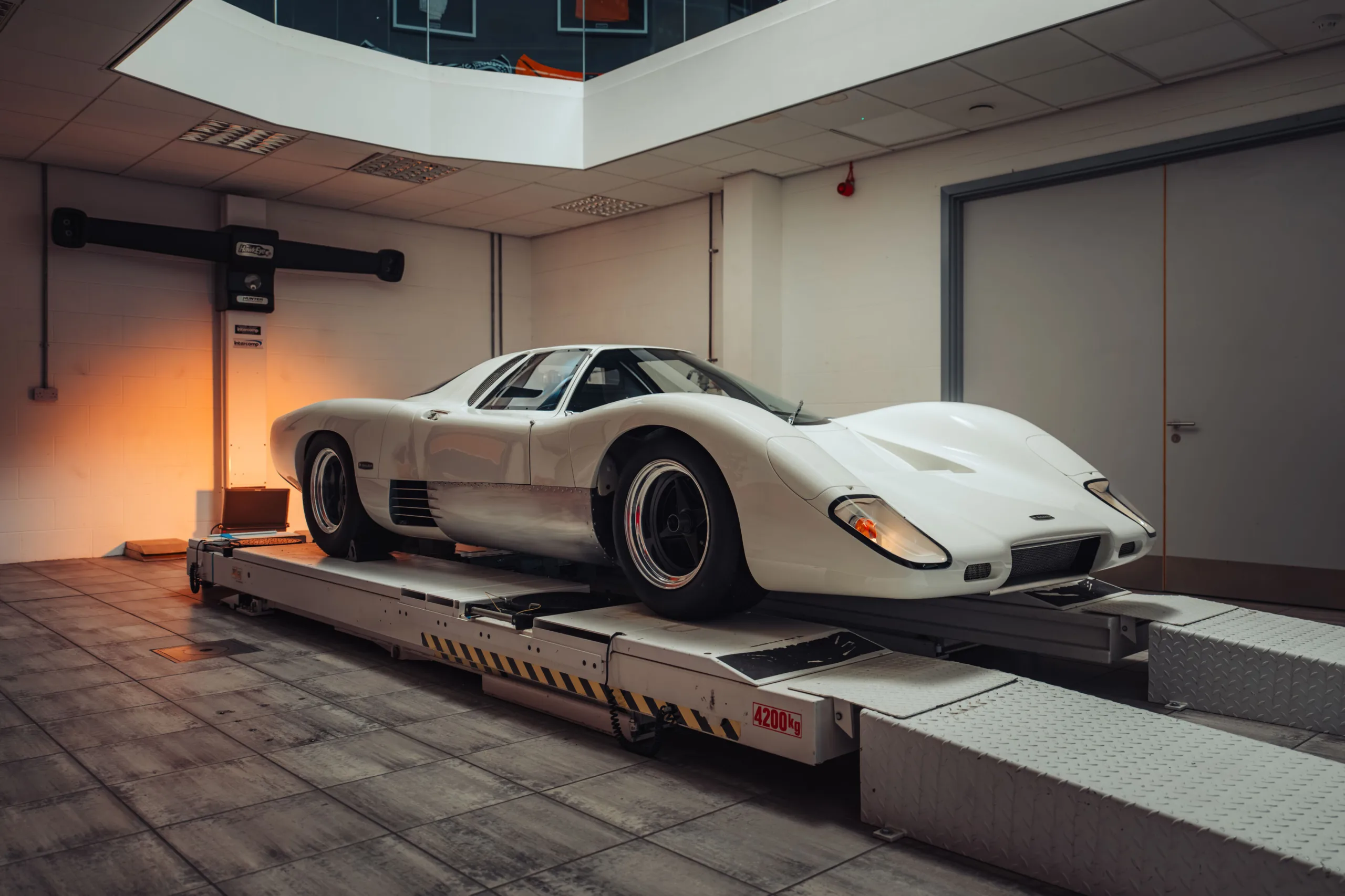
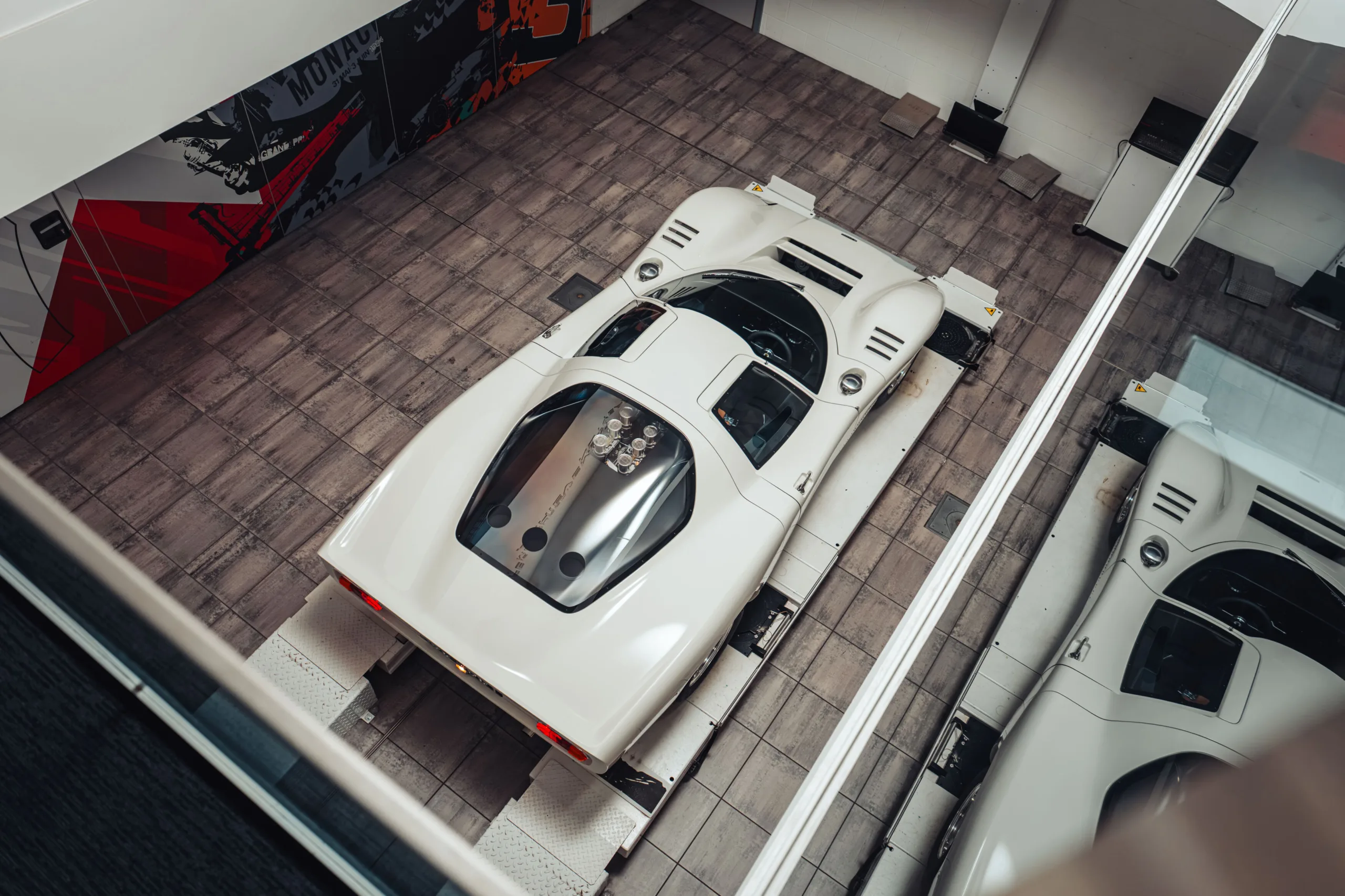
The engineering specifications alone read like a love letter to the 1970s racing era. The car features a period-correct engine and gearbox, with a small-block V8 fitted with ‘camel hump’ cylinder heads, exactly as originally specified. The suspension is genuine M6GT hardware, meticulously restored and rebuilt, with many components requiring imperial-era bearings sourced to standards that aren’t even in regular production anymore.
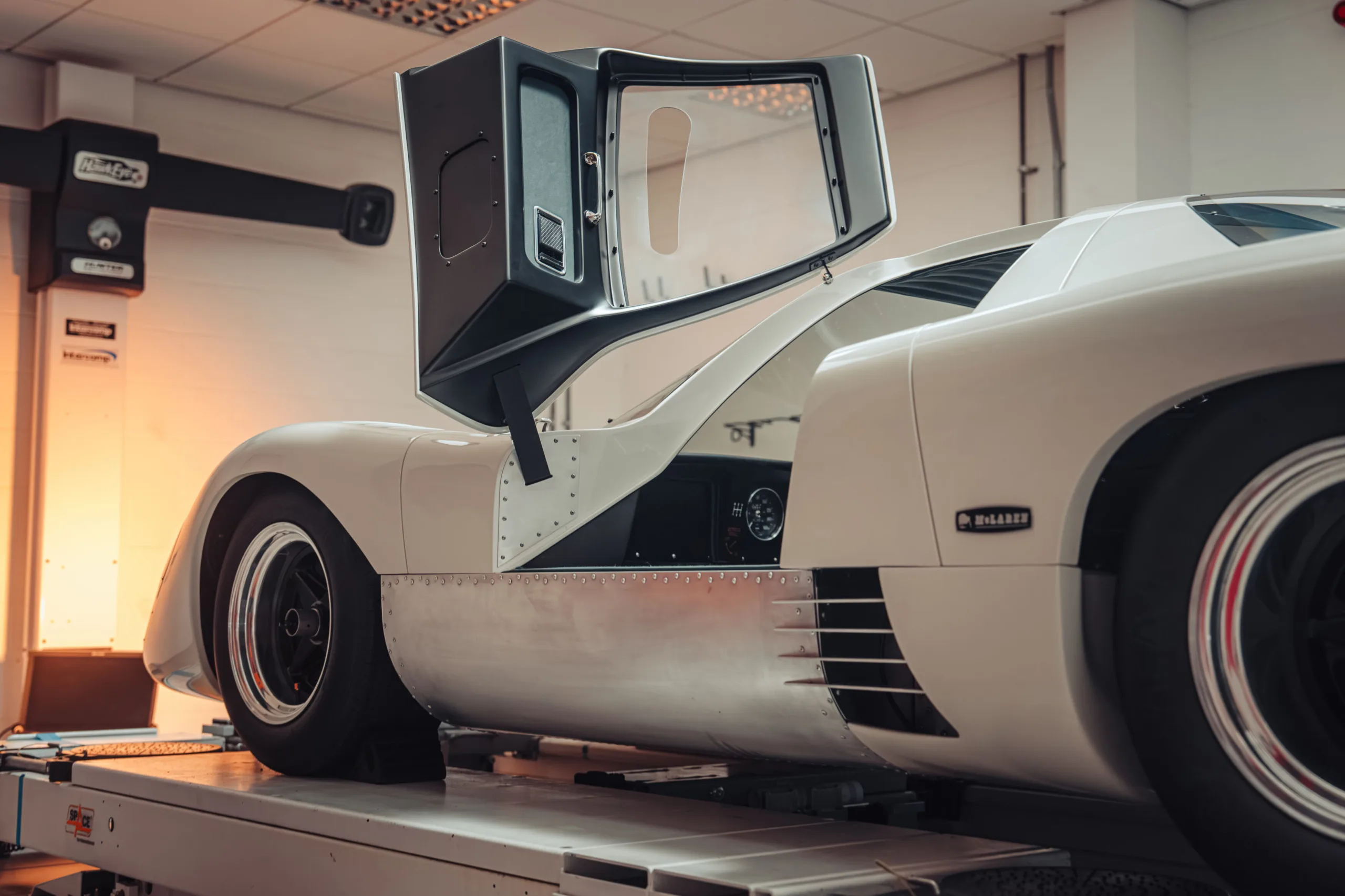
Even the smallest details received reverence: original-style closed aluminium dome rivets were hand-installed by skilled craftspeople from the aerospace industry. This isn’t just restoration; it’s archaeological precision applied to automotive engineering.
Racing DNA, Road Car Soul
The M6GT draws its design inspiration directly from the M6A racing programme. Aerodynamic endurance racing cues, lightweight engineering, and race-derived proportions inform every curve. Bruce McLaren actually used the first prototype as his personal transport to attend meetings and racing events, a race car masquerading as a commuter.
The philosophy proved prophetic. It would take another 25 years before Bruce’s vision for a production customer vehicle materialised in the iconic McLaren F1, but those early principles continue to shape the brand today. The M6GT represents the genesis of the McLaren road car story.
Craft in Every Corner
Step inside the M6GT, and you’ll find intimacy meets restraint. The cabin showcases bespoke craftsmanship: the gear knob is hand-turned from solid walnut, and the seats are trimmed in custom vinyl with heat-seam stitching in matching green, a subtle nod to McLaren’s racing heritage.
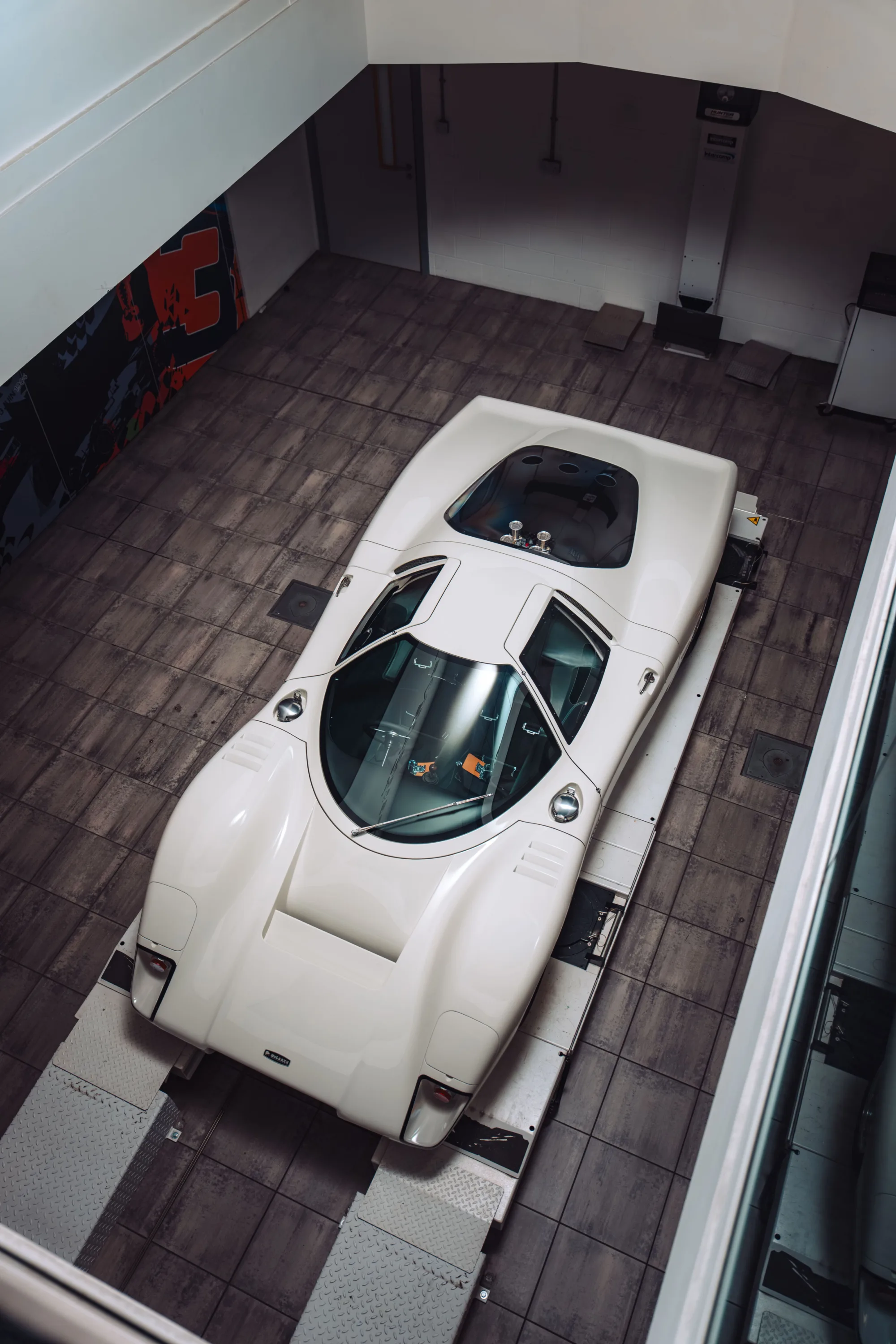
Even the windscreen received special treatment. Scans of the original profile were sent to specialist suppliers to recreate the unique bespoke design. The attention to detail extends beyond what meets the eye, with hidden structural elements (the roll hoop, rear frame support, internal clam reinforcement, and wiring harness) hand-fabricated by MSO specialists with the same care as visible surfaces.
The Colnbrook Connection
The M6GT is finished in a bespoke cream-based white colour, named Colnbrook in homage to the factory where Bruce developed his road car thinking. Located under the flightpath to what would become Heathrow Airport, the Colnbrook facility represented Bruce’s ideal, close enough to his day job, yet perfectly positioned for those last-minute dashes to races around the world.
The colour scheme—Colnbrook white exterior with green interior—draws inspiration from Bruce’s first McLaren Formula 1 car, the 1966 M2B, which wore white with a green stripe as a personal signature from founder to machine. It’s storytelling through paint and upholstery.
A Living Museum at Goodwood
The M6GT debut comes as part of the McLaren House at Goodwood Festival of Speed, which celebrates a living lineage from Bruce McLaren’s earliest racing experiments to cutting-edge modern offerings. Restored icons like the M8A and Austin 7 Ulster sit alongside contemporary statements like the Artura and 750S, demonstrating how race-bred engineering and bespoke MSO craftsmanship continue to shape McLaren’s performance luxury story.
The showcase serves as both a museum of origin and an ode to the maverick spirit that has defined McLaren across six decades. It’s about understanding where you came from to know where you’re going.
What’s Next?
Beyond the M6GT, Goodwood will see the public debut of the MCL-HY, McLaren Racing’s new 2027 24 Hours of Le Mans and World Endurance Championship challenger. And there’s more: on Thursday, July 9th, 2026, McLaren will reveal what they’re calling the “high point of its current supercar era,” with a public debut on Friday, July 10th. For enthusiasts and petrolheads alike, Goodwood 2026 is shaping up to be unmissable.
Tarmac Takeaway
The M6GT restoration represents something profound in automotive culture: the recognition that heritage and innovation aren’t opposing forces. They’re dance partners. By honoring Bruce McLaren’s vision through meticulous restoration, MSO doesn’t just celebrate the past, it informs the future.
This is why the M6GT matters. It’s not just a beautifully restored classic. It’s a masterclass in how to respect tradition while pushing boundaries, wrapped in Colnbrook white with a green stripe and powered by decades of purpose.