If you’ve been following the electric vehicle revolution, you’ve probably heard the same old story, bigger batteries, longer waits, astronomical costs. Well fuel company Shell has unveiled something genuinely different – the Triple 10 Challenge concept car, a compact, mass-market EV that’s turning conventional EV wisdom on its head.
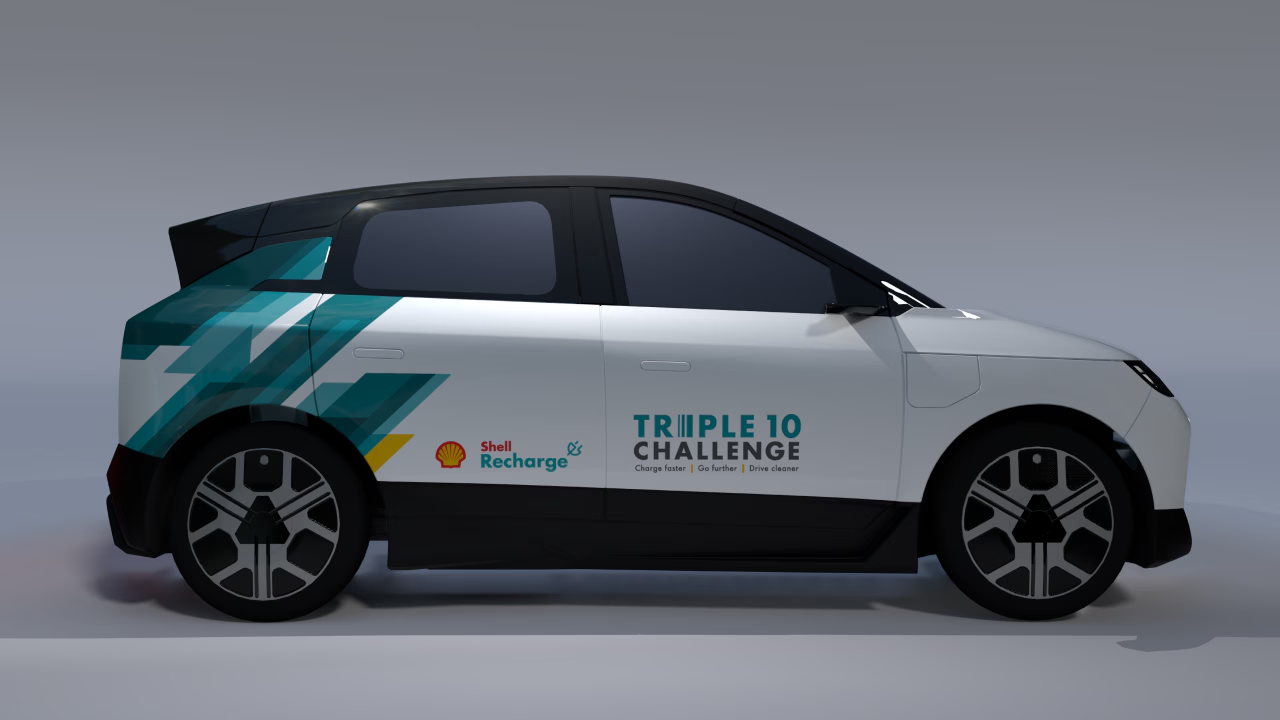
What’s the Triple 10 Challenge Actually About?
The name tells you everything, Shell believes this vehicle can achieve three ambitious targets that could reshape the future of electric mobility:
- Charge Faster: A sub-10-minute charge time
- Go Further: 10-km/kWh economy
- Drive Cleaner: A life cycle 10-tonne CO2e footprint
Sounds ambitious? It absolutely is. But here’s the thing, Shell has actually built it and proven it works in real-world conditions.
The Charging Revolution You Didn’t See Coming
Let’s talk about charging, because this is where things get genuinely exciting. Current EVs that can charge in under 10 minutes? They require ultra-fast chargers exceeding 300kW, the kind you’ll find at maybe one in a thousand petrol stations. Utterly impractical for everyday drivers.
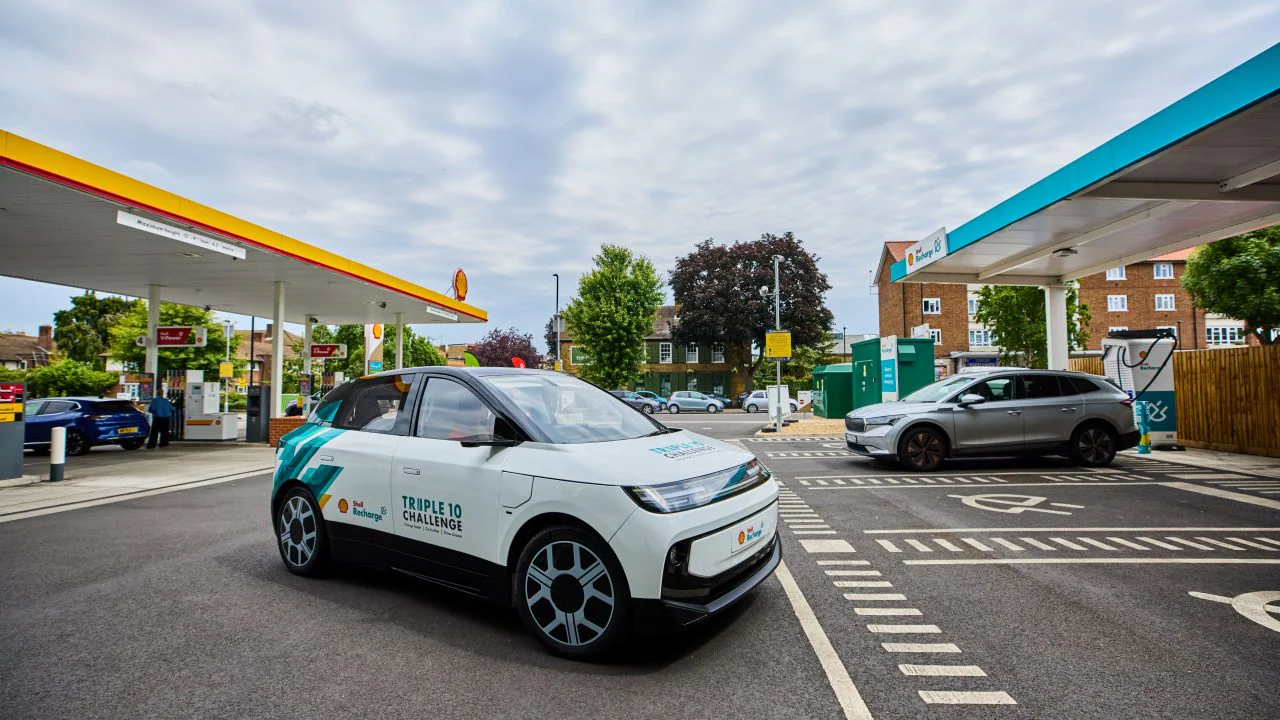
The Triple 10 Challenge pulls off the same trick using a standard 175kW charger, the kind already scattered across public charging networks today. It achieves a 10% to 80% charge in just 9 minutes 54 seconds.
Even more impressive, it adds 24km of range per minute of charging, compared to a typical 13km/minute on the same charger. That’s almost 90% more range for your time investment.
The Battery-Pack Breakthrough Nobody Expected
Here’s where Shell’s innovation gets genuinely clever. Rather than simply throwing a bigger battery at the problem (like everyone else), they completely reimagined how heat moves through the vehicle.
Traditional EV cooling systems rely on water-glycol coolants, which require heavy, complex piping networks. Shell developed Shell Recharge thermal fluid, a dielectric fluid that allows direct immersion cooling of the battery and indirect cooling of the motor and power electronics.
Translation? No more heavy piping, simpler architecture, and a battery pack that’s roughly 25% cheaper to produce than conventional EV batteries.
Range and Efficiency – The Numbers That Matter
The Triple 10 Challenge achieves 10 km/kWh in driving economy – that’s over 30% better than many current-generation EVs. For context, that means you’re getting genuinely impressive mileage from a smaller, lighter battery system that costs less and charges faster.
But wait, there’s more. Because the vehicle is lighter and more efficient, its lifecycle carbon footprint sits at approximately 10 tonnes CO2e – roughly 50% lower than typical battery electric vehicles in the European market.
Why This Actually Matters
We’re not talking about vaporware or engineering fantasy here. This concept car was unveiled at HORIBA MIRA’s proving ground after extensive validation and testing. Shell partnered with some of the brightest minds in automotive engineering:
- RML stripped out the heavy cooling architecture and redesigned the battery pack
- Empel Systems developed the advanced electric motor that maintains exceptional power density
- HORIBA MIRA conducted world-class vehicle integration and testing, subjecting the system to simulated extreme global weather conditions
The result? A vehicle that proves next-generation EV technology exists today – it doesn’t require decades of development or impossible technological breakthroughs.
The Bigger Picture – Shell’s EV Ambition
Shell didn’t pull this concept out of thin air. The company has a rich heritage in ultra-efficient vehicle innovation, stretching back to Project M (2016), the Starship programme for freight efficiency (ongoing since 2018), and the legendary Shell Eco-marathon, which for over four decades has challenged students globally to build the world’s most energy-efficient vehicles.
Now, Shell is consolidating its EV capabilities under a single umbrella: Shell Recharge. This unified platform covers everything from charging networks to advanced fluids to battery solutions, creating a complete end-to-end offer for both B2B and B2C customers.
The Reality Check
Let’s be honest: this is a concept car, not a vehicle you can buy next month. The Triple 10 Challenge was developed to demonstrate what’s technically achievable under optimized conditions. Real-world results will vary depending on driving patterns, climate, and charging infrastructure.
But here’s what matters: Shell has proven that the path forward for mass-market EVs doesn’t require impossibly large batteries or revolutionary new materials. Instead, it’s about smarter thermal management, clever engineering, and rethinking the fundamentals.
What This Means for You
If you’ve been holding off on going electric because you’re worried about charging times, limited range, or eye-watering battery costs, pay attention. Shell’s Triple 10 Challenge suggests that within the next few years, you could be looking at EVs that charge in minutes, deliver impressive efficiency, and won’t require a second mortgage.
The concept car proves that sustainable, practical, mass-market electric mobility isn’t some distant dream – it’s genuinely achievable with technologies available today.
For an industry obsessed with ever-larger batteries and longer development timelines, Shell’s alternative approach feels genuinely refreshing. Sometimes the best innovations aren’t about doing more; they’re about doing things smarter.