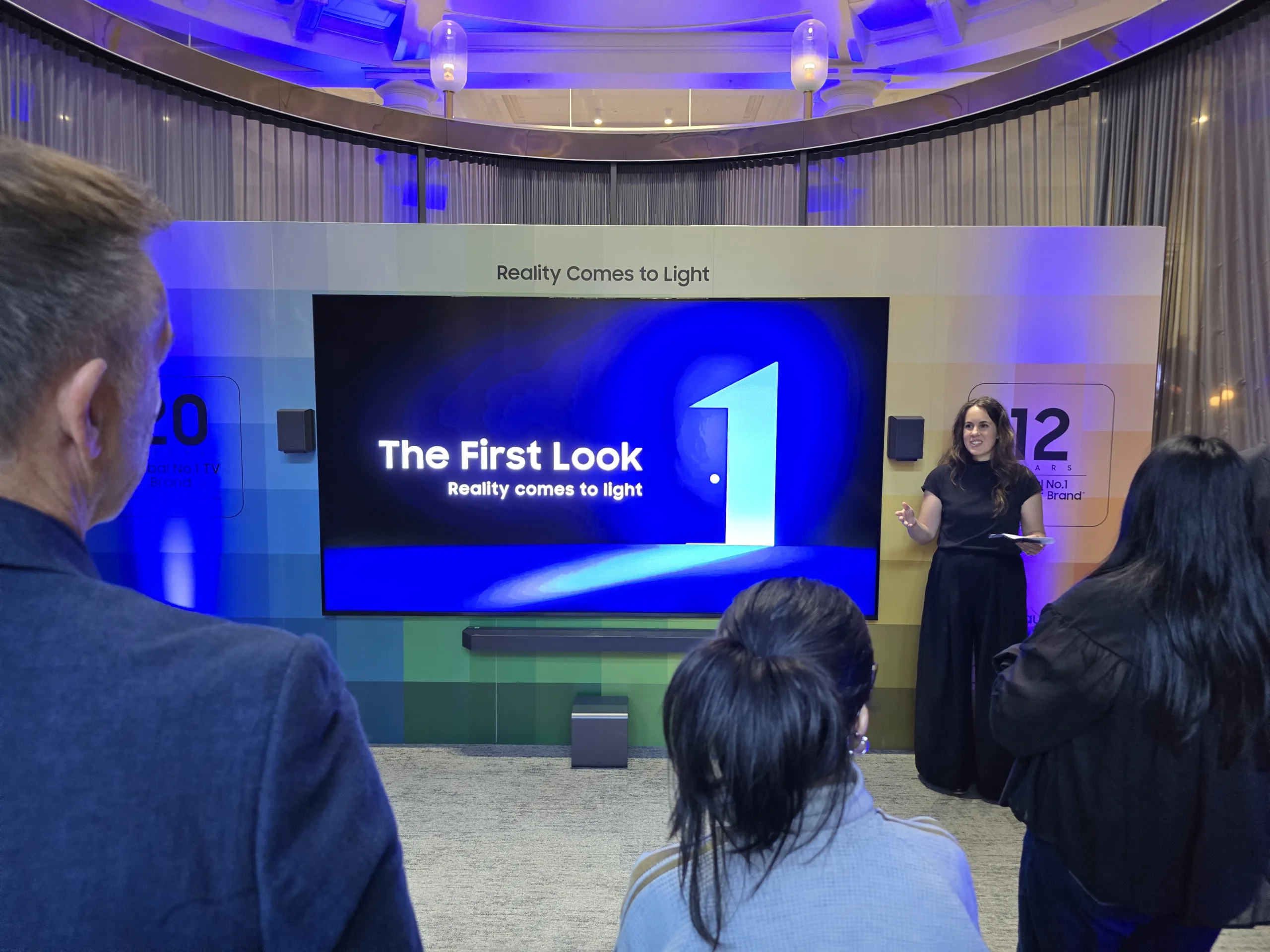
Samsung flew me across to Sydney last month for the unveiling of its full 2026 AI TV line-up, and as of today the whole range is officially available to Kiwi consumers. It is the biggest, broadest, and frankly the most accessible TV launch I have seen from the brand in years.
This is also Samsung’s twentieth consecutive year as the world’s number one TV manufacturer by unit sales, which is the sort of milestone that companies normally celebrate by getting comfortable. Samsung has gone the other way and pushed harder. The 2026 line-up adds more screen sizes, more glare-free panels, more art-mode options, and an entirely new portable category in the Movingstyle, while pulling premium features down into more affordable tiers.
If you have been eyeing a new TV for the living room, this is a very good week to start paying attention.
What’s been launched
The headline act is Micro RGB, Samsung’s new premium technology that uses individually controlled red, green and blue micro LEDs to deliver light far more precisely than a conventional backlight can manage. It is available in two series, the flagship R95H and the more affordable R85H, scaling from a 55-inch panel right up to a 115-inch Micro RGB wall that, at $42,999.95, is firmly in “if you have to ask” territory.
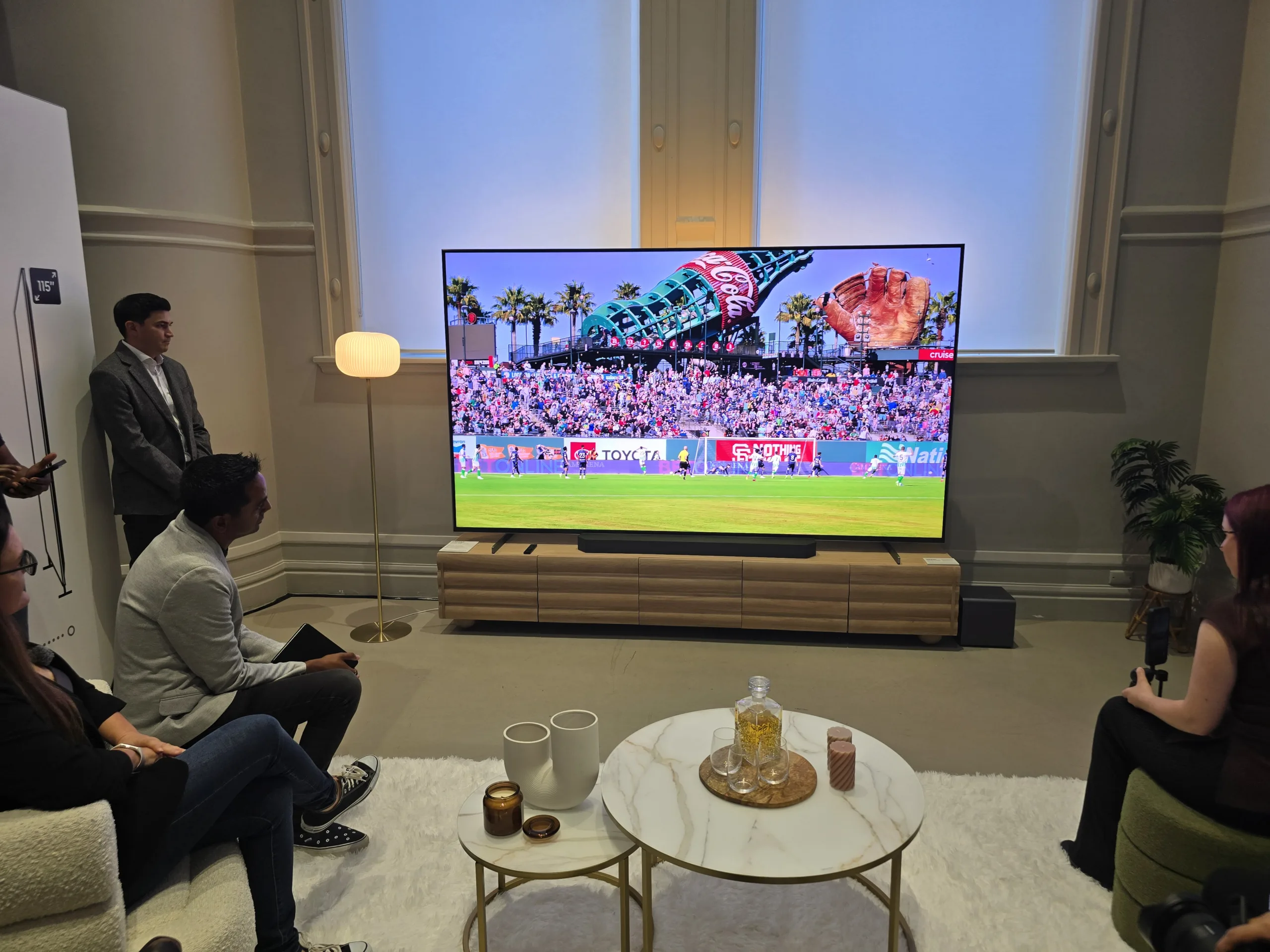
Below that sits OLED, refreshed across three tiers: the flagship S95H, the popular S90H, and the more accessible S85H. All three offer Samsung’s deep blacks and rich colour, but the headline story for me is that Samsung’s Glare Free anti-reflective coating, which previously only featured on the flagship S95F, now extends down through both the S95H and the S90H. I will come back to this in a separate piece because it genuinely matters in New Zealand homes.
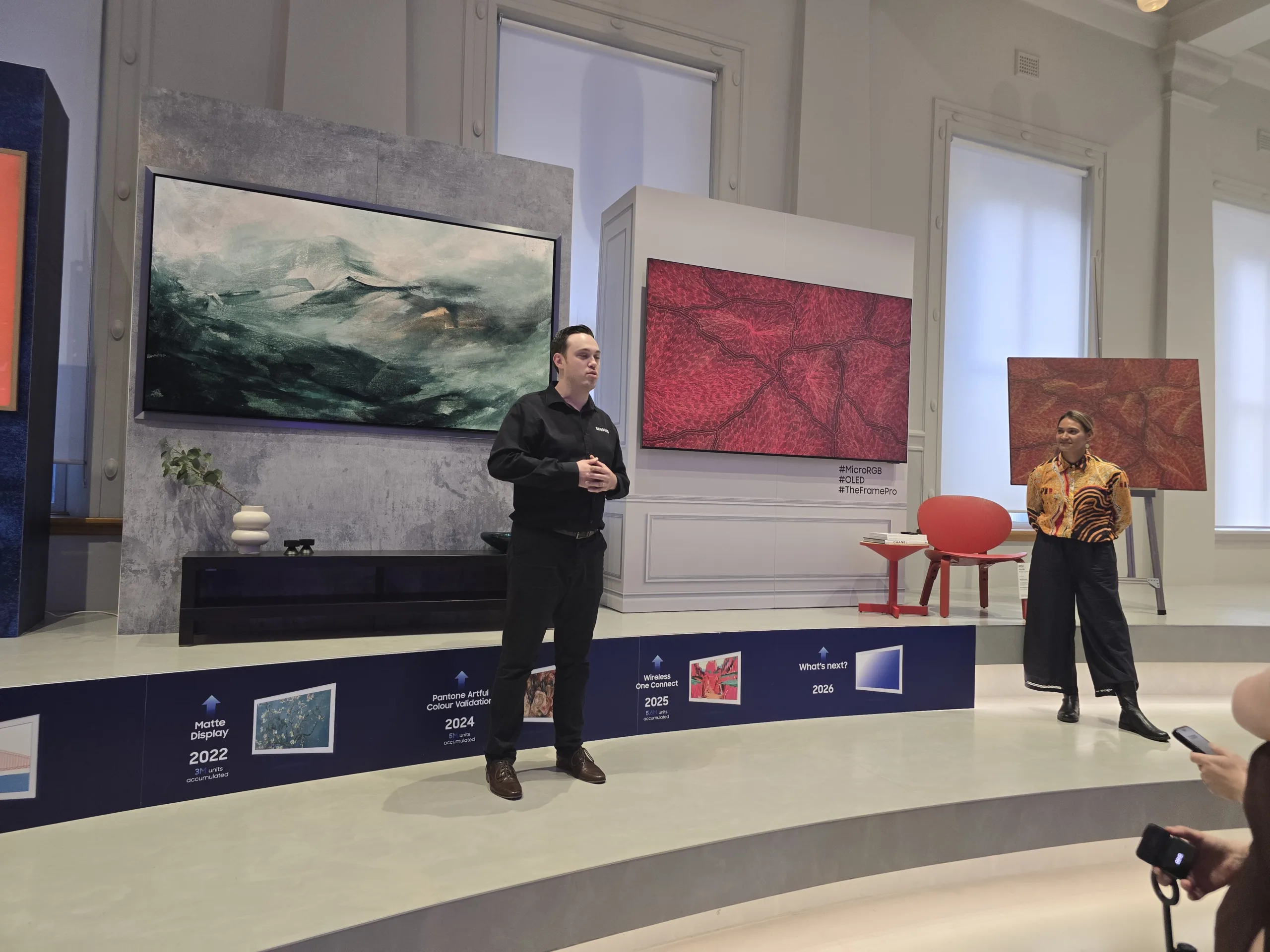
The Frame is back with a Pro variant featuring Neo QLED picture quality, Wireless One Connect, and that lovely 24.9mm slim profile, plus a built-in 98-inch Frame that finally gives gallery-scale art TVs a sensible installation path. The Pantone-validated colour reproduction in Art Mode is honestly a step beyond anything I have seen on a TV before.
Neo QLED (QN80H and QN70H) and Mini LED (M80H and M70H) cover the practical middle ground, offering Samsung’s Quantum Mini LED light control, AI-powered upscaling, and gaming features such as Motion Xcelerator at up to 144Hz on select models. These are the volume sellers and they are the models most Kiwi families will be choosing between this winter.
Then there is the Movingstyle, a 27-inch touch-screen display on a rollable floor stand with a three-hour battery and a detachable panel. It is a strange and brilliant thing, and I will admit I was not sure I needed one until I came across it through the launch cycle. More on that another time.
And in audio, Samsung is leaning further into the lifestyle play with two new wireless speakers, the Music Studio 7 and Music Studio 5, complete with Hi-Resolution Audio, Dolby Atmos and Q-Symphony pairing with Samsung TVs. The smaller Studio 5 features a Dot Design by Erwan Bouroullec, which is unusually grown-up industrial design for a home speaker. It marks Samsung’s twelfth consecutive year as the world’s number one soundbar brand, which is becoming a habit.
The AI bit, because of course there’s AI
I will be honest, the AI side of this launch is not what got me excited. Samsung is pushing Vision AI Companion (VAC) across its 4K-and-above range, with Gemini integration, AI Upscaling Pro, an AI Football Mode (which the Australians insisted on on calling “soccer”) that optimises picture and sound for live matches, and an AI Sound Controller Pro that lets you fiddle with dialogue and crowd noise independently. If you care about that sort of thing, Samsung now offers more of it on more models than anybody else.
For my money, what matters more is that the AI is increasingly invisible. You get the upscaling whether you ask for it or not, the picture is better whether you understand what is happening or not, and you can leave the TV alone to do its thing. That is how this stuff should work.
New Zealand pricing
Samsung has priced the range carefully, with entry points that are genuinely surprising. Some highlights:
- Crystal UHD U8000H from $899.95 (43-inch) to $5,999.95 (98-inch)
- Mini LED M70H from $1,099.95 (43-inch) to $4,899.95 (85-inch)
- Neo QLED QN70H from $1,599.95 (43-inch) to $5,599.95 (85-inch)
- OLED S85H from $3,499.95 (48-inch) to $9,999.95 (83-inch)
- OLED S90H from $3,799.95 (42-inch) to $12,499.95 (83-inch)
- OLED S95H from $6,299.95 (55-inch) to $14,999.95 (83-inch)
- The Frame from $2,499.95 (43-inch) to $12,999.95 (98-inch)
- The Frame Pro from $3,799.95 (55-inch) to $6,499.95 (75-inch)
- Micro RGB R85H from $4,699.95 (55-inch) to $21,999.95 (100-inch)
- Micro RGB R95H from $7,799.95 (65-inch) to $42,999.95 (115-inch)
- Music Studio 5 at $649.95, Music Studio 7 at $849.95
Full pricing across every size and tier is available at Samsung.com/nz, with stock now landing at leading retailers nationwide.
A small confession
Long-time readers will know I bought a new Samsung TV last month, unaware that a fresh range was weeks away from launch. As bad timing goes, it is up there. The good news is that my S90F was so close to what is now the S90H that I am not exactly weeping into my popcorn, and the experience prompted Samsung to invite me to the Sydney launch, so the universe has a sense of humour.
What I will say from spending real time with the 2026 range is this: if you are sitting on an ageing TV and have been talking yourself into one more year, just… don’t. Apart from the stuff that doesn’t fit in your house anyway, Samsung’s pricing is really competitive, the panel technology has stepped forward, and the lifestyle options now stretch from a $649 wireless speaker to a 115-inch Micro RGB wall. There is a TV in here for almost every Kiwi living room, and I suspect most of them will be very, very hard to walk past on the shop floor.
The Samsung 2026 AI TV range is on sale now in New Zealand through Samsung.com/nz and major retailers.
Samsung covered travel and accommodation for the Sydney launch event. Editorial opinions are entirely my own.