When the Mitsubishi Outlander first arrived on the scene in the early 2000s, it didn’t exactly cause a huge stir on the global scene. Yes, it would go on to become a highly successful SUV on the sales charts but it wasn’t a novelty, there were other SUVs around at the time. However, when the Outlander PHEV debuted in 2013, this was a different story altogether. PHEVs or ‘plug-in hybrid EVs’ had come and gone before but none quite like the Mitsubishi which would go on to not only pioneer this market but also become the benchmark. Put it this way, what the Toyota Prius did for Atkinson-cycle hybrids, the Mitsubishi has done for plug-in hybrids.
Such is the influence and legacy of Mitsi’s PHEV that it continues to feature strongly on the sales charts even today. The success of this powertrain led them to include it in their Eclipse Cross crossover as well. However, this review is about the Outlander PHEV and as good as its PHEV system might be, that alone doesn’t sell cars. With how competitive the SUV market has become in recent years, the Outlander has to deliver on all fronts to keep this level of success up. So has this mid-cycle facelift help keep it above the watermark?
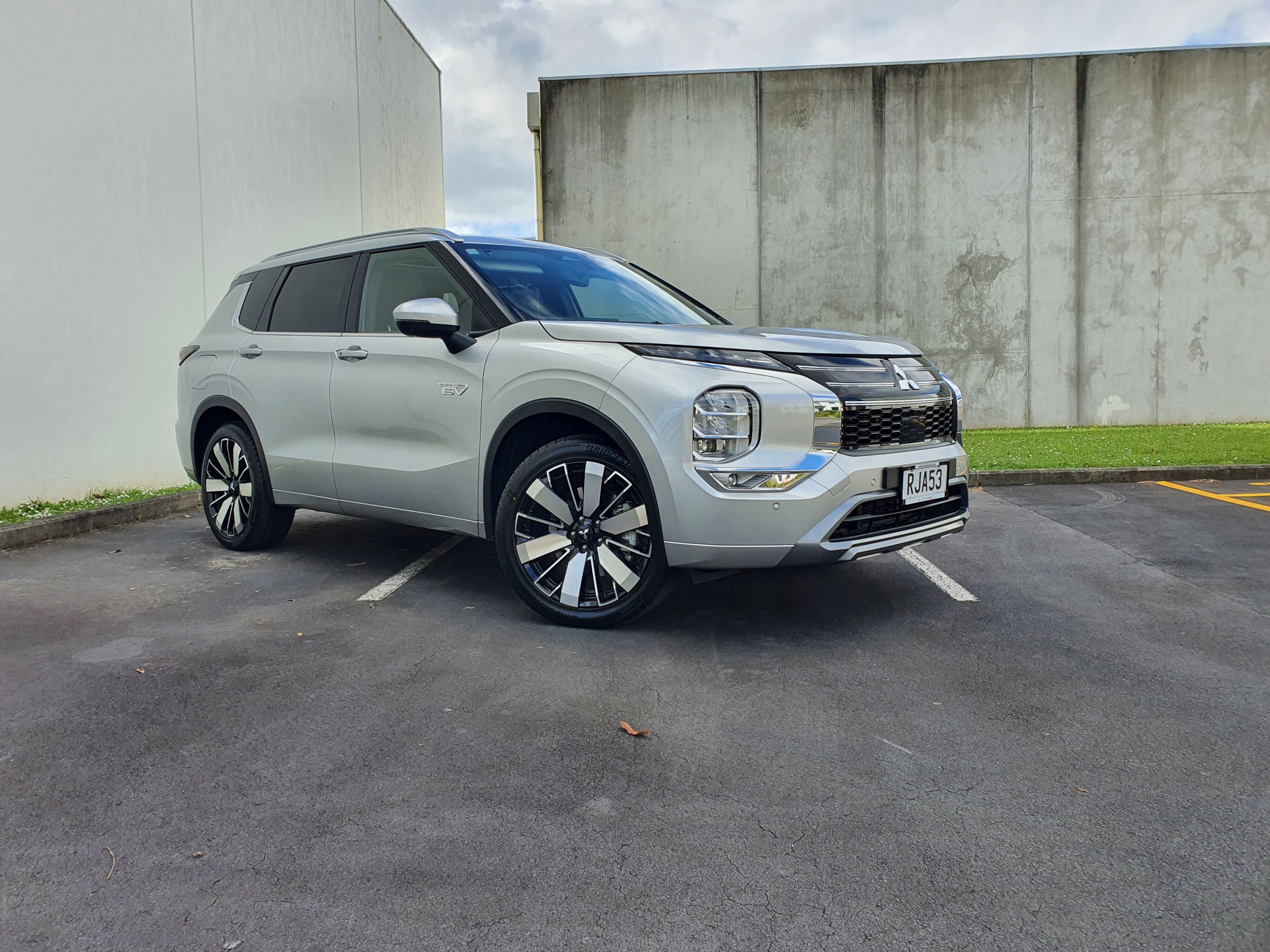
At its debut, the latest generation Outlander took a huge step forward from its predecessor, so much so that it has only needed a minor mid-cycle refresh/facelift at best to keep it relevant. For starters, it maintains that now signature Mitsubishi front grille. Evidently, while other manufacturers seem to be shying away from chrome, the triple diamond seems to have secured a deal on the material because there’s no shortage of it at the front! In fact, chrome is used to frame the grille, headlights and accentuate some of its lines, a trait that continues down the side as well.
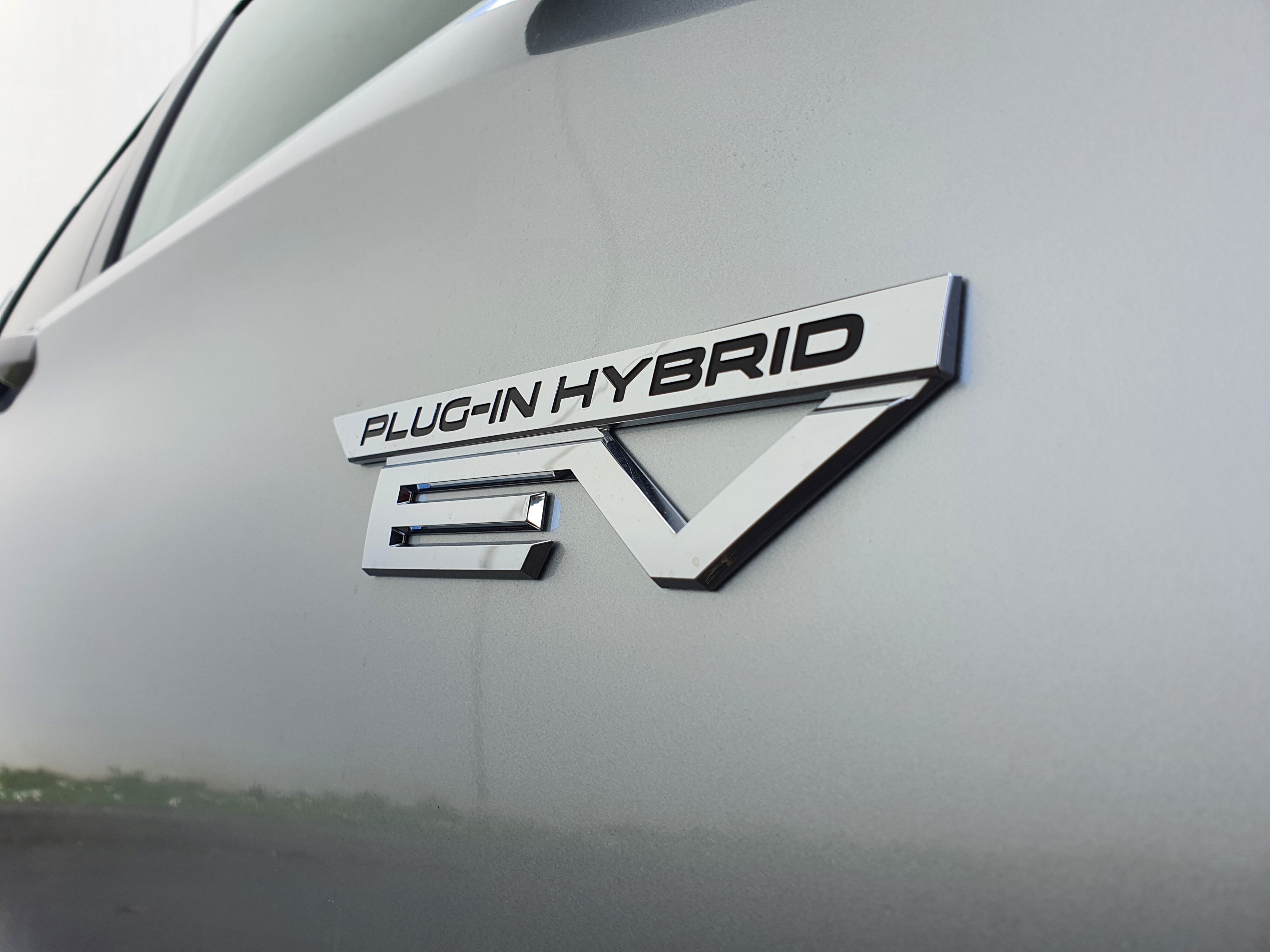
It certainly is a shiny new car in every sense of the word and I know of at least one person who chose the Outlander over its competitors for that exact reason. Part of the updated equipment list also includes these shiny new 20 inch wheels, standard on the VRX model reviewed here. Our review model came in a timeless Sterling Silver colour to further accentuate its gleaming appearance, not that the car needed any accentuating. While on the topic of paint choices, I would like to draw your attention to ‘Red Diamond’ and ‘Atlantic Blue’ shades which would be my picks if I was specifying an Outlander. Also note the prominent ‘Plug-in Hybrid EV’ badge on the side which seems to be growing with every generation that passes.
In fact, I can’t remember the Outlander ever being this big but it is indeed a sizable vehicle now, a far cry from the compact/medium sized crossover that it started out as. The dimensions tell the same story too with the car measuring in at 4.7m long, 1.86m wide and 1.75m tall. It’s large enough for family friendliness but not quite so that it is impractical to park/maneuver, although it is getting close.
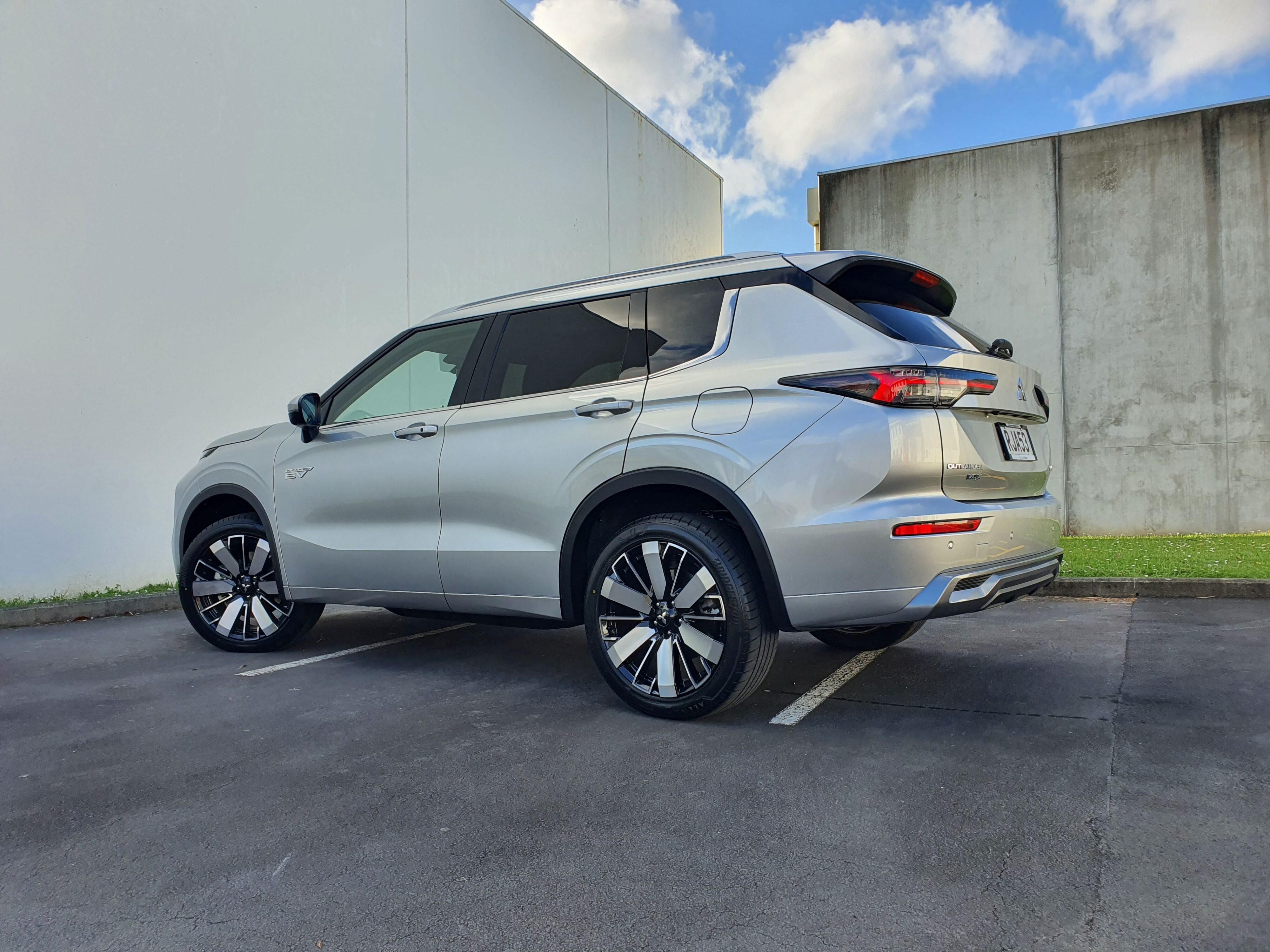
The Outlander is practical indeed with a boot that measures in at 637L in size with the second row up, a figure that quickly opens up to 1384L with a drop of that row. It can tow too with a capacity of 1.6 tonnes (braked). At this point, you can probably see why this is one of New Zealand’s favourite family SUVs. In fact, if you are sitting at a cafe reading this, look out the window and you will likely see one go by.
If anything, the interior only hammers the point home. It is genuinely a nice place to be and ticks all the standard boxes for a car of this category. Spacious, practical, comfortable and well equipped if I were to sum it up in one sentence. Once again, thanks to the huge leap forward that this generation took, like the outside, the inside hasn’t needed much in the way of a refresh either. Though what has been added has (mostly) improved the experience from before.
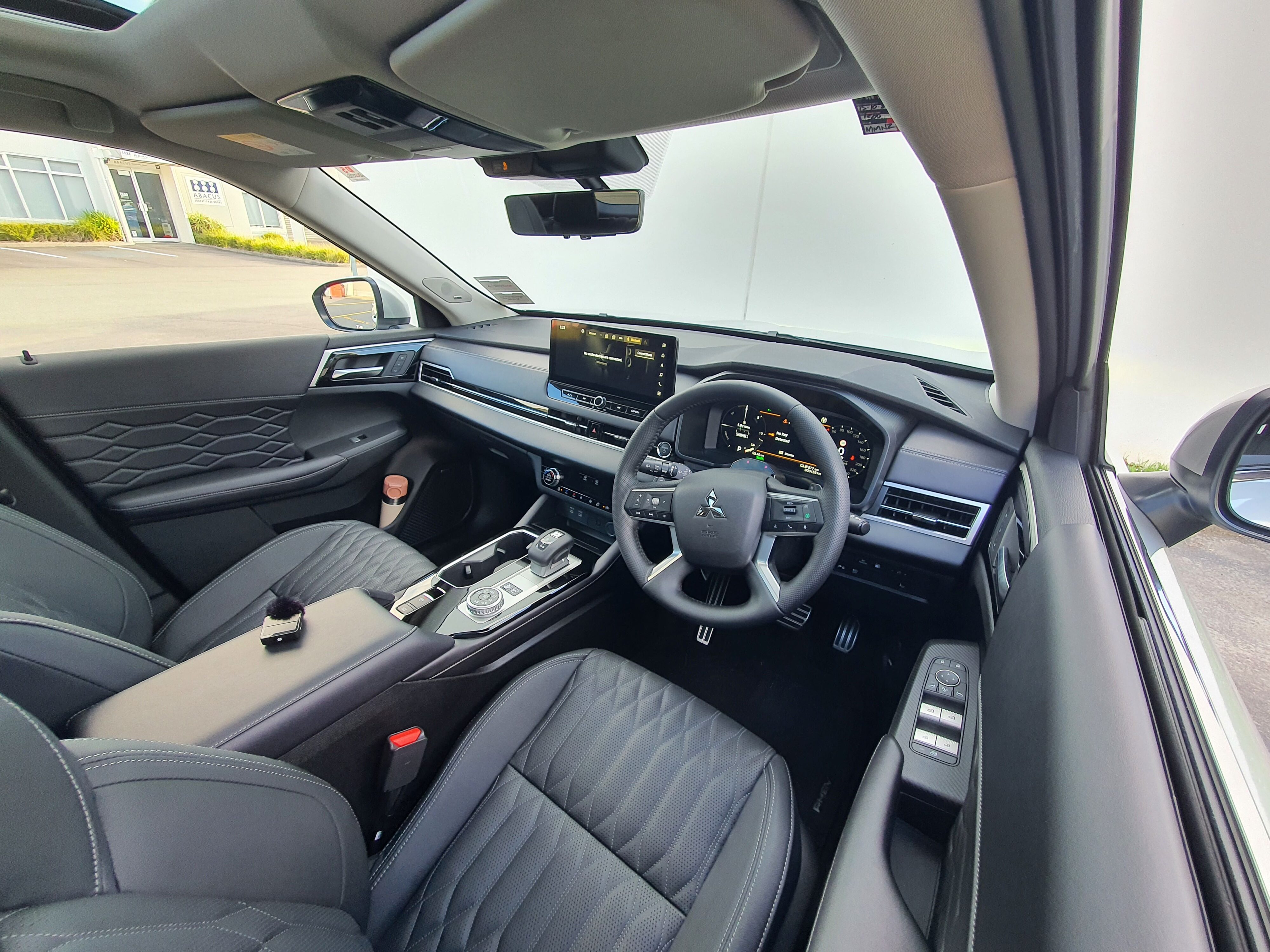
Diamonds are in the brand’s logo and indeed in the fabrics of the Outlander’s interior where the quilting extends from the seats into the door cards. Material use has been smart with all the key touchpoints being soft, meaning that the cabin not only feels premium but also aids the car’s ability to be quieter on the road. While on the topic of materials, the leather appointed seats are comfortable with heating and ventilation available on this VRX model. During my time with the car, I completed a round trip to Tauranga in a single day and had no real gripes where comfort was concerned. The review model featured here was specified with black upholstery, although there is a lighter colour on offer, I would recommend against choosing this if you have young children or a pet for instance.
Even with a black upholstery and interior fit-out, the cabin never feels too dark as there’s sizable windows and a dual sunroof on offer which floods the cabin with light when the shade is peeled back. All this so far works well if you happen to be seated in rows one and two of the Outlander. If you find yourself in the third row, your family/friends either like you a lot, so to accommodate you or dislike you very much, there’s no in between I’m afraid. I say this because there’s not very much leg room at all for those in the third row, so much so that I’d be hard pressed to call the Outlander a seven seater vehicle. If you do choose to put anyone larger than a young adult in the third row, it means that both the second and first rows have to shuffle forward, to the point of being uncomfortable. See my point now?
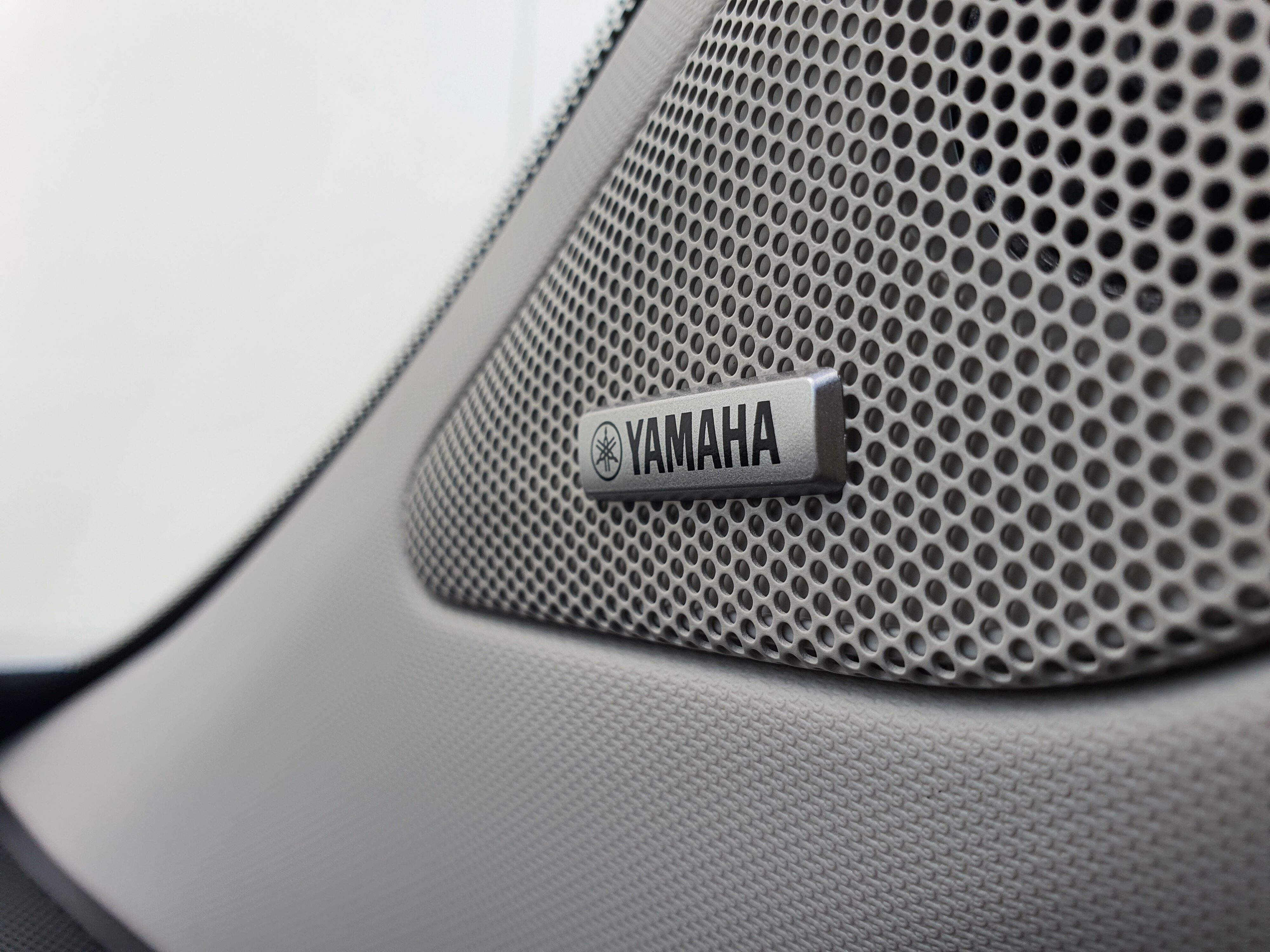
With all occupants’ knees firmly pressed up against their stomachs, the driver is bound to hear plenty of complaining so it’s just as well that the sound system is a good one then! Mitsubishi have swapped out the previous name brand unit for a Yamaha one as part of this mid-cycle facelift. Now, we know that everything Yamaha touches turns to gold when it comes to the automotive sector. Lexus’ V10 and Volvo’s V8 can be cited for examples. While the tuning fork didn’t work on the Outlander’s engine, it was responsible for the acoustics which were very impressive. Dive into the audio settings and you are presented with the image of a beautiful Yamaha branded black grand piano. My recommendation is not to bother with custom equalizer settings. Instead, just use the pre-set options according to your music tastes.
The audio system was a huge improvement over the pre-facelift model and at a time when these name brand units matter greatly, Yamaha have done an excellent job with their brief. However, the serene audio experience is then so rudely interrupted by the safety warnings. For the most part actually, the Outlander doesn’t do too badly on this front, except for the driver monitoring system. Generally speaking, I’m not really a distracted driver, rarely ever using my phone on the move and keeping my eyes on the road bar mirror glances and a wandering gaze to check out some exotic car that has just driven by. Even so, I found the system beeping incessantly at me which meant turning off straight away, a process that fortunately only takes about two clicks! Aside from that, no major gripes to report on, that is until we get to the powertrain.
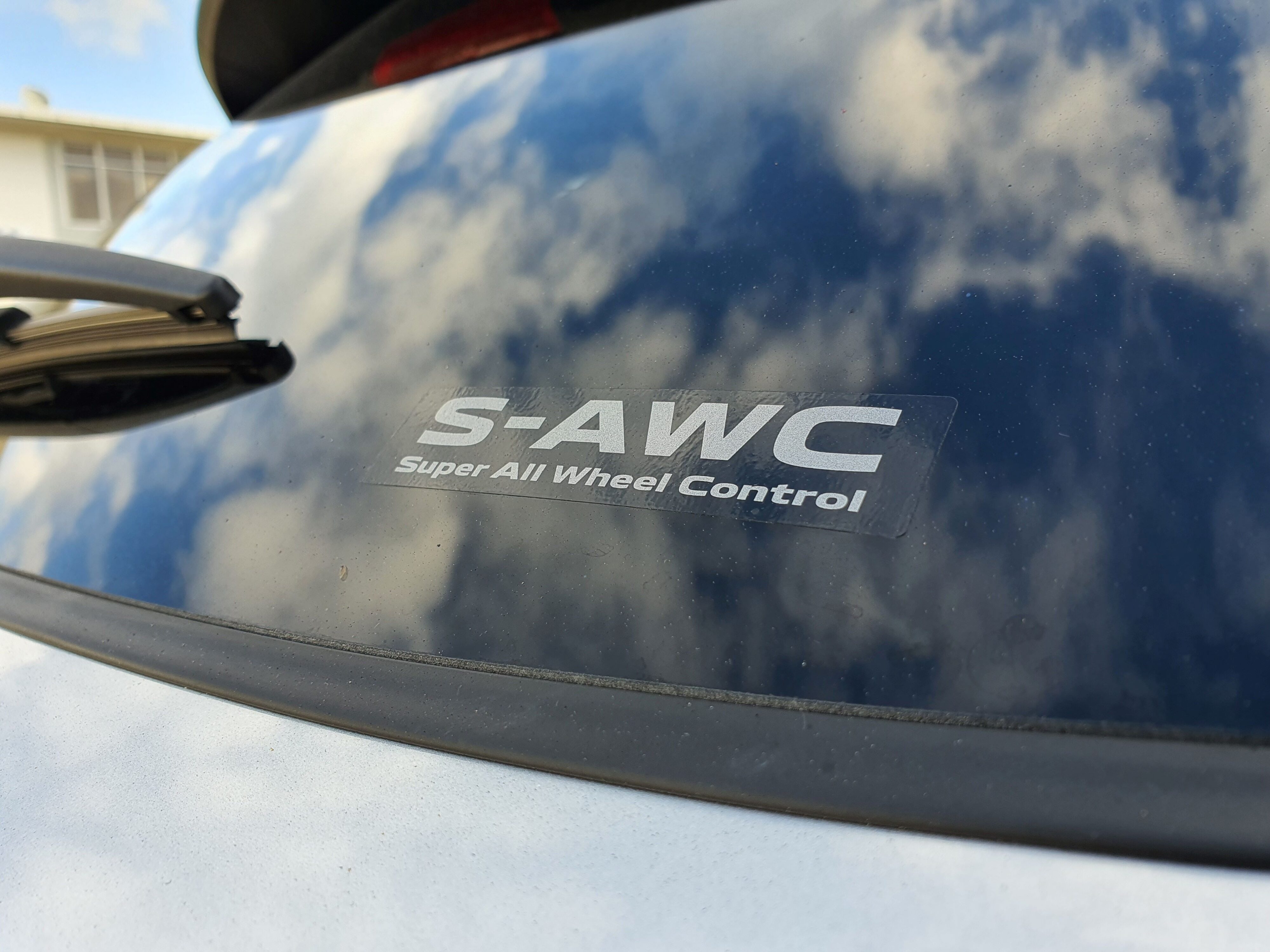
The powertrain itself remains relatively unchanged from the pre-facelift model. It still uses a 2.4L naturally aspirated four cylinder engine coupled to an electric drive system which employs a 22kWhr battery. Combined power is about 220kW (248hp) which is impressive. The jury’s still out on what the combined torque figure is but all of my research tells me it’s about 400Nm, there or thereabouts at least.
When I picked up the car, it came with a full tank of petrol and a full charge, that’s about 53L worth of fuel and the ability to travel 103km on EV power only, a combined fuel economy figure of 1.3L/100km is to expected, according to the marketing material.
However, I do not have charging facilities at home. So, here’s how I ran things instead. First, I depleted the battery to around 20%, following which I used short motorway drives to top up the battery via the engine, after which I would complete urban commutes under electric only power. For my long road trip, I ran the vehicle in ‘Tarmac’ mode which used a mix of the petrol engine and EV powertrain. In the end, the Outlander returned a fuel efficiency figure of 6.9L/100km and an electric consumption average of 19.9kWhr/100km. Neither was it an efficient petrol hybrid, nor an efficient EV by the looks of things. Well, that’s because I was running the car more like a traditional hybrid rather than a PHEV. To make this powertrain work as intended, what I should have been doing was charging it up at home every night, completing my commute in pure EV mode and then deploying the engine on that longer road trip. Despite all of the above, I returned the Outlander having travelled 850km, with 160ish kilometres of combined range still to go! 1,000km on a full tank is pretty impressive in my books.
The above experiment aside, the Outlander was no sportscar but still offered a composed drive around twisty roads which was a pleasant surprise at times, it must be something to do with the weight balance of the vehicle. It seemed to munch the miles without breaking a sweat, whether that was traffic, urban motorways or national inter-city highways. The thick tyre sidewalls coupled with soft material finishes in the cabin meant that there wasn’t really much tyre roar and the car did well to absorb bumps and things along the way.
The Verdict
All in all, it’s hard to fault a car like the Outlander. It seats five comfortably, seven at a stretch, the equipment list is generous and it drives comfortably on most surfaces. You get the latest in safety technology, a premium audio system and the backing of one of the best new car warranties on the market (Mitsubishi’s Diamond Advantage). There’s a good reason why it’s the world’s most popular plug-in hybrid after all! However, if not used as intended, the powertrain itself can be the car’s biggest downside.
Then there’s the dollar figure, this VRX PHEV was $77,990 as tested which is pricey, especially when you look at the cost of other new PHEVs that have flooded our market recently. However, my week with the car reassured me that there’s a reason why it continues to be so popular and although there are cheaper alternatives out there, it’s hard to trump the legacy of the Outlander.
2025 Mitsubishi Outlander VRX PHEV: 4.5/5
Thanks for reading! For more Mitsubishi news and reviews, visit Tarmac Life.
Words and pictures by Matthew D’Souza. Car courtesy of Mitsubishi Motors New Zealand.