Volkswagen is one of the most recognizable names when it comes to automotive marques. That famous ‘VW’ logo has become a cult icon over the years, so much so that there was a time when the badges were being nicked from bonnets so rappers could wear them on their chains. Like any iconic brand, Volkswagen has had its fair share of highs and lows but for a bonafide car enthusiast like myself, the brand have really had two truly defining eras thus far.
In the 1960s, VW was putting out icon after icon. It was a decade that gave rise to the Beetle, Karmann, Squareback and of course, the Kombi van. More recently, the brand had a surge of craziness in the early 00s which birthed the V6 powered Golf R32, the Touareg V10 TDI, W12 Nardo supercar and the ultra-luxurious Phaeton.
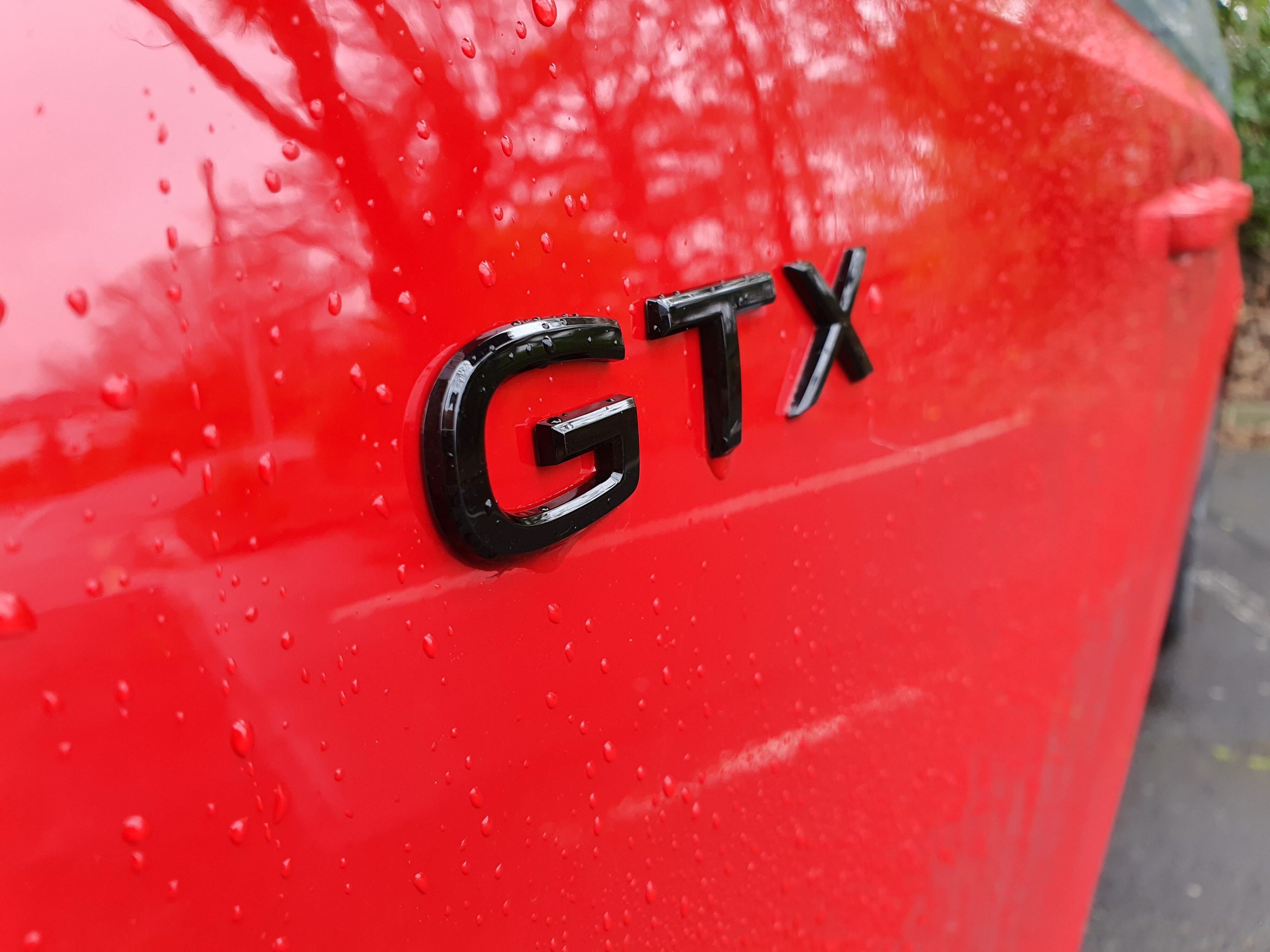
Fast forward to today where the brand continues to transition into its electric future with the ID. sub-brand, it is on the cusp of creating another memorable era. Now, looking through the history books, particularly those pages outlined above, why doesn’t Volkswagen just combine their two previous iconic eras to shape their next one? Well, that’s exactly what they did and it gave rise to the ID. Buzz GTX.
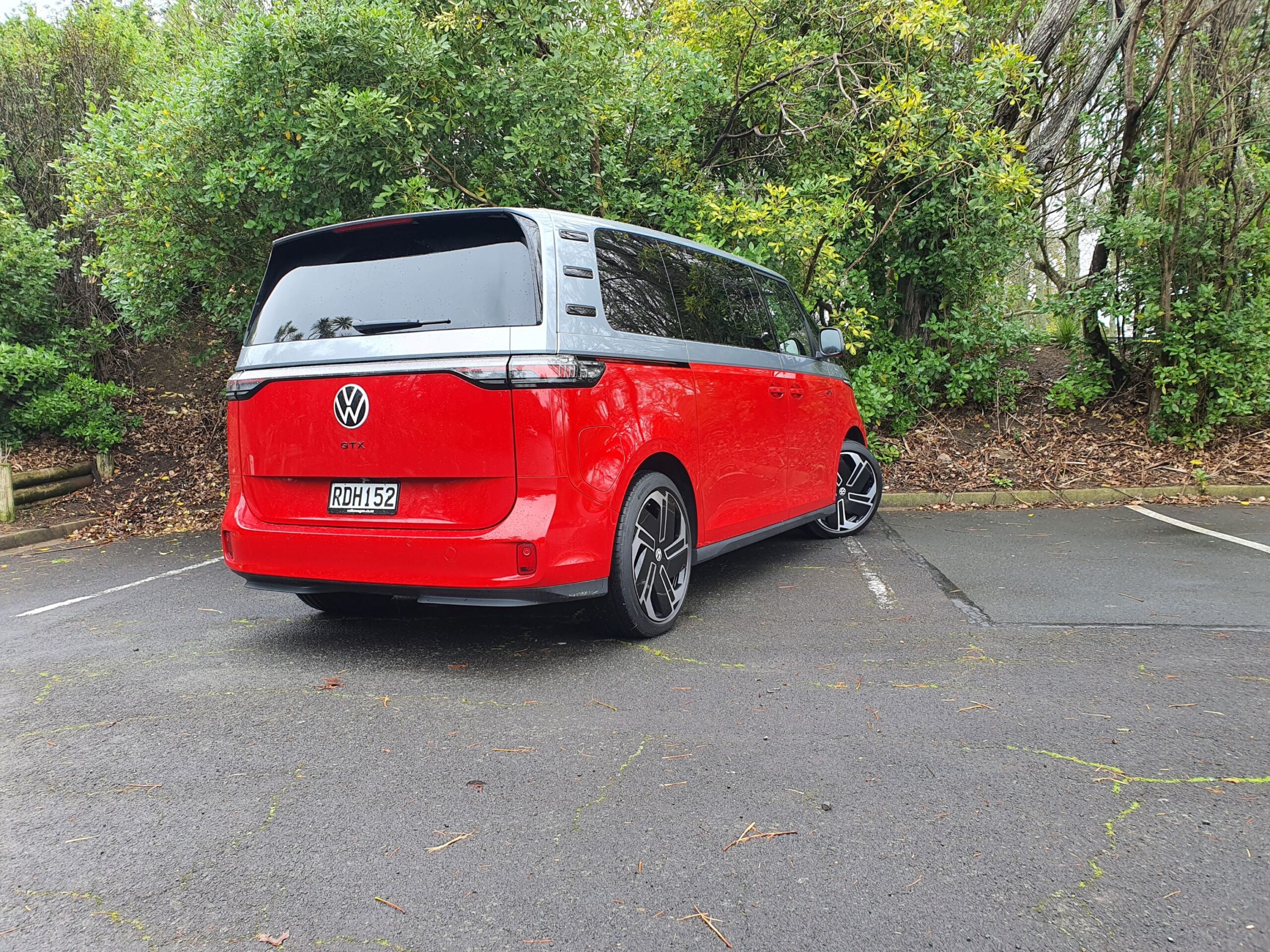
While there has been plenty of media buzz (pardon the pun) thus far about Volkswagen’s ID sub-brand, it has been a while since they have had a new vehicle command the levels of attention that this electric van has received. First launched overseas in 2022, the updated ID.Buzz found its way to us here in New Zealand earlier on in the year, Dave was actually on the local launch too. Four models were announced for our market, starting with the Pro and topping out with the GTX LWB covered in this review.
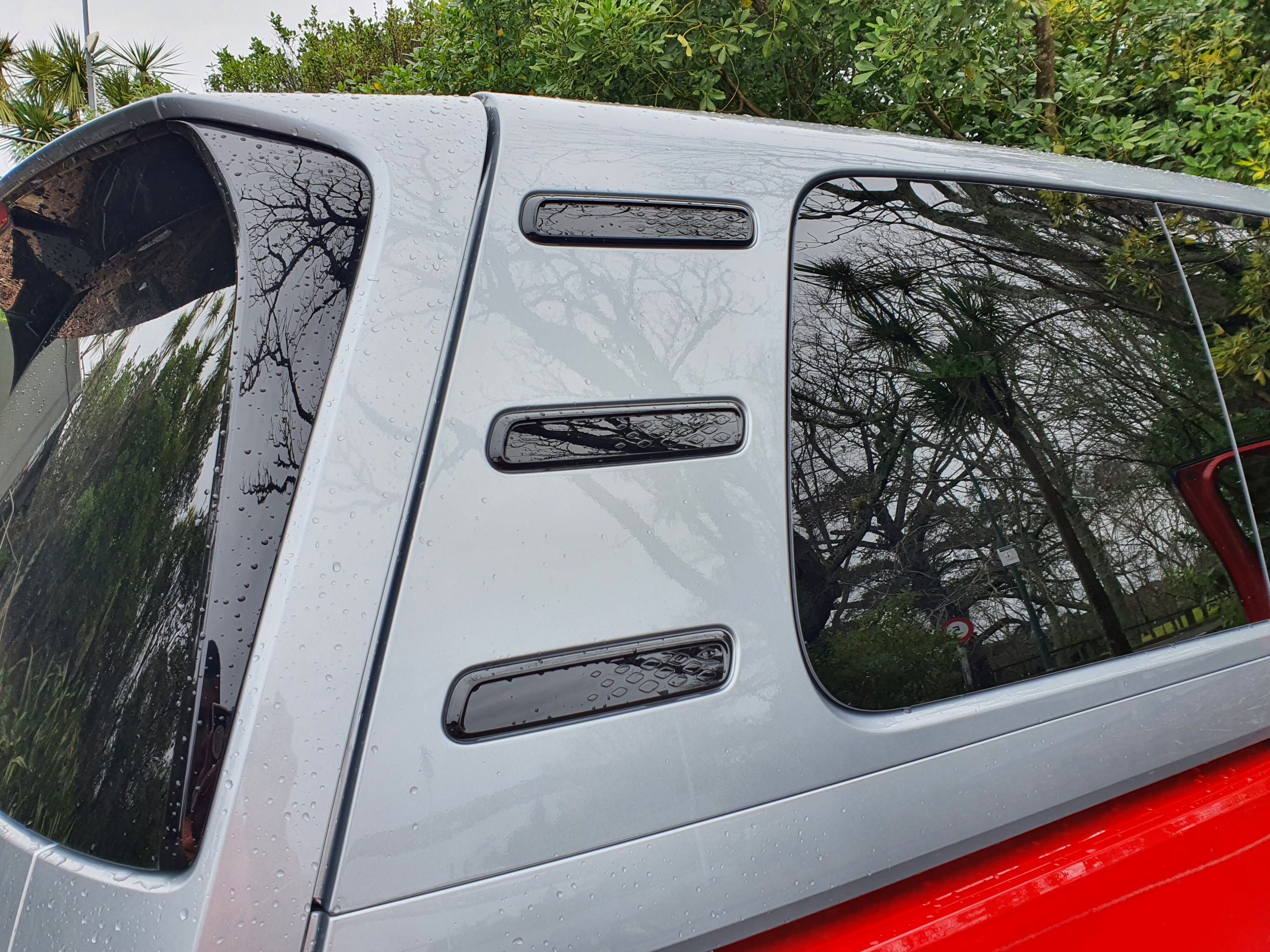
It’s no secret that Volkswagen played on the fondness of nostalgia with the ID.Buzz, there’s plenty of cues around that pay respect to the original Kombi, the fascia that looks like a face, the faux vents on the rear pillar etc. This definitely helps the Buzz’s case though as I don’t think I have ever had a review vehicle that has been photographed this much, not to mention the thumbs ups, children pointing etc, it is a very lovable vehicle so be warned, if you don’t like the attention then this probably isn’t the van for you. And in this two tone ‘Cherry Red’ and ‘Mono Silver’ colour scheme, it attracts plenty of eyes. In fact, there’s over 2,000 different customization options available across the range and out of the first 35ish vehicles that were specified by Kiwi customers, no two were the same!
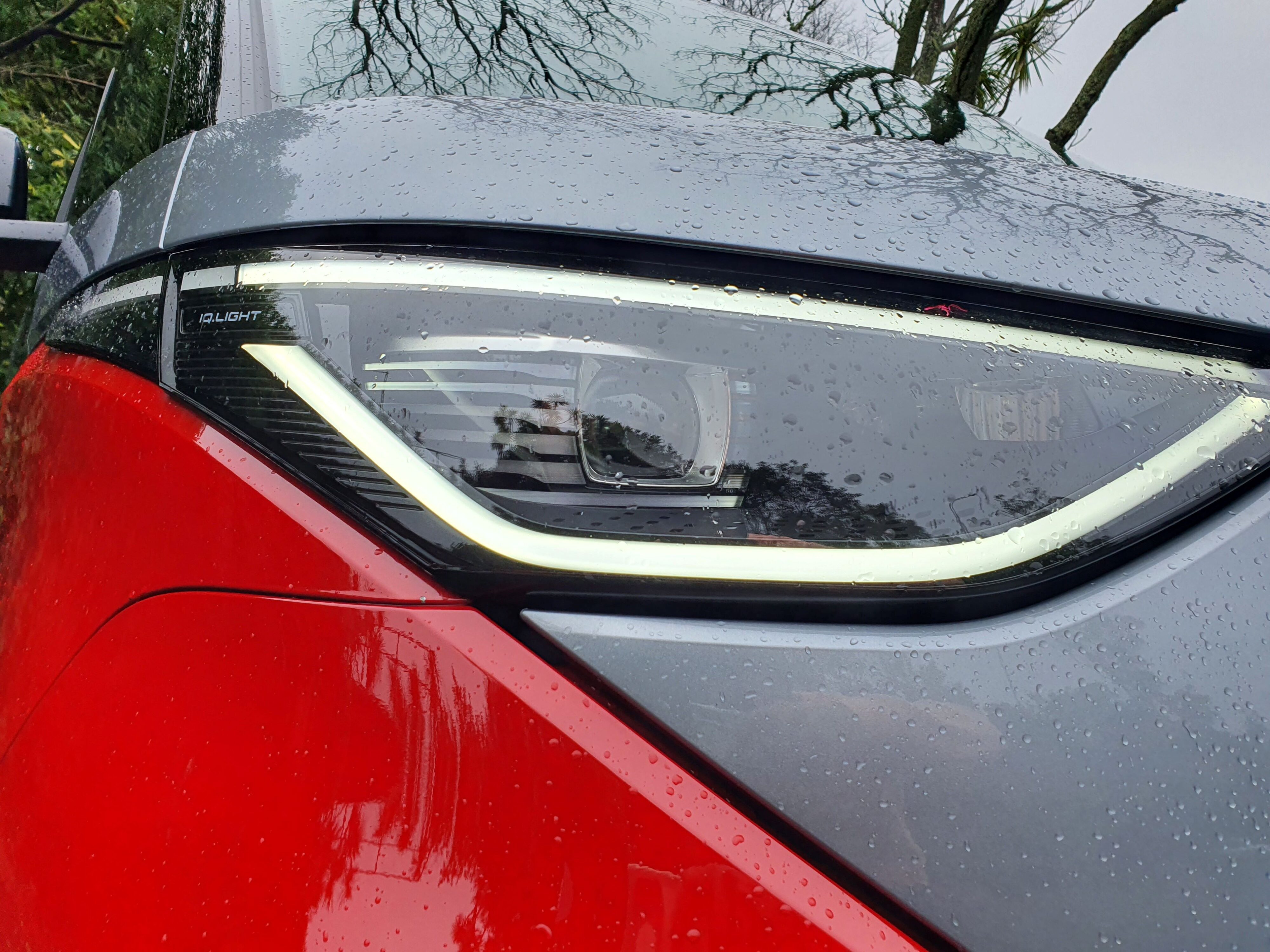
Beauty is in the eye of the beholder as the saying goes and it is indeed all in the eyes of the ID.Buzz, the headlights do a cheerful wink as they light up on approach, a feature that freaked out a couple of my friends while others liked its cheeky personality. The units themselves are Volkswagen’s high-tech IQ-Light matrix headlights and do a great job of illuminating the road ahead as well as following you around corners and turns. The prominent VW logo on the nose of the vehicle is also illuminated though this isn’t the case for the big badge on the rear although it does sit beneath a light bar denoting it as a car of this era.
Thus far, I’ve managed to get around the elephant in the room but this point had to be addressed eventually and we might as well do it now. It’s the size. The ID. Buzz GTX LWB is huge, in every aspect. It measures in at 4.96m long, 1.98m wide and 1.93m tall. Yes, I’ve previously reviewed vehicles with similar length and width figures but adding height to the mix changes things, not to forget that this is a van so you become very conscious of its dimensions. It made me realise just how many entrance ways are only 2m tall, particularly those for malls and carparks, often there’s a ramp of some sort to compete with so you really do have to watch not just the height but also the approach/departure angles if you want to keep a scratch free roof. There’s also the width, it does pretty much take up a standard parking space so that’s another thing to keep an eye out for.
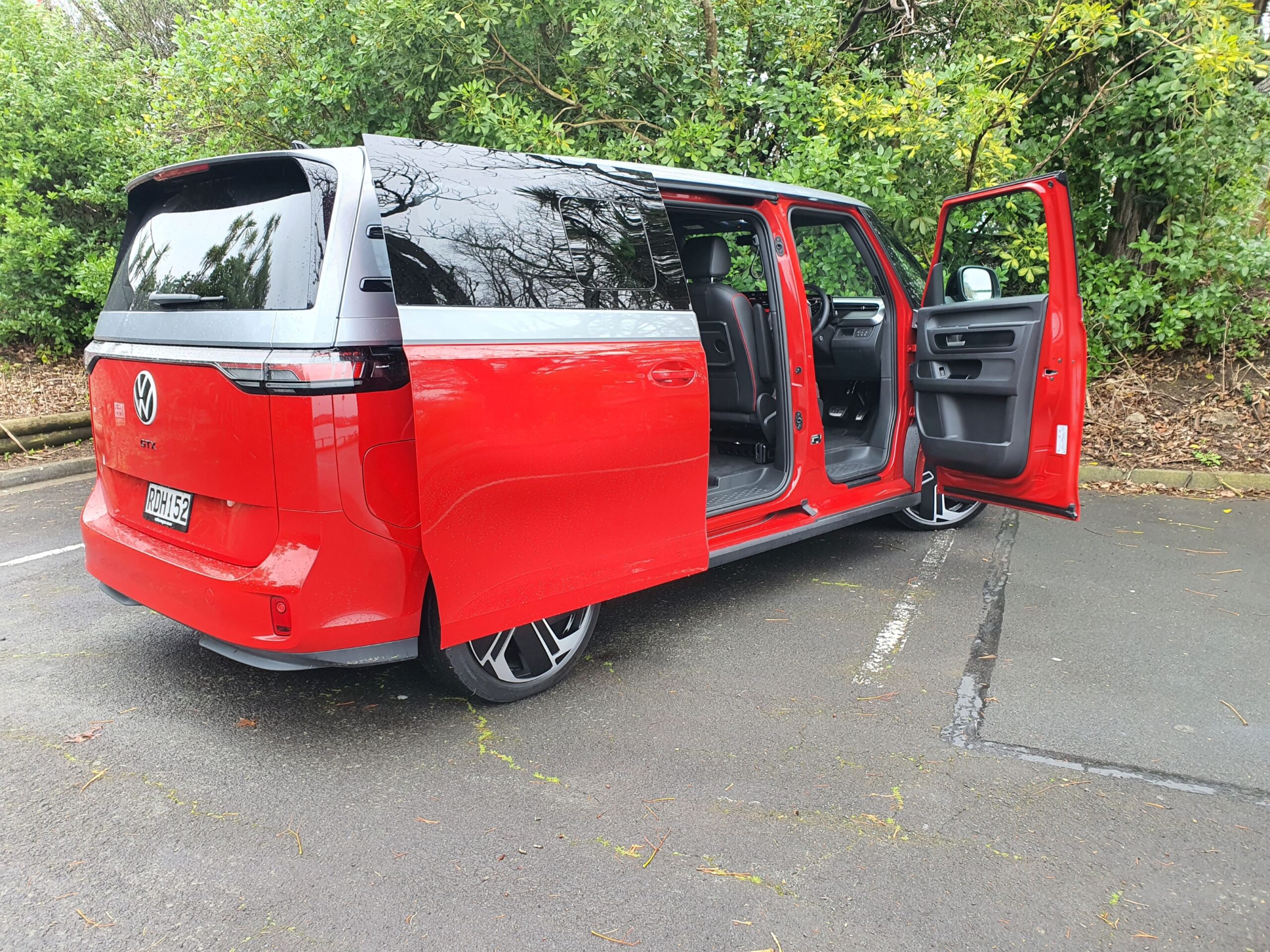
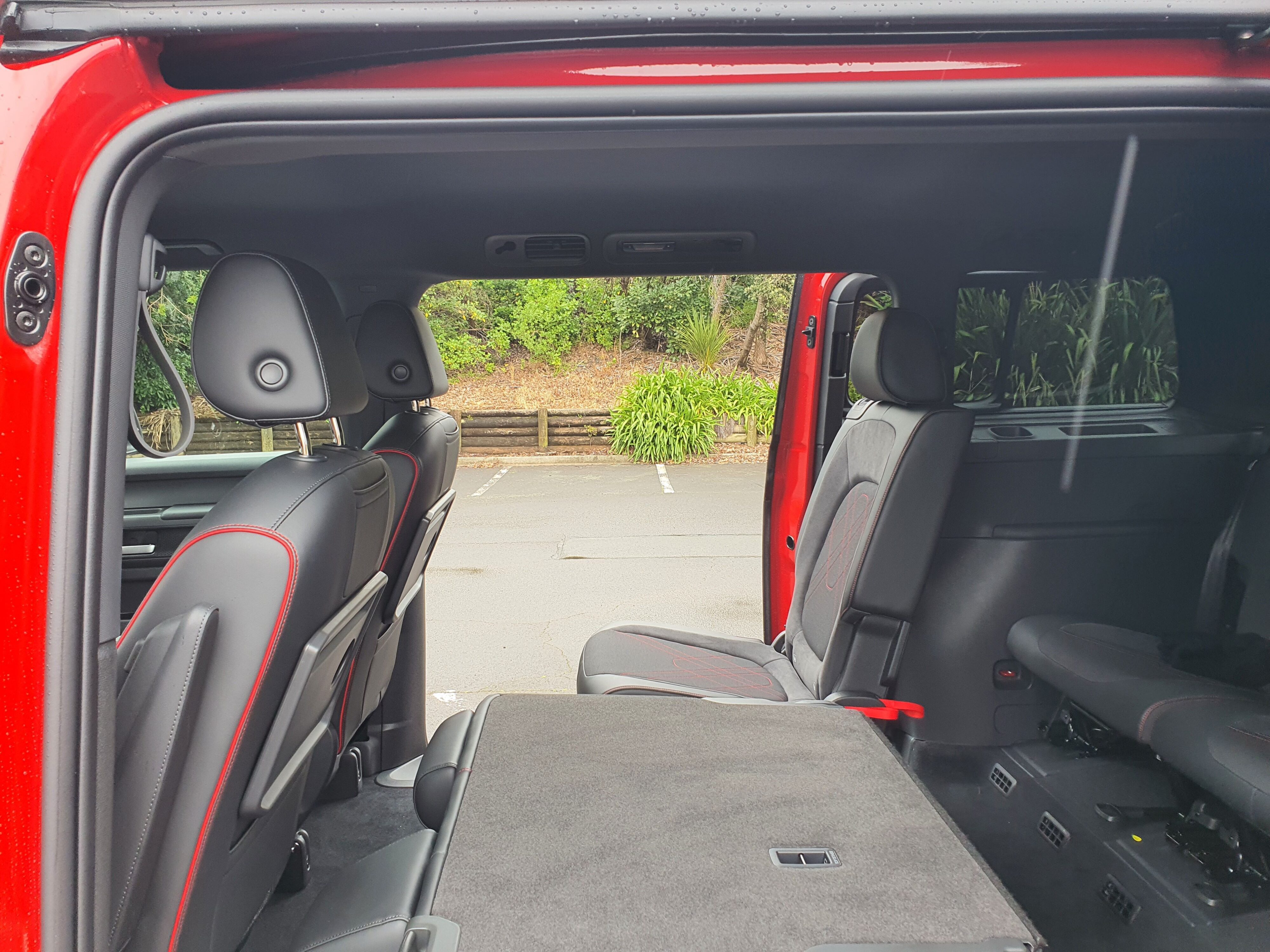
The upside of those dimensions though means more space inside for your passengers. Not just that, getting in and out is rather a breeze with the electric sliding doors making access easy for those in the second and third rows. The seating configuration is one that can be pre-selected when ordering the vehicle and in this particular review car, there were 7 seats arranged in a 2-3-2 combination, boot space is an ample 306L too when you have third row up, it can be expanded to 1340L or 2469L as you fold down the two rows.
Seating for those in third row is comfortable, there’s plenty of room for adults as well as good size windows which are tinted though so it can get quite dark, particularly if the glass roof hasn’t been optioned. The story is much the same in the second row where the seats can also be reclined, there’s also tray tables that fold up from behind the front seats to allow for some snacking while on the move. The second row windows are interesting because they mimic the sliding motion of a traditional van but are electric as are the large doors, oh the conveniences of technology!
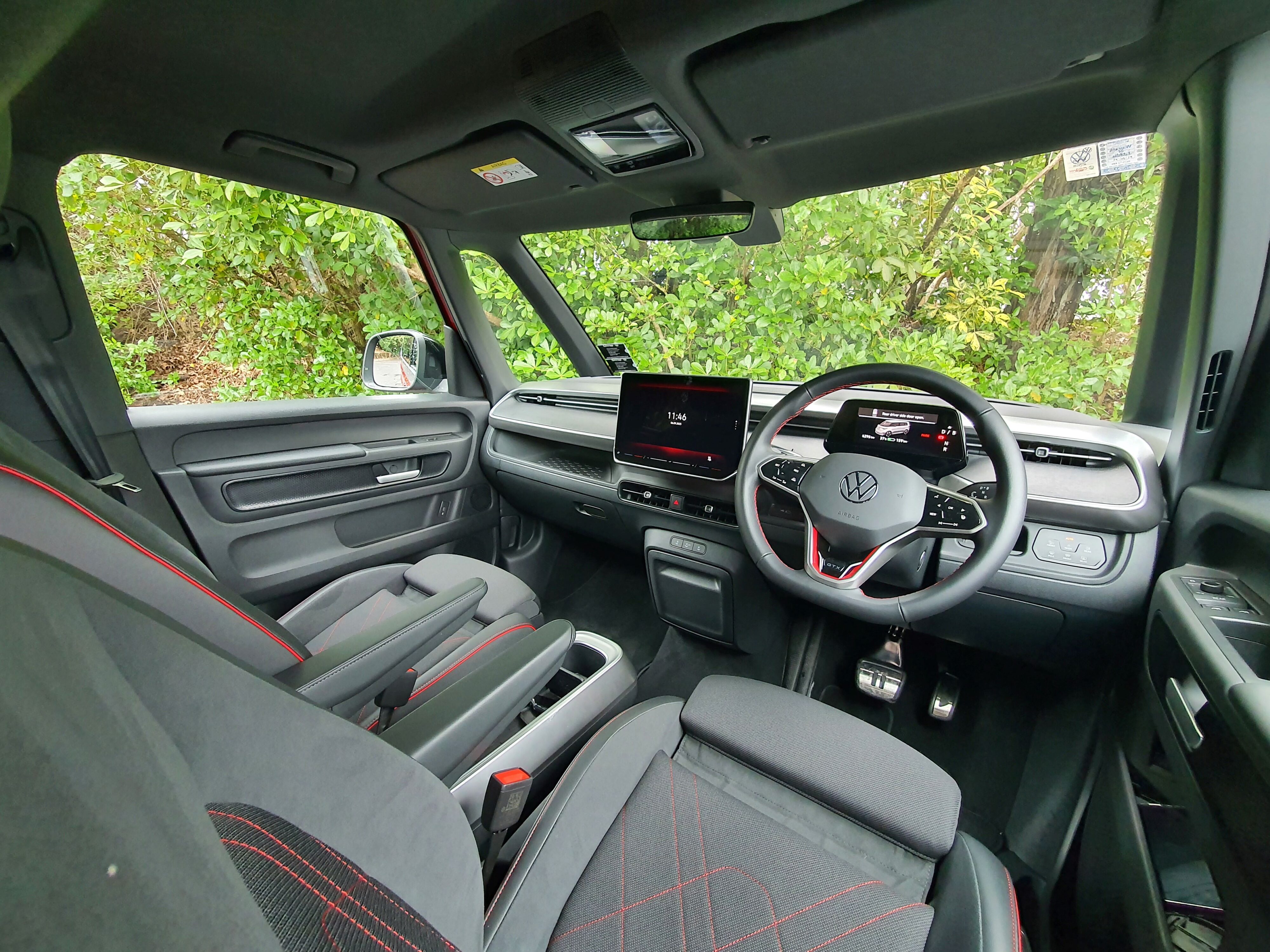
Tech is indeed aplenty upfront, the prominent infotainment screen now features backlit touch capacitive buttons to make interaction easier. Drive modes, ambient lighting etc can all be altered through the same unit while the driver’s gauge cluster is reserved for just the basics. Storage space is very generous too with the doors featuring two tier cubbies, there are drop down cupholders from the middle and the trick ‘Buzz Box’ can be slid forward or backwards as well as being removed for picnics etc. GTX specific bits include a flat-bottom leather wrapped steering wheel and sports seats, complete with massage functionality as well which is also selected through the infotainment screen. The big windows give you a vast feeling of space as you do sit very high up so get to enjoy some panoramic vistas of the road around you, it’s a big vehicle for sure but having plenty of visibility helps with maneuvering, speaking of that, let’s see how it fares.
I’ll be honest, this is a near 3 tonne electric van so I wasn’t expecting it to be incredibly impressive around corners, what I was expecting though was some savage straight line acceleration which was delivered. EV powertrains have made straight line speed so accessible and it means that even a van like this can record a 0-100 sprint time of about 7.5s which is not bad at all. While I expected the GTX to be brisk off the mark, it was still hilarious each time I left an unsuspecting commuter behind at the lights. With 250kW and 560Nm on tap, it certainly packs a punch even with the weight it carries around, a sizable amount of which comes courtesy of the 91kWhr battery onboard.
86kWhr is the usable figure and it promises 396km of range with an average consumption figure of 23.72kWhr/100km which wasn’t too far of the 24.5kWhr/100km figure that I recorded during my test, although you can subconsciously feel the Huntly Power Station firing up whenever you plug the Buzz in for a charge.
A dual motor set up ensures that it doesn’t break traction. All credit to VW though because the ID. Buzz GTX grips the road well and despite its dimensions, it delivers an engaging drive even when the road starts getting twisty. A stiffer suspension set up does mean lesser body roll although speedhumps can be a bit jarring but aside from that, it offers a mostly compliant and hushed ride. No fake exhaust noises here though, it’s all silent if you haven’t got the harman kardon audio system delivering the tunes.
The Verdict
So what exactly were Volkswagen thinking when they decided to dial up their power on their electric people mover? Well, they probably weren’t. I suspect it was probably a challenge to the engineering team casually delivered over a couple of drinks after work and that’s exactly what it feels like. Do you need a 7-seater van with performance credentials, probably not but do you want one, probably so. And who could say no to its retro inspired styling and winking headlights?!
2025 Volkswagen ID. Buzz GTX: 4/5
Thanks for reading! For more Volkswagen news and reviews, visit Tarmac Life.
Car courtesy of Volkswagen New Zealand and EMD. Words and photos by Matthew D’Souza.