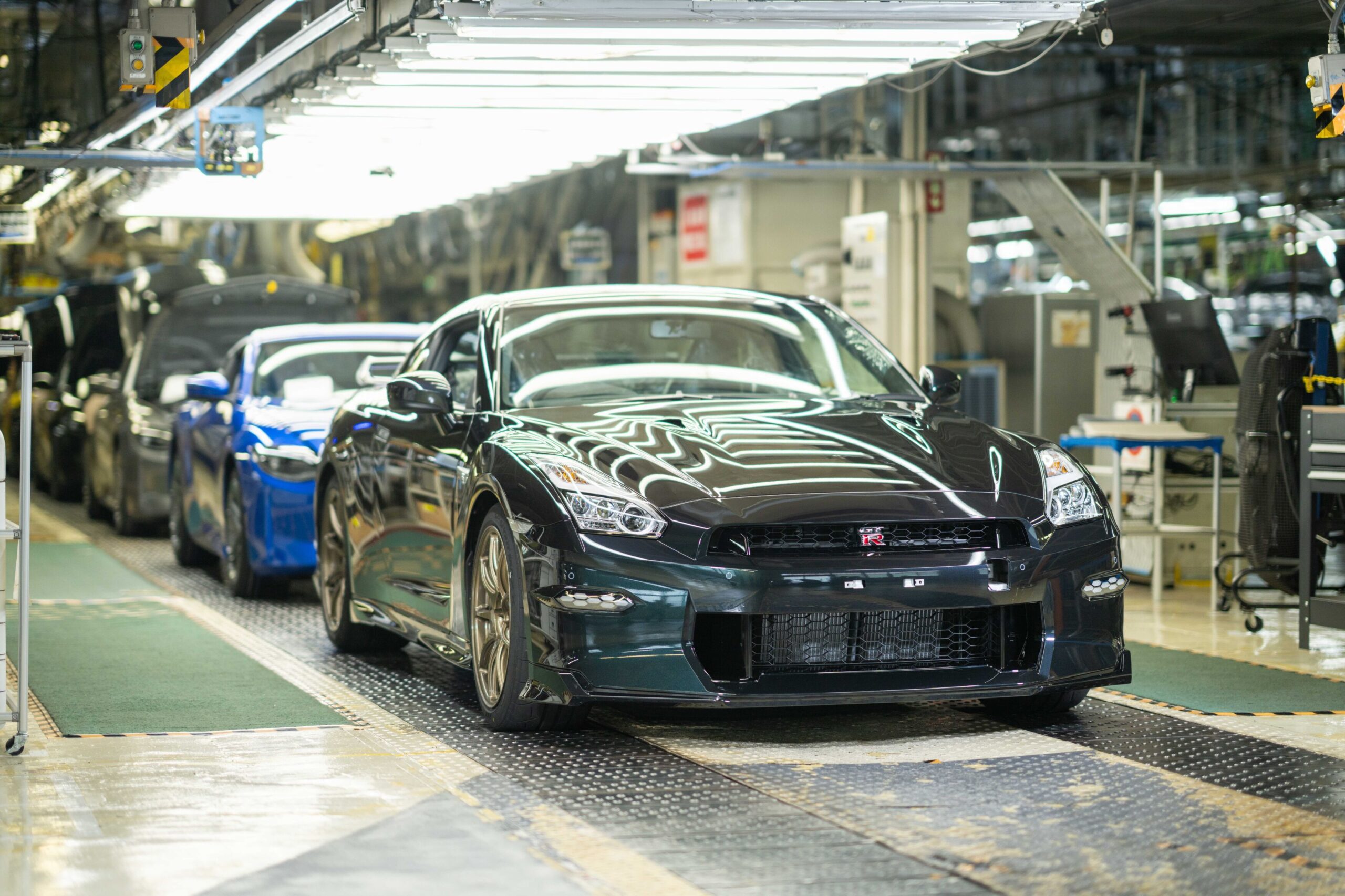
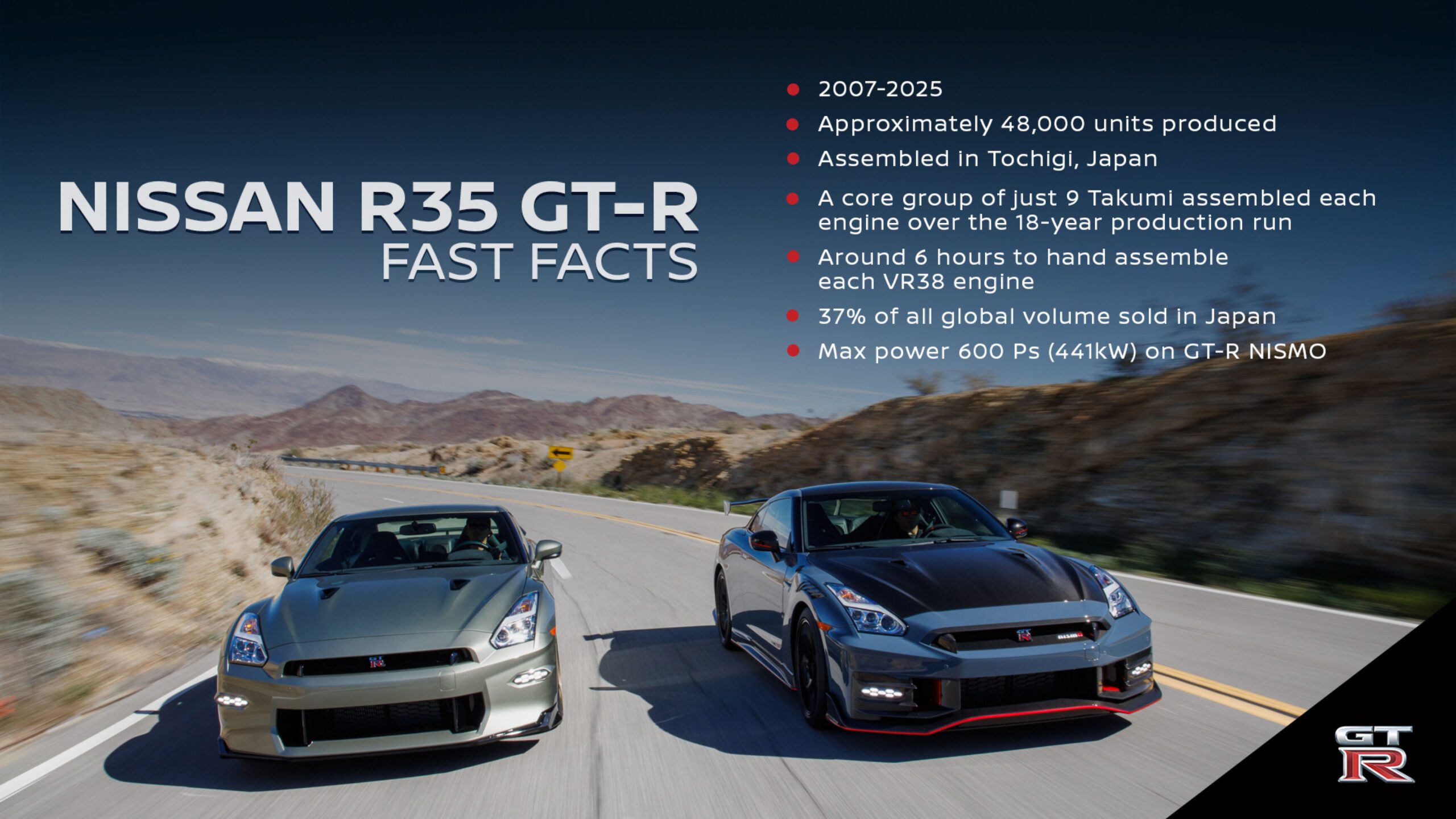
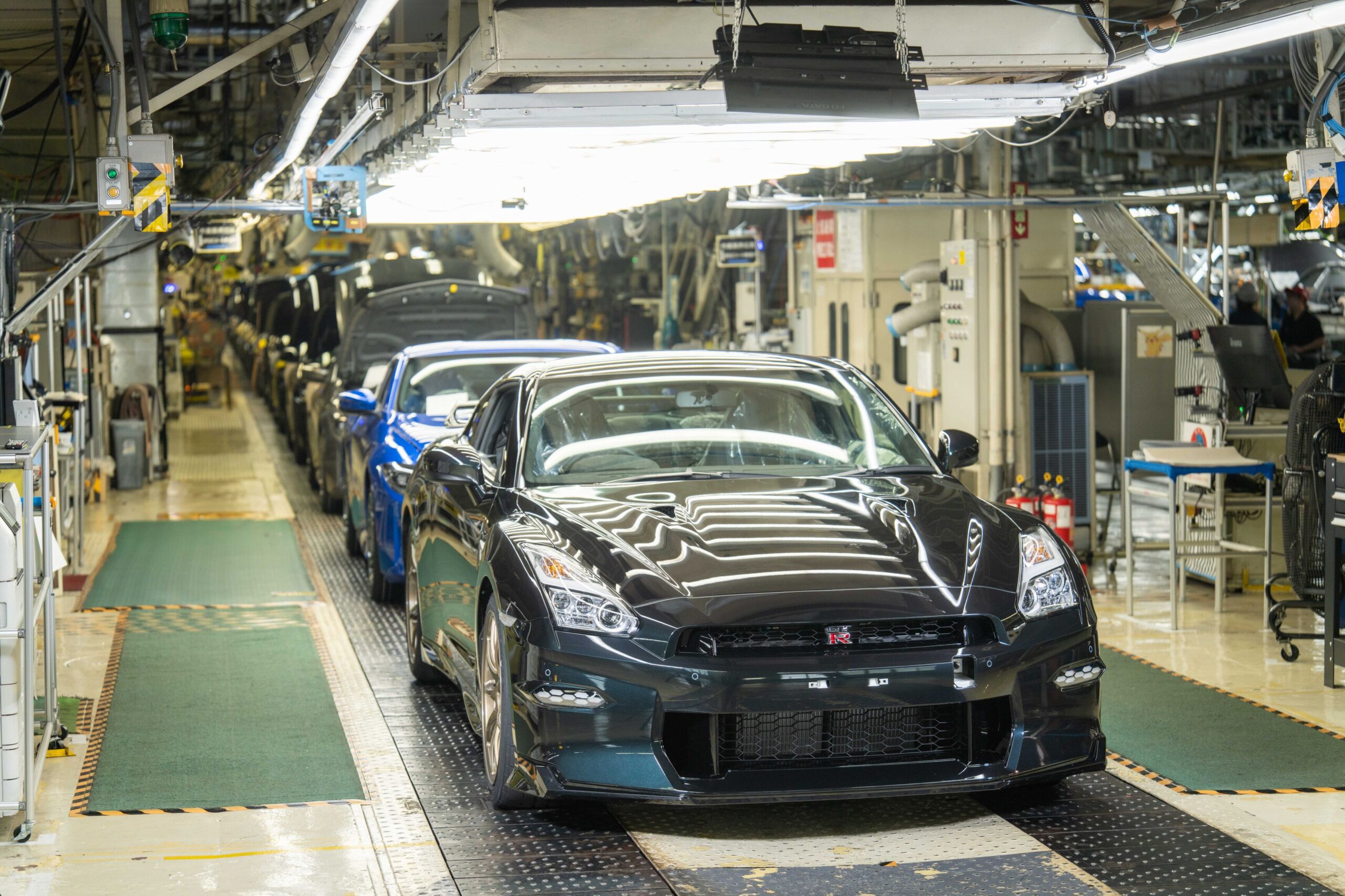
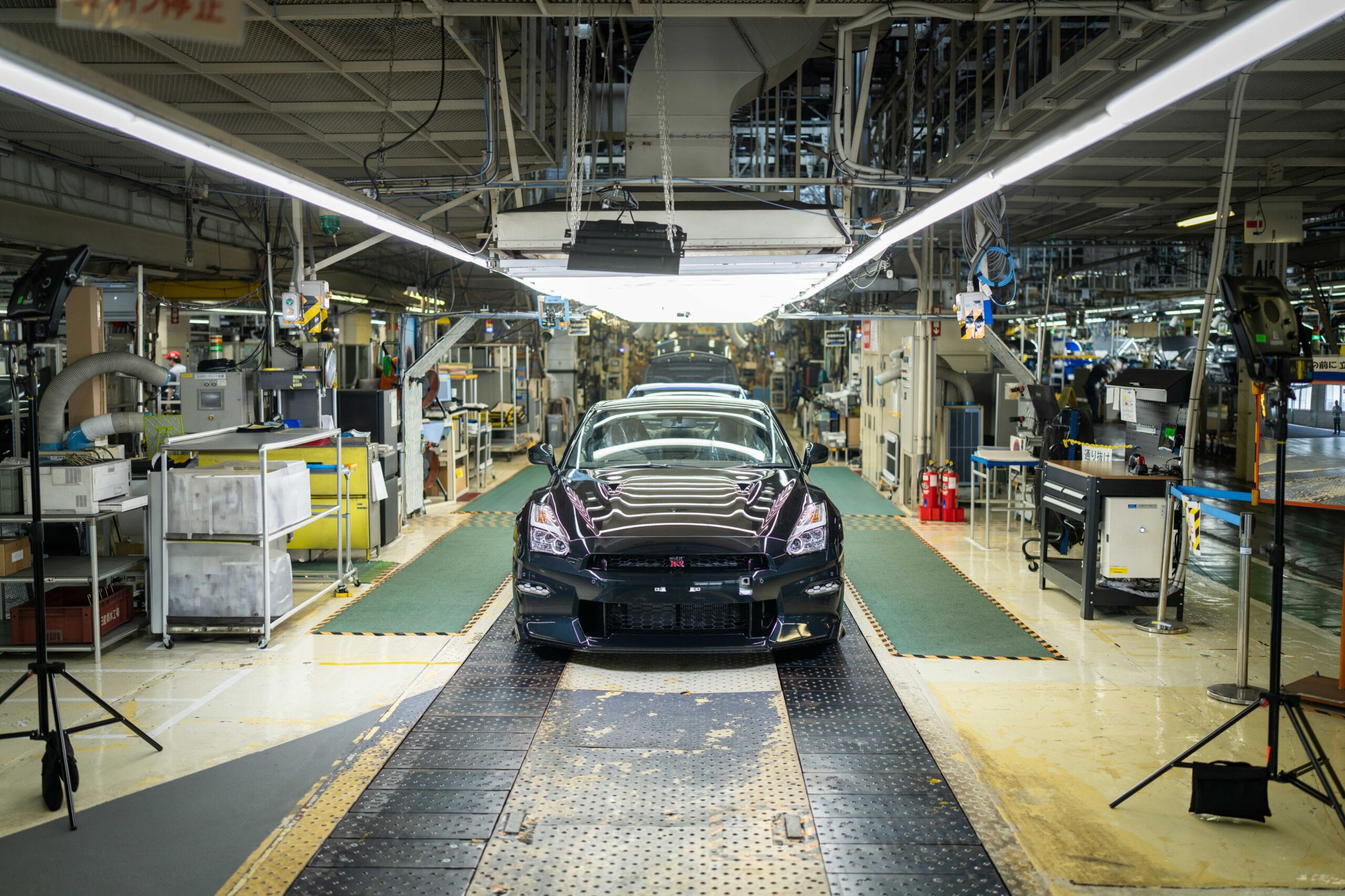
It’s a day many of us in the automotive world knew was coming but secretly hoped would never arrive. After an incredible 18-year reign, the last Nissan R35 GT-R has officially rolled off the production line at the Tochigi plant in Japan. The giant-slayer, the supercar for the people, the machine affectionately known as Godzilla, has reached the end of its current chapter.
For nearly two decades, the R35 has been a constant—a benchmark for performance, an icon of engineering, and a symbol of innovation that sent shivers down the spines of far more expensive European exotics. Now, as production concludes for its final sales region, the Japan domestic market, the silence it leaves behind is deafening.
Workers at the Tochigi plant gathered to commemorate the extensive legacy of the R35 as the final unit, a Premium edition T-Spec finished in the iconic Midnight Purple paint, completed its journey down the line, destined for a lucky customer in Japan. In total, approximately 48,000 of these incredible machines were brought into the world.
More Than a Car: A Constantly Evolving Legend
When the R35 GT-R launched in 2007, it redefined what a performance car could be. Nissan’s engineers deliberately gave it a “multi-performance” personality. It was a true Grand Tourer, with a comfortable ride and refined finish, but with the flip of a switch, it would unleash the “R”—a nod to its racing technology—and deliver world-class, face-melting performance.
Unlike most cars that get a major facelift halfway through their life, the R35 was a masterpiece of continuous improvement. Each model year brought tweaks and enhancements, with Nissan’s engineers relentlessly honing its capabilities. Whether it was more power, greater control, or the breathtaking, track-focused performance of the GT-R NISMO, the R35 never stood still.
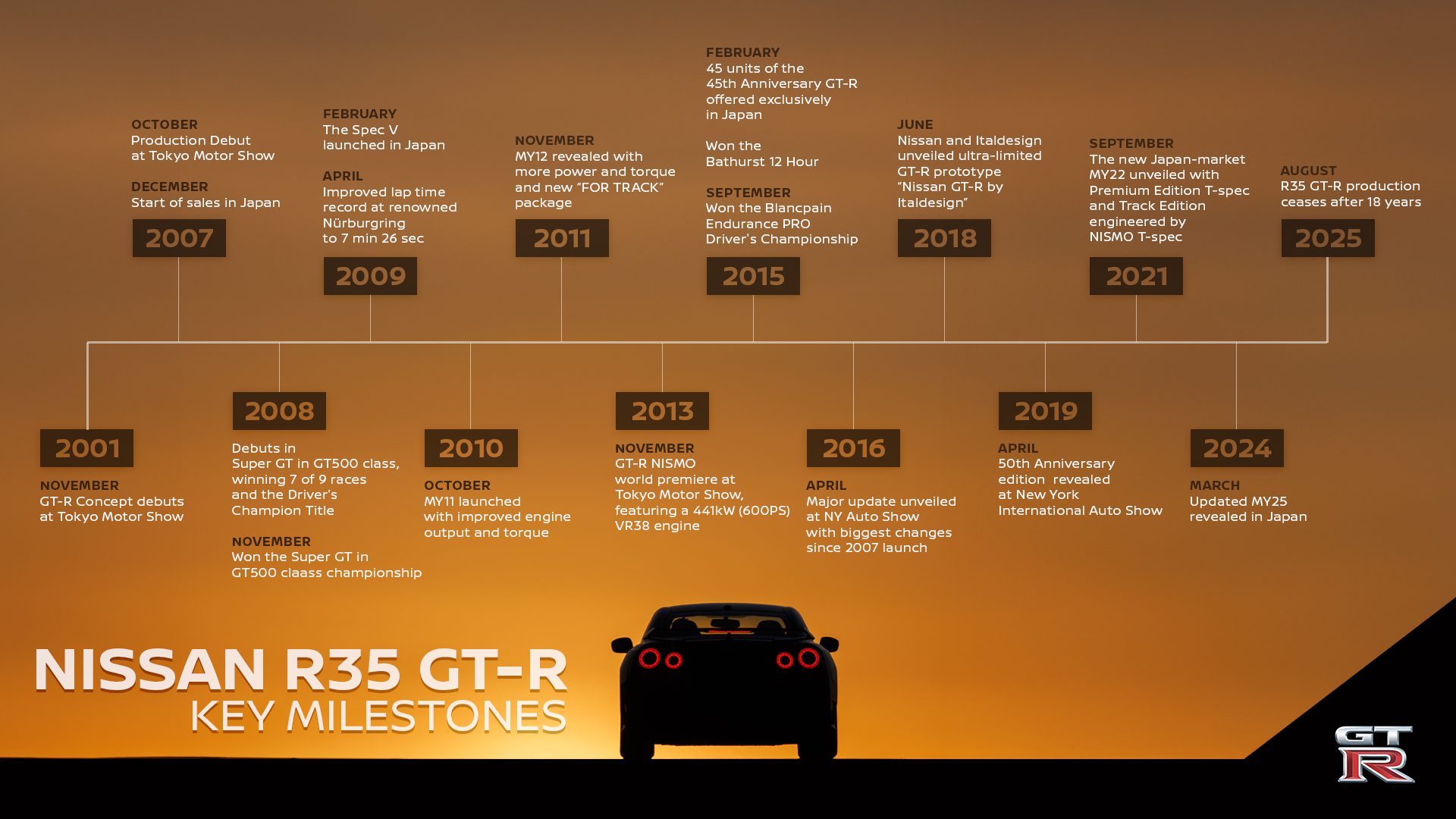
At its core was the legendary VR38DETT twin-turbo V6 engine, paired with the acclaimed ATTESA ET-S all-wheel-drive system that provided physics-defying grip. But the soul of the machine came from a place of human passion. Over its entire production run, a core team of just nine master craftsmen, known as Takumi, hand-assembled every single one of those 48,000 engines at Nissan’s Yokohama plant. Their names are immortalized on a small plaque on each engine, a testament to their dedication. Power output climbed from an already potent 353kW (480ps) at launch to 419kW (570ps) in later models, while NISMO engineers, using GT3 race-spec parts, extracted a staggering 441kW (600ps).
A Legacy Forged on the Racetrack
The R35 GT-R doesn’t just leave behind memories; it leaves a legacy written on the tarmac of the world’s most demanding circuits. Its list of motorsports accolades is enviable, including multiple wins in Japan’s SUPER GT Championship, a victory at the Bathurst 12-hour in 2015, and numerous endurance racing titles.
But its most famous battle was with the clock at Germany’s Nürburgring Nordschleife, the ultimate proving ground.
- 2007: A production model set a blistering lap of 7 minutes, 38 seconds, one of the fastest ever for a production car at the time.
- 2008: Chief test driver Toshio Suzuki smashed that time, clocking in at 7 minutes, 29 seconds.
- 2009: They returned and went even faster: 7 minutes, 26 seconds.
- 2013: The pinnacle was achieved. A GT-R NISMO with track options, piloted by Michael Krumm, recorded an unbelievable 7 minutes, 8.679 seconds—the R35’s best-ever time at the hallowed circuit.
Closer to home, the NISMO team set and then broke the production car lap record at Japan’s Tsukuba circuit, first in 2019 and again in 2024, achieving a final time of 59.078 seconds. And let’s not forget the moment it set a Guinness World Record in 2016 for the fastest-ever drift, hitting 304.96 km/hr at a 30-degree angle.
A Farewell, But Not a Goodbye
As we mourn the end of this era, Nissan offers a glimmer of hope. Ivan Espinosa, President and CEO of Nissan, made it clear this is not the end for the legendary nameplate. “To the many fans of the GT-R worldwide, I want to tell you this isn’t a goodbye to the GT-R forever, it’s our goal for the GT-R nameplate to one day make a return,” he stated.
Nissan remains committed to the badge, promising that the learnings from 18 years of the R35 will be integral to whatever comes next. Espinosa acknowledges the weight of expectation, saying, “the GT-R badge is not something that can be applied to just any vehicle; it is reserved for something truly special and the R35 set the bar high. So, all I can ask is for your patience”.
And so, we wait. The R35 GT-R is gone, but its spirit—of relentless innovation, accessible performance, and giant-killing audacity, will live on. Farewell, Godzilla. You were, and always will be, a legend.