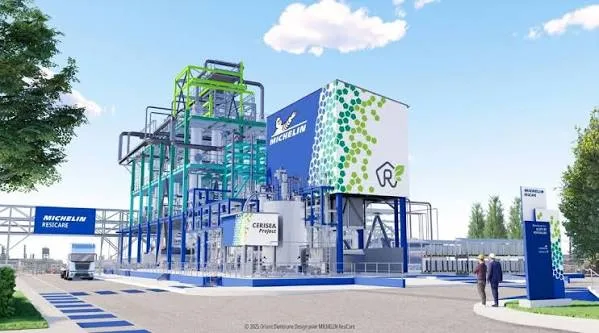
Michelin ResiCare is installing its first industrial line for the DragonFly project at Ajinomoto’s Nesle site in France, with commissioning planned for early in the second quarter of 2027.
Most people know Michelin for tyres and restaurant stars. Its resin business is now working on something less glamorous: a factory line. Michelin ResiCare has started installing the first industrial production line for its DragonFly project, which aims to make a key resin ingredient from bio-based feedstocks rather than oil.
The line is at Ajinomoto’s industrial site in Nesle, in France’s Somme department. Construction began in May 2026, and commissioning is due at the start of the second quarter of 2027.

What DragonFly Actually Makes
DragonFly uses fermentation. Microorganisms will produce a bio-based aromatic monomer, which is a building block for the resins Michelin ResiCare develops. The announcement doesn’t name the molecule.
Michelin developed the microorganism strain with Alderys, a Givaudan Group company. The company says an earlier project, BioImpulse, already proved the strain works at industrial scale. The Nesle line now has to show that the whole process holds up in real-world operation.
Why Nesle and Why Ajinomoto
Michelin ResiCare and Ajinomoto signed their partnership in April, and the Nesle line is the first practical step under it. Michelin chose the site for two reasons: the infrastructure already exists, and Ajinomoto has experience running fermentation processes for high-value molecules.
Ajinomoto Foods Europe has offered large-scale fermentation services above 100 cubic metres since 2022. For Ajinomoto, hosting DragonFly fits a wider push to diversify. For Michelin, it means using a working plant instead of building one from scratch.
The Second Piece of a Bigger Puzzle
DragonFly follows Cerisea, a separate project that aims to build Europe’s first production value chain for 5-HMF, another bio-based molecule. Between them, the two projects are meant to secure supply of both strategic monomers in Michelin ResiCare’s next-generation resins.
Michelin also links the work to European industrial sovereignty over critical raw materials. It says France will gain a competitive value chain for this molecule that is unique worldwide. That’s a big claim, and it comes from the company itself. Both projects get French Government funding through the France 2030 investment plan, which the environmental agency ADEME manages.
The Emissions Claim in Context
The headline environmental figure is striking. Michelin says work so far shows the potential to cut greenhouse gas emissions from making this molecule by up to 96% compared with the fossil-based version.
The wording matters, though. “Up to” and “potential” are carrying a lot of weight, and the figure comes from the project’s own work rather than independent verification. Testing the process at industrial scale is exactly what the Nesle line is for.
Where These Resins End Up
Michelin ResiCare is targeting a wide range of industries, including construction, furniture, composites, electronics, aerospace and space. Automotive and transportation are on the list too, which is why this matters to us.
For now, there’s no finished product to talk about, just the supply chain behind one. Michelin ResiCare says it is ready to meet customer demand. From spring 2027, the Nesle line will have to show that a fermentation tank can compete with a refinery on cost and volume.
IMAGES (for WordPress):
1. https://agngnconpm.cloudimg.io/v7/https://dgaddcosprod.blob.core.windows.net/cxf-corporate/attachments/cljy2gcmy49e40tmbhoxs9ml1-resicare-test.full.jpg
SOURCE: Michelin
SOURCE URL: https://www.michelin.com/en/publications/products-and-services/next-generation-resins-michelin-resicare
PREPARED FOR: Dave