As the global automotive industry undergoes a seismic shift towards cleaner transportation, BMW’s measured and flexible approach to electrification is setting it apart from competitors who once championed aggressive, all-electric timelines. The company’s CEO, Oliver Zipse, has publicly credited BMW’s multi-drivetrain strategy—where battery electric vehicles (EVs), hybrids, internal combustion engines (ICE), and even hydrogen-powered vehicles coexist—for its growing success amidst changing market dynamics.

Multi-Technology Strategy: The Cornerstone of BMW’s Success
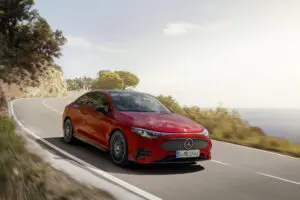
While major rivals like Mercedes-Benz, Volkswagen, and Volvo announced plans to go all-electric within ambitious timeframes, BMW chose a more inclusive path. According to Zipse, “E-mobility as the sole technology leads to a dead end. That should be obvious by now” . The company’s rationale centers on the reality that markets evolve at different paces. For example, while countries such as Belgium see over 60% of new vehicle sales as electrified (including hybrids), other markets like Italy lag behind at just 4%. By offering a wide range of powertrains, BMW can meet the unique demands of each region and customer segment.
Robust Sales and Market Adaptation
BMW’s flexible model is not preventing its EV segment from growing—quite the opposite. The automaker reported selling over 426,500 EVs across its BMW, Mini, and Rolls-Royce brands in the previous year, reflecting a 14% increase over 2023 . In the first quarter alone, more than a quarter of BMW’s new car sales were electrified models, with nearly one-fifth being fully-electric . This positions BMW as both a pioneer in electrification and a provider of established ICE options for consumers resistant or unable to transition entirely to electric yet.
Future-Forward: Neue Klasse, Hydrogen, and Manufacturing Synergy
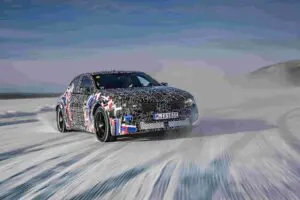
BMW’s technological openness is exemplified in its ongoing and future plans. The company is set to launch the iX3, a mid-size electric crossover built on the “Neue Klasse” platform, designed purely for EVs. Promises of improved range exceeding 300 miles (483 kilometers) and faster charging address key consumer concerns . Additionally, BMW is advancing hydrogen fuel-cell vehicles, with production models expected by 2028, further diversifying its approach and hedging against an uncertain regulatory and technological future.
Operationally, BMW’s strategy brings cost benefits by allowing EVs, hybrids, and combustion vehicles to be manufactured on shared assembly lines. This setup reduces manufacturing costs, improves flexibility, and insulates the company from bottlenecks such as battery material shortages—challenges faced by more single-minded competitors.
Regulatory, Economic, and Environmental Considerations
Increasingly stringent environmental mandates, such as Europe’s aim for zero-emission vehicles by 2035, coexist with more relaxed approaches in parts of the U.S. and other global regions. By not betting exclusively on one technology, BMW is positioned to comply with diverse regulations, policymakers’ evolving preferences, and economic realities such as high upfront EV costs—the average mid-size EV now costs about $56,000 in the U.S.
Industry Validation and Looking Forward
BMW’s CEO summarized the shifting landscape, observing, “We took a clear stand on this, even in the face of strong headwinds. Now the wind has shifted in our direction,” as competitors scale back their all-electric ambitions . Even Tesla, long seen as the sector’s EV bellwether, is not immune—reporting its first annual sales decline since the debut of the Model Y.
BMW’s multi-technology strategy is proving to be a robust and adaptive model in a rapidly transforming automotive industry. By remaining open to a mix of EV, hybrid, ICE, and hydrogen options, the company can respond to uncertain regulatory environments, market readiness, and advances in technology—all while posting strong sales and operational flexibility. As the auto sector recalibrates its direction, BMW’s balanced approach offers a blueprint for navigating the complex path toward sustainable mobility.