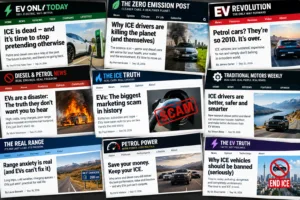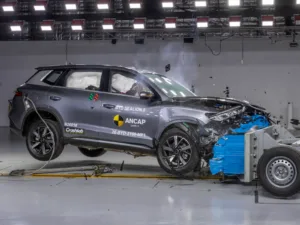
Why is the motoring media still talking about EVs and petrol cars as if they’re members of rival gangs?
EV owners on one side, petrol and diesel loyalists on the other. Apparently, somewhere in between is a line in the tarmac that you must not cross. Except there’s a problem with that argument. They’re all just cars. Different powertrains, certainly. Different strengths, different compromises and, in some cases, radically different ways of using them. But ultimately, four wheels, seats, steering wheel and somewhere to put your coffee.
So why does the automotive media continue to divide the industry into EV and ICE as though we’re covering two completely separate species?
Once upon a time, it made sense
There was a time when an electric vehicle absolutely needed explaining. It didn’t have an engine, it had a big battery, you plugged it into a wall, it could regenerate energy when you lifted off the accelerator, it was very quiet, and, depending on the car, it could either travel surprisingly far or leave you staring nervously at the range display while calculating whether you could make it home.
That was new, and new deserves explanation. Early EV buyers had legitimate questions about range, charging, battery degradation, servicing, resale value and what happened when the battery got low.
So the media quite reasonably treated EVs as a separate subject, with dedicated EV channels, sites and advice. But here’s the thing, They’re not new anymore. The International Energy Agency says more than 20 million electric cars were sold globally in 2025, representing roughly one in every four new cars sold.
That makes them a major part of the automotive market, and yet we’re still writing headlines as though an EV has just arrived from Mars.
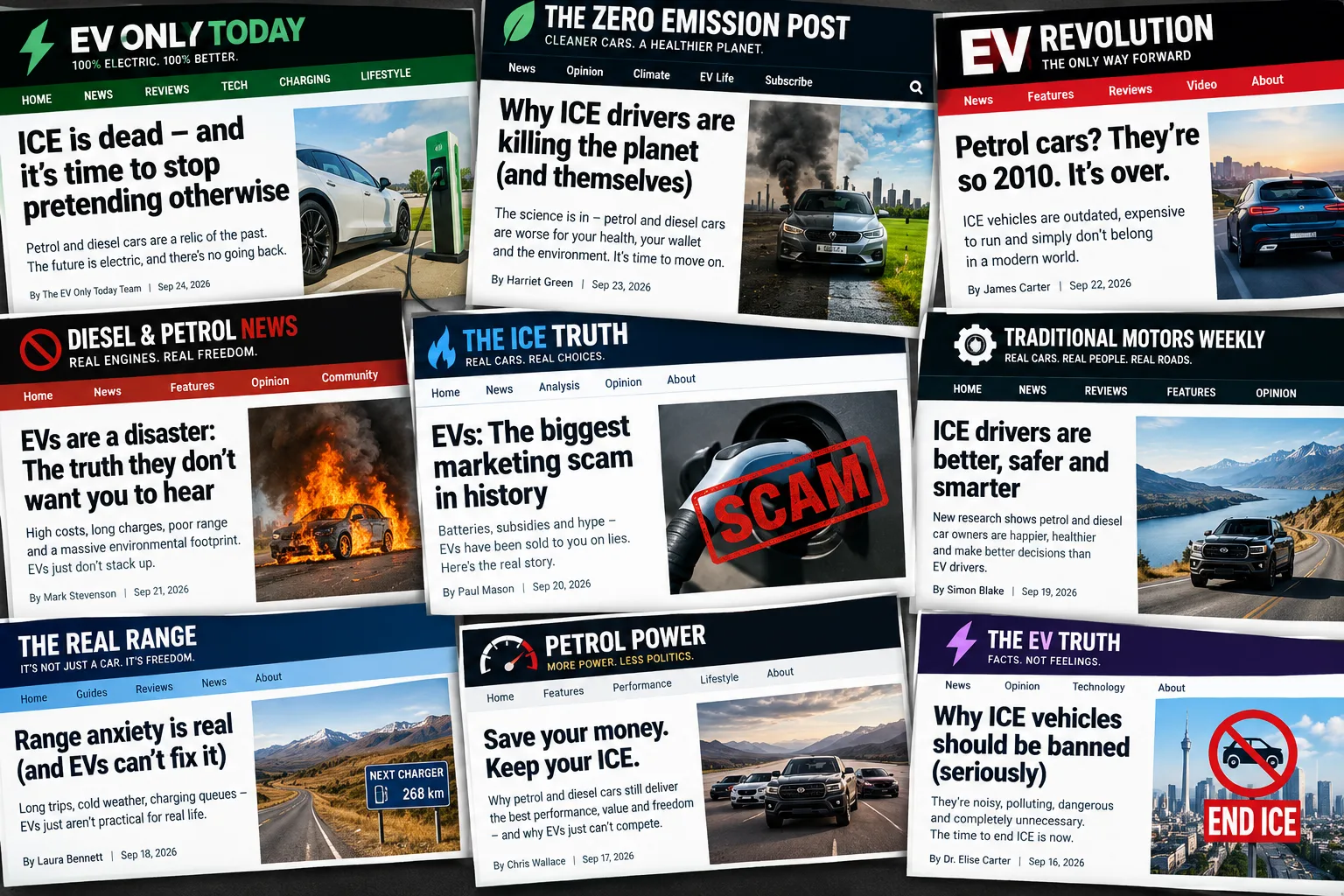
The great EV versus ICE fight
Perhaps there’s another reason, Conflict sells. “New SUV available with petrol, hybrid and electric powertrains” isn’t exactly clickbait. “EVs versus petrol: which side are you on?” suddenly has the internet reaching for its keyboard.
We in the auto world love a fight. Ford versus Holden, Manual versus automatic, Turbo versus naturally aspirated. And now: EV versus ICE. It’s perfect, two teams, two tribes and importantly, two sets of angry comments.
The problem is that most people buying cars aren’t actually interested in joining a tribe they’re interested in buying a car. A good one, preferably.
I’m sure gaining your knowledge from like-minded outlets may make you ‘feel’ smart, but true insight and growth comes from objectivity, seeing and understanding BOTH sides of the story.
The buyer doesn’t care what team you’re on
Ask someone shopping for a family SUV what they want to know. How much does it cost? Is it comfortable? Will the kids fit? What’s the boot like? Can it tow? What’s the warranty? How much does it cost to service? How far can it go?How long does it take to refuel or recharge? What’s it like to drive? Does the infotainment system make you want to put your fist through the screen? And perhaps the most important question: Is it any good?
Notice something? Almost none of those questions begin with EV or ICE. That’s because they’re car questions.
But the powertrain absolutely matters
Before anyone starts throwing batteries at me, let’s be clear. The distinction isn’t meaningless. An EV isn’t simply a petrol car with the engine removed and a giant battery shoved underneath it.
Electric motors deliver their power differently, regenerative braking changes how the car feels, battery weight affects handling, packaging can create huge amounts of cabin space, software and energy management become increasingly important. And then there’s charging. You can’t simply wave away the difference between spending five minutes filling a tank and potentially spending 20–40 minutes at a fast charger.
Those things matter and they should be tested. They should be explained and they should absolutely be part of a review. But they don’t need to become the entire review.
Because the industry itself has stopped being binary
Here’s where things get really interesting. The car industry isn’t actually divided neatly into EV and ICE camps. It’s a spectrum. Petrol, Diesel, Mild hybrid, Hybrid, Plug-in hybrid, Extended-range EV. Battery electric. And increasingly, those categories overlap.
A hybrid can drive electrically. A PHEV can behave like an EV for the school run and a petrol car on holiday. An extended-range EV (super hybrid) can use an engine to generate electricity while electric motors do the driving. Meanwhile, even conventional petrol cars are becoming rolling computers packed with software, sensors, cameras, connectivity and electrification.
So where exactly is the great dividing line? Well it’s getting blurry. In fact, some progressive car companies ‘traditional’ and ‘new’ have already embraced this blur and produce vehicles that offer a broad spectrum of powertrain solutions that cater for the end user’s needs, whatever those needs happen to be.
Maybe we’re asking the wrong question
The question shouldn’t be: “Is an EV better than an ICE car?” That’s almost meaningless without knowing what the car is being asked to do. Imagine two buyers, one drives 35km a day, has a garage and can charge overnight. The other drives huge distances for work, regularly tows a trailer and spends days in rural areas where public charging is limited.
Should they have the same powertrain? Of course not. That’s not a political statement. It’s just matching technology to the job. A PHEV might suit one person, BEV another, a diesel ute another, a petrol SUV, well you get the point I’m sure. The clever answer isn’t picking a winner it’s understanding the use case.
And this is where the media can do better
Instead of asking whether EVs are “better”, journalists should explain where they are better suited (and where they’re not).
The same applies to ICE vehicles. A petrol SUV that drinks 11 litres per 100km shouldn’t escape scrutiny simply because we’re used to petrol. A diesel ute that costs a fortune to service shouldn’t get a free pass because it has a familiar fuel tank. And an EV shouldn’t automatically receive a halo because it has zero tailpipe emissions.
Every technology has compromises, that’s what a decent car review is supposed to uncover. So for those wanting to be full informed, picking an EV or ICE only media title surely misses the whole story?
EVs aren’t perfect. Neither are petrol cars.
Electric cars bring some obvious advantages. Electric drivetrains are highly efficient. They can deliver spectacular performance (certainly in a straight line). Running costs can be lower, particularly for people who can charge cheaply at home and with solar. And there are no tailpipe emissions.
But they’re not magic. Batteries require significant quantities of raw materials and large EVs can be extremely heavy. Also charging infrastructure varies enormously. Apartment dwellers can face very different challenges from homeowners with garages. Long-distance travel can still require more planning in some places.
ICE vehicles have their own strengths. Refuelling infrastructure is mature meaning long-distance travel is familiar. Energy-dense liquid fuels remain extremely convenient. And for some applications (particularly certain forms of towing, remote travel and high-mileage use) conventional powertrains can still make practical sense. None of that requires a winner, it requires context.
Charging isn’t a footnote
If there’s one area where EVs genuinely deserve their own conversation, it’s charging. Because an EV owner’s experience depends heavily on where that electricity comes from and where the car can plug in.
Someone with home charging can wake up every morning with a full battery. Someone living in an apartment without dedicated parking may have a completely different experience. That’s why simply quoting an EV’s maximum range isn’t enough.
Journalists need to talk about charging speed, charging availability, real-world energy consumption, road-trip practicality and what happens when the weather, traffic or payload changes the equation.
The good news is that the charging network is growing. The IEA estimates that more than 43 million private light-duty charging points existed globally in 2025, alongside more than 7 million public charging points.
But infrastructure isn’t equal everywhere. So the question isn’t: “Are EVs easy to charge?” It’s: “How easy is this particular EV to charge for this particular person?” That’s much more useful.
And then there’s the elephant in the showroom
We’re also obsessing over the wrong revolution. The biggest change coming to cars isn’t simply replacing petrol with electricity. It’s software.
Cars are becoming connected devices. Over-the-air updates, Digital keys, Driver monitoring, Advanced driver assistance, Cloud-based services, AI, Predictive maintenance, Energy management. Features that can be updated after you buy the vehicle.
Some of this technology is arriving particularly quickly in EVs, but it isn’t exclusively an EV phenomenon. The modern car is becoming a computer on wheels. And quite frankly, that’s a much bigger story than whether it has a fuel tank.
So should we stop calling them EVs and ICEs?
No, of course not. The powertrain matters. It affects performance, efficiency, running costs, refuelling, maintenance, range and the way the vehicle fits into someone’s life.
But perhaps we should stop making the powertrain the identity of the car or the website for that matter. An EV should be judged as an SUV, hatchback, sports car or ute that happens to be electric. An ICE vehicle should be judged in exactly the same way.
The powertrain becomes part of the specification. Like the gearbox. Like the drivetrain. Like towing capacity. Like boot space. Like price. It’s absolutely important BUT not the entire identity of the vehicle.
Because the future is going to get messier
And that’s actually exciting. The automotive industry isn’t heading towards a simple world where every petrol car disappears and every vehicle becomes a battery EV overnight.
It’s heading towards a complicated mix of technologies. Different markets. Different regulations. Different infrastructure. Different customer needs. Different solutions. And that’s exactly how it should be. Because cars aren’t smartphones. There isn’t one charging cable, one operating system and one solution for everyone.
The person commuting around Auckland has different needs from the farmer in Southland. The family towing a caravan has different requirements from the urban runabout. The fleet manager doing 50,000km a year has different priorities from someone who drives to the supermarket twice a week. One size does not fit all.
Perhaps it’s time to stop picking sides
The EV-versus-ICE argument has been useful. It forced us to question how we power cars, it pushed manufacturers to innovate, it made consumers think harder about energy, efficiency and running costs. But eventually, every new technology becomes just technology.
Nobody gets excited because their microwave is “electric”. Nobody describes their washing machine as a “battery-free appliance”. And we don’t call a petrol-powered lawnmower an “ICE mower”.
At some point, technology becomes normal and perhaps cars are reaching that point. The interesting question isn’t whether the car is electric or petrol. It’s whether it’s good. Does it work? Does it suit the job? Does it offer value? Is it comfortable? Is it safe? Is it enjoyable? Does its technology actually make life better? And, most importantly, does it make sense for the person buying it?
Because when the dust settles, the battery is still just a way of storing energy. The engine is just another way of making it. The rest of the car still has to do the same job. Get you from A to B. Carry your stuff. Take the kids to school. Go to work. Go on holiday. Go somewhere stupidly far away just because you can. And occasionally make you grin like an idiot. In other words Life.
Maybe that’s the point. We’re spending an awful lot of time arguing about what’s powering the car. Perhaps we should spend a little more time talking about the car itself.
Because whether it’s powered by petrol, diesel, electrons, or some increasingly complicated combination of all three… it’s still a bloody car.