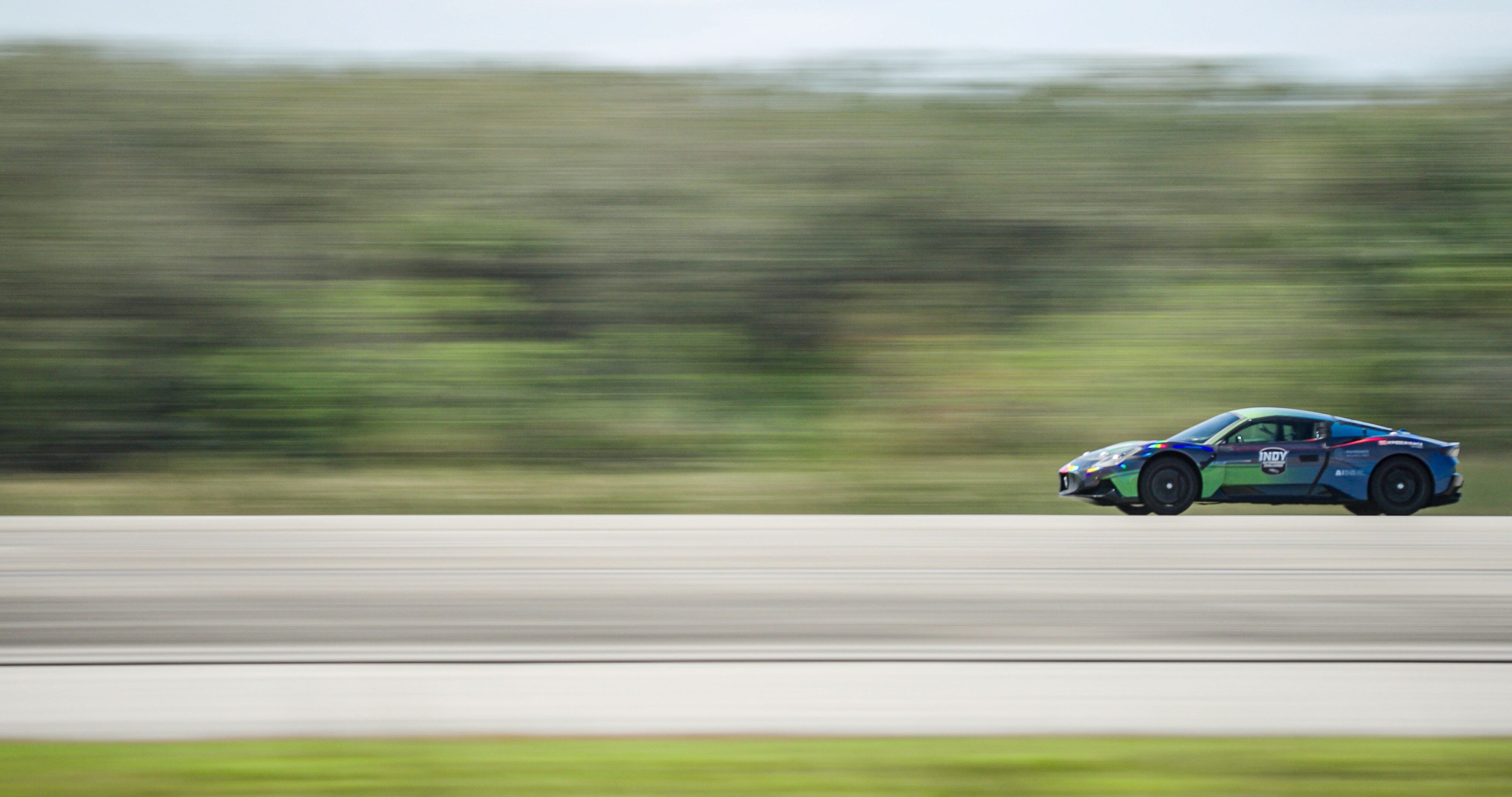
Even by today’s standards of technology, this was an ambitious challenge, the achievement of which has now put the Maserati MC20 into the history books. So, if you’ve ever wondered how fast a car can go without a driver behind the wheel, Maserati now have an answer for you.
At Cape Canaveral in Florida (yes, the same one), Indy Autonomous Challenge (IAC) and Politecnico di Milano joined forces with Maserati and the Mile Miglia Experience Florida to take technology where it has never gone before! Kennedy Space Center‘s ‘Space Florida Launch and Landing Facility’ (LLF) has a runway of 2.8 miles. Not only is the runway one of the world’s longest but the site itself is steeped in history, the perfect place to do some high speed testing!
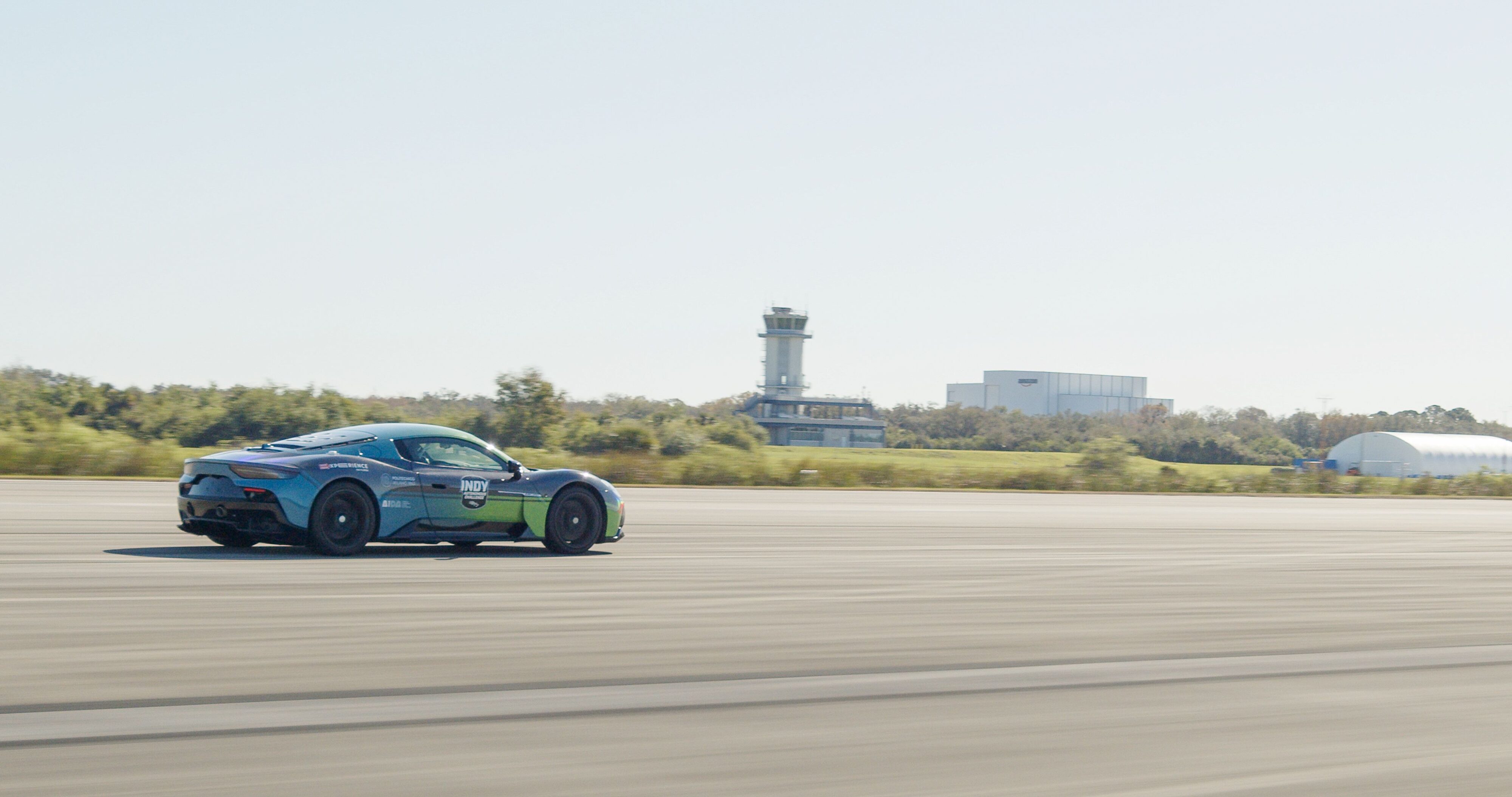
‘PoliMOVE-MSU’, an AI driver software developed by Politecnico di Milano’s division for ‘Artificial Intelligence Driving Autonomous’ (AIDA) was applied to a Maserati MC20 for the purpose of this test. The car reached 197.7 mph or 318kph during testing without a soul onboard! The clocked speed is a new record, breaking the previous holder’s 192.8mph statistic which was also set by PoliMOVE during the 2022 edition of the Indy Autonomous Challenge.
Funnily enough, the Maserati MC20 is already the world record holder for the top speed recorded by a production car, clocking 177mph or 285kph during testing at the Piacenza Military Airport track in November 2024. Now, Maserati can add another feather to its cap!

The purpose of all of this you may ask? Well, this was done to ensure the behaviour and reliability of autonomous driver technology under extreme conditions. During testing, the AI was assessed on its reaction time and mobility among other metrics. To celebrate the achievement, Maserati are sending an MC20 Cielo on the 1000 Miglia Experience Florida to further popularize the innovative achievement as well as do a bit of autonomous driving of its own!
Thanks for reading! For more Maserati news and reviews, visit Tarmac Life.
Words by Matthew D’Souza, media courtesy of Maserati News.