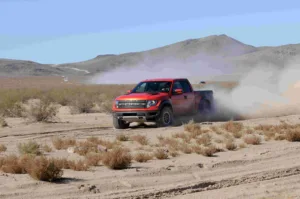
From a handful of engineers with a crazy idea to an off-road phenomenon, the Ford Raptor proves that sometimes the best way to build a better road-going truck is to throw it into the desert and see what breaks.
There are plenty of pickup trucks that look tough. There are fewer that can genuinely back up the attitude with the ability to tackle some of the nastiest terrain on the planet. And then there’s the Ford Raptor, a machine that effectively asks one simple question: what if you could buy a desert racing truck without needing a racing licence, a support crew or a second mortgage to keep it running?
As it turns out, that question would help create one of the most recognisable names in the performance pickup world.
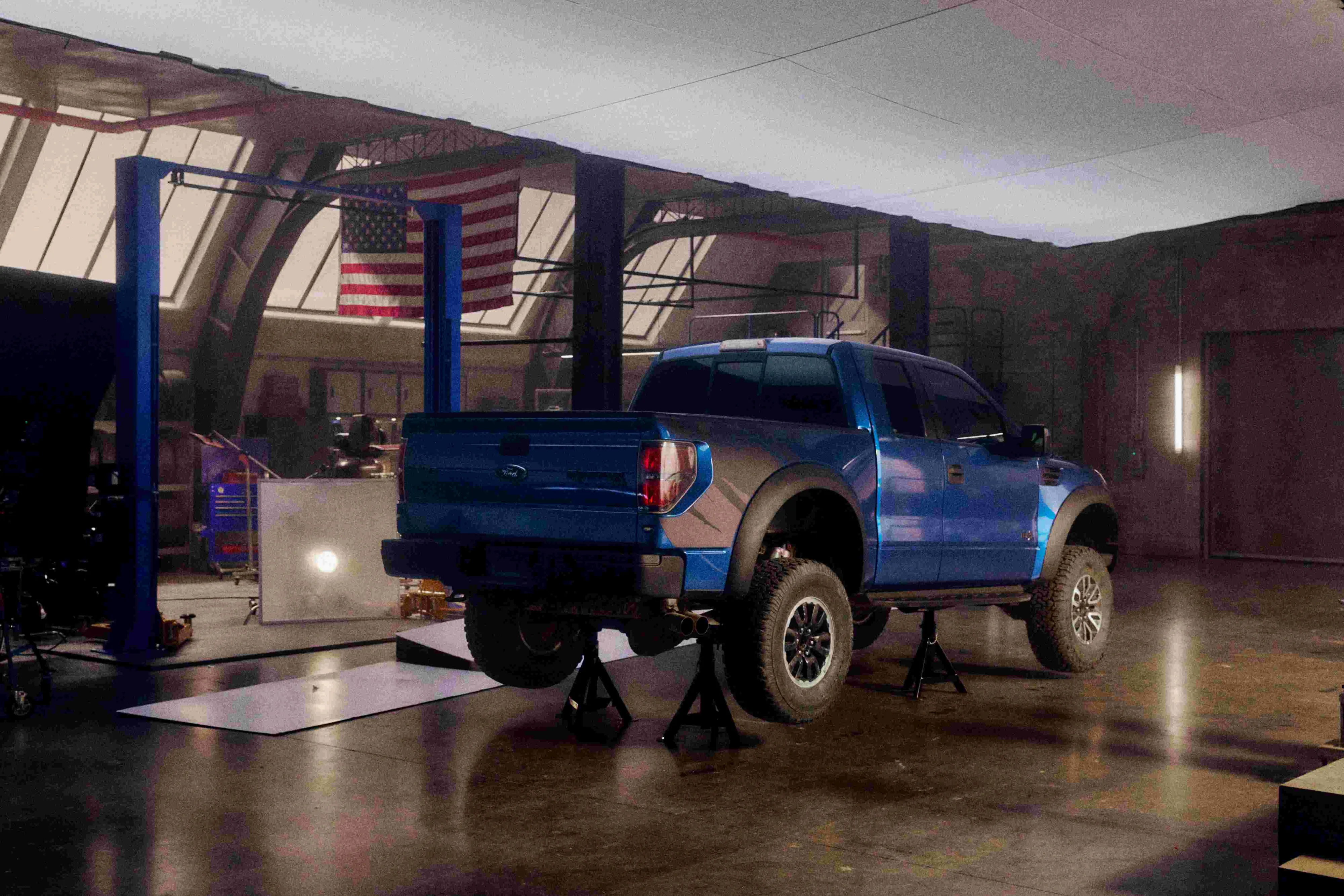
Ford’s latest Raptor Origin Story campaign revisits the thinking, engineering challenges and people behind the high-performance off-road truck. Directed by Raptor owner Ben Affleck, the campaign features actor Jon Bernthal alongside engineers Tim Smith, Derek Bier and Chris Paiva, who helped shape the Raptor’s development and legacy.
It’s a story that began with an idea that was just a little bit bonkers. Thankfully, nobody told the engineers to behave themselves.
From the Racecourse to the Road
Wind the clock back to the mid-2000s, when Ford engineers were exploring the development of a road-going performance vehicle. Rather than simply making something faster on the tarmac, a small team began considering a more adventurous proposition.
Could the performance, toughness and desert-conquering ability of a competition truck be built into a production vehicle that ordinary customers could actually buy? It was hardly a question without consequences.
Desert racing, particularly in Mexico’s Baja region, is a brutal test of machinery. Vast stretches of sand, punishing corrugations, rocks and extreme temperatures put extraordinary demands on vehicles. Suspension components take a beating, drivetrains face enormous loads, and a vehicle that looks invincible in a showroom can quickly become an expensive collection of broken parts.
The conventional approach to an off-road pickup was relatively straightforward: start with a regular four-wheel-drive truck, add some tougher-looking styling, increase the ride height and fit chunkier tyres. Ford’s team wanted to go considerably further.
Rather than simply looking like an off-road weapon, the proposed Raptor would need the hardware to deliver genuine performance away from the sealed stuff. And it would have to do so while remaining a factory-built vehicle backed by a manufacturer’s warranty.
In other words, it needed to be capable of taking a serious pounding without requiring its owner to become a full-time mechanic. Easy, right?

When Things Go Bang
The early development programme was a case of building, testing, breaking and trying again. Test vehicles were pushed hard, components were stressed and engineering assumptions were challenged. One particularly memorable failure involved a steel driveshaft twisting under load until it resembled a candy cane.
Not exactly the sort of result you’d want to see on a new-car launch slide. However, those failures were part of the process. If Ford wanted to build a pickup capable of surviving the kind of punishment associated with desert racing, the engineering team needed to discover precisely where the limits lay. And then push them further.
Suspension became one of the critical challenges. A vehicle travelling quickly over rough terrain needs more than generous ground clearance and a set of aggressive-looking tyres. It needs suspension capable of absorbing repeated impacts, maintaining control and resisting the sort of heat build-up that can compromise performance over time.
Ford partnered with FOX to introduce position-sensitive internal-bypass shock technology to the production truck. Previously associated with serious off-road racing machinery, the technology helped deliver the suspension performance required for the Raptor’s ambitious brief.
The result was a truck engineered to do more than crawl over rocks or navigate a muddy farm track. It was designed to travel quickly across rough ground while giving its driver greater control and confidence.
That distinction is important. Plenty of four-wheel-drives can get you through difficult terrain at walking pace. Building one that can tackle it at speed, repeatedly, is an entirely different proposition.

Proving the Point in Baja
Eventually, the development work needed to move beyond the test facility. What better place to demonstrate the concept than the very environment that inspired it?
Ford took the Raptor to the Baja 1000, one of the world’s most demanding off-road races. The truck finished on the podium, providing a suitably dusty demonstration of the relationship between Ford’s racing ambitions and its production vehicles.
It was a significant milestone because the Raptor wasn’t simply borrowing the visual language of desert racing. The project was built around translating genuine off-road engineering into something customers could drive home. That philosophy remains central to the Raptor identity.
Today, the Raptor name extends across a family of vehicles, including the F-150 Raptor, F-150 Raptor R, Ranger Raptor and Bronco Raptor. Each has its own character and purpose, but the underlying idea remains consistent: deliver serious off-road capability without abandoning the usability expected of a production vehicle.
And while the original concept was developed in the United States, the Raptor philosophy has found a particularly receptive audience in markets such as Australia and New Zealand, where pickup trucks are expected to handle everything from everyday commuting to remote adventures.
For Kiwi buyers, the Ranger Raptor is the most familiar expression of that philosophy. It’s a reminder that a ute doesn’t necessarily have to choose between being a working vehicle and being something you genuinely look forward to driving. Although, given the price of some modern performance pickups, your accountant might still want a word.
The Unexpected Bonus: A Community
Here’s where the Raptor story gets particularly interesting. Ford set out to build a better off-road truck. What it didn’t necessarily anticipate was the community that would grow around it.
As Raptors reached customers, owners began forming clubs, organising gatherings, sharing trail advice and heading off on adventures together. The vehicles became a common thread connecting people who wanted to explore places that ordinary road cars would never comfortably reach.
The scale of that enthusiasm was on display at this year’s Raptor Rally in Lake Havasu, Arizona, where Ford reported more than 1,100 attendees and nearly 500 Raptors gathering over a weekend.
The event brought together owners and enthusiasts for off-road driving, trail experiences and opportunities to ride alongside professional drivers.
It wasn’t just a gathering of people comparing horsepower figures or arguing about tyre pressures. It was an opportunity to experience the vehicles in the environments they were designed for, while connecting with others who shared the same enthusiasm. And that’s a powerful thing for any automotive brand to achieve.
A vehicle can be engineered to an extraordinary standard, but when owners begin building friendships, traditions and experiences around it, the product takes on a life of its own. The Raptor has become more than a set of specifications on a brochure. For many owners, it’s a ticket to adventure.
From Baja to Formula 1
Ford’s wider motorsport ambitions also help explain why the Raptor story matters today. The company has been reconnecting its racing operations and production vehicle development under the Ford Racing banner, with the aim of bringing lessons from competition into the vehicles customers drive. That connection stretches beyond the desert.
Ford’s return to Formula 1 with Red Bull Ford Powertrains provides another high-profile example of the company’s renewed motorsport focus. While a Formula 1 car and a Raptor occupy radically different ends of the automotive spectrum, both represent opportunities to develop technology, test engineering ideas and demonstrate what the brand can achieve.
The Raptor Origin Story campaign reflects that broader philosophy, celebrating the people who turned an unconventional idea into a production vehicle and the enthusiasts who helped make it an enduring part of Ford’s identity.
It’s also a reminder that motorsport’s influence isn’t limited to lap times, podiums and expensive trophies. Sometimes, its legacy is a pickup truck bouncing across a desert with considerably more enthusiasm than common sense would normally recommend. And sometimes, that’s exactly the point.
The People Behind the Beast
The new campaign places the original engineers at the centre of the story, rather than treating the Raptor as a vehicle that simply appeared one day in a designer’s sketchbook.
Jon Bernthal, an actor and Raptor owner, was a natural fit for the project, bringing genuine enthusiasm for the truck to his involvement. He described the Raptor as an exceptionally capable machine and welcomed the opportunity to celebrate the engineers responsible for creating it.
That authenticity is important. The campaign isn’t simply about telling people that the Raptor is tough. It’s about explaining why it was developed, the obstacles its creators faced and the thinking that made it different.
For Artists Equity, the production company involved in the campaign, the appeal was similarly rooted in the human story behind the engineering.
The original team had a vision, encountered setbacks and continued pushing until the idea became reality. That’s a more compelling narrative than simply lining up a few trucks, adding dramatic music and throwing sand at the camera. Although, to be fair, throwing sand at a Raptor does sound like a perfectly reasonable way to spend an afternoon.

A Monster With a Purpose
The Raptor’s evolution over nearly two decades illustrates what can happen when an engineering team is given the freedom to challenge conventional thinking. The original ambition was straightforward, if rather extreme: build a production truck with the spirit and capability of a desert racer.
Achieving that required experimentation, new suspension technology, plenty of broken components and a willingness to tackle problems that a more conservative development programme might have avoided.
The resulting vehicle helped establish a new benchmark for high-performance off-road pickups and created an identity that continues to resonate with owners.
But perhaps the biggest lesson from the Raptor story isn’t about horsepower, suspension travel or how quickly a truck can cross a patch of desert. It’s about what happens when a manufacturer builds something that people genuinely connect with. Ford’s engineers created the machine. Owners turned it into a movement.
And somewhere along the way, a seemingly outrageous engineering experiment became a vehicle family with a following that stretches well beyond its American origins.
So, the next time you see a Ford Raptor sitting in traffic, don’t assume it’s simply an oversized ute with an expensive wardrobe. There may be a little more Baja DNA beneath those flared wheel arches than you’d expect.
Just remember that while the truck might be capable of tackling some seriously challenging terrain, the local supermarket car park is probably not the place to demonstrate it..