A few months ago, I hopped on a 25 hour journey to go back to my home country of Brazil to spend some time with family and friends, 7 years after leaving on a one-way ticket. There’s nothing like being there again to rekindle some old automotive interests. And that’s where the subject of this story comes in.
The history of Volkswagen and Brazil is a long and very interesting one. Established back in 1953, “Volkswagen do Brasil” was the first plant of the German brand outside of its country of origin, and at first imported knocked down kits to be assembled and sold there. Shortly afterwards, operations grew to become an actual factory that started with the Sedan (the good old Beetle) and the Kombi (the Type 2 Transporter that Dave wrote about recently), but here I’m using the names they were known by when growing up in Brazil.

Around the 1960s, protectionist governments implemented tight importing laws that meant the enormous Brazilian market grew in a vacuum, with not a lot of external competition. During that time, four main brands (Volkswagen, Ford, General Motors and FIAT) ran the show and had a tight grip on the Brazilian automotive scene, with models designed with the country’s market and necessities in mind. This led to localised products that became very dear to the Brazilian people, some of them now known worldwide. VW’s air-cooled framework was heavily explored, leading to the Brasilia, the stunning pair of SP1 and SP2, the Variant II, or even the also interesting Puma GT, who Muhammad Ali would buy the rights for years later.
And most of Volkswagen’s success can be attributed to the Sedan, which at that point was already known locally as the Fusca. It’s really hard to put in words how immensely important the Fusca is for the Brazilian people and our culture, so it’s no surprise that people seek these, nerd out on them and even go as far as to strip them down to bare metal and restore them fresh. This is what a close friend of mine did some time ago, and when the car was ready, I had the opportunity to have it for a little while.
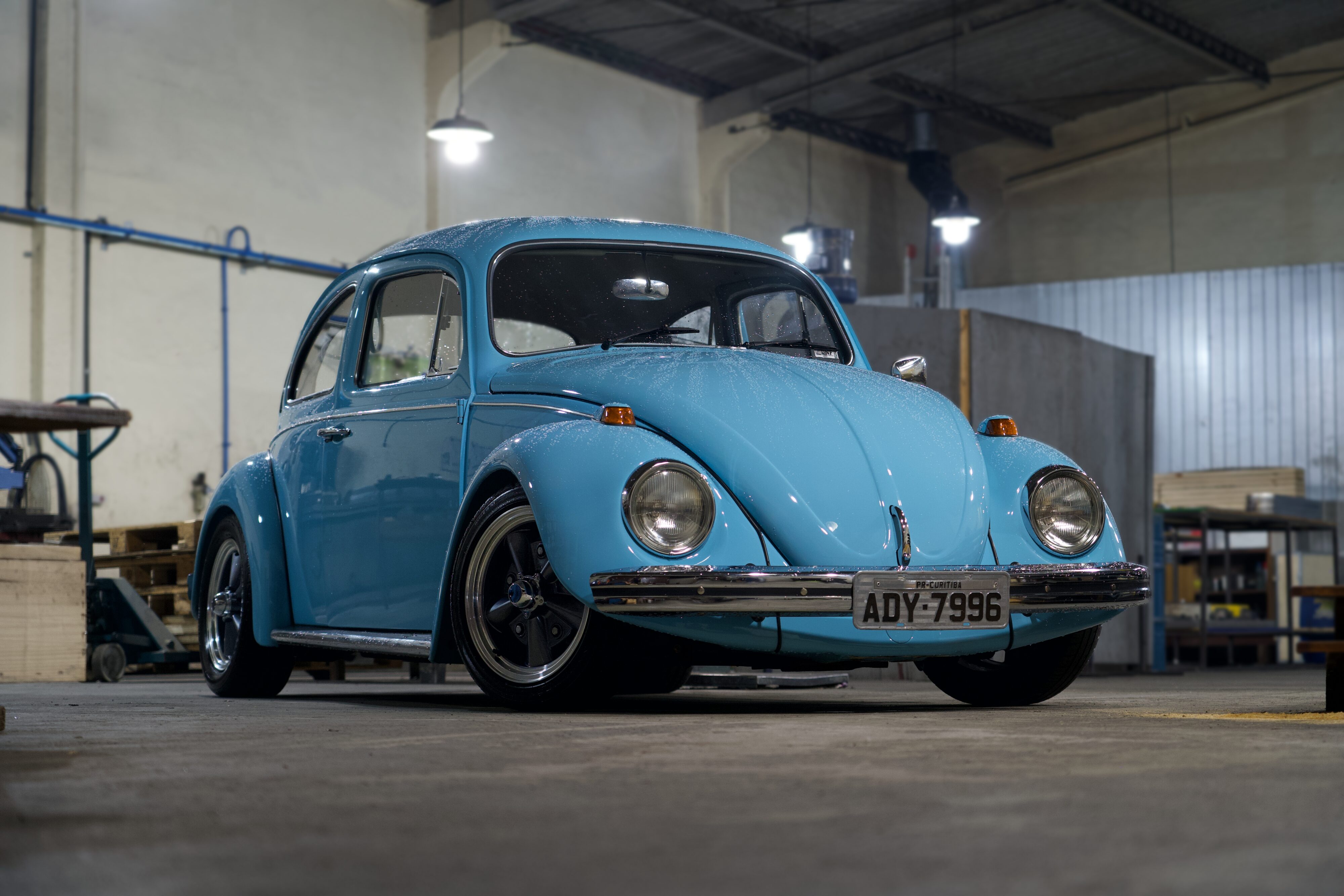
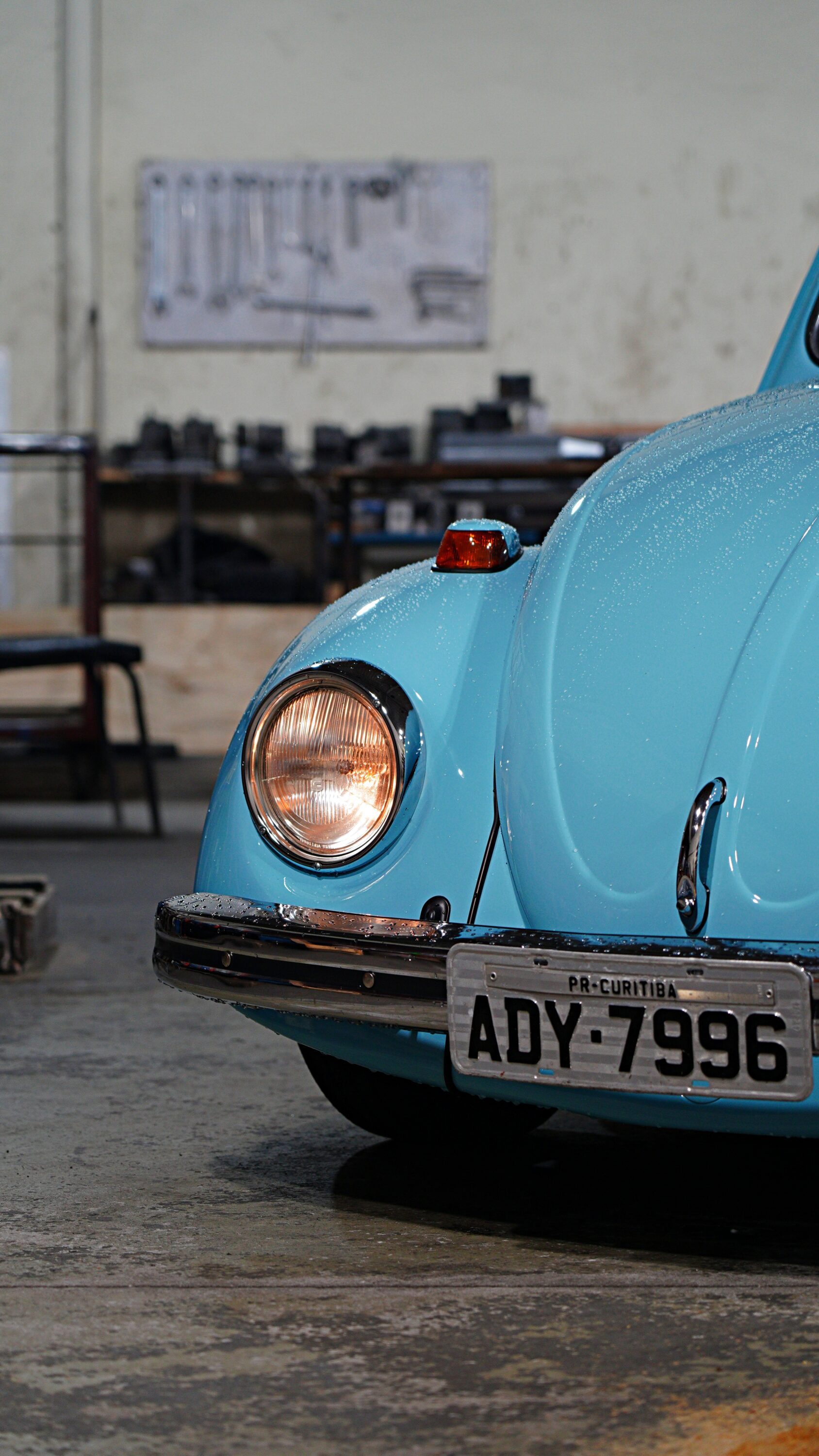
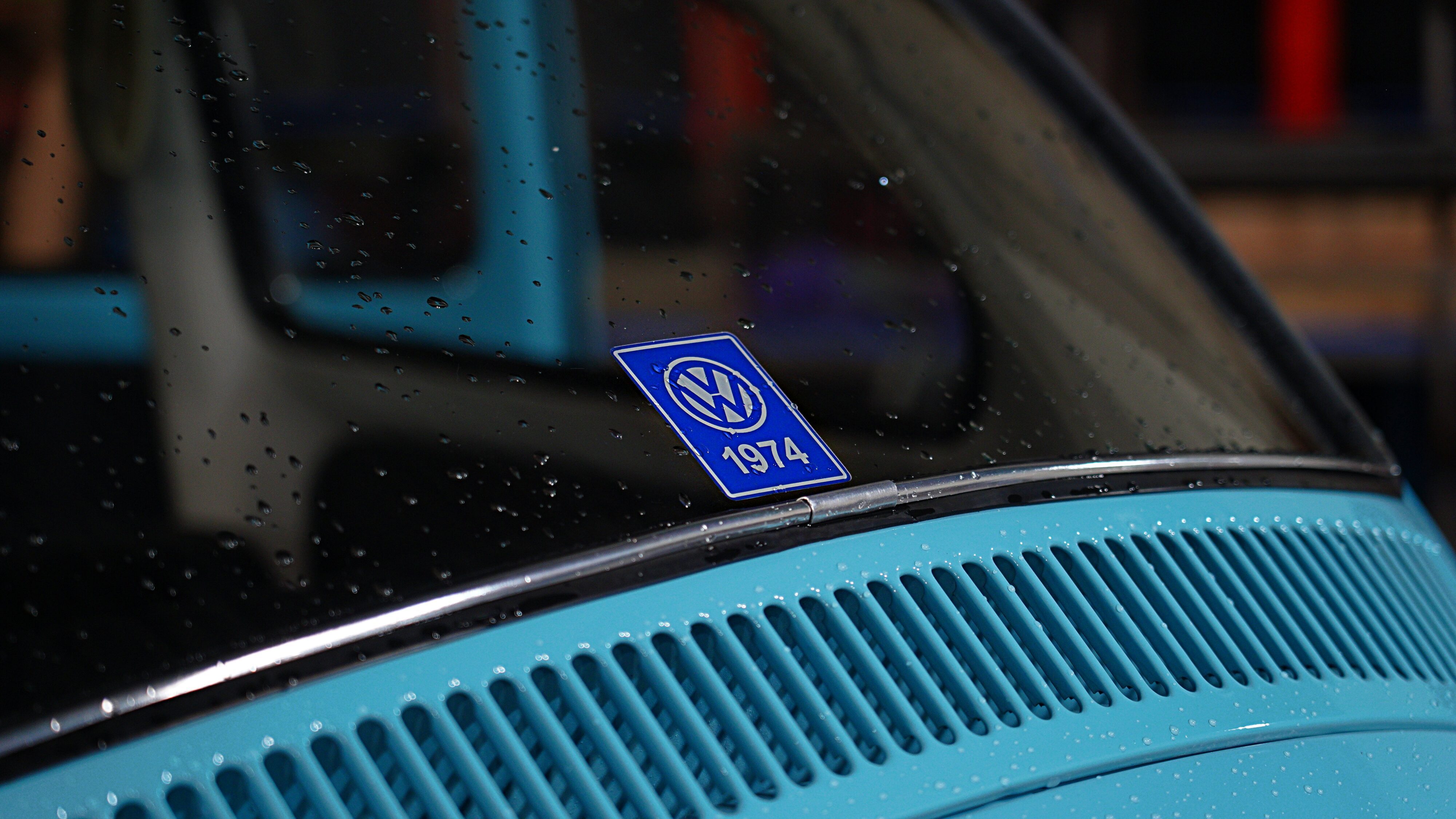
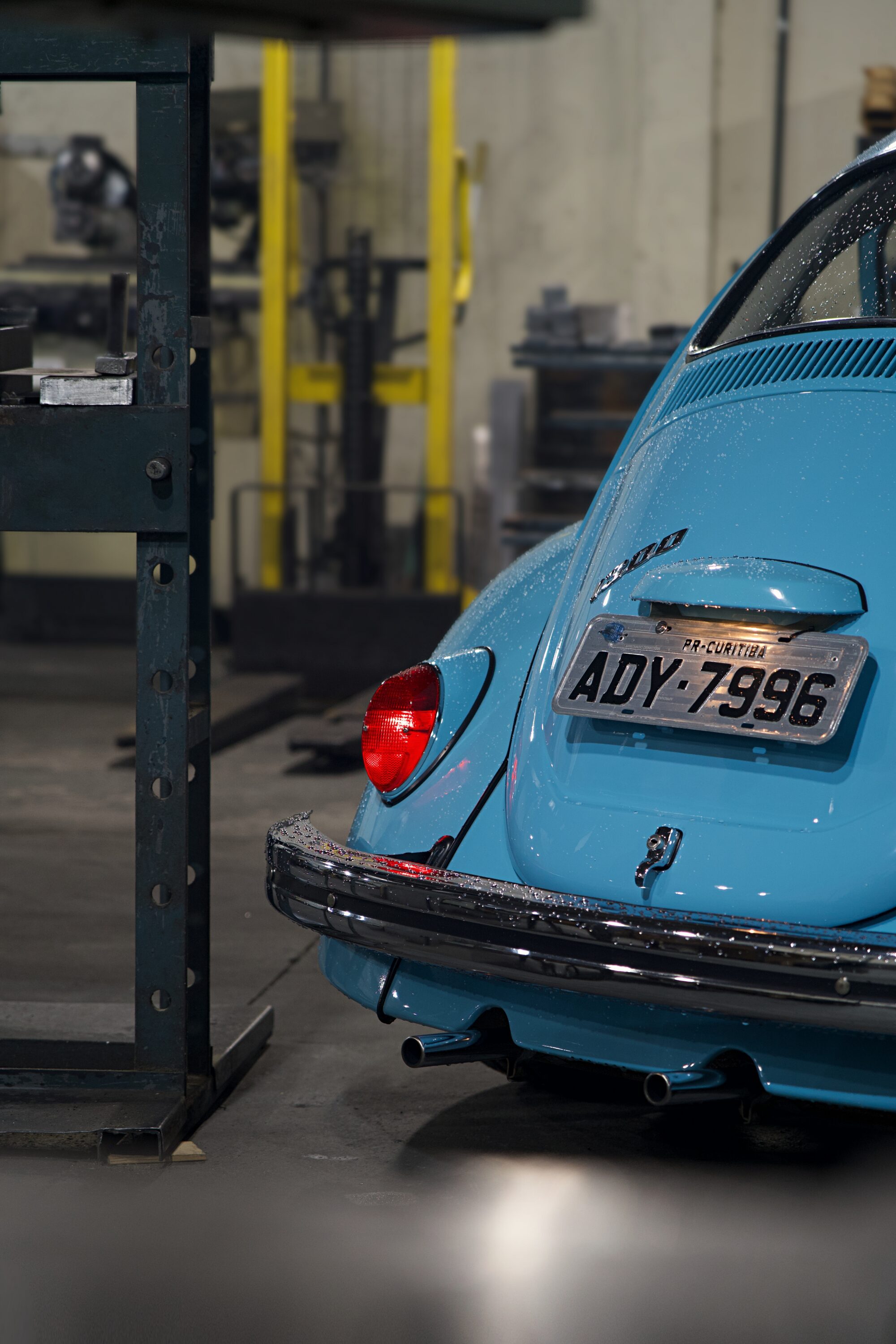
The car in question is a 1974 model. This generation and trim level can easily be identified by the “flat” nature of the headlights and the body-coloured cap for the front indicators. See? As I said, Fusca fans will nerd out on every single detail and, full disclosure, I owned a Fusca myself for a handful of years. Mine was a 1971, also in blue.
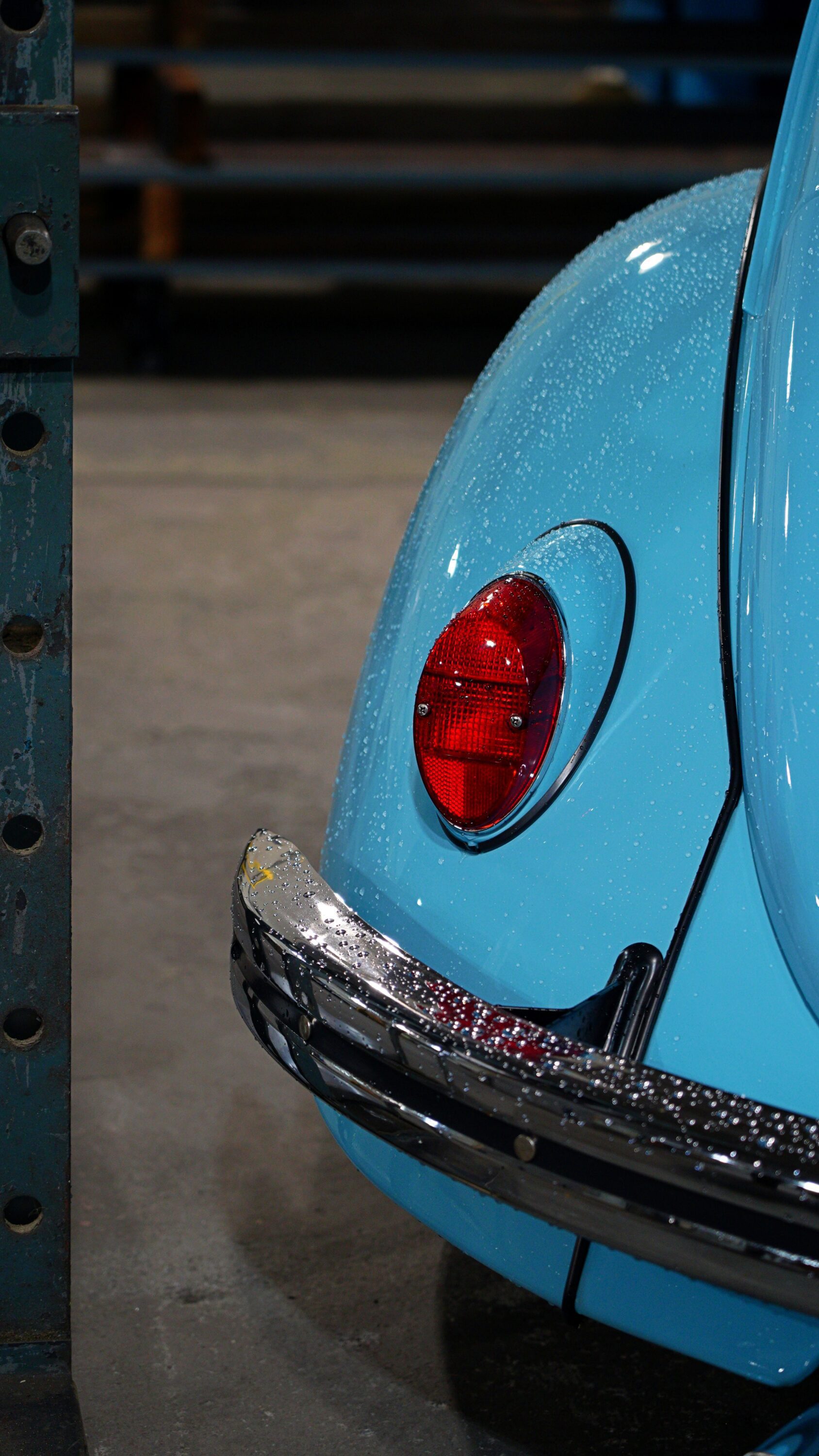
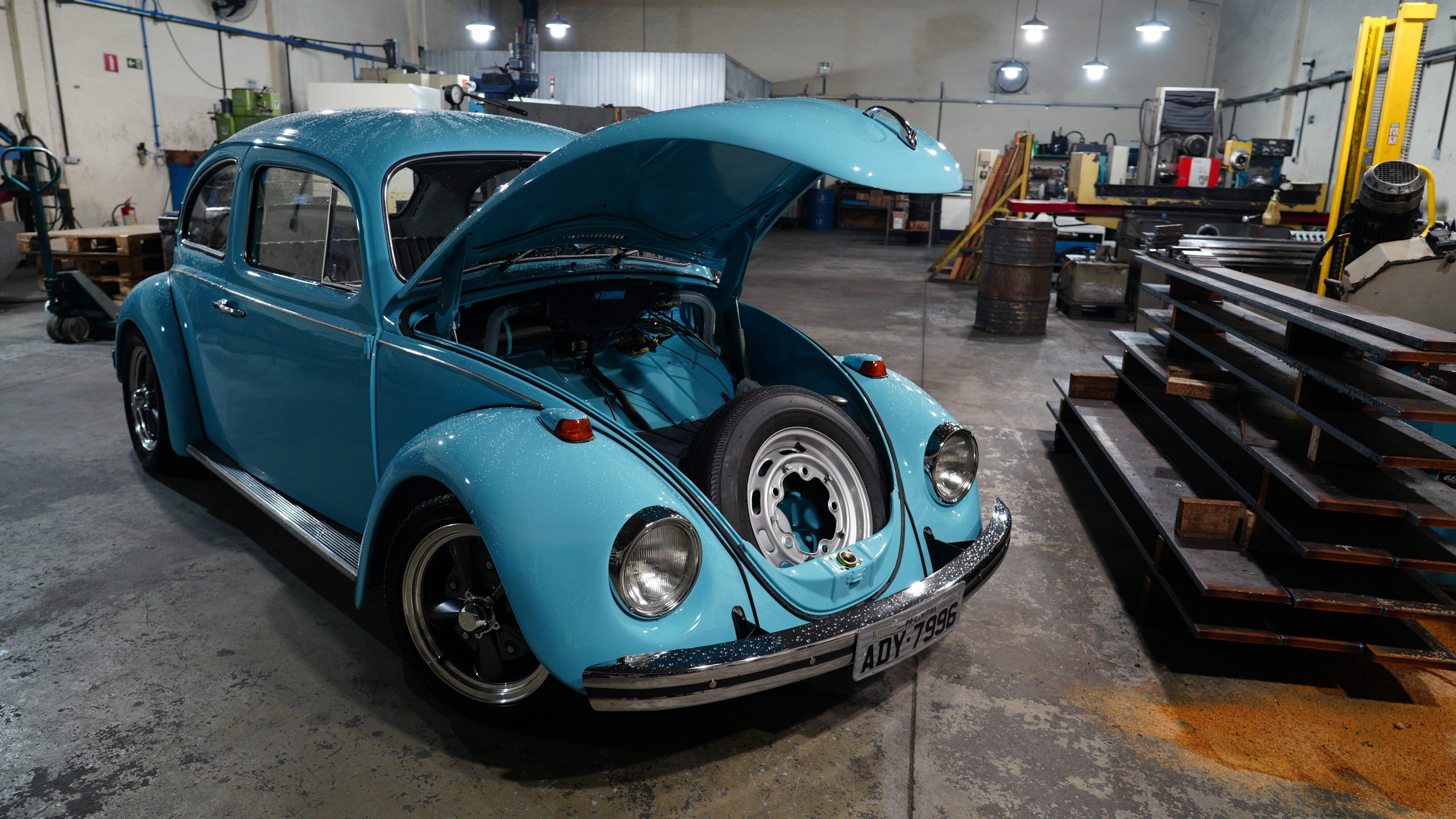
What stayed basically unchanged for the whole run, however, is the unmistakable overall shape. There are barely any straight lines, and the panels are attached to the body like one big LEGO set. Up front you will find storage and the spare tyre, because of course the engine is all the way at the back. A formula so good that the Porsche 911 sticks to it to this day!
The Empi 5-Rib wheels and the slightly lowered suspension close the deal for this example, changing this from a totally original-looking car to one that will clearly stand out, including driving to the massive air-cooled events held back home. The chrome bits, which can make or break the look of a vintage car, have all been replaced by old stock parts. This and the quirky period-correct details sprinkled throughout the car make it feel like you opened a portal back to the Groovy 70s.

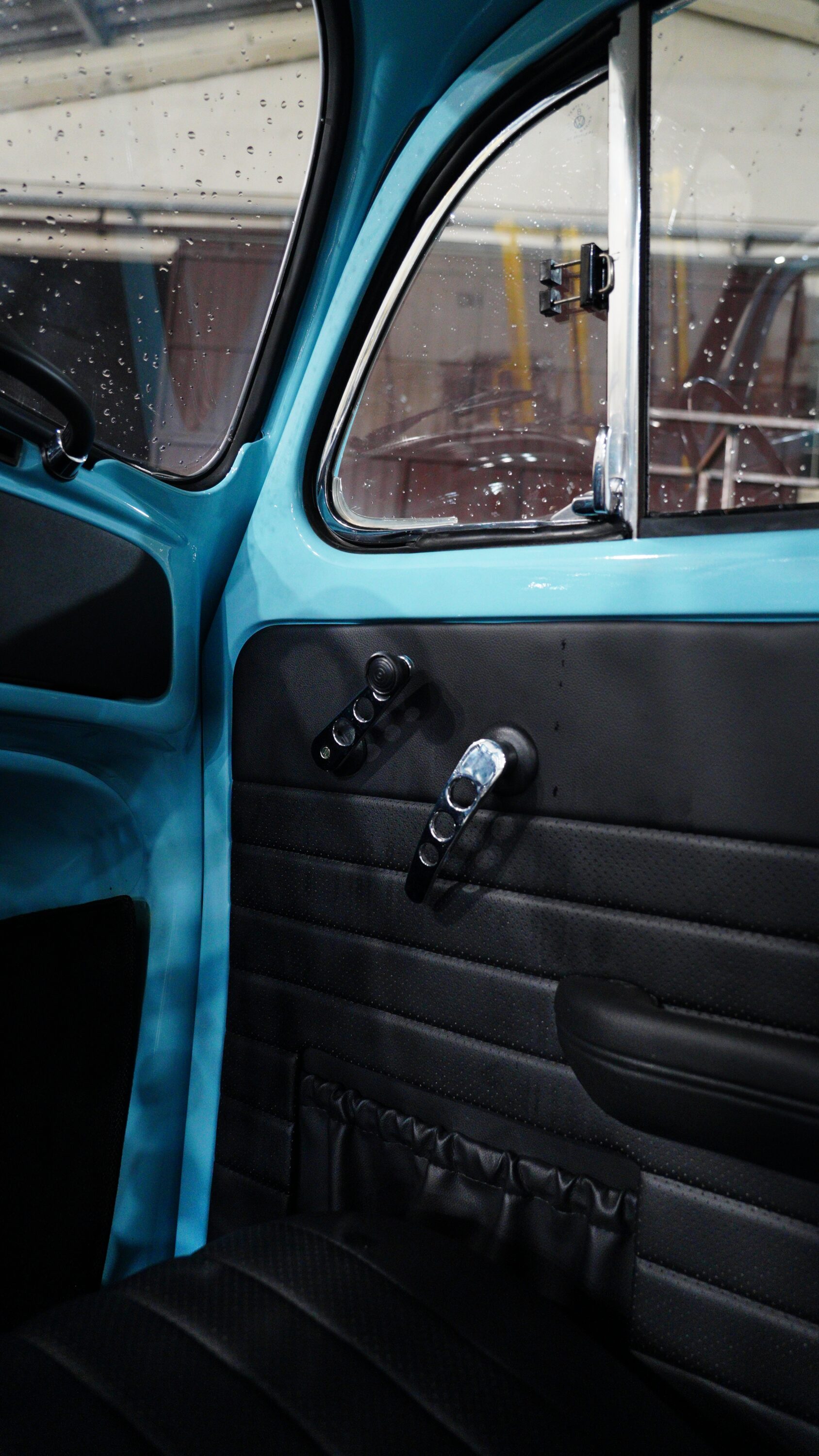
Pull on that lovely door handle and jump inside the Fusca and you will feel the comfiest seats ever. They might not have a head rest or any kind of bolstering, but they have actual springs on them! I owned another vintage VW in the past, and that one used dried coconut fibre instead of foam, so it’s clear that car brands tried a bit of everything back in these days. The upholstering, which has been redone using period materials, feels comfortable and compliments the rest of the interior very well.


The door cards are simple as can be. It must have been 10 years since the last time I actually cranked down a window, but the sewn-on door pocket and the quarter window are reminders of a much simpler time, as these were considered luxury options. Amenities are few and far between: while a new sound system has been fitted here, there are no infotainment options, ventilation or driving assistances of any kind.
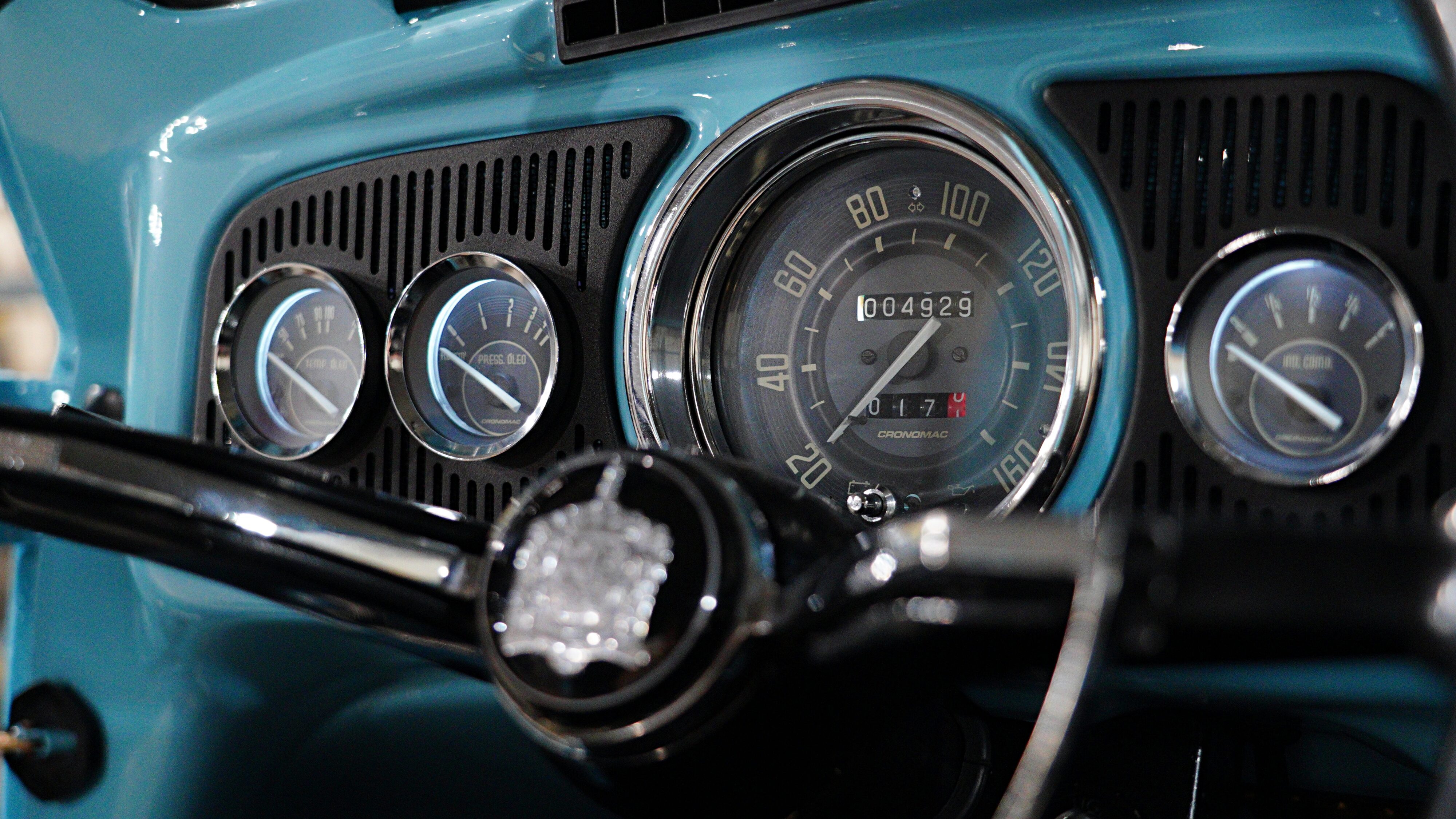
The steering wheel is a pleasure to interact with because of its thin grip, its smooth surface and the horn being activated through the chrome surround close to the bottom. Its large diameter allows for easy peeking at the dials, which in this specific case carry a modern touch by introducing new gauges and being lit by LEDs.
Due to that “isolation” mentioned earlier, the Fusca evolved differently to other Beetles, so many of the popular characteristics such as the McPherson struts or the curved windscreen were never available for us there. The same applies to the engine, and popping the hood – or is it trunk? there is no settling this question – will provide you with an almost complete view of the whole powertrain.
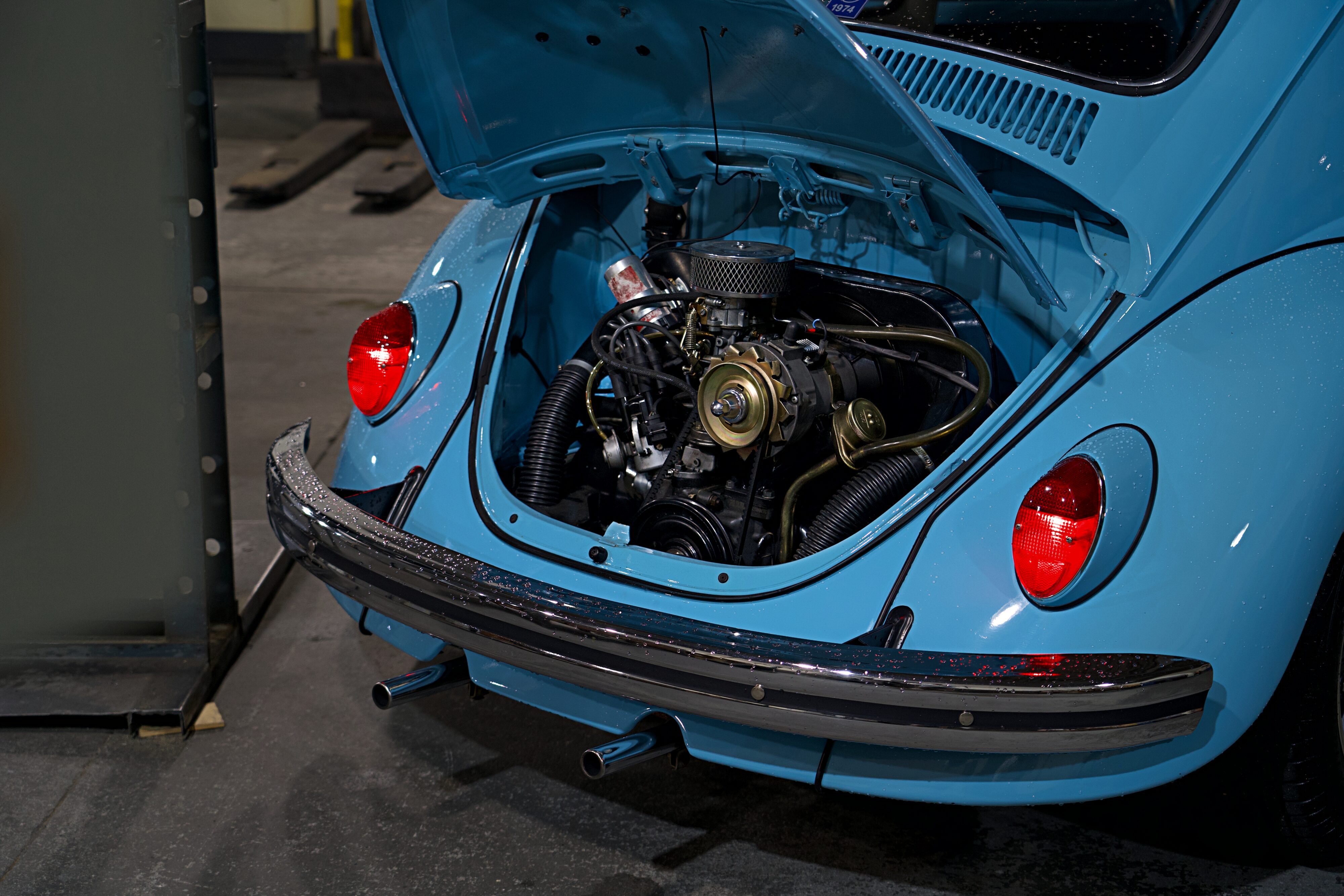
The lack of wires and hoses is such a refreshing view, especially in an example in this condition. This car came originally with a 1300cc engine that was later stroked up to a single carburettor 1500cc. Interestingly enough, the same thing had been done to my own Fusca some 15 years ago (before my ownership), as this was a common modification done to these as a way to get a bit more than the original 34kW of power available.
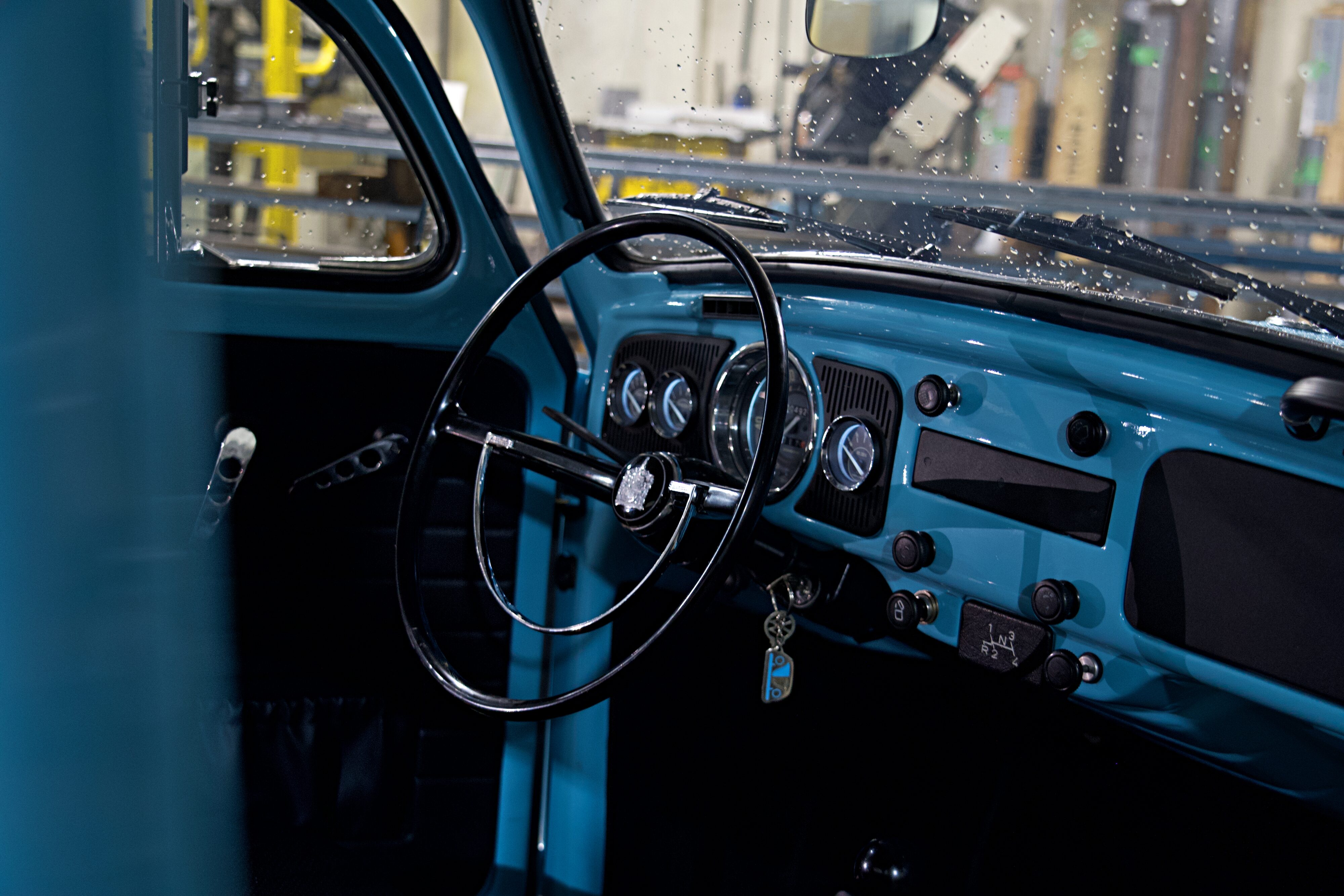
Turning the key gets the boxer four running with ease, and through the famous “whistle” exhaust comes an endearing, comical idle sound that has no peer. It is quiet and inviting, and fits the approachable looks of the Fusca like a glove.
Getting it going is a novel experience in itself. The throttle response is slow, in line to what you would expect from a carbureted, throttle by cable engine. The clutch is light, and has enough mechanical feedback for you to know when it’s engaged by the vibrations it transfers to your foot. Trying out one new vehicle after the other like we do here might make you think cars haven’t changed much, but there’s nothing like being able to drive a well-sorted old(er) car to quickly appreciate how much they have actually evolved.
The brake pedal, which is mounted to the floor of the car instead of travelling towards the firewall, requires a conscious effort to properly use at first, especially for those with longer legs like me. This car has had disc brakes fitted up front, but this is a time where four wheel drums were the rule.
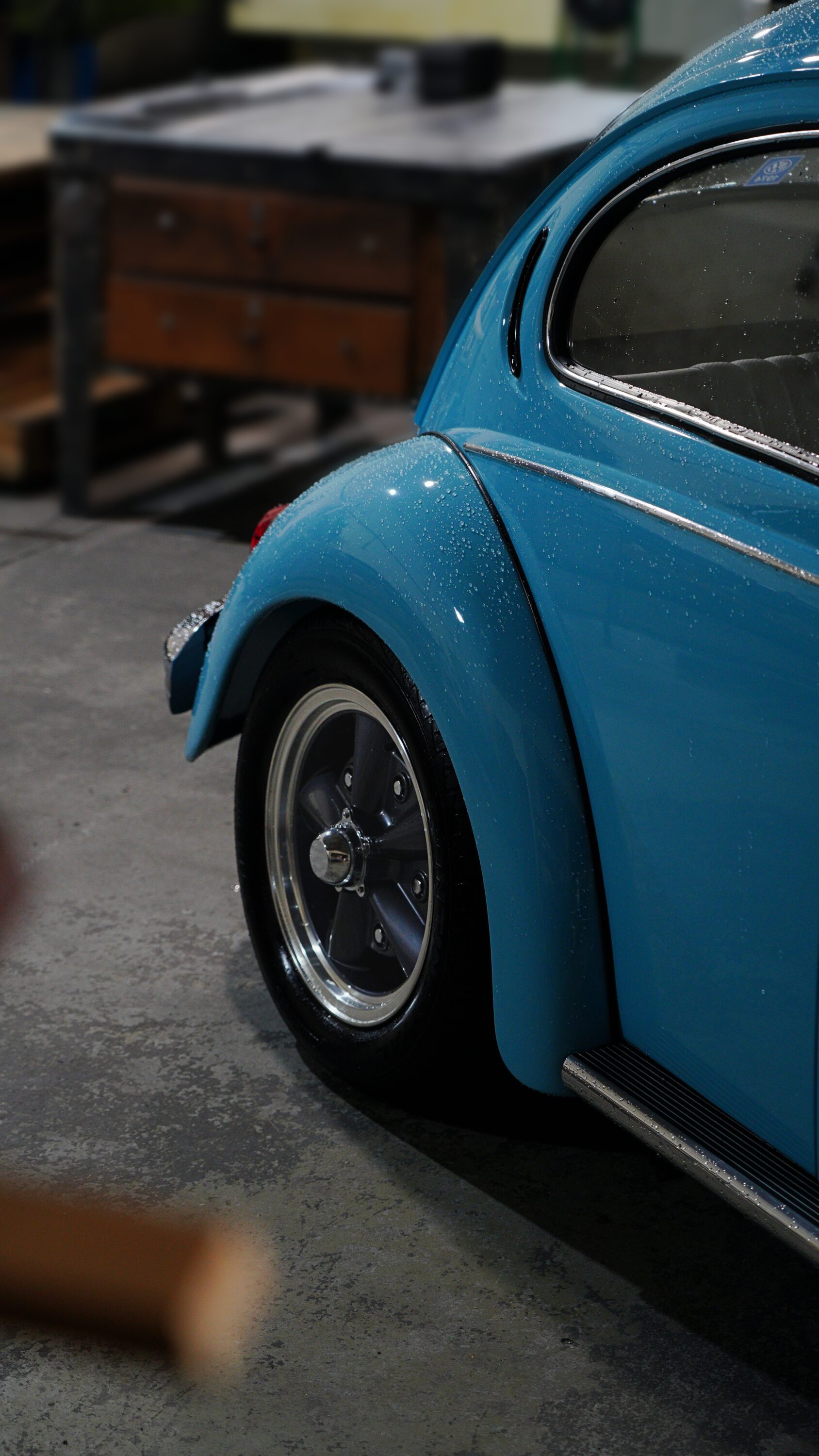
Not that you will be going very fast, anyway. The modified suspension fitted here will transmit more of the motion to those inside the car, and with the lack of bolstering from the seats, you will have to rely on the two-point seat belts to keep you in place.
So just slow down and enjoy the ride, and you will be rewarded. The Fusca is perfect proof that a great time is not measured in kilowatts of power, and that the right car will find a way to become memorable. As cars get more competent, more sterile, and more similar to one another, a multidimensional experience like this feels like a palate cleanser, and a great way to put everything into perspective.
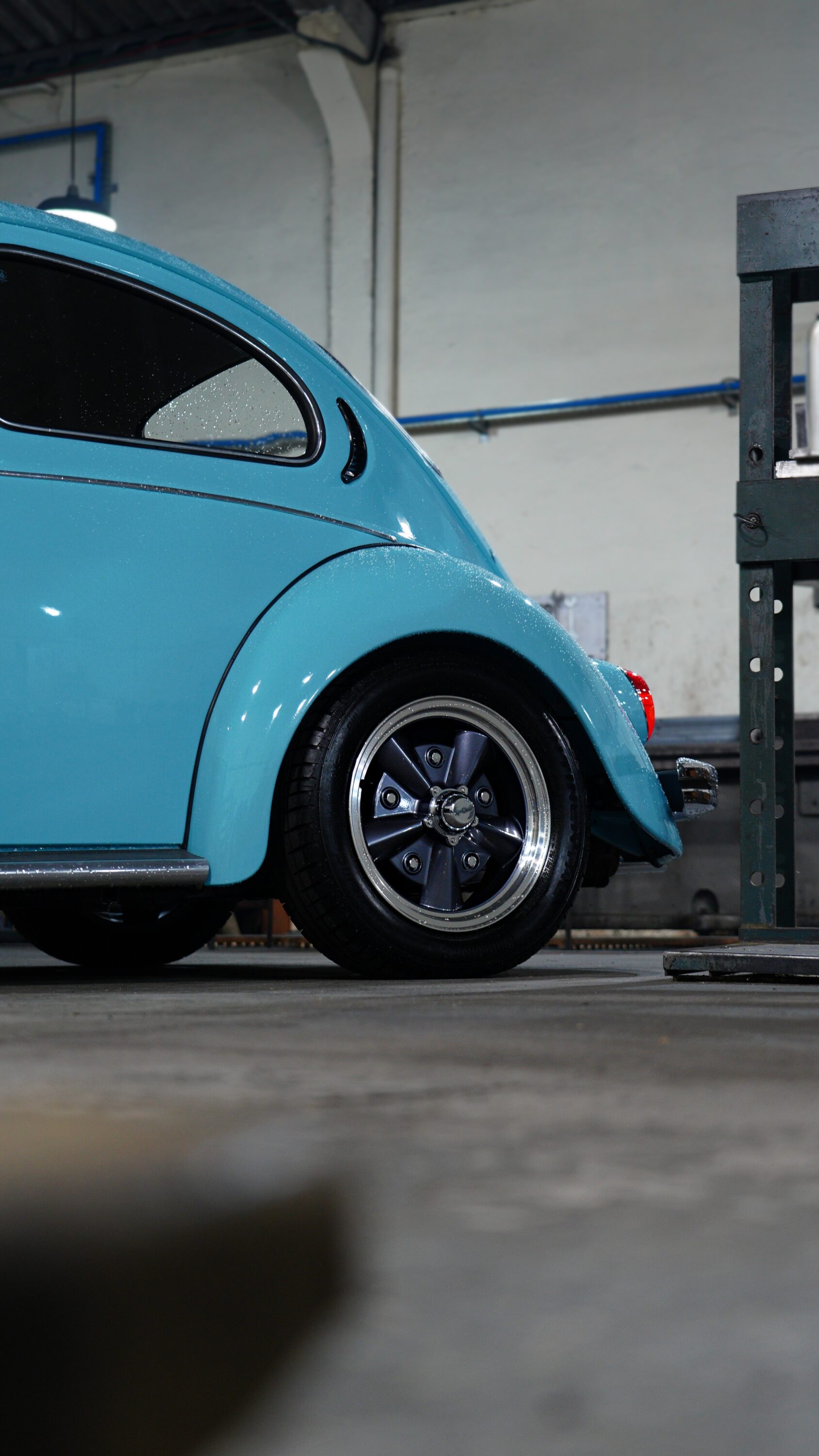
The vague gearbox performance will make you only shift when the engine asks for it, and there’s a funny element about being seen in one of these in Brazil: you will still see people punching each other at the sight of the car very frequently. It is the old as time “Punch Bug” game, but since we have so many Fuscas there, the rules have been changed so that only blue cars are eligible. Ask me how I know.

I thoroughly enjoyed my time with this Fusca. Quite possibly the most recognisable car shape ever produced, it became a cultural and historical icon whose influence lasts to this day. With almost 2 million sold in Brazil, they might be a rare sight here in NZ, but you’re never too far from one there.
It was a great trip back memory lane, recalling a simpler life during a barbecue surrounded by car friends. After I sold my last “old car”, I made myself a promise to never again lust after another, as owning a classic car is never without its surprises. But all it took was a few hours around this lovely blue thing, and I could see that promise shattering in front of my very eyes. Oh, well… Thanks for reading!