Electric car sales in Australia have climbed sharply this year, but researchers warn that unreliable and concentrated charging infrastructure may not keep pace.
Electric car sales in Australia have risen sharply this year. Researchers from the University of Queensland and the University of Western Australia now warn that the charging network may struggle to keep up.
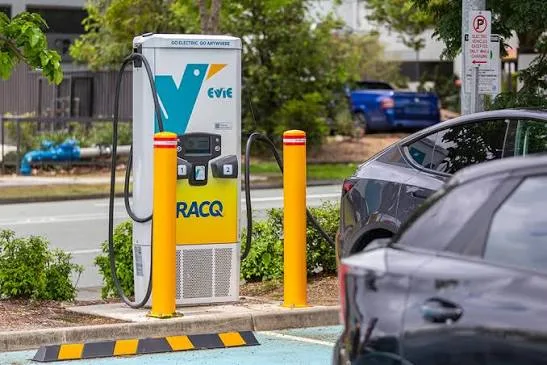
A Sharp Rise in EV Sales
Sales of battery-electric vehicles nearly tripled in the first half of 2026. Their share of the new car market rose from 8.4% in January to 23.4% over the following six months.
Combined industry data cited in the article shows more than 108,000 new cars in July, with more than a fifth battery-powered. Tesla and Polestar delivered over four times as many vehicles in July as in the same month last year. BYD is now Australia’s second-best-selling brand, behind Toyota, with sales up 70.5% year on year. Plug-in hybrid sales rose 157%, while petrol and diesel sales fell sharply as fuel prices climbed.
Charging Networks Race to Catch Up
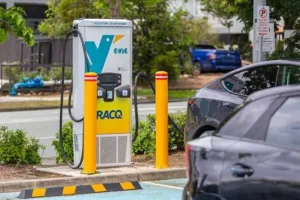
Retailers and fuel companies are installing higher-powered chargers. Coles, working with Evie Networks, plans 200-kilowatt fast chargers at up to 30 supermarkets in Victoria and Queensland over two years. Ampol has switched on its first 400-kilowatt chargers, and BP is building a 24-bay hub at Melbourne Airport.
The National Roads and Motorists’ Association is also expanding its highway network. It built 35 new sites in 2025 after receiving nearly A$40 million in federal funding. The authors note that funding often ends once a charger is installed, leaving operators to maintain it without support.
Who Owns the Hardware?
Chargefox, described as Australia’s largest charging network, owns very little of the equipment it relies on. It bundles chargers owned by other networks, councils, businesses and energy companies into one app. Drivers may find it hard to tell who is responsible when a charger breaks.
Market concentration adds another risk. A study cited in the article found Chargefox controls 83% of Tasmania’s public chargers and 58% in Western Australia. In a market that concentrated, one company’s poor performance can quickly affect an entire state.
In Western Australia, the Royal Automobile Club wound up its decade-old Electric Highway project last year. The 16 sites, stretching from Monkey Mia to Esperance, passed to local councils. Many of those councils lack the resources and skills to manage such complex infrastructure, and several have decommissioned broken units rather than repair them.
Reported Uptime Versus Real Experience
Uptime, the share of time a charger is available and working, is central to the debate. The United Kingdom requires public rapid chargers to achieve 99% uptime. Operators, however, self-report those figures, which are rarely tested by government or independent bodies.
The European Union requires charger companies to share uptime and payment data with authorities. The authors argue that neither approach has closed the gap between reported uptime and what drivers actually experience. A study of San Francisco’s public chargers found only 73% working when tested, against operator claims of 95% to 98%. The authors say their analysis of Californian government-funded chargers showed a similar pattern.
What the Authors Recommend
The authors propose several changes for Australia:
- Apply federal minimum operating standards, which currently require 98% uptime for taxpayer-funded chargers, to privately funded chargers.
- Link funding to performance rather than installation alone, a model the authors say the United States uses.
- Plan rural and remote networks carefully along key highways.
- Require charging companies and car manufacturers to disclose data, including charging speeds, failure rates and locations, and charging hotspots that may create bottlenecks.
For now, the authors say the network is growing fast enough to serve current owners. Their warning is that building new chargers while existing ones break down or disappear could change that. For owners in a fast-growing market, the number of chargers on a map matters less than whether the plug works on arrival.