Audi says the A2 e-tron can power external devices and a home from its battery, while feeding energy back into the public grid is planned for the future.
An electric car battery is usually thought of as a way to move the car. Audi wants the A2 e-tron’s battery to do more, using bidirectional charging to turn the compact model into a mobile energy source. Two of the three functions are described as enabled, and the third is planned.
Three Ways to Use the Stored Energy
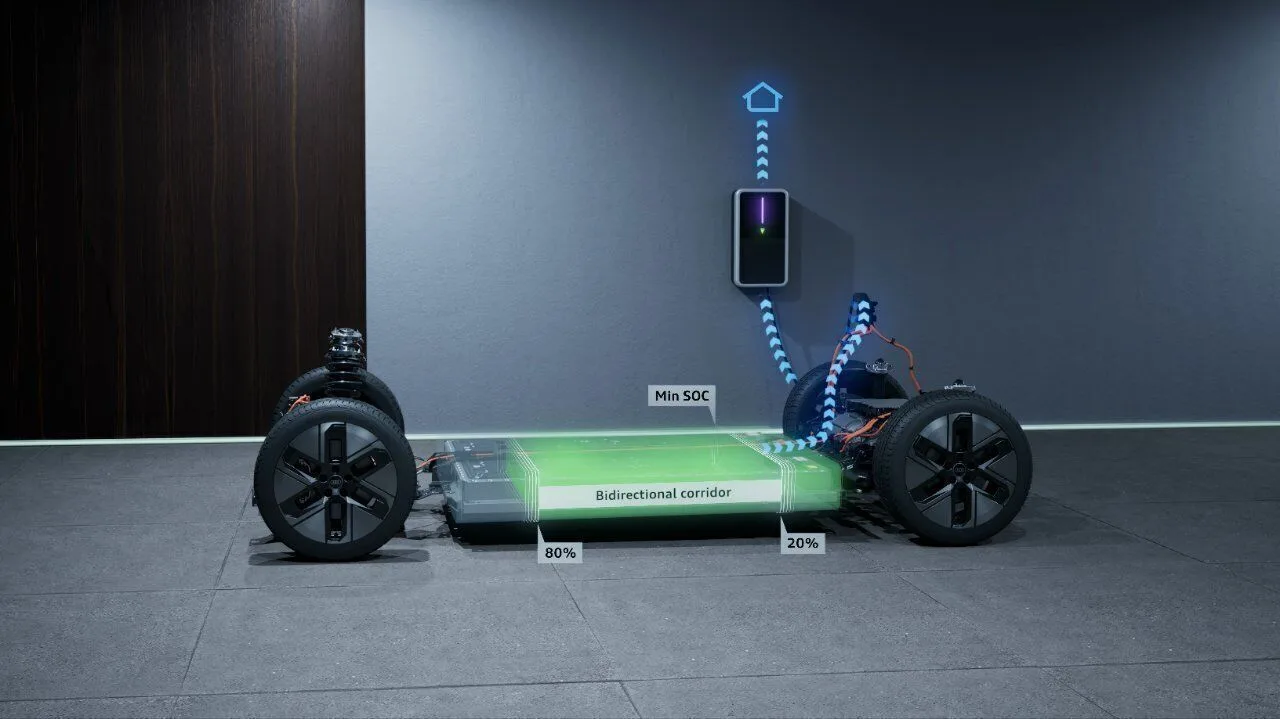
Vehicle-to-Load (V2L) lets the car supply external consumers, making the A2 e-tron a mobile power source. Vehicle-to-Home (V2H) goes further, using the stored electricity for the household through a compatible bidirectional DC wallbox.
Vehicle-to-Grid (V2G) is the next step. Audi says it will be added in the future, allowing energy to flow back into the public power grid. Availability will depend on several factors:
- the market
- the vehicle’s equipment
- compatible charging infrastructure
- home installation and regulatory requirements
- a suitable electricity tariff, where needed
Inside the Charging Hardware
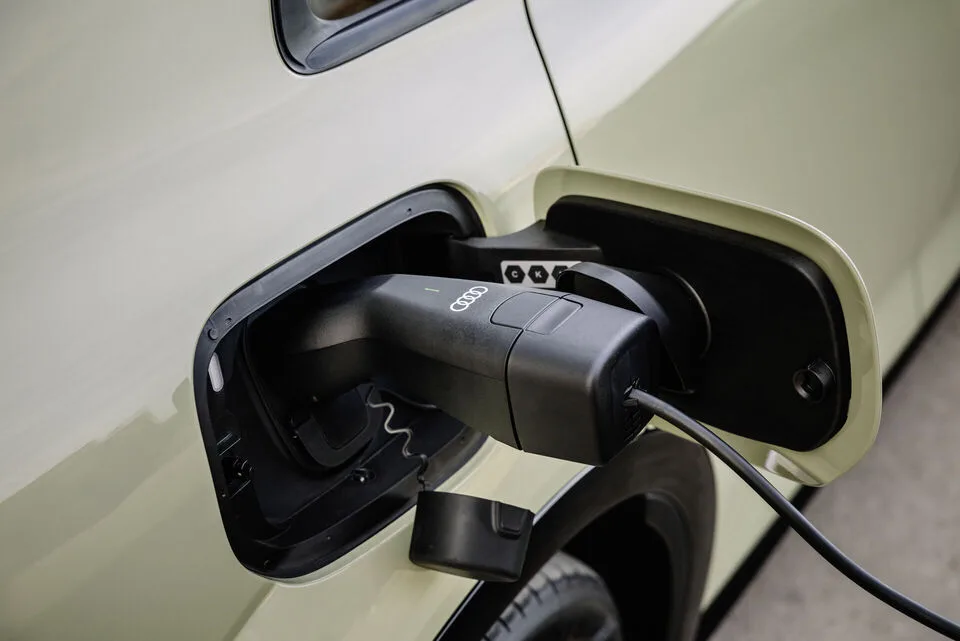
The key component is a unit Audi calls OCDC 2.0, which combines the on-board charger and DC/DC converter. Audi says it uses more MOSFETs, adapted AC output management and corresponding software changes. A battery management controller monitors and regulates the battery.
Audi also points to a technical challenge. Lithium iron phosphate (LFP) cells have a flatter open circuit voltage curve, which makes state of charge and ageing harder to determine precisely. Audi uses an adapted algorithm for this, and the results feed into range, charging behaviour and operating strategy. The material does not state which cell chemistry the A2 e-tron uses.
Charging Times and Test Conditions
Audi provides DC charging times from 10 to 80 percent state of charge, listed by variant and battery capacity. These figures apply under defined test conditions. Audi notes that actual charging time can vary with battery temperature, state of charge and available charging power.
The company says the battery is designed for a controlled, plannable charging process rather than a brief power peak. Those figures come from the manufacturer’s own test setup, so independent testing will show how closely they hold up in everyday use.
Why It Matters for Owners
Audi frames the system as a way to make electric mobility in the compact segment more practical, efficient and flexible. Bidirectional charging extends the battery’s role beyond driving, making the car an active part of the energy system.
For buyers, the setup around the car matters as much as the car itself. A compatible wallbox, a suitable tariff and local rules will largely determine how much of this an owner can use at home.