The Hyundai Staria Hybrid adds captain’s chairs and a more luxurious feel to a van it can’t quite leave behind, but it does a competent job in the space between.
For years, I’ve pictured the Hyundai Staria in one particular way. It’s white, the sliding door is wide open and there’s a tradie’s kit in the back. Or it’s lined up at the airport waiting to take a group of tired travellers to their hotel. You could almost say like a sci-fi workhorse, but a workhorse nonetheless: bench seats, hard-wearing surfaces and a cabin built to be useful. So when this one turned up, it was a first for yours truly. It was the first Staria I’ve been around that wasn’t a regular work van or a basic people mover. This one is trying to be more than that.
And it’s a good time to be trying. People movers have become one of the more interesting corners of the market recently. At one end you still have the back tobasics vans with bench seats that do the job and little else. At the other end you have the Toyota Alphard and the wave of Chinese electric people movers I’ve driven recently. Those are full-blown lounges on wheels, packed with every comfort feature you can think of. This Staria sits at an interesting midpoint between the two. It has two captain’s chairs in the middle row and a 1.6-litre turbo hybrid powertrain under the bonnet, and at $99,990 it also bridges the gap on price. So the question is whether a midpoint is a good place to be, or just a compromise in both directions.
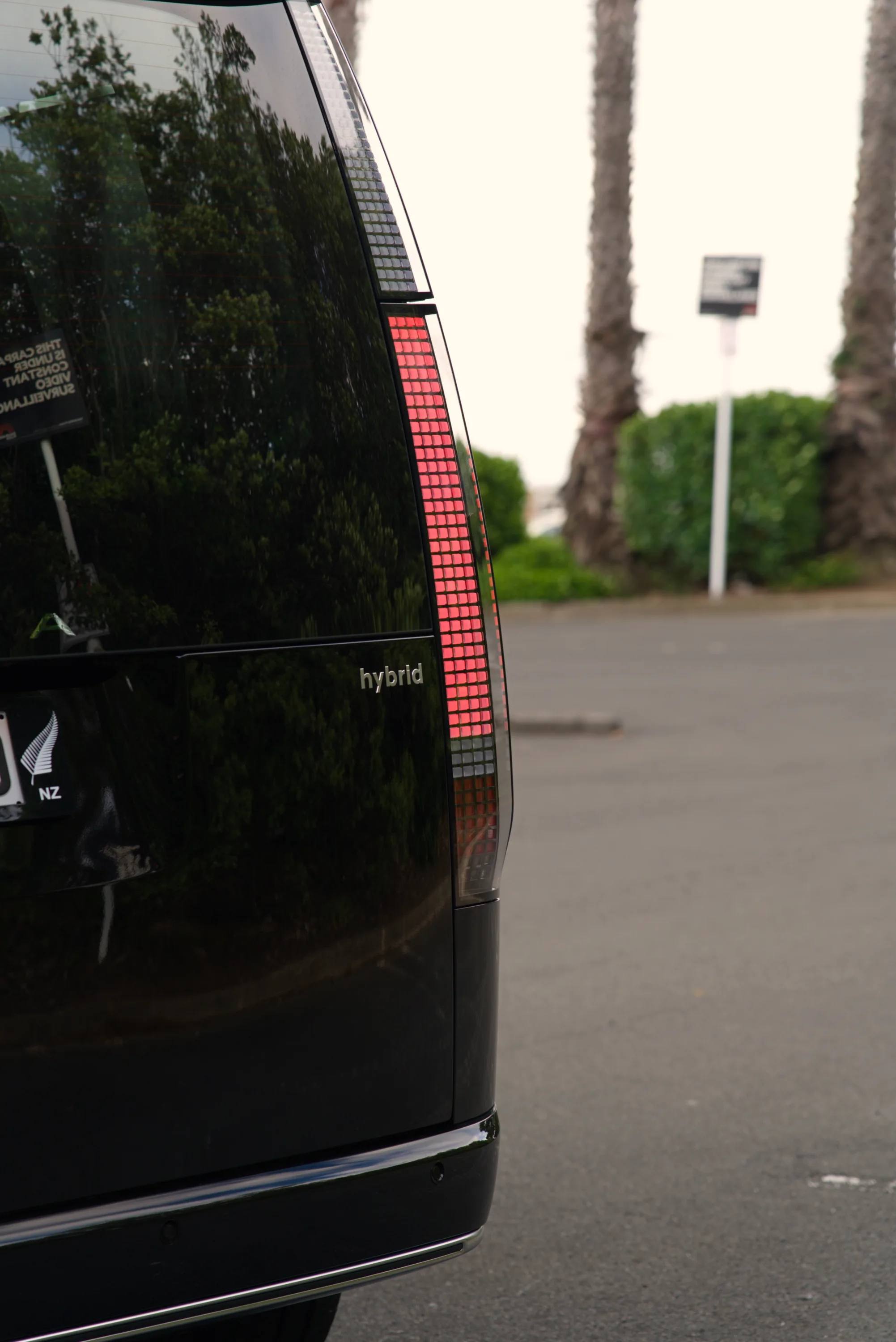
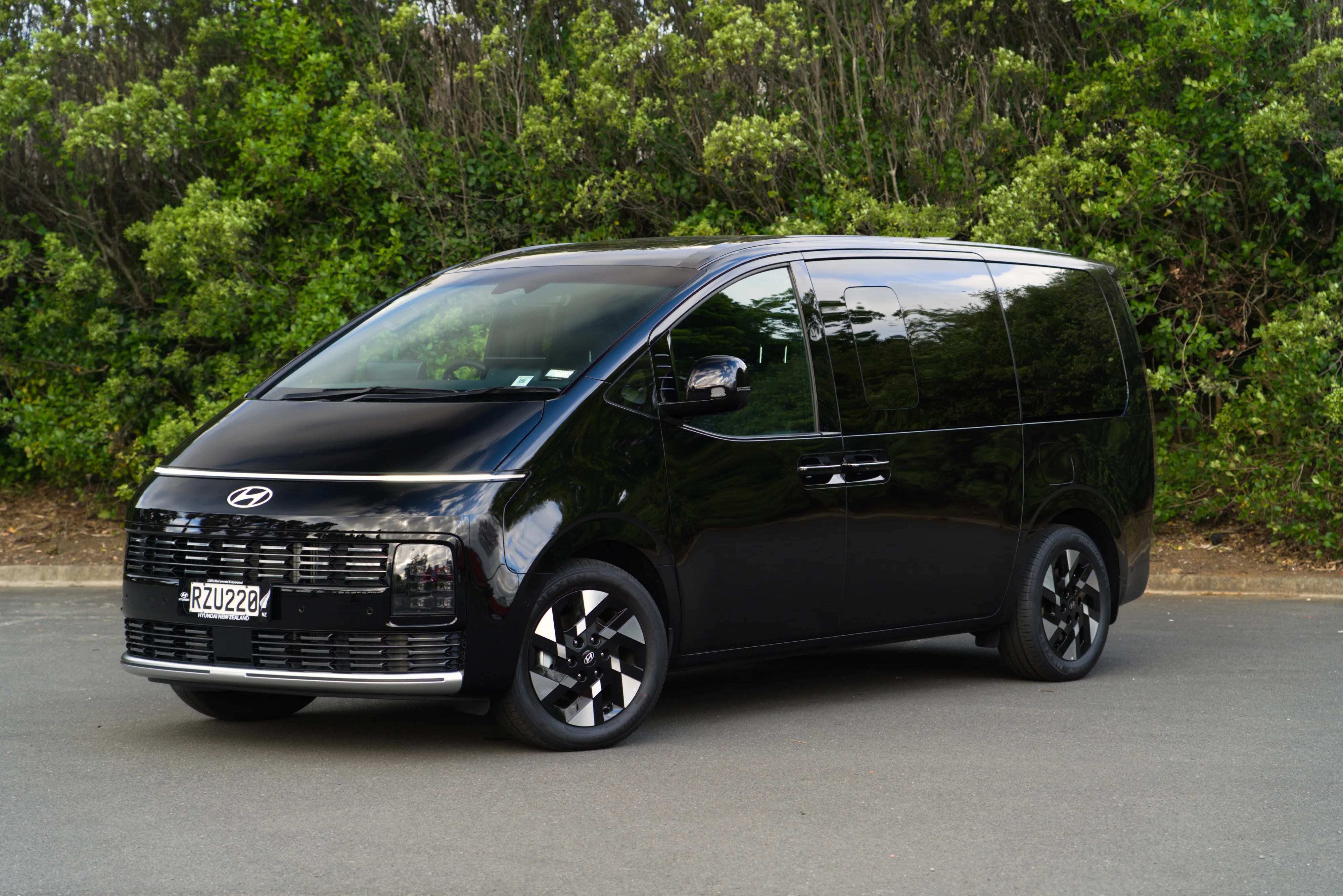
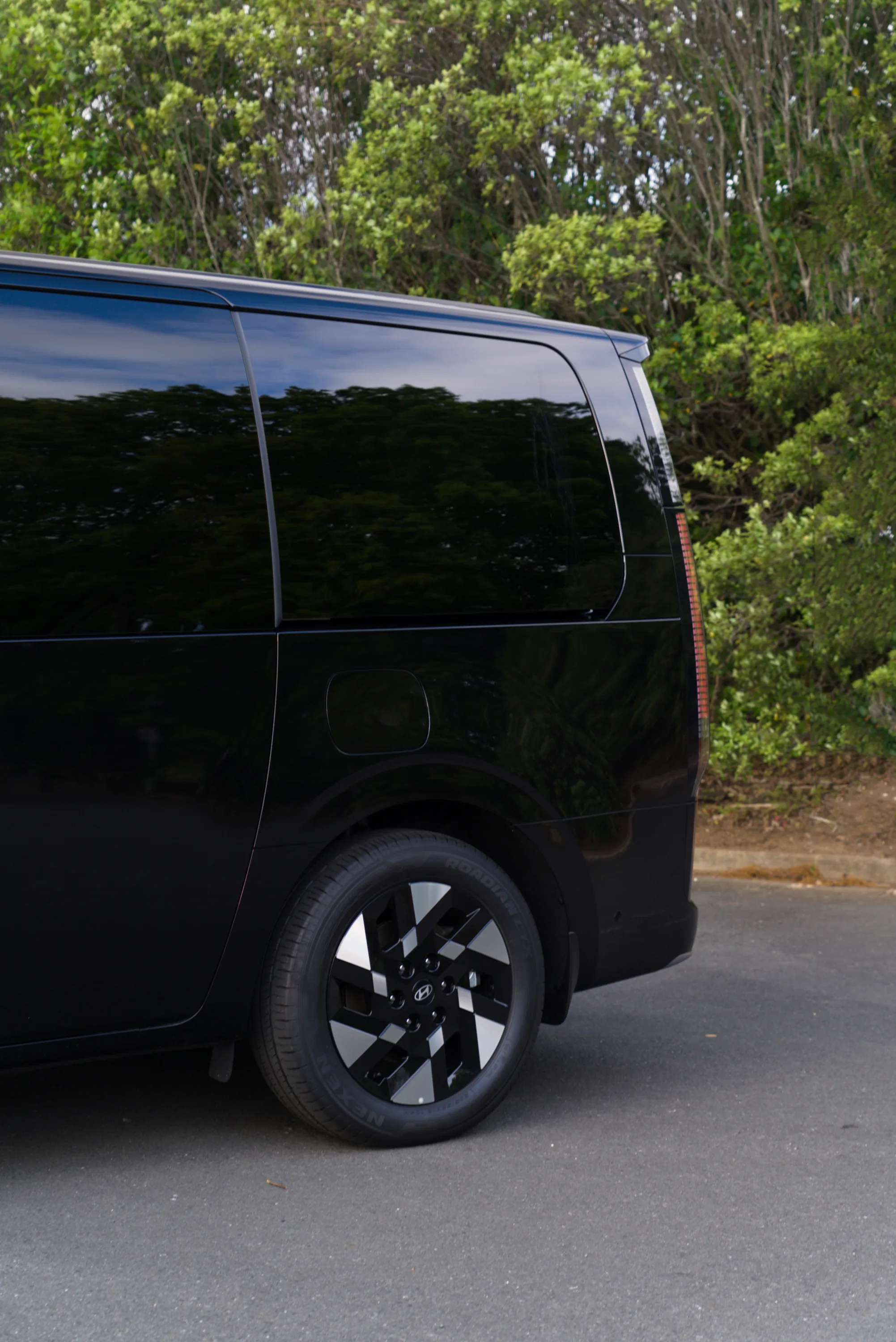
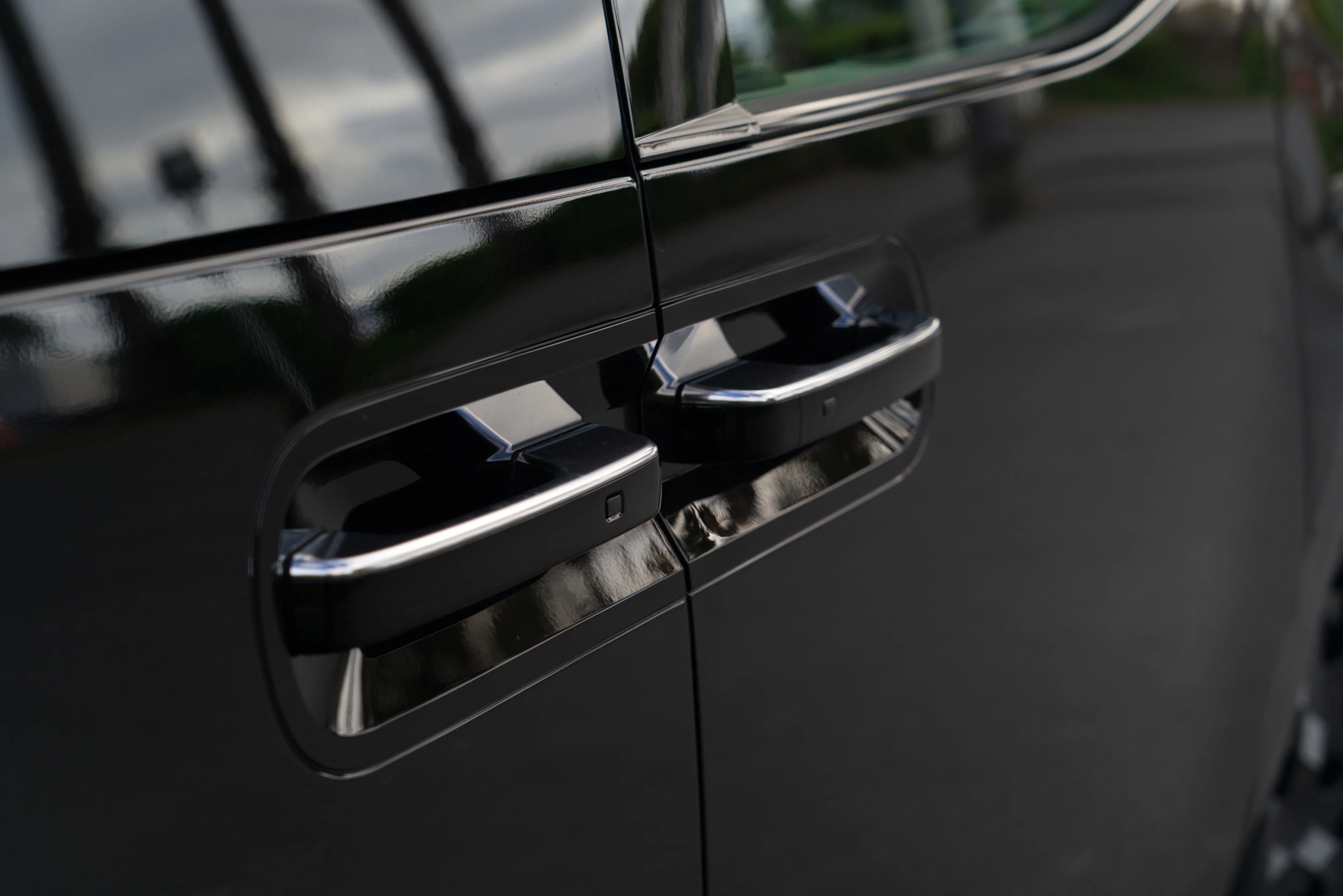
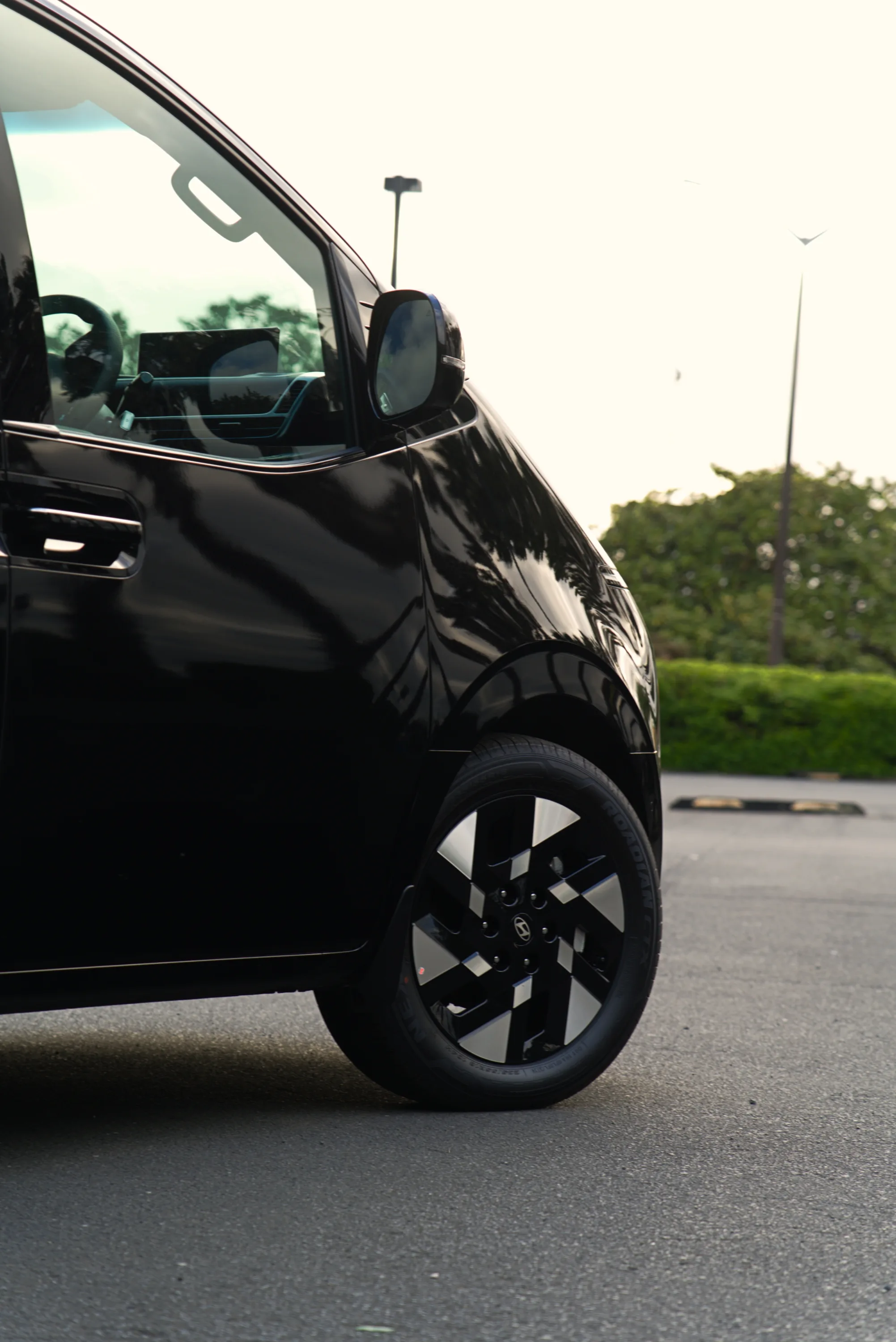
From the design perspective, the Staria was never going to blend into the background. The full-width light bar across the nose, the low-set headlights, the huge glass area and the near-vertical rear give it a shape that looks more like a spaceship than a van, and you won’t mistake it for anything else on the road. The body is the same one you’ll see on the commercial versions, though. That means the differences between this and the vans waiting at the airport are in the details rather than the silhouette. It’s a big thing, and it makes no attempt to hide that, which honestly fits what it’s for.
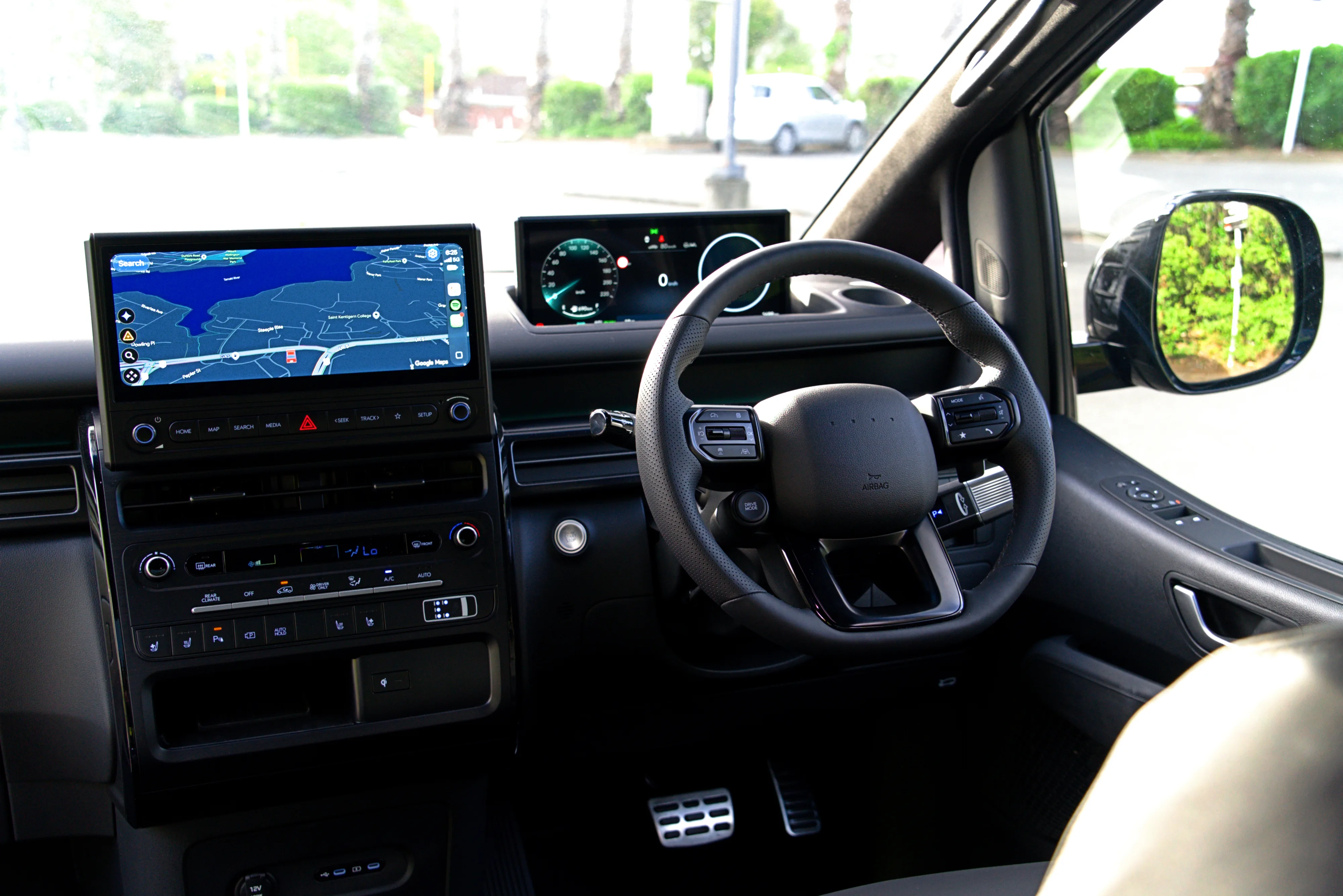
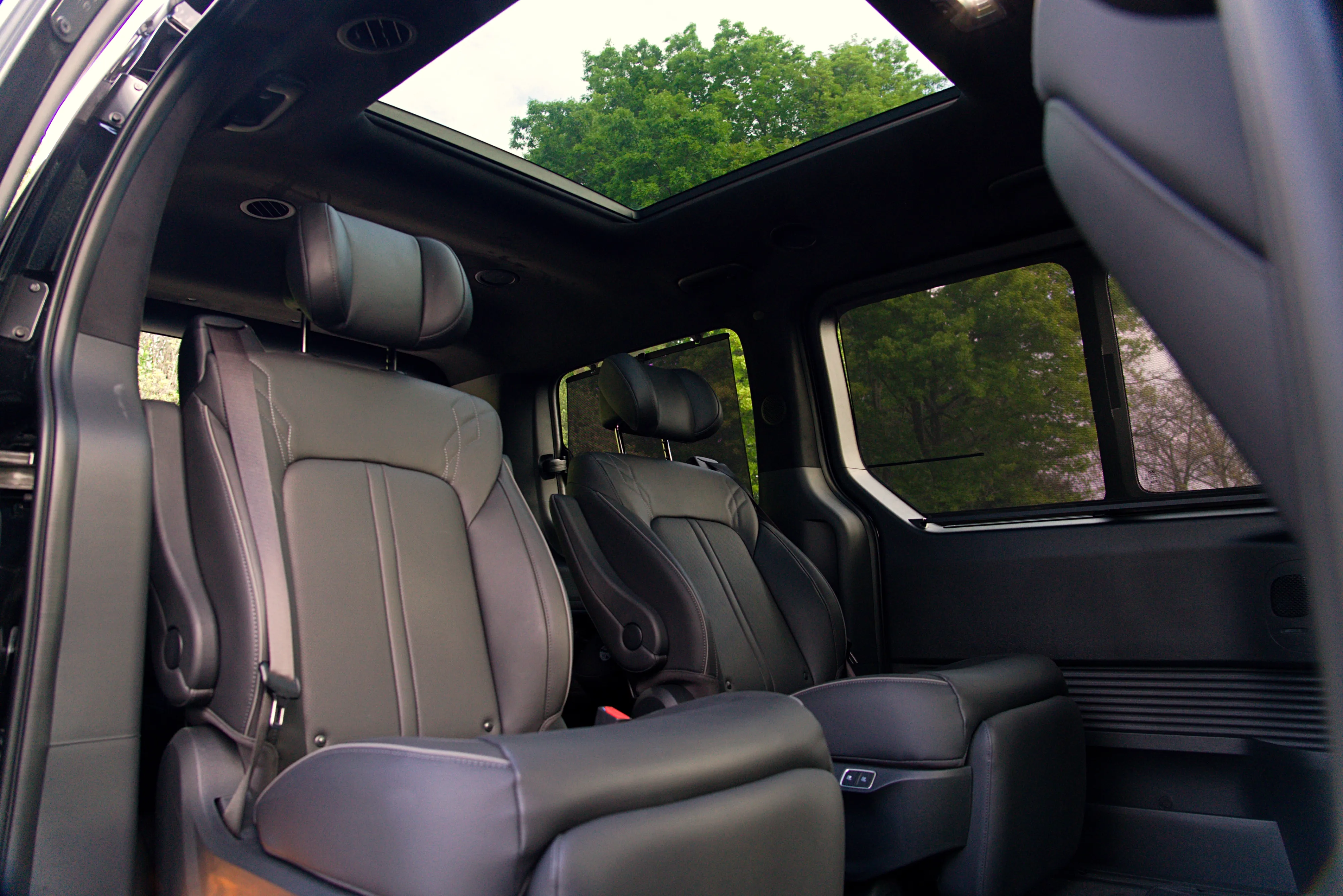
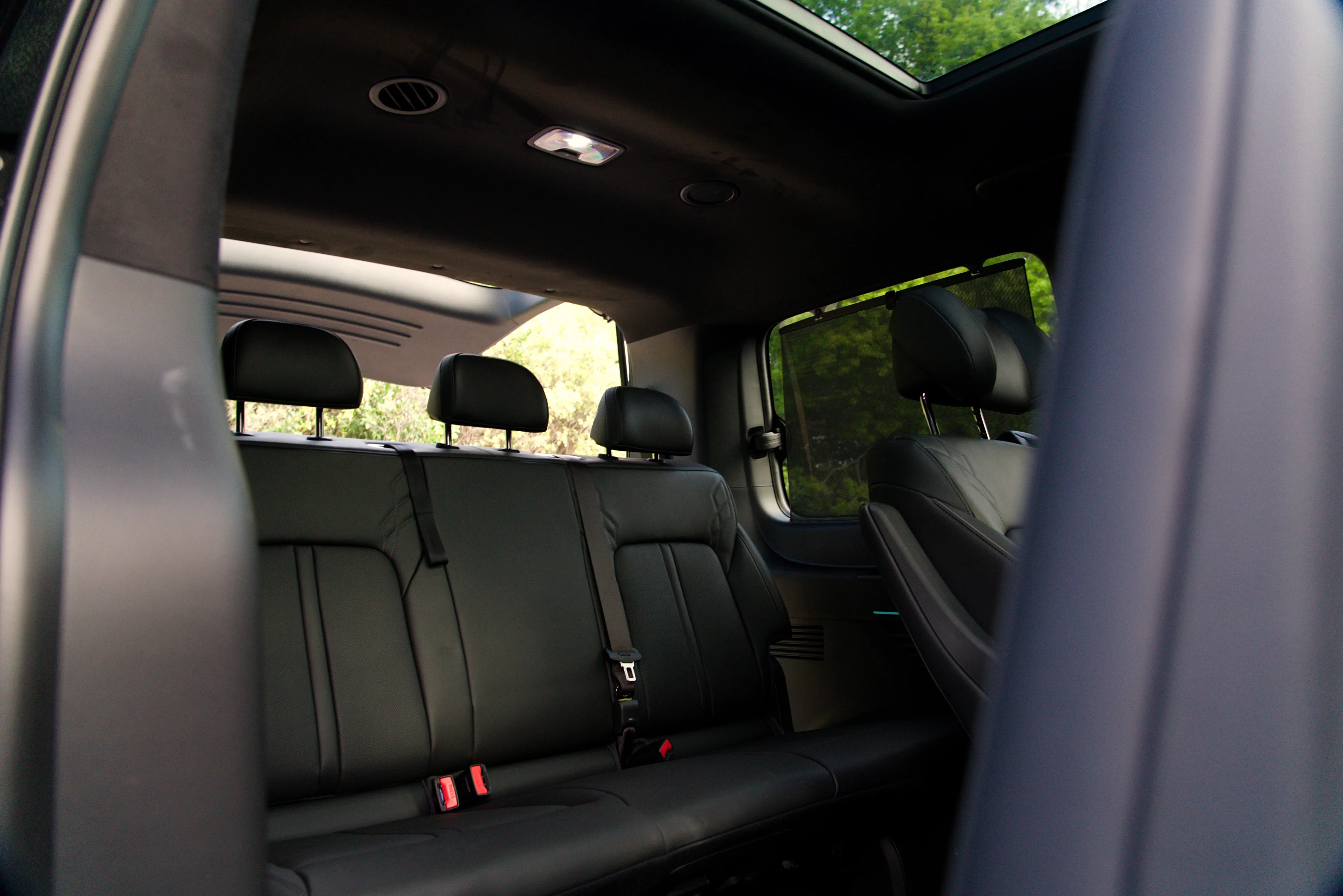
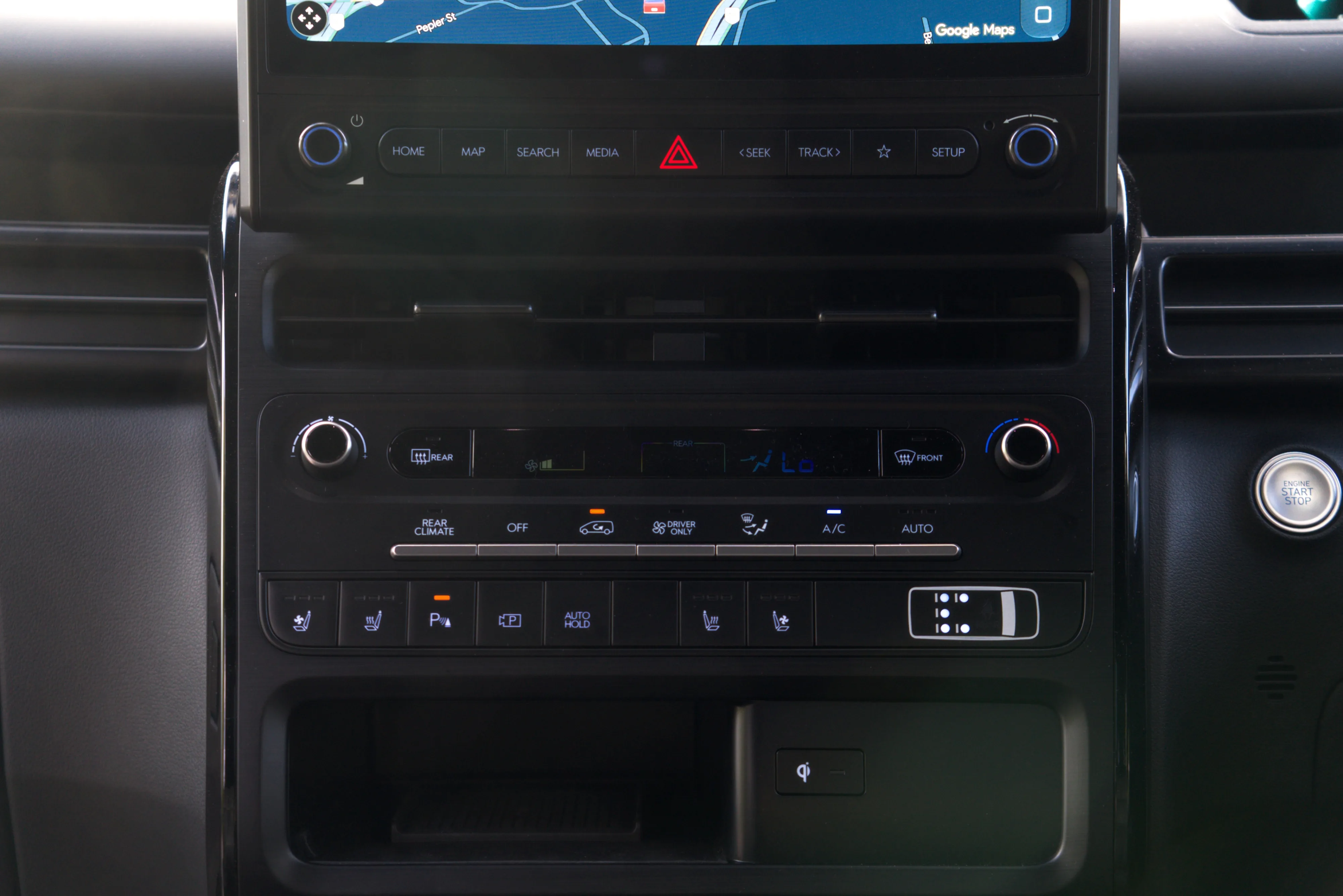
So, let’s cover the interior, which is where the Staria has to earn its luxury pitch. The powered sliding doors open onto the two middle-row captain’s chairs, and they are clearly the stars of the show. They offer a lot of recline and very good heating, and they adjust electrically. That’s a world away from the bench seats I’d normally associate with the name. This is also where you start to notice what’s missing. There’s no fridge, which has become almost a given at the top of this segment. The rear air-conditioning controls are mounted on the roof, so you really have to stretch to reach them from the captain’s chairs. That’s a bit of a head scratcher in a car whose main job is keeping the people in the back comfortable. The leather isn’t especially soft either. Beyond the electric seat controls and the powered sliding doors, there isn’t much else in the way of pampering. It is a step up from the van, but not quite into lounge territory.
Some touches do help lift the ambience. A dual-pane sunroof floods the cabin with light, and a suede headliner adds a sense of occasion you wouldn’t expect from something that shares its bones with a work van. These are the kinds of details that make the cabin feel special, moreso than just spacious, and I wish there were a few more of them, especially for the rear passengers.
When it comes down to practicality, the story is more nuanced than you might expect. The power tailgate opens onto a massive boot, and the rear seats can be moved in a few creative ways to make better use of the space. When they’re slid all the way forward, a net helps keep your load in place, but there are limits. You can’t get a flat floor to make the most of the storage, and if you’re mostly carrying two people, you’d probably be better off taking the rear seats out altogether, because they get in the way more than they help. It’s a strange thing to say about a people mover, but it shows who this car is really for: people who regularly fill those seats.
The tech beat is fairly short. A Bose sound system comes as part of the package and is decent, not outstanding, which suits the cabin well enough. The more meaningful story is driver assistance: Hyundai’s ADAS features are usually very well calibrated, and this is no exception. More on that later, because they matter more on the road than they do on a spec sheet.
Under the bonnet sits a 1.6-litre turbocharged petrol engine with hybrid assistance, driving through an automatic gearbox. On paper it’s a sensible choice for something this size. It’s frugal enough to make the Staria easy to live with, and Hyundai claims a range of over 800km. That figure matches the pitch for a vehicle like this very well. Long family trips with lots of people and luggage are exactly when you don’t want to be planning your day around refuelling stops. But how does it drive?
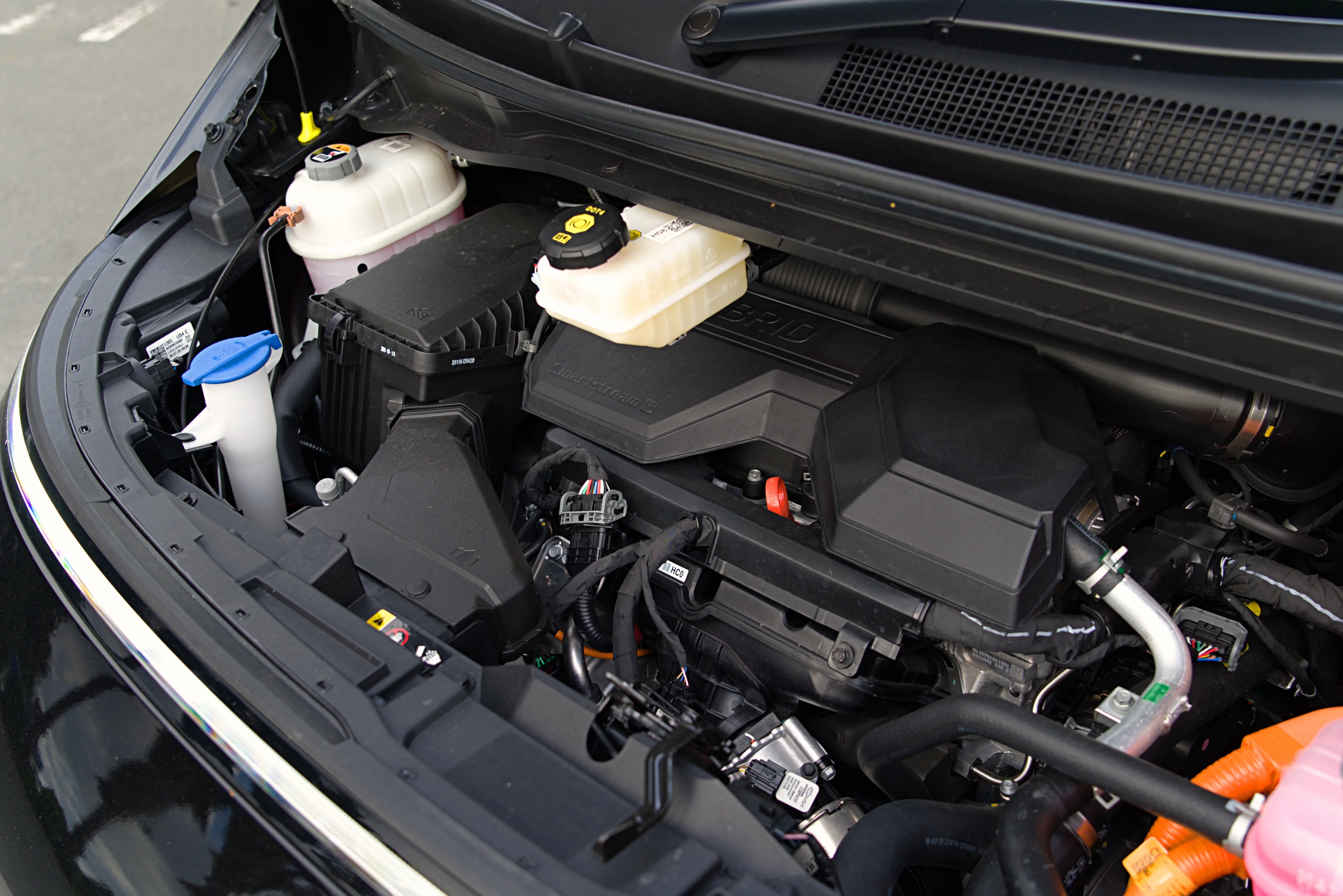
The powertrain gets the job done, but it’s a little clunky and slow. That applies to the power delivery and to the gearbox, which doesn’t always shift as smoothly or as quickly as you’d hope. Is that a deal breaker? Not really, because it suits what the Staria is about. Nobody buys a large people mover to win traffic-light drag races, and a relaxed powertrain matches a relaxed car. My one reservation is that it may feel underpowered with every seat full and the boot loaded. Given that’s exactly how many buyers will use it, it’s worth keeping in mind on a test drive.
The chassis follows the same theme. The suspension is extremely soft, and the steering is over-boosted, so it’s light enough to need very little effort but doesn’t tell you much about what the front wheels are doing. Again, that matches the car’s purpose. For the passengers in those reclining captain’s chairs, a soft ride is a good thing, and you can tell Hyundai has tuned it with them in mind. From the driver’s seat, though, it can feel floaty, with the body taking a moment to settle over bumps and through corners. This isn’t a car that rewards a spirited drive, and it doesn’t pretend to be. The best way to drive it is to slow down, smooth out your inputs and play chauffeur.
This is where those well-calibrated ADAS features come in. If the Staria is at its best when driven calmly, the driver-assist systems do a lot of the calm driving for you, and they do it well. They feel natural rather than intrusive, which is not something I can say about every car I drive. In something this big, with this much body movement, that confidence makes a real difference over a long drive. It’s very softly sprung, but still competent. That might be the best way to sum up the driving experience as a whole.
So where does that leave the Staria? It sets out to bridge the gap between being just a van and offering a bit more luxury, and in many ways it does. The captain’s chairs, the sunroof, the suede headliner and the powered doors take it well beyond the work vans I’ve always associated with the name. The missing comfort features, the remind you that the top of the segment is still a step further up, but that also reflects right down to the price tag. So, in the end, what you get is a very competent product at a price that sits between the two extremes. If you need to move a lot of people in reasonable comfort and don’t need a lounge on wheels, it lives in an interesting place of its own. Thanks, Hyundai, for the opportunity, and thank you for reading this far!