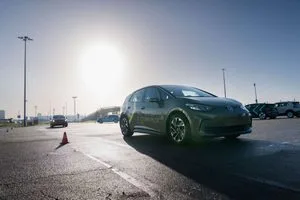
Volkswagen has closed out a multi-year test program exploring how driverless vehicle movements could reshape logistics at its Emden plant, working alongside Deutsche Telekom, Finnish software firm Unikie, and the Bremen Institute for Production and Logistics (BIBA) at the University of Bremen. The project, known as AutoLog, ran for more than two years at the port facility in Emden and was backed by funding from Germany’s Federal Ministry of Transport.
The trial focused on moving vehicles around a logistics yard, all the way to parking areas, driving routes and even a roundabout, without a driver behind the wheel. Unikie supplied its Marshalling Solution software to coordinate vehicle movements, while Deutsche Telekom provided connectivity through a public 5G network with edge computing and fiber-optic backhaul, aimed at keeping the processing delay low enough for real-time vehicle control. The setup was designed in line with ISO 23374, the international standard covering automated valet parking, and relied on a digital map of the yard to plan each vehicle’s path.
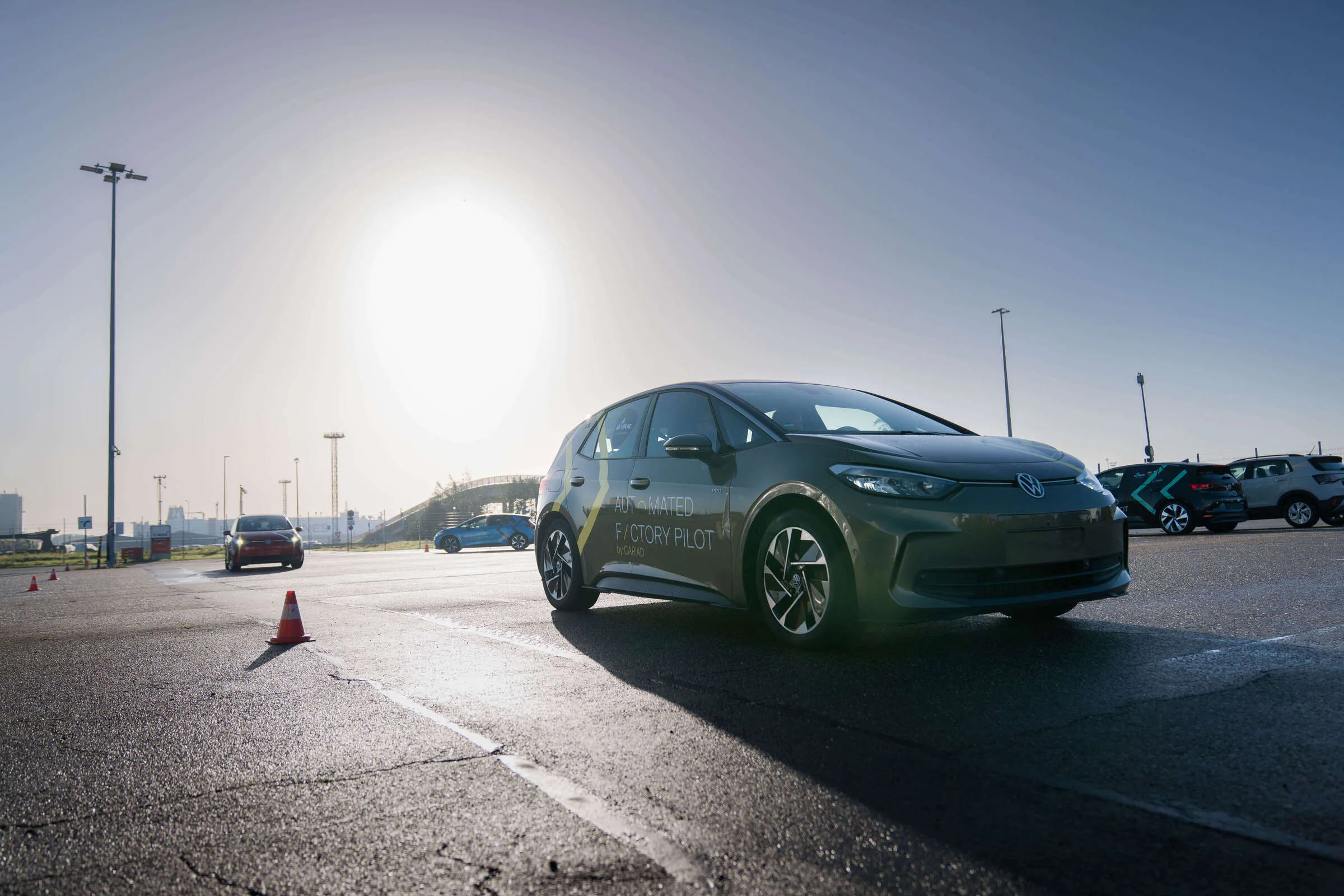
A key part of the work involved getting autonomous and human-driven vehicles to operate safely in the same space, a persistent challenge for any automated logistics system that isn’t walled off from regular traffic. The partners also tested automated loading of vehicles onto rail wagons in cooperation with Audi, extending the automation beyond the yard itself and into onward transport.
“AutoLog demonstrates the potential of automated driving for our logistics operations,” said Christian Vollmer, the Volkswagen board member overseeing the project. He added that the trial had produced valuable insights the company can draw on going forward.
With the project now concluded, Volkswagen and its partners say the findings point toward meaningful gains in efficiency and sustainability for port and plant logistics, provided the safety case for mixed autonomous/human traffic keeps holding up as the technology moves from pilot to wider rollout.