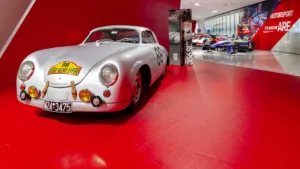
Porsche Heritage and Museum has used notebooks, financial records and old photographs to piece together the history of the one 356 SL that never left the company’s hands.
You would think a car that has never left its maker’s ownership would come with a tidy paper trail. Porsche’s 1952 356 SL does not. Despite more than seven decades in the company collection, surprisingly little is known about its past.
That gap is the subject of a new Raceborn Moments episode from Porsche Heritage and Museum. The corporate archive worked with outside specialists to establish exactly which car this is and what it did.
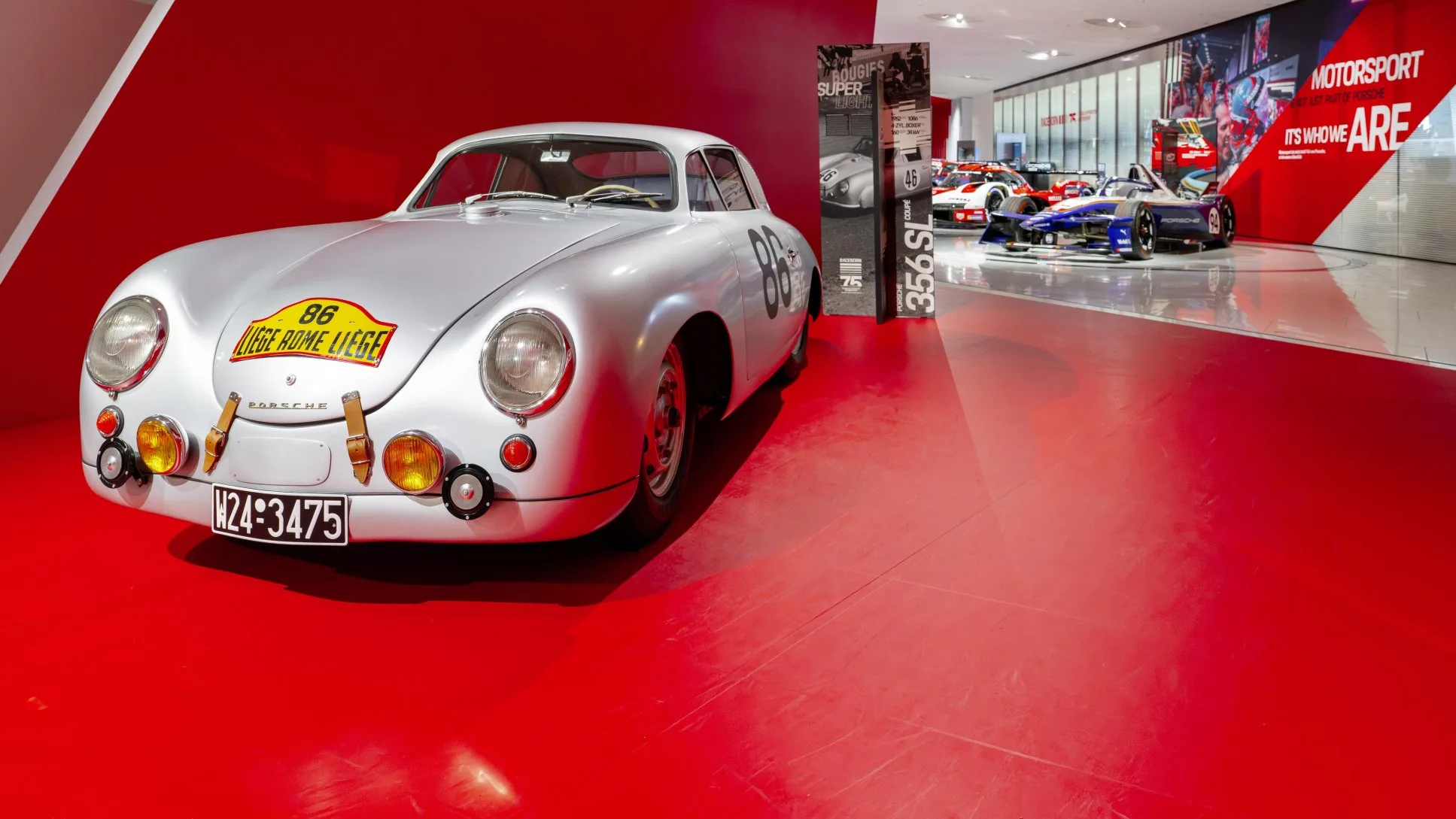
Where Porsche’s Racing Story Began
The 356 SL matters because it marks the start of Porsche’s factory-supported motorsport. In 1951, it earned the brand its first class win at Le Mans, the foundation for everything that followed.
The idea predates that result. In 1950, Racing Director Paul von Guilleaume suggested to Ferry Porsche that the company enter an international race. The timing was poor, though. Production in Stuttgart had only just started, and the first cars were already promised to dealers.
The solution was resourceful. Porsche used aluminium bodies left over from its Gmünd era, some of them built by Tatra in Vienna. These were then converted in Stuttgart for racing. Internal files call the effort Project “514”, a label that first referred to the engine type before covering the wider programme.
Nine Cars, Several Numbering Systems
Five 356 SLs were built in 1951. Another four followed in 1952 from four additional aluminium bodies, taking the total to nine. One of those 1952 cars stayed with Porsche and was used for racing and testing for several years.
Here’s the catch. Unbroken ownership doesn’t settle a car’s identity on its own. The records use more than one numbering system, with Tatra body numbers appearing alongside chassis numbers. Tracking those body numbers across documents is what lets researchers follow individual cars. That meant studying the other eight 356 SLs too.
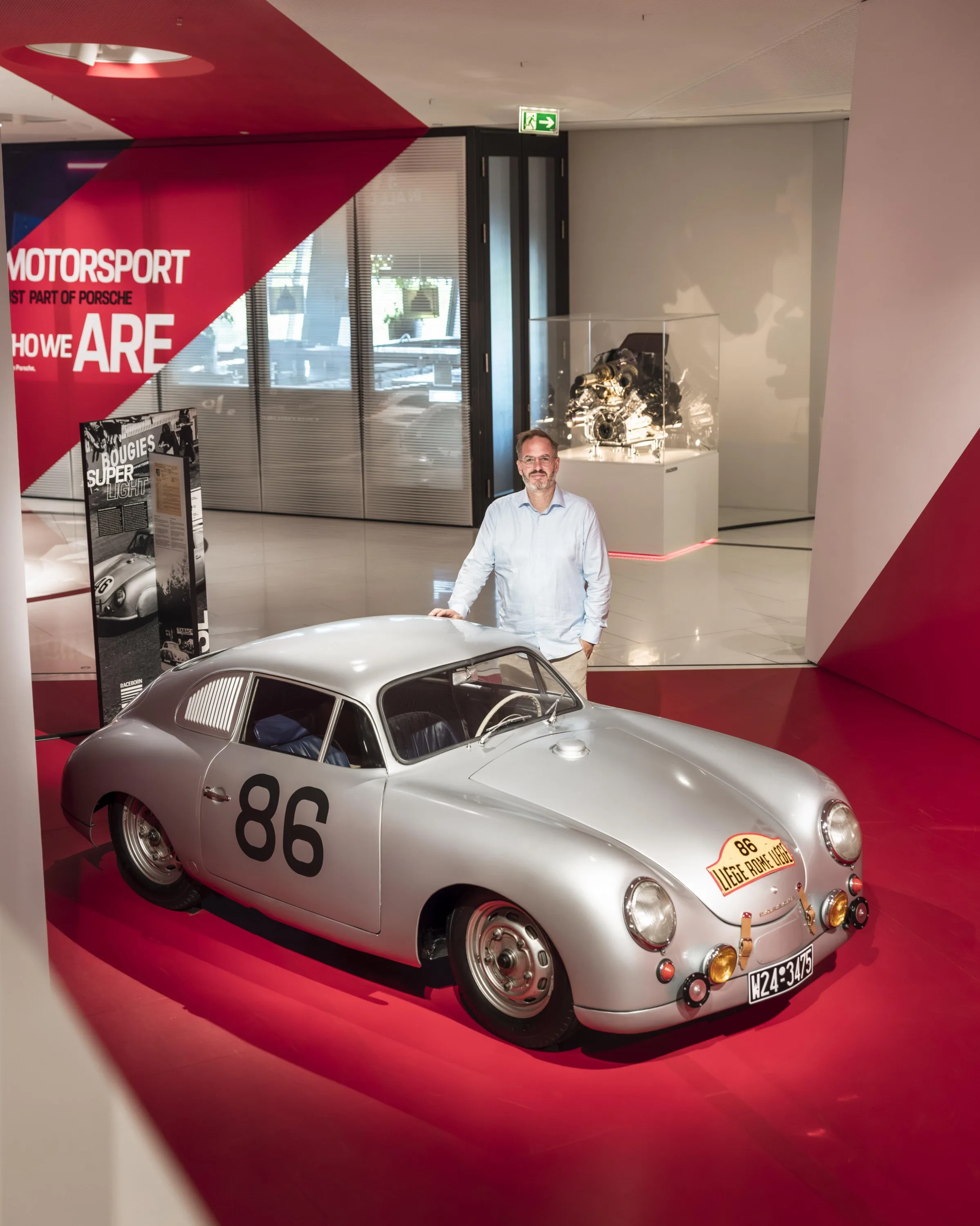
Detective Work in the Archive
The evidence came from several corners of the archive:
- Notebooks from racing engineer Wilhelm Hild, covering the cars and their race outings
- Financial records showing how many aluminium bodies were available at given times
- Motorsport registration papers indicating when specific chassis numbers were used
- Notes from Karl Rabe, an early engineer central to developing the 356
- The archive then checked its findings against published literature, private sources and outside experts. Sometimes a photo confirmed which car was which. Other times a document explained something an image left unclear.
Achim Stejskal, Head of Porsche Heritage and Museum, says the episode aims to show how the team reaches its conclusions, not just what it found. That transparency is welcome. Still, this is Porsche researching its own car, and the source material doesn’t set out the specific conclusions. For those, you’ll need to watch the episode.
Six Survivors
Six of the nine 356 SLs are known to exist today. Three are in the United States, one is in Mexico and one is in Belgium. The sixth is the 1952 car, which is the only one never to have left Porsche’s ownership.
For us enthusiasts, the interesting part is less the car and more the method. Heritage usually reaches us as polished anniversary stories. Here, Porsche is showing us the notebooks, ledgers and registration slips behind one of its founding race cars.