A £3 million, government-backed project will use a modified Leaf to test autonomous mobility services on real Cambridge roads as an actual passenger service.
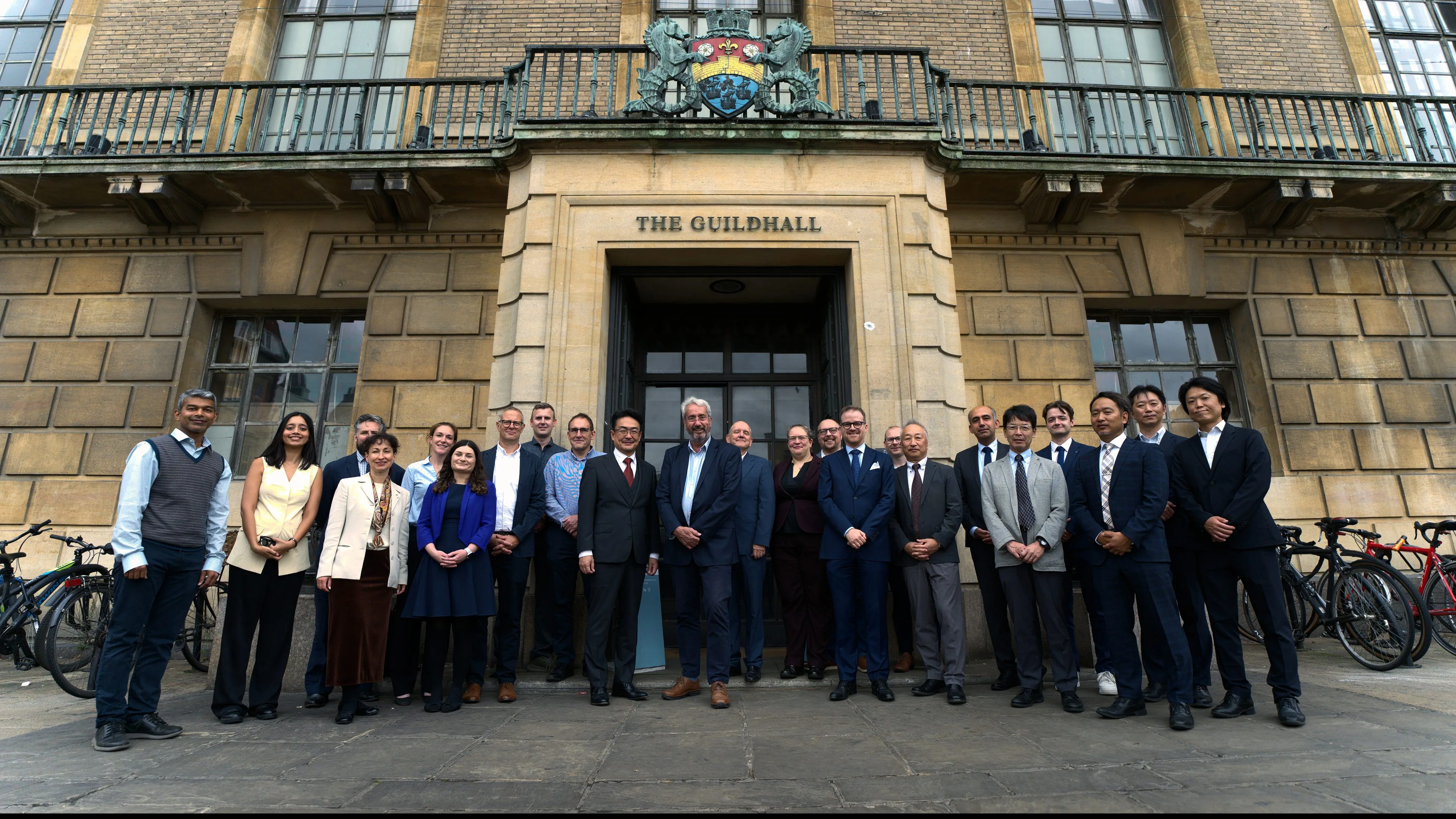
Nissan has launched a research project that will put a self-driving car on public roads in Cambridge, in one of the more concrete steps yet toward autonomous passenger services in the UK. The project, called ADventure, is backed by £3 million from the UK Government and led by Nissan Technical Centre Europe, working alongside the Warwick Manufacturing Group (WMG) at the University of Warwick and PAVE UK (Partners for Automated Vehicle Education UK). Funding and support come via the Department for Business, Innovation, Science and Trade, the Advanced Propulsion Centre UK, and Innovate UK.
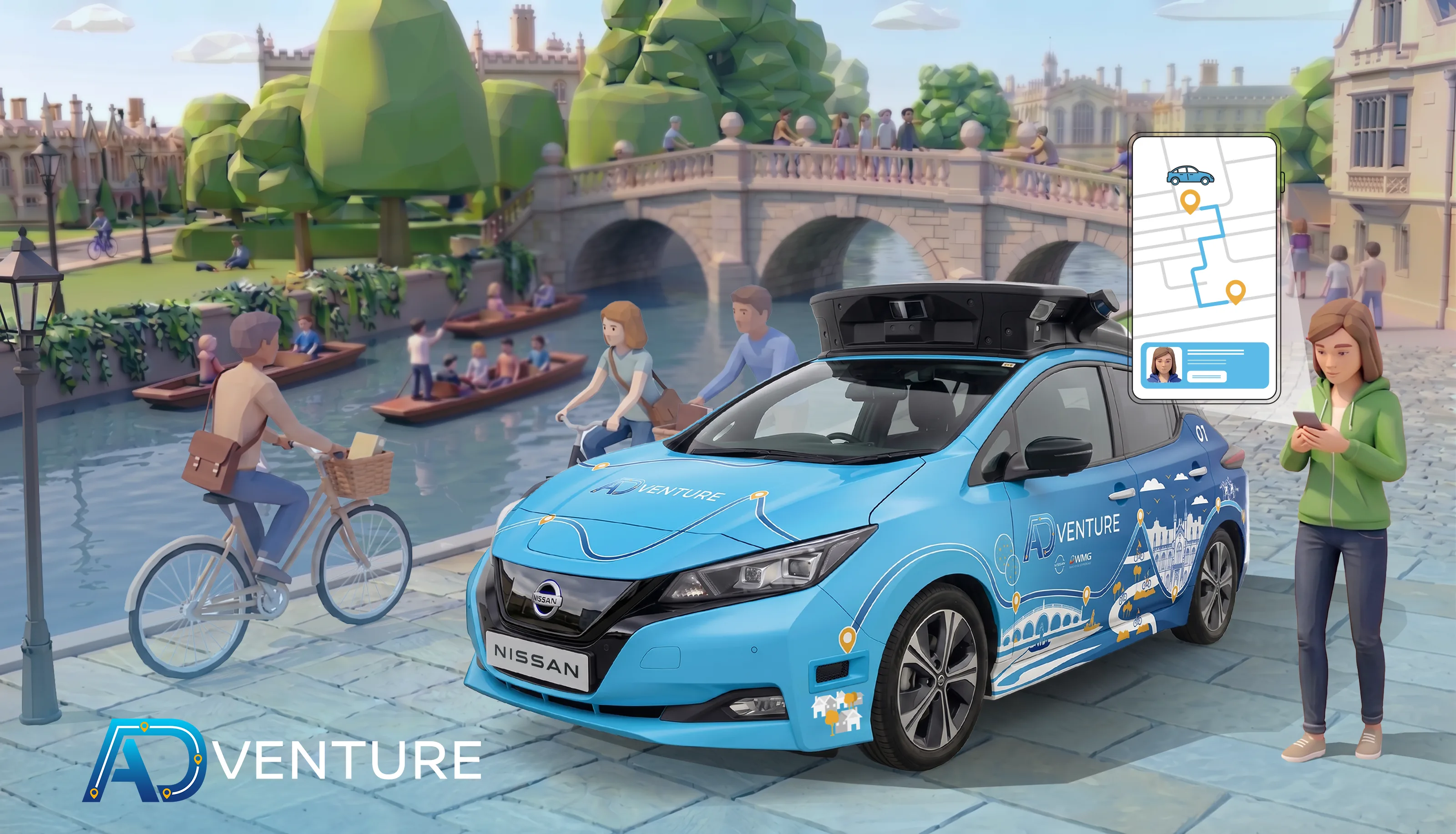
The test vehicle is a specially equipped 2022 Nissan Leaf, fitted with Nissan’s own autonomous driving technology. Nissan is running the trial on a production model it already sells, which keeps the project closer to something that could plausibly become a real service. According to the brand, ADventure is about designing a mobility service, potentially including trips to things like medical appointments, rather than simply proving a car can steer itself down a road. David Moss, Nissan’s Senior Vice President for R&D, called it “an important step for autonomous mobility in the UK,” saying the project will “help us understand how these services can work for different communities.”
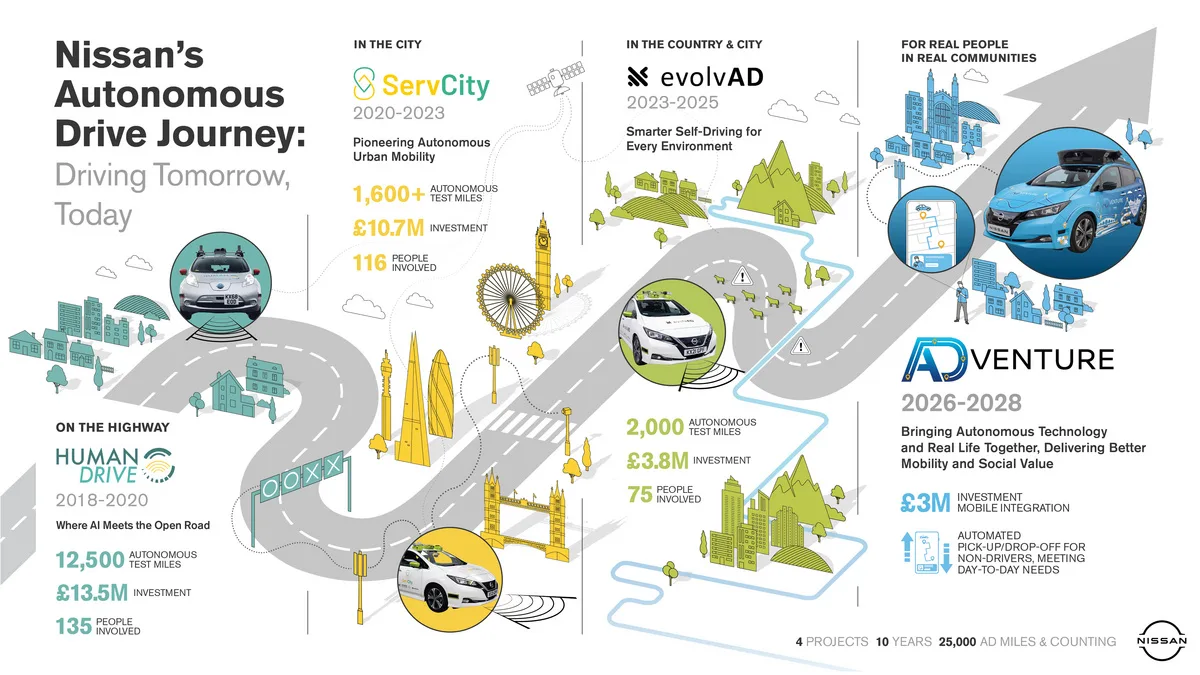
The work will culminate in a public-road demonstration, showing the autonomous mobility service operating on Cambridge’s actual streets rather than a closed test track. The timing lines up with a broader shift in UK policy, as the government’s self-driving vehicle pilot scheme, published in full at the end of March 2026, allows companies to run automated vehicles on public roads without a safety driver, a meaningful step beyond the trials that have run in Britain until now, which required a human ready to take back control at any moment.
The pilot scheme is expected to run for up to 12–18 months, ahead of the full Automated Vehicles Act regime taking effect in late 2027. None of that means driverless taxis are about to appear on Cambridge’s roads next month. But between a real manufacturer, a real government backed budget, a specific regulatory pathway already published, and a public road demonstration promised as the end point, ADventure is a noticeably more substantial claim than most “self-driving car” stories that cross a car site’s desk.