Polestar has teamed up with the University of Oxford’s SDG Impact Lab to study drivers’ brain activity, heart rate and eye movement at Sweden’s Gotland Ring, aiming to put numbers on the thrill of driving.
Power outputs, acceleration times and lap records are easy to print on a spec sheet. The buzz a driver gets from a good car on a good road is not. Polestar now wants to change that, and it has brought in academic help to try.
The electric car maker has announced a research project with the SDG Impact Lab at the University of Oxford. The aim is to find out whether the thrill of driving can be observed, analysed and decoded scientifically.
Science on the Circuit
The study will take place at the Gotland Ring in Sweden, with testing planned for this northern summer. Oxford researchers from Engineering Science and Experimental Psychology will run the programme.
They will collect three main types of data from people behind the wheel:
- Brain activity , to track how the mind responds while driving
- Heart rate , as a measure of physical arousal
- Eye movement , to show where drivers look and focus
Polestar says the thrill of driving is one of the few parts of performance that has never been measured scientifically. Put simply, the researchers want to see whether excitement leaves a trace clear enough to record.

Why a Carmaker Cares About Feelings
Polestar’s own argument is that performance figures matter but only tell part of the story. Plenty of us enthusiasts would agree. A car can post a brilliant lap time and still leave its driver cold.
That said, it’s worth noting who is asking the question. This is a manufacturer-backed project, so any framework it produces will carry a carmaker’s name. That doesn’t make the science worthless. However, the results will deserve close scrutiny once they are published.
Oxford presents the work as academic research with impact beyond the university. Professor Alexander Betts, Pro-Vice Chancellor of the University of Oxford and co-founder of the Oxford SDG Impact Lab, says the partnership lets the university turn scientific insight into knowledge that could help shape future innovation.
What Happens Next
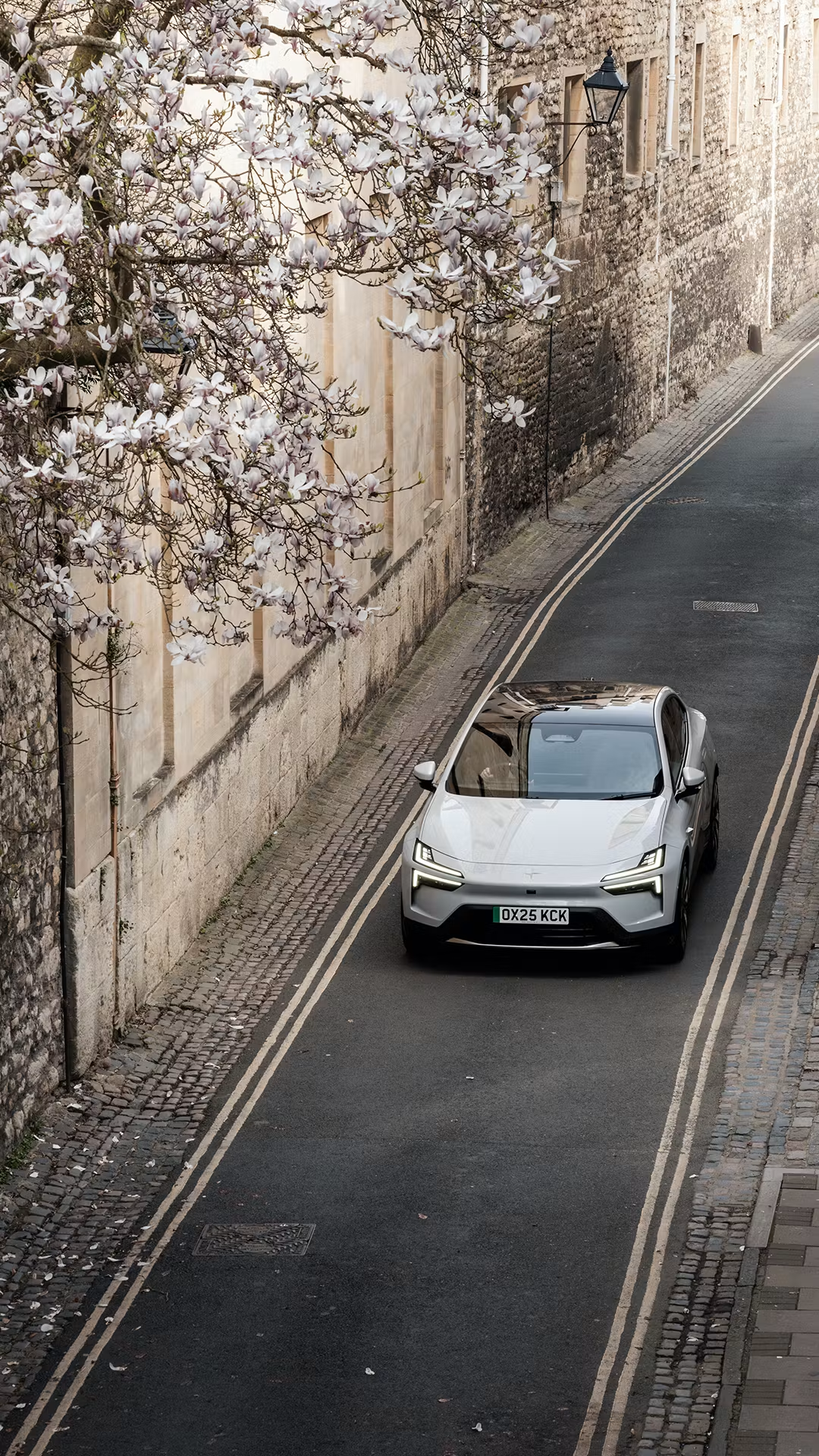
No findings have been released so far. Polestar has not said how many drivers will take part, which cars will be used, or when results are due.
Instead, the brand plans an upcoming series documenting the project. It will follow the tests, the researchers and their effort to build a framework for measuring driving thrill.
That framework is the part to watch. If researchers can link specific physical responses to moments of driving enjoyment, engineers would gain a new kind of target to develop cars towards. For a brand selling electric cars to keen drivers, evidence that a car is engaging would carry more weight than a marketing claim. Until that data arrives, the stopwatch is still the only judge anyone can quote.