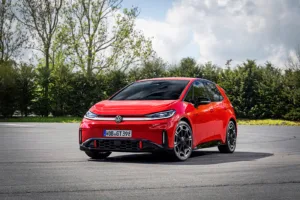
Volkswagen has shown the near-production ID.3 GTI, a 240kW rear-drive electric hatch due for pre-sales in early 2027, in the 50th year of the GTI badge.
The GTI badge has turned 50, and Volkswagen has marked the occasion by putting it on a battery-electric car. The ID.3 GTI has made its world premiere as a near-production concept. Volkswagen says it will be the most powerful GTI ever built in series production.
The car isn’t on sale yet, and all of its efficiency figures are preliminary forecasts. Pre-sales are due to start at the beginning of 2027.
The Numbers, in Context
A single electric motor on the rear axle makes exactly 240kW (326PS) and 545Nm. Volkswagen quotes 0-100km/h in 5.6 seconds, and Launch Control comes as standard. Top speed is electronically limited to 200km/h.
Those figures are brisk rather than outrageous. Volkswagen seems aware of that, since it points to the car’s always-available torque as the real attraction rather than the sprint time. That torque works alongside the adaptive DCC sports chassis and a low centre of gravity.
Battery, Range and Charging
Energy comes from a lithium-ion battery with 79kWh of usable capacity. On a DC fast charger it takes up to 183kW, which Volkswagen says gets it from 10 to 80 per cent in around 29 minutes. The forecast range is up to 601km, with combined consumption of 14.5kWh/100km.
Practicality gets some attention too. An optional Power Socket adapter adds vehicle-to-load, so the car can power or charge other devices. Add the optional bike-carrier bracket (rated for a 75kg drawbar load) and you can carry two e-bikes and recharge them between rides. Nice.
Heritage Cues Inside and Out
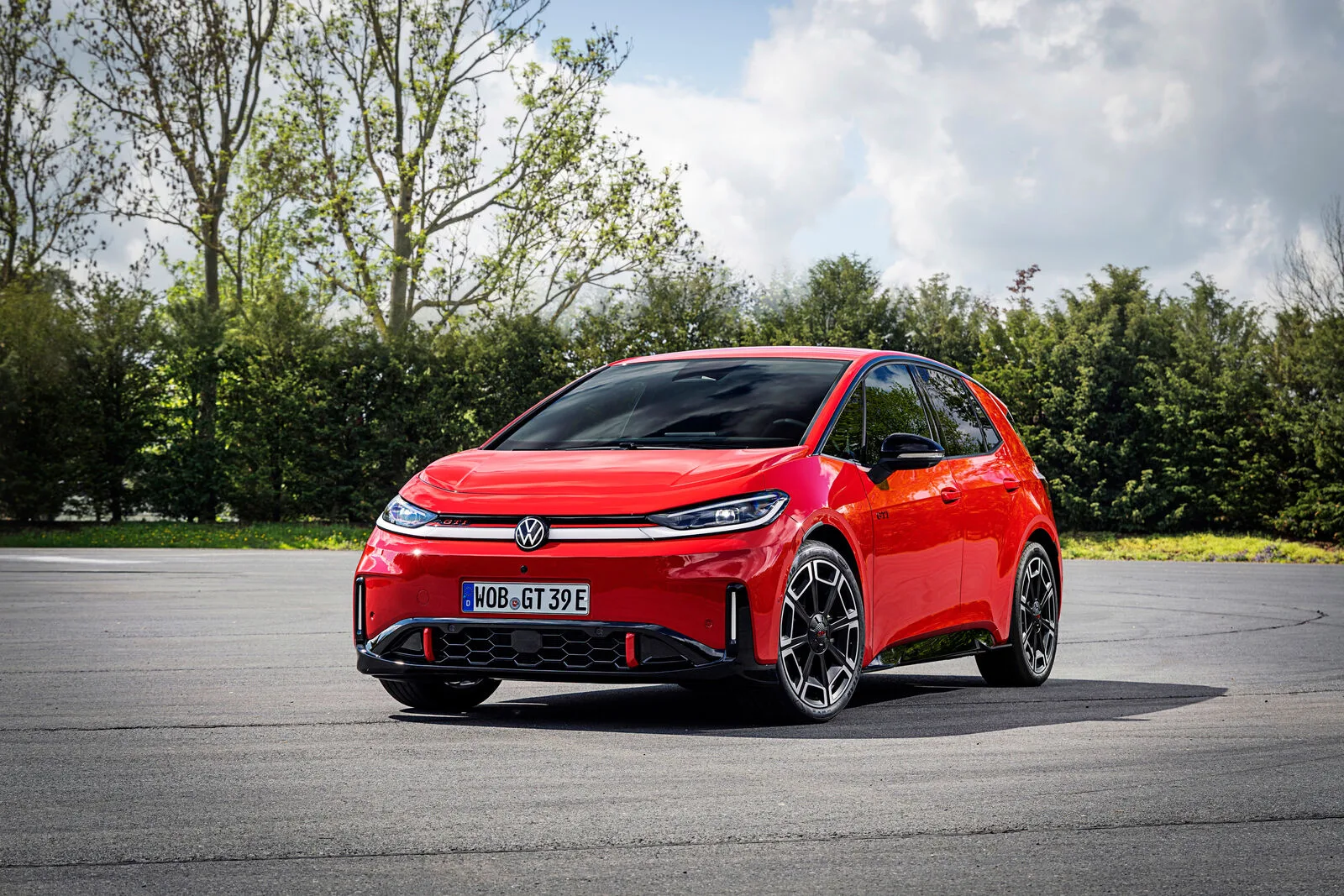
The GTI is based on the ID.3 Neo, and most of what sets it apart looks backwards on purpose. A red stripe above the front light strip references the red grille surround of the 1976 Golf GTI. Vertical LED elements in the bumper are new, and mark this as an electric GTI.
Standard 20-inch wheels are named Wörthersee, after the well-known GTI meet in Austria. The roof, spoiler and boot lid are now body-coloured rather than black as on the ID.3 GTX. That makes the car look longer. Five colours are offered, including Tornado Red (code LY3D), which first appeared on the facelifted first-generation Golf GTI.
Inside, the cabin is red on black, with a red stripe across the dash and a red 12 o’clock marker on the wheel. The sport seats use a new take on the original car’s tartan pattern.
A Button Marked GTI
The illuminated GTI button on the steering wheel sets the motor, progressive steering and DCC chassis to their sportiest settings and enables Launch Control. The ambient lighting turns red and the digital cockpit switches to a power-focused display. A synthetic combustion engine sound also plays in the background, which some buyers will like more than others.
Optional extras include a panoramic roof, a Harman Kardon sound system and an augmented reality head-up display. The latest Travel Assist is also optional, and it can now brake the car to a stop at red traffic lights.
What’s striking is how much of the pitch rests on symbols: the stripe, the tartan, the Tornado Red. The numbers make it the most powerful series GTI. Volkswagen is relying on 50 years of visual cues to convince buyers it’s a real one.