Dreame has pulled the plug on its ambitious electric vehicle plans, proving that while it may be very good at sucking dirt off your carpet, making a car is a rather different proposition.
There are plenty of strange stories in the automotive world. A Chinese vacuum cleaner manufacturer announcing that it wants to build some of the world’s fastest electric cars, however, was always going to rank fairly highly on the Weird-O-Meter.
Now, just one year after announcing its ambitious automotive programme, Dreame has officially pulled the plug. Yep, the Dreame is over.
And while that may sound like a particularly cruel punchline, the company itself says the decision is a strategic one, rather than an admission of automotive defeat. Still, given the scale of its original ambitions, it’s hard not to wonder whether somebody eventually looked at the numbers, looked at the car industry and quietly swept their ambitions under the rug.
From vacuum cleaners to supercars
For anyone unfamiliar with Dreame, the company has built its reputation around high-tech consumer products, particularly robot vacuum cleaners and smart-home appliances. It has also developed considerable expertise in things such as high-speed electric motors, sensors, robotics and artificial intelligence. And, to be fair, that makes the jump into electric vehicles sound slightly less bonkers than it initially appears.
Electric cars are essentially giant computers with wheels, electric motors, batteries, sensors and increasingly sophisticated software. The problem is that they’re also cars. And cars are rather complicated things to manufacture, certify, crash-test, service, distribute and sell.
Dreame announced its automotive ambitions in 2025 under a programme known as Project Starry Sky, with the rather modest objective of building the world’s fastest car. Because apparently making the world’s best robot vacuum wasn’t enough of a challenge.
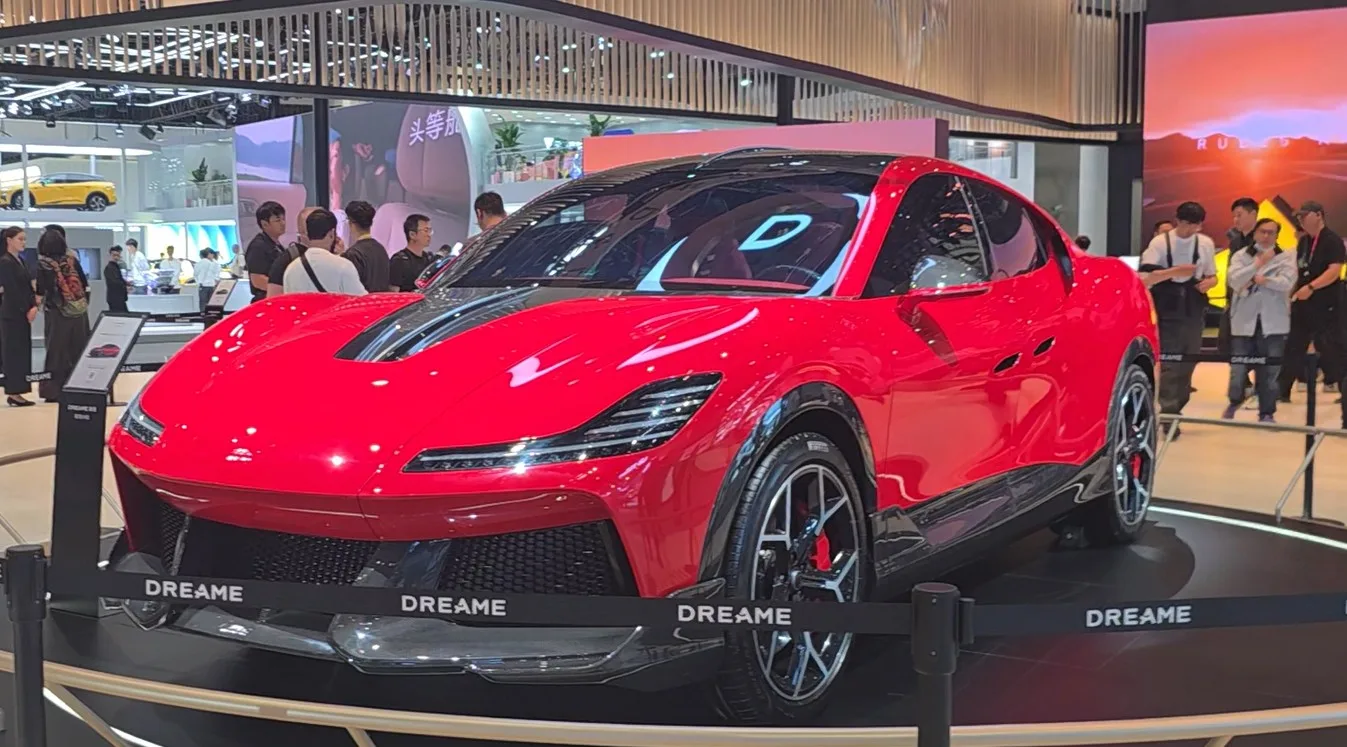
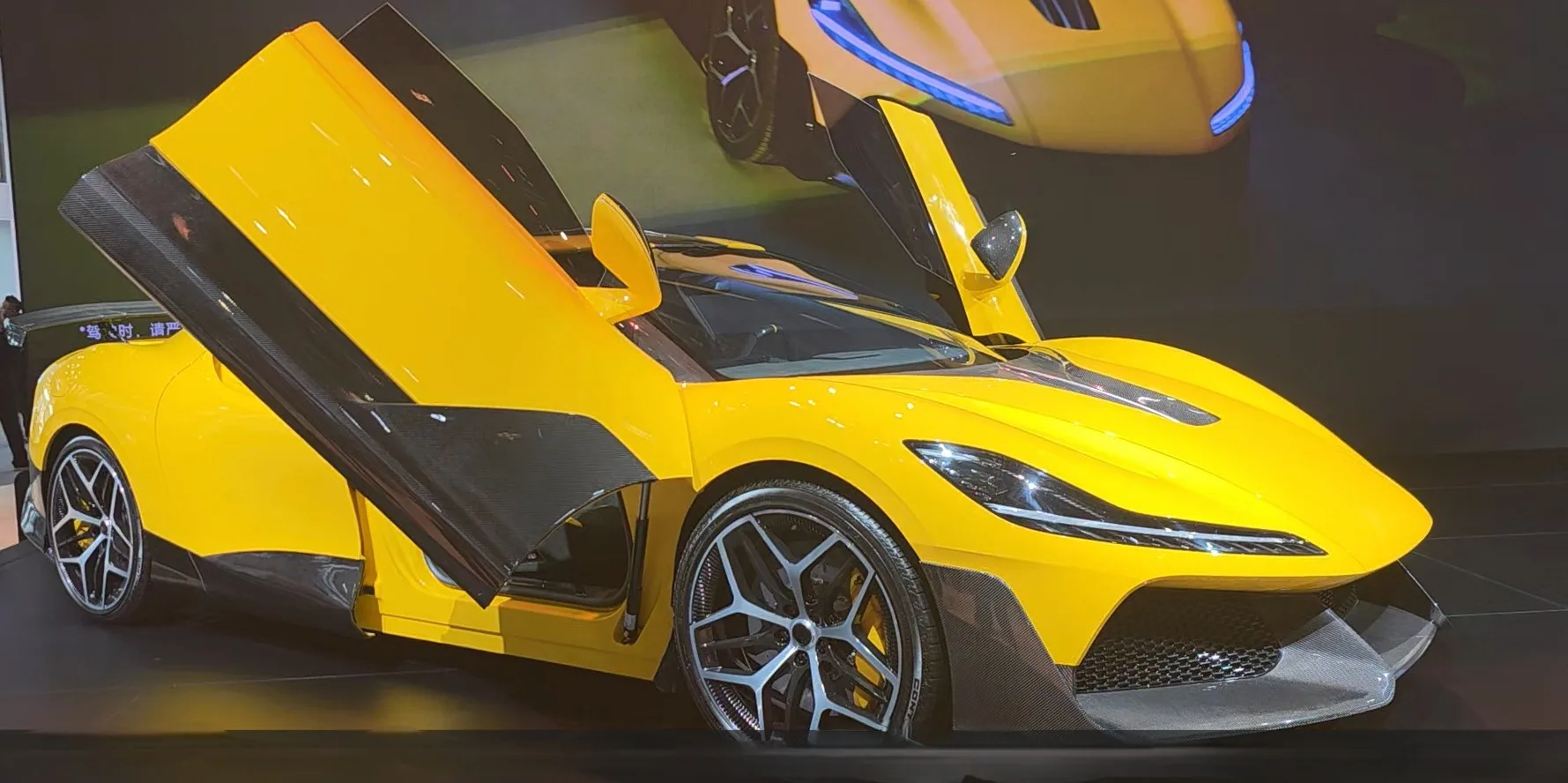
The company subsequently revealed the Nebula NEXT 01 sports car and NEXT 01X luxury SUV concepts, and its ambitions became increasingly spectacular. At one point, Dreame was talking about a luxury EV capable of competing with the likes of Bugatti, Bentley and other high-end performance brands.
It even showed off a so-called Nebula NEXT 01 Jet Edition, which was claimed to use rocket propulsion to help deliver a 0-100km/h time of just 0.9 seconds. Yes, a vacuum cleaner company wanted to build a rocket-powered car. Honestly, somewhere, Elon Musk was probably thinking: “That’s a bit much.”
And then came the Super Bowl
Dreame wasn’t exactly keeping its automotive ambitions quiet. The company reportedly spent around US$10 million on a Super Bowl advertisement earlier this year, using the global sporting event to promote its technology and automotive ambitions. That is one hell of a way to introduce yourself to the car industry.
The company also showcased its vehicle concepts internationally, including at major technology and automotive events. The messaging was clear: Dreame wasn’t interested in building a boring electric hatchback, it wanted to go straight for the top.
The problem with aiming for the top of the automotive mountain is that there are already quite a few extremely wealthy, experienced and slightly obsessive people sitting up there.
Then reality arrived
According to a reliable source (Reuters), Dreame has now decided not to advance the automotive project as an independent business. The company says the project had not entered mass production and had not involved significant heavy-asset investment, meaning it does not expect the cancellation to have a material impact on its financial position.
That’s probably just as well, because building cars isn’t like launching another vacuum cleaner. You can design a robot vacuum, manufacture it, put it in a box and ship it around the world. A car requires factories, supply chains, regulatory approvals, crash testing, homologation, service networks, parts distribution, software support, warranty infrastructure and a rather large pile of money.
And then you have to convince somebody to actually buy the thing. The automotive industry has chewed up considerably larger companies than Dreame.
From nearly 1,000 employees to a handful
Perhaps the clearest indication of just how quickly the project has unravelled is the workforce. Dreame’s automotive operation reportedly grew to almost 1,000 employees at its peak. Now only a few dozen remain to deal with the administrative work associated with winding the project down, including supplier settlements and corporate deregistration.
That’s a spectacularly short automotive career, it went from: “We’re going to build the world’s fastest car!” to: “Can someone please cancel the factory order?” in roughly a year.
What about those incredible cars?
This is perhaps the most interesting part. Dreame’s concepts certainly looked impressive. The company talked about advanced electric powertrains, solid-state battery technology and extraordinary performance figures. The Nebula NEXT 01 Jet Edition was claimed to be capable of accelerating from 0-100km/h in 0.9 seconds, while reports also referenced a solid-state battery with an energy density of around 450Wh/kg.
Those are the sorts of numbers that make petrolheads stop scrolling. But there’s a sizeable difference between showing an extraordinary concept and building thousands of road-legal cars. And Dreame never got to the latter.
The vehicles remained concepts and prototypes rather than production cars, with no mass-market vehicle reaching the road. And that’s quite the difference. Because the automotive industry is littered with cars that looked spectacular on a turntable. The hard bit is turning the turntable into a production line.
A very expensive lesson
Dreame’s retreat also highlights one of the biggest challenges facing technology companies entering the automotive industry. On paper, the transition from consumer electronics to EVs looks logical. Both involve batteries, electric motors, software, artificial intelligence and increasingly sophisticated electronics. But there is a massive difference between developing technology and developing a complete vehicle.
Tesla spent years proving that point. So did a whole bunch of other EV start-ups. And Dyson famously abandoned its own electric car project in 2019 despite reportedly spending billions of dollars on development. In other words, Dreame isn’t the first clever technology company to discover that building a car is bloody difficult.
So what’s next for Dreame?
The company isn’t disappearing. Far from it. Dreame says it will refocus its resources on four key areas: smart homes, outdoor living, smart mobility and embodied AI. It also says that technology, intellectual property and research developed through the automotive programme will be redeployed into other areas of the business.
And that could actually prove to be the smart move. The company already has genuine expertise in robotics, electric motors, artificial intelligence and autonomous systems. Rather than trying to become another car manufacturer in an increasingly crowded Chinese EV market, it can potentially use those technologies where it already has a customer base and manufacturing experience. Sometimes the cleverest business decision isn’t knowing when to accelerate, it’s knowing when to brake.
The New Zealand connection
For New Zealand car buyers, the Dreame story is interesting because Chinese EV manufacturers are increasingly becoming a significant part of our market. We’ve already seen brands such as BYD, MG, GWM, LDV, JAC, Zeekr and others demonstrate that Chinese companies can successfully enter the automotive industry and establish themselves internationally.
But there’s a big difference between a company with years of automotive engineering and manufacturing behind it and a consumer electronics brand deciding it wants to build a car.
New Zealand is also a particularly interesting market for EVs because we’re small enough to be attractive to emerging brands, while buyers are increasingly comfortable considering manufacturers they may not have heard of five years ago. That makes brand credibility, after-sales support and long-term product backing increasingly important. Because buying a vacuum cleaner that dies after three years is annoying, buying a $70,000 EV from a company that disappears after three years is rather more problematic.
Suck it up, Dreame
There’s an irony in all of this. Dreame’s automotive adventure wasn’t necessarily a complete waste. The company has gained knowledge, developed technology, recruited automotive talent and generated an enormous amount of publicity. It also demonstrated something increasingly common in the modern automotive industry: the boundaries between technology companies and car manufacturers are becoming increasingly blurred.
But ultimately, Dreame has decided that building cars isn’t where it wants to spend its money. And perhaps that’s sensible. Because while a vacuum cleaner needs to navigate around your furniture, avoid the dog and find its way back to its charging dock, a car needs to do all that metaphorically while travelling at 100km/h surrounded by other cars, trucks, cyclists, pedestrians and the occasional Kiwi who thinks indicating is an optional extra.
So goodbye, Dreame car. We barely knew you. Although, given that your rocket-powered supercar was never really heading for the supermarket car park, perhaps we shouldn’t be too surprised.
Dreame may have failed to make the world’s fastest car – but at least it knows how to clean up after itself.