The Porsche 924 was never supposed to wear the Stuttgart crest. Originally developed under contract for Volkswagen as the EA 425 project, it became a Porsche almost by accident, and in doing so, forced the brand to ask a question it had never seriously needed to answer before: what actually makes a Porsche a Porsche?
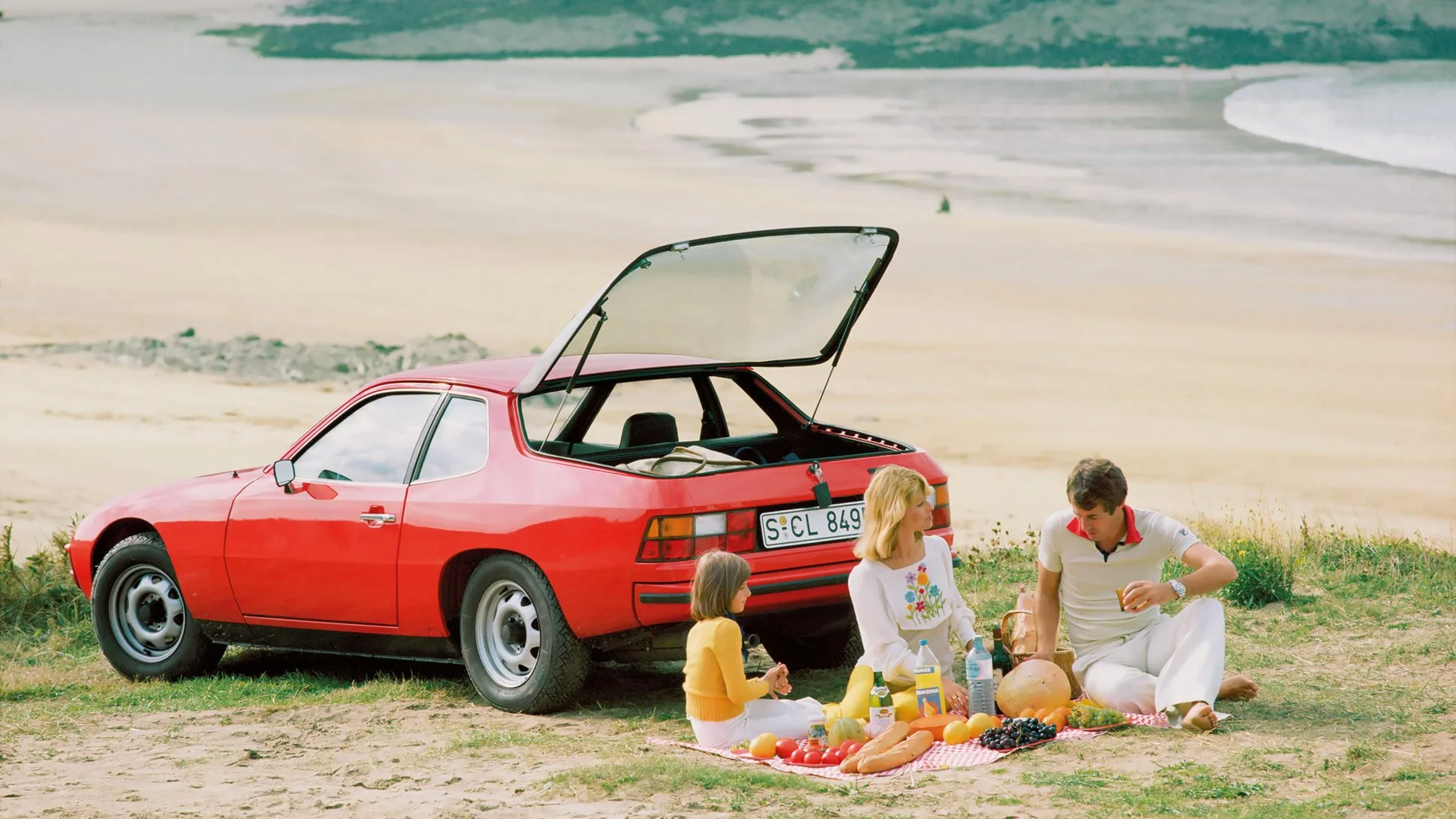
Fifty years on, Porsche is revisiting that moment and the lasting influence of the car and the transaxle architecture it introduced.
A Project Porsche Bought Back
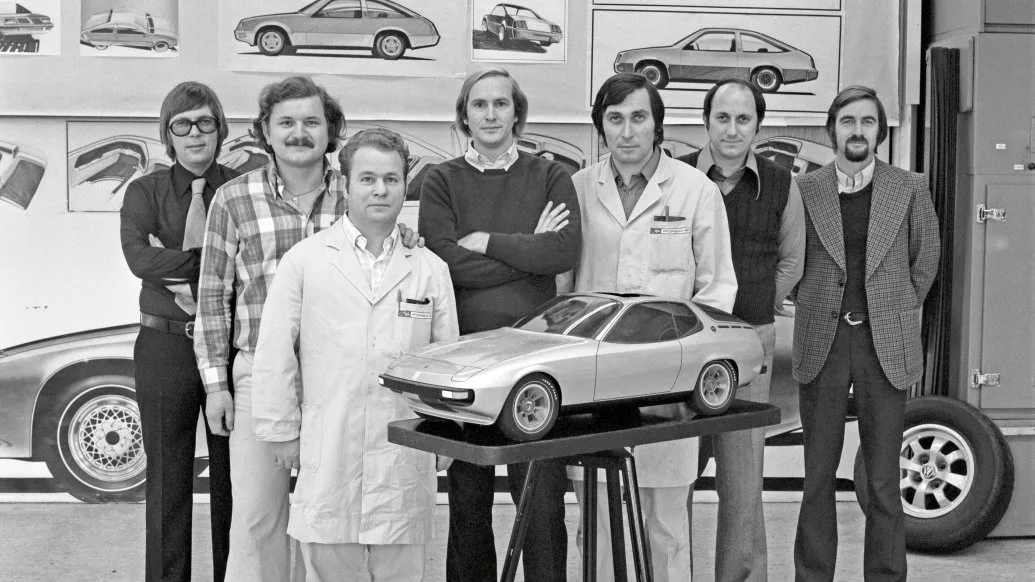
Work on the 924 began at Porsche’s Weissach facility in the 1970s. The brief was straightforward enough, a front-engined sports car with a large glass rear hatch and genuine 2+2 seating. The angular silhouette and elongated nose were a deliberate departure from the rear-engined 911, and the car was designed from the outset for Volkswagen’s production plans.
When VW’s new leadership scrapped the project in 1975, Porsche stepped in and acquired it. Designer Harm Lagaaij, then in his mid-twenties, recalls that the concept was so coherent the team continued without altering it. “The design of the 924 developed entirely intuitively,” he says, “and was something of a surprise.” Changing direction at that stage of development would have been impossible regardless.
Porsche’s willingness to take on the project reflected a broader strategy the brand had used before: adopt proven series-production technology, exploit shared development costs, and apply Porsche engineering judgement to the result. The 914 had followed a similar path with Volkswagen a decade earlier.
The Transaxle Decision
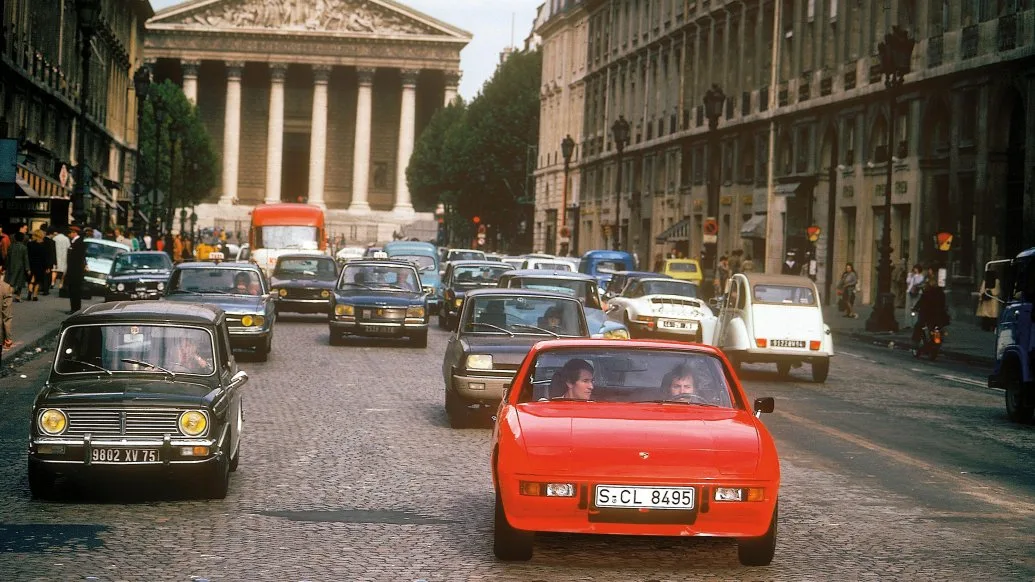
The most consequential engineering choice in the 924 was the transaxle layout. Rather than placing the engine and gearbox together at the front axle, Porsche’s engineers positioned the engine up front and the transmission at the rear, connected by a rigid propshaft. The result was a near-even front-to-rear weight distribution, something the 911’s rear-engine configuration could never offer.
Roland Kussmaul, a former Porsche road-testing engineer who spent considerable time evaluating the car on both road and track, describes the 924 as an “easy-to-handle, forgiving, fast car.” He credits the balanced weight distribution for its composure at speed, in crosswinds, and during lane changes. That balance was not incidental, it was the primary reason Porsche chose the transaxle layout in the first place.
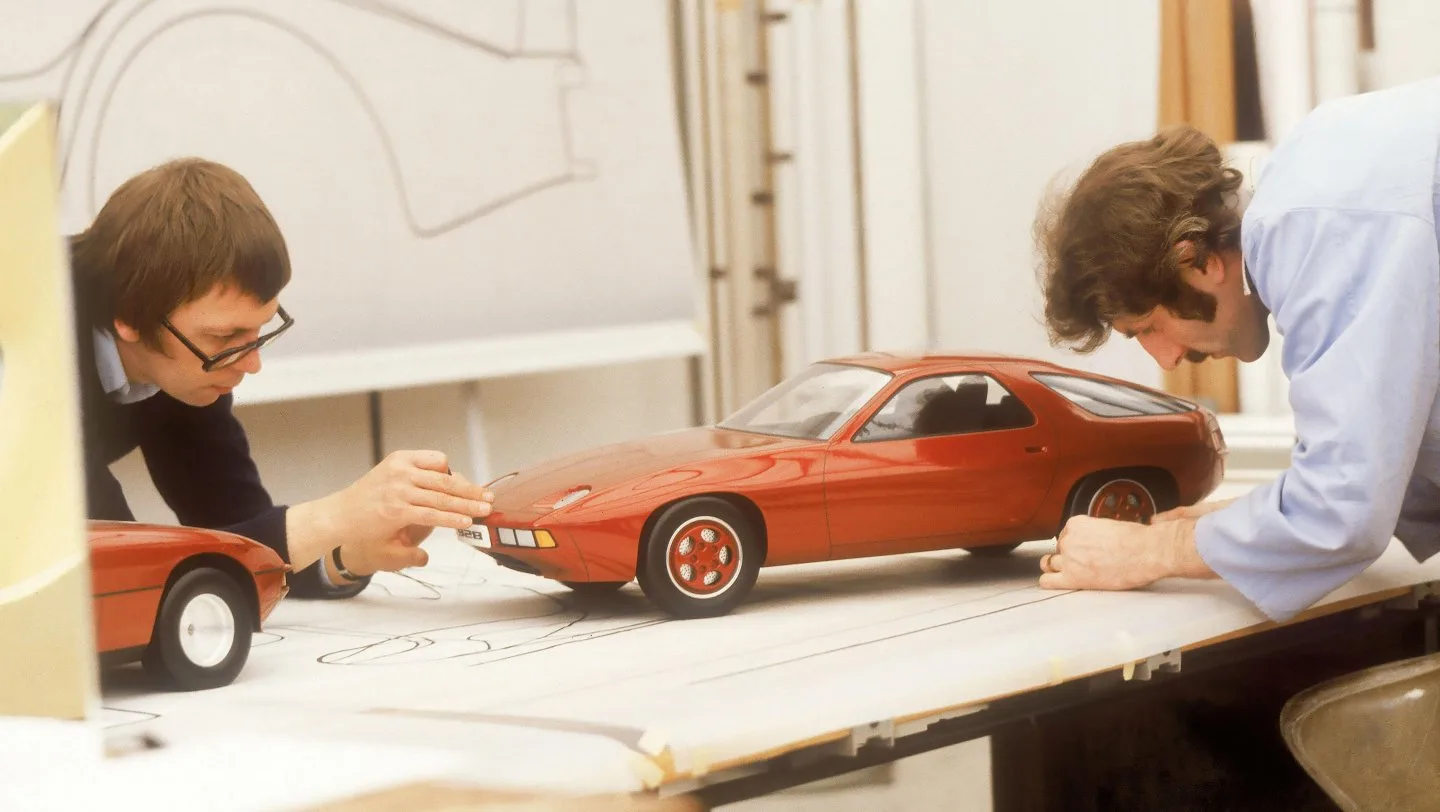
The same architecture was applied almost simultaneously to the 928, a larger V8 gran turismo developed alongside the 924. Both cars shared the basic transaxle package while pursuing entirely different design languages, which Lagaaij sees as evidence of how much freedom Porsche’s design identity permitted at the time.
Commercial Impact and Hard Lessons
Between 1976 and 1988, Porsche built more than 150,000 vehicles across the 924’s various derivatives, a figure that nearly matched 911 production over the same period. The 924 was not a niche experiment; it was a commercial pillar that helped sustain the company through a difficult decade.
The transaxle family eventually expanded to include the 944 and 968, but the range carried a structural problem. Each model was developed largely as an independent project, with its own engine, body components, and production processes. Shared platforms and economies of scale were not part of the thinking. Costs climbed, and the synergies that should have existed between the models were never fully realised.
Porsche draws a direct line from those difficulties to its current modular platform strategy, where multiple models share chassis components, electronic systems, and powertrain elements. The transaxle era, in other words, taught the company something it still applies today.
A Lasting Influence
The 924 arrived at a moment when Porsche genuinely needed to change, new markets, tightening emissions and safety regulations, and shifting customer expectations all demanded a response. The car provided one, even if it took time for the industry to understand it on its own terms.
Lagaaij, looking back, says the transaxle models have “aged very gracefully.” The 924’s proportions, its practical 2+2 layout, and its dynamic balance remain relevant reference points. For a car that started life on a white sheet of paper with a Volkswagen badge in mind, that is a considerable legacy.