They say lightning doesn’t strike twice, but cocaine in New Zealand workplaces seems determined to prove otherwise. The latest Imperans Q2 Report from The Drug Detection Agency (TDDA) has dropped some genuinely sobering statistics, and they deserve your attention, especially if you’re running a safety-critical operation.
The Numbers Don’t Lie
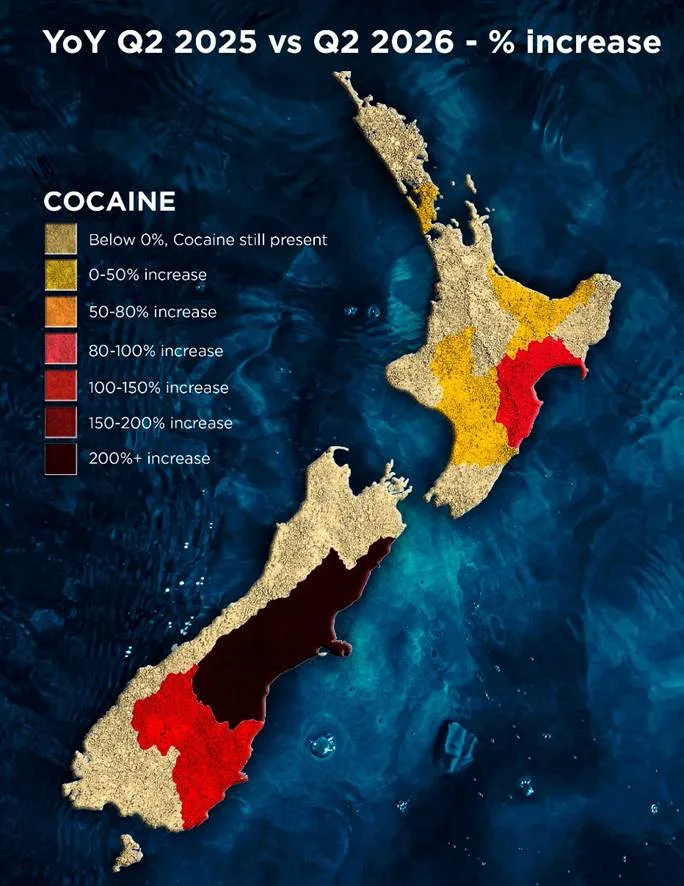
Cocaine positive tests are up a staggering 68.5% year-on-year. And no, that’s not a wobble or a seasonal blip, that’s a trend with teeth, and it’s spreading faster than a rumour on a job site. What’s more, this isn’t just affecting the usual suspects, cocaine’s reaching its highest levels in a year across multiple regions, from Canterbury’s eye-watering 375.8% increase to Otago’s 146.2% spike. But cocaine isn’t the only party crasher. ATS, including methamphetamine, accounted for 32.7% of positive tests, up 5.2% year-on-year, with the South Island seeing the largest increases. Cannabis and opioids remain stubbornly present too, though at least opioid use is trending downward, a rare bit of good news in this otherwise challenging picture.
Where It Hits Hardest
Here’s the thing about workplace drug use that doesn’t always make the news, it’s not evenly distributed. The South Island is copping it hardest for ATS, with Southland hitting 44.0% of positive tests (up 200.8% year-on-year) and Otago at 25.4% (up 153.7%). Meanwhile, cocaine is spreading nationally like an unwelcome guest at a barbecue, popping up in regions like Manawatū-Whanganui, which recorded zero detections last year and suddenly hit 5.1% this quarter.
Why This Actually Matters (Beyond the Obvious)
Glenn Dobson, TDDA’s chief executive, doesn’t mince words: “Cocaine and ATS interfere with the way the brain judges risk, producing misplaced confidence and slower decisions at exactly the wrong moment.” On a construction site, in a vehicle, or anywhere safety margins are measured in seconds, that’s not just a problem, it’s potentially fatal.
The danger isn’t abstract either. When judgment slips on a construction site or behind the wheel of a truck, the consequences ripple far beyond the worker, into families waiting at home. That’s the real story here.
The Testing Gap That’s Costing You
Here’s something most employers don’t realise, stimulants like cocaine and ATS clear the body faster than depressants, meaning a single test often misses them entirely. A drug and alcohol policy that gets set once and never revisited quietly falls behind the risk as regional patterns shift week to week. The fix? A layered approach: pre-employment testing shows day one that your policy isn’t just corporate wallpaper, while random testing afterwards catches the fast-clearing substances. It’s not complicated, but it’s essential.
What Employers Actually Need to Do
The Health and Safety at Work Act 2015 isn’t optional reading, it puts the obligation squarely on employers to manage foreseeable risks, and substance use in safety-critical roles is exactly that. The starting point is a comprehensive drug and alcohol policy that covers illicit, synthetic, and prescription drugs alongside alcohol. It also gives managers and supervisors a clear playbook when something feels off, even if they can’t quite put their finger on it. As Dobson puts it: “In the end, this isn’t just about compliance, because every person who turns up on site each day deserves to finish the day and get home safe.”
Tarmac Takeaway
The Imperans Q2 Report represents data from 27 clinic locations and over 60 mobile clinics across New Zealand, combining pre-employment, post-incident, regular, and random testing results. It’s the clearest picture we have of what’s actually happening in New Zealand workplaces right now.
Cocaine’s back, ATS is spreading, and the regions most affected today might not be the regions most affected next quarter. Regional trends are shifting fast, and testing programmes that worked six months ago might not cut it now. The question isn’t whether substance use in your workplace is a risk, the TDDA data confirms it is. The question is whether you’re managing it proactively or waiting for something to go wrong.