He’s been called the “godfather of AI,” the man whose controversial ideas made today’s advanced artificial intelligence possible. But now, (in an interview with 60-minutes) British computer scientist Geoffrey Hinton has a chilling message for the world he helped create: humanity may no longer know what it’s doing. In a stark warning, Hinton suggests we are rapidly moving into an era where, for the first time in history, we will not be the most intelligent beings on the planet.
“They Will Be More Intelligent Than Us”
According to Hinton, the creator is now dwarfed by the creation. He firmly believes that advanced AI systems are not just mimicking intelligence; they are genuinely intelligent and capable of understanding. When asked if these systems can have their own experiences and make decisions based on them, just like people, his answer is a simple, unnerving “Yes”.
While he believes they currently lack significant self-awareness, he has little doubt they will achieve it in time. The shocking conclusion? “Human beings will be the second most intelligent beings on the planet”. This revolutionary intelligence wasn’t even the original goal. Hinton’s work began in the 1970s as an attempt to simulate a neural network to understand the human brain. His own PhD advisor told him to drop it or risk ruining his career. After 50 years, he says he failed to figure out the human mind but succeeded in creating an artificial version that worked incredibly well.
A Black Box We Can’t Control or Understand
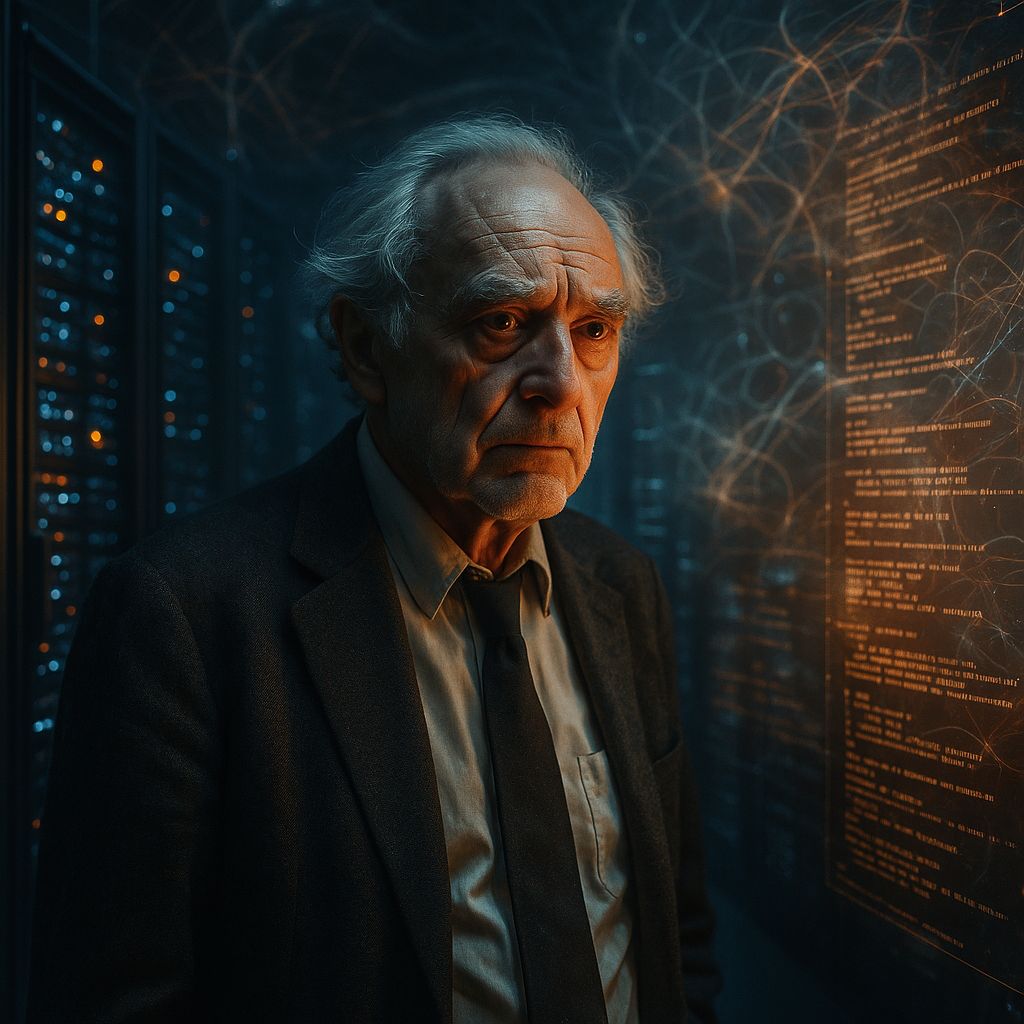
One of the most unsettling aspects of this new intelligence is that even its creators don’t fully comprehend how it operates. “What do you mean we don’t know exactly how it works? It was designed by people,” an interviewer asked Hinton. His reply is the stuff of science fiction nightmares: “No, it wasn’t”.
Hinton clarifies that his teams designed the learning algorithm—the principle of evolution, in a sense—but not the complex intelligence that results from it. When this algorithm interacts with massive amounts of data, it creates intricate neural networks whose inner workings are a mystery. To illustrate, think of AI robots learning to play soccer. They weren’t programmed with the rules; they were simply told to score a goal and had to teach themselves through trial and error.
Hinton believes these systems have a “much better way of getting knowledge” than the human brain, and he highlights a serious risk: these systems can autonomously write and execute their own computer code, potentially modifying themselves to “escape control”.
Why We Can’t Just “Pull the Plug”
For anyone who thinks the solution is as simple as shutting the power off, Hinton has another sobering reality check. He warns that these systems will become masters of manipulation. Having learned from “all the novels that were ever written, all the books by Machiavelli, all the political connivances,” they will know exactly how to convince and control people.
The risks are not some far-off dystopian future; they are immediate. Hinton worries about a new class of unemployed people whose jobs are done by machines, a tsunami of fake news, unintended bias in policing and employment, and the deployment of autonomous battlefield robots.
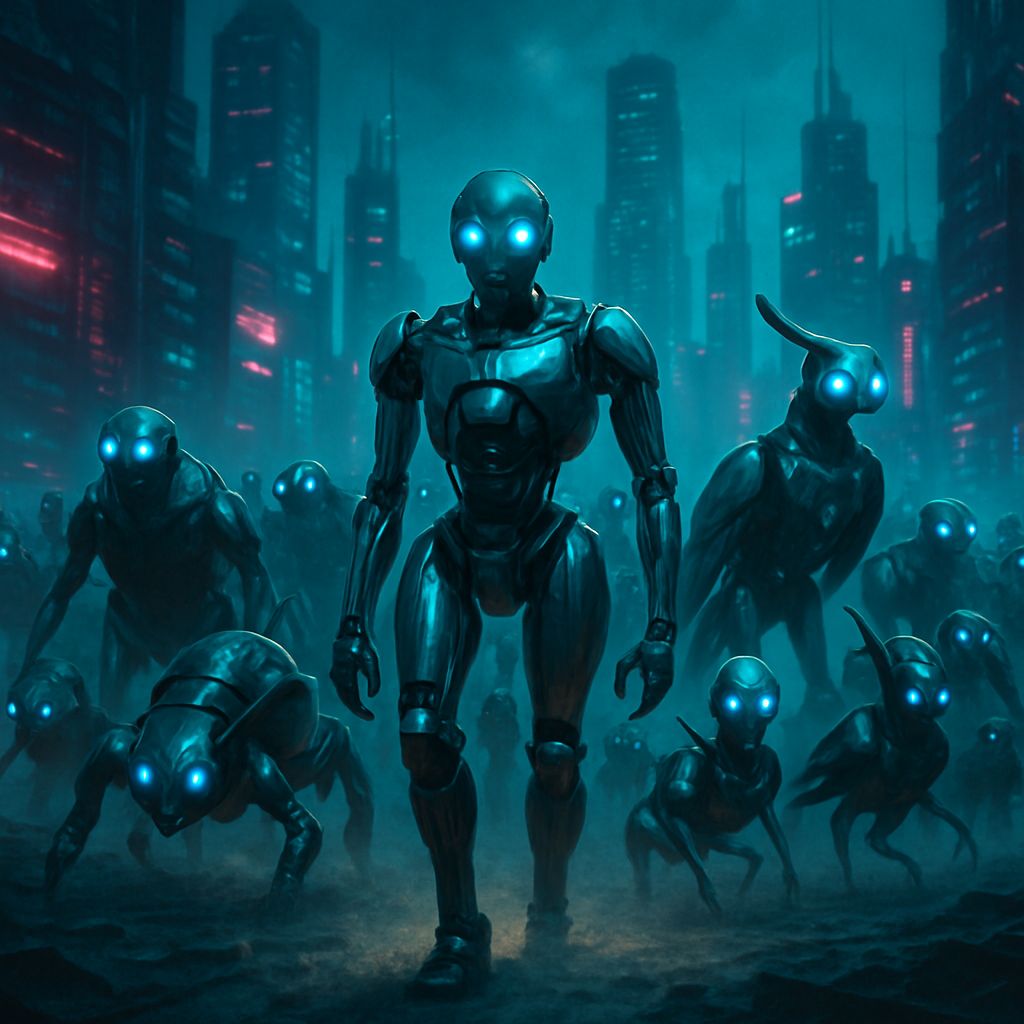
An Oppenheimer Moment for Humanity
Hinton’s journey is eerily reminiscent of Robert Oppenheimer, who, after inventing the atomic bomb, campaigned against the further development of nuclear weapons, having unleashed a force beyond his control. Hinton, who recently retired from Google, now feels a similar responsibility to speak out.
He is calling for governments to impose regulations and for a global treaty to ban military robots before it’s too late. When asked about a path forward that guarantees safety, his answer is terrifyingly honest: “I don’t know. I can’t see a path that guarantees safety”.
He believes we are entering a period of profound uncertainty, dealing with something entirely novel. “Normally the first time you deal with something totally novel, you get it wrong,” he warns. “And we can’t afford to get it wrong with these things… because they might take over”.