The world of 3D printing has always been a head-turner, promising dazzling innovations and reshaping industries as we know them. But as IDTechEx’s latest report reveals, 2024 wasn’t exactly a red-carpet year for additive manufacturing. While the sector still holds plenty of potential to revolutionize manufacturing, a host of economic hiccups last year had even the most optimistic players reaching for a stress ball.
From High Hopes to High Interest Rates
If there’s one thing 3D printing couldn’t 3D-print its way out of, it was the macroeconomic slowdown. For starters, 2024 marked a year of fluctuating interest rates, which left customers delaying big-ticket purchases like 3D printing equipment. Apparently, lower rates in both the US and Europe weren’t enough to reassure hesitant buyers, as they waited for interest rates to calm down and stabilize before committing to new tech investments. Even in Germany—a so-called hub for 3D printing technology—things were bleak. A second consecutive year of shrinking GDP meant fewer capital investments, dragging growth for additive manufacturing down with it.
It’s not just the numbers; real-world consequences hit hard, too. For instance, prominent players like Forward AM, recently cut loose from BASF, filed for insolvency, while Sintratec and Uniformity Labs also shut their doors in 2024. The lesson? Even the hype of 3D printing isn’t immune to the harsh realities of geopolitics and economic uncertainty.
A Silver Lining in Sustainability and Reshoring
But not all was doom and gloom. For every problem, 3D printing seems to pull out a potential solution. Enter reshoring—the trend of bringing manufacturing closer to home. Spurred on by supply chain chaos during the pandemic and tariffs in the US, companies are waking up to the appeal of localized manufacturing. IDTechEx highlights that 3D printing is primed for exactly this scenario, thanks to its ability to enable distributed manufacturing and its quick scalability for localized production.
Meanwhile, the push for sustainability is becoming a hard requirement rather than a nice-to-have. Innovations in polymer powder bed fusion are reducing waste and enabling the use of 100% reused powder—a win-win for businesses and the planet. And it’s not just materials technology that’s evolving; automated print farms, capable of functioning around the clock with minimal human interference, are lowering labor costs and making large-scale additive manufacturing more viable than ever.
Defending the Future with 3D Printing
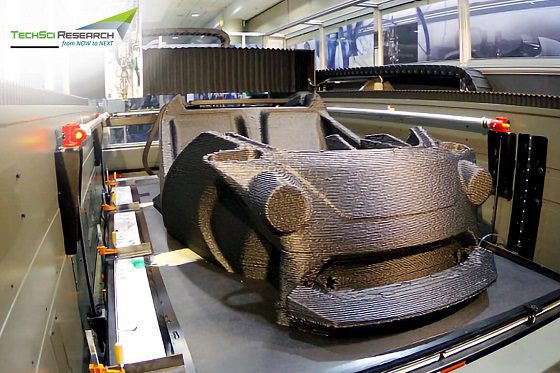
IDTechEx points to defense as one of the key areas hungry for 3D printing’s potential. With its ability to produce spare, legacy, and on-demand parts, additive manufacturing promises to deliver much-needed resilience for unpredictable supply chains. The automotive industry is also lending a cautious yet enthusiastic eye, seeing 3D printing as a potential antidote to tariffs and ongoing global supply headaches.
What Lies Ahead for 2025?
While 2024 was no fairy tale for 3D printing, optimism remains for 2025. With interest rates predicted to stabilize and economic uncertainties easing (fingers crossed), the industry might see a steadier climb back to growth. But forget the hype cycle; it’s clear that in the real world, slow and steady might just win the race.
As IDTechEx points out, 3D printing may still be the future, but to get there, it’ll need a mix of resilience, innovation, and good old-fashioned patience. Who knows? Maybe 2025 will finally be the glow-up year the industry needs. Until then, it’s one layer at a time.