A new study by Scrap Car Comparison has revealed the drivers that are most likely to react the quickest to a hazard, and it’s Volvo drivers, as well as those that own electric vehicles that rank as having the fastest reflexes.
With slow reaction times having the potential to result in significantly longer stopping distances, the research tasked 2,000 drivers to complete a reaction time test that simulates performing an emergency stop and in return, gathered the reaction time in milliseconds from each respondent.
This reaction time was also converted into an associated ‘reaction age’ based on average reaction times per age group. The average reaction time for an 18-year-old is approximately 0.3 seconds, whereas the average reaction time for a 70-year-old is closer to a full second, at 0.8 seconds.
Which drivers react the quickest to a hazard?
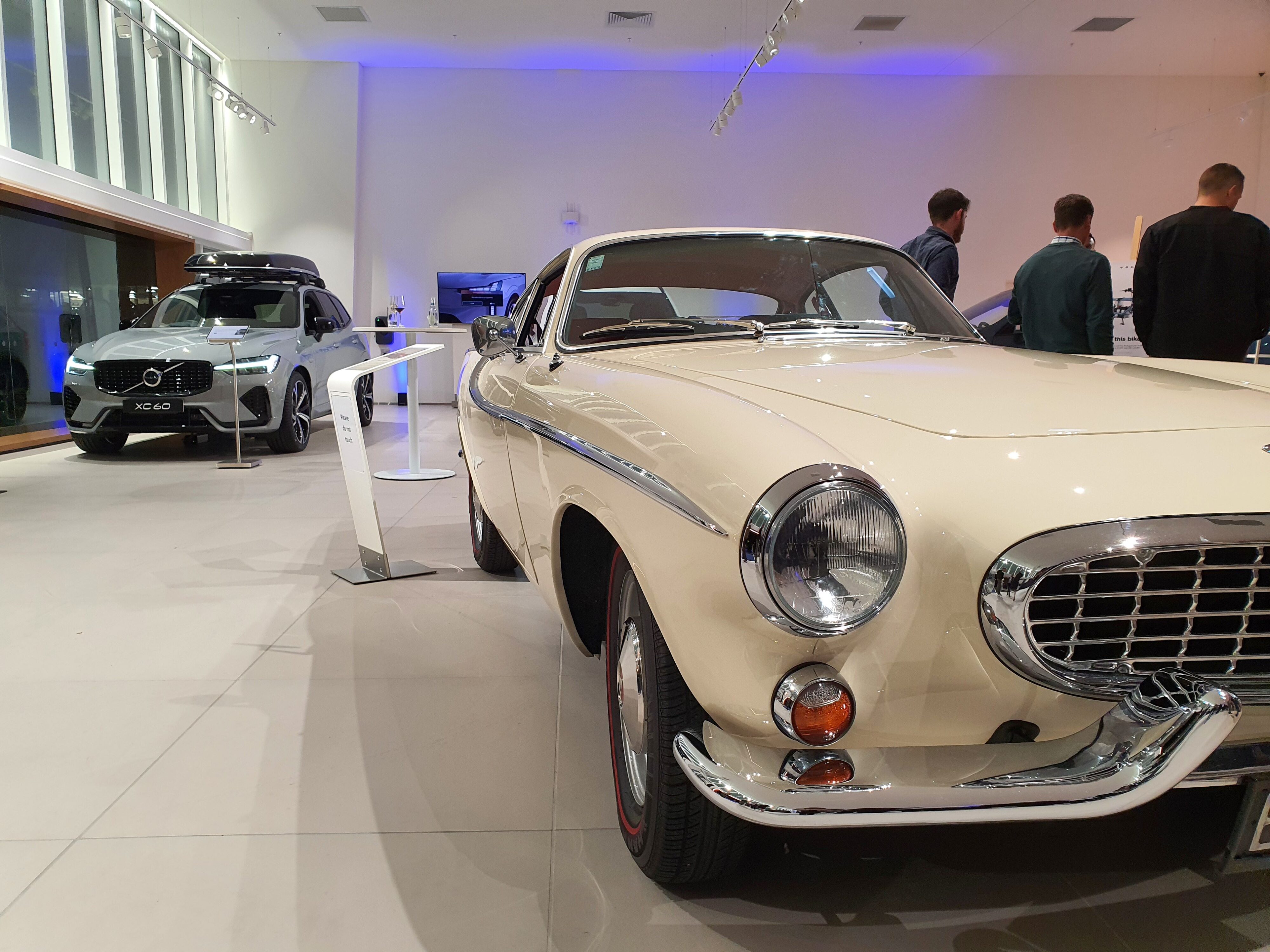
Volvo drivers rank as being the quickest to react behind the wheel, clocking in with an impressive average reaction time of 0.401 seconds. Positively re-enforcing the stereotype of Volvo owners being sensible drivers, this response time becomes even more impressive when considering the associated reaction age of 32, a whole 13 years younger than the actual average age of the Volvo drivers that took part in the study (45-years-old).
Jaguar owners follow closely behind with an average reaction time of 0.409 seconds, showing that they are also likely to stay calm under pressure when out on the roads, and are quick to respond to hazards or the need to stop abruptly.
Other brands with particularly alert owners include the Japanese pairing of Suzuki and Mitsubishi, in addition to Porsche, a brand synonymous with speed.
| Rank | Car brand | Average reaction time (in seconds) | Average reaction age (in years) |
| 1 | Volvo | 0.401 | 32 |
| 2 | Jaguar | 0.409 | 33 |
| 3 | Suzuki | 0.413 | 33 |
| 4 | Mitsubishi | 0.417 | 34 |
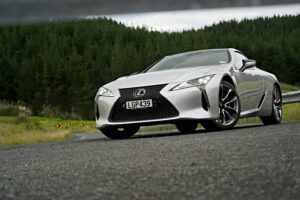
| 5 | Lexus | 0.435 | 36 |
| 6 | Renault | 0.438 | 36 |
| 7 | Audi | 0.442 | 36 |
| 8 | BMW | 0.443 | 37 |
| 9 | Porsche | 0.444 | 37 |
| 10 | Fiat | 0.446 | 37 |
| 11 | Skoda | 0.451 | 37 |
| 12 | Land Rover | 0.453 | 38 |
| 13 | Seat | 0.458 | 38 |
| 14 | Honda | 0.459 | 38 |
| 15 | Vauxhall | 0.460 | 38 |
The drivers with the slowest reaction times
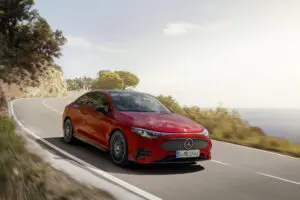
At the other end of the scale, it’s only Mercedes-Benz owners that have an average reaction time that crosses over into being longer than half a second. Mercedes owners take an average of 0.527 seconds to react, the slowest of any brand in the study. This response time equals a corresponding reaction age of 45-years-old, which is actually four years older than the actual average age of the Mercedes owners that took part in the study (41), hinting that owners of the German automotive brand may need to work at staying more alert whilst driving.
| Rank | Car brand | Average reaction time (in seconds) | Average reaction age (in years) |
| 1 | Mercedes-Benz | 0.527 | 45 |
| 2 | Kia | 0.496 | 42 |
| 3 | Hyundai | 0.481 | 41 |
| 4 | MINI | 0.475 | 40 |
| 5 | Peugeot | 0.474 | 40 |
Electric car drivers have faster reflexes overall
The study also analysed whether fuel type has a bearing on how quick to react a driver may be, and while the differences are marginal, there is one clear winner. Motorists that are embracing the electric future rank as being faster to react overall, with a reaction time of 0.459 seconds. Good news with manufacturers placing a bigger focus on electric models, hybrid owners bridge the gap between EV drivers and those still favouring traditional fuel types. Hybrid drivers react in 0.462 seconds, while petrol and diesel drivers follow, with reaction times of 0.463 and 0.464 respectively.
Why are reaction times important when driving?
The research by Scrap Car Comparison reveals that it’s electric-powered Volvo drivers that have lightning-fast response times, but why are reaction times so important for road users?
Being alert and reacting quickly to a hazard is crucial because a driver’s response time will contribute to the time and distance it takes for the vehicle to slow down and reach a complete stop. Known as ‘stopping distance’, this is also impacted by other variables such as speed, tyre tread depth, road surface and weather conditions, however it can be surprising just how much difference a couple of milliseconds makes.
For instance, a reaction time of 0.4 seconds while driving at 50 miles per hour will result in a stopping distance of approximately 30 feet, however this distance rises to more than 60 feet with a slightly higher reaction time of 0.9 seconds.
David Kottaun, Operations Manager at Scrap Car Comparison commented: “Staying alert behind the wheel is always important, but in a world of distractions and notifications, it can be hard to do so at times.”
“With that in mind, it was really encouraging to see that all of the drivers in our study, no matter what type of car they drive, all had favourable reaction times, with average reaction times generally sitting between 0.3 and 0.8 seconds.”
“Evidently some drivers reacted quicker than others, however with most falling at the lower end of this scale, it shows that drivers’ reflexes are still sharp. It’s vital that drivers maintain the same levels of concentration throughout their entire journey and make sure distractions such as phone calls and texts are ignored, because a split second can be the difference between reacting well and reacting too late.”