
At CES 2025, Donut Lab unveiled a game-changing innovation that could transform the future of electric vehicle (EV) design and performance. Their revolutionary second-generation “donut-shaped” in-wheel motors promise to dramatically reduce weight while maintaining power and efficiency, a breakthrough that may drive EVs into an exciting new era.
Traditionally, EVs inherit design architecture from combustion-engine cars, with motors placed in the vehicle’s body and connected to the wheels via drivetrains. Donut Lab flips the script by integrating the motor directly into the wheel arches, freeing up interior space for cargo, passengers, or even more batteries. The new motors are cleverly designed with a hollow center, hence the “donut” namesake, which keeps unladen weight to a minimum.
Each 21-inch “donut” motor unit produces up to 630 kilowatts (845 horsepower) and 4,300 newton-meters (3,171 pound-feet) of torque, astonishing figures for a motor weighing just 88 pounds (40 kilograms). To put this into perspective, the unit is about one-third the weight of conventional rotor-and-stator systems, which could lead to a major weight-saving advantage for vehicles . By cutting out half-shafts, CV joints, and other drivetrain components, Donut Lab estimates hundreds of pounds of weight can be shaved off altogether.
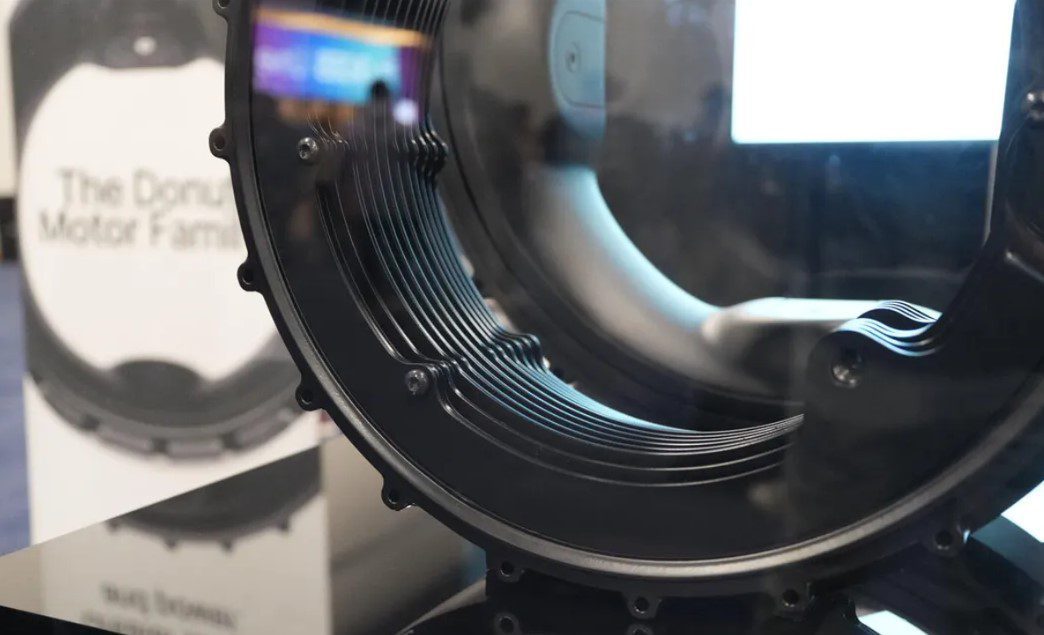
While the lightweight design offers tantalizing benefits such as more range and potentially lower manufacturing costs (up to 50% cheaper, thanks to 120 fewer parts), the extra unsprung mass in the wheels, a critical performance factor, raises questions about ride quality, handling, and braking. Donut Lab remains optimistic that benefits such as enhanced control and power, combined with reduced production complexity, will outweigh these concerns.
Donut Lab isn’t stopping with cars. Their 21-inch motor has also been adapted for semi-trucks, offering a lower operating RPM with significant torque, while smaller versions are being developed for scooters, motorcycles, and even drones. In fact, their 17-inch motorcycle motor is already being used in boutique electric bikes today, potentially paving the way for widespread adoption across numerous vehicle platforms.
The futuristic design also opens new possibilities for EV styling and aerodynamics. Engineers could use the extra space in vehicles for bold, creative designs, reminiscent of groundbreaking features seen in vehicles like the Jaguar I-Pace and Polestar 3 but taken to new extremes.
Bold, innovative, and ambitious, Donut Lab’s technology could reshape how we think about EV engineering. From reducing manufacturing costs to enhancing versatility and performance across various vehicle types, these donut-shaped motors could truly be the “hole-y grail” of electric transportation. Whether this tech cracks the mainstream market remains to be seen, but one thing is clear: the EV industry will be watching closely.