If you thought humanity’s love affair with gravity-defying stunts had peaked, think again. In a jaw-dropping spectacle of engineering wizardry and bold ambition, McMurtry Automotive has officially turned the automotive world upside down—literally. With the Spéirling hypercar defying expectations (and gravity), this British-built electric marvel became the first car in history to drive upside down while stationary. Yep, you read that right: upside down, stationary, and every bit as awe-inspiring as it sounds.
This mind-bending feat took place at McMurtry’s headquarters in Gloucestershire, England. Using a proprietary fan-powered “Downforce-on-Demand” system, the Spéirling clung to the ‘ceiling’ of a specially constructed rotating rig, sucking itself so tightly to the inverted surface that Thomas Yates, Co-founder and Managing Director, was able to nonchalantly drive forward. Like Spider-Man taking his first wall-crawling steps, this daredevil moment showcased not just a car, but a new potential era for hypercars.
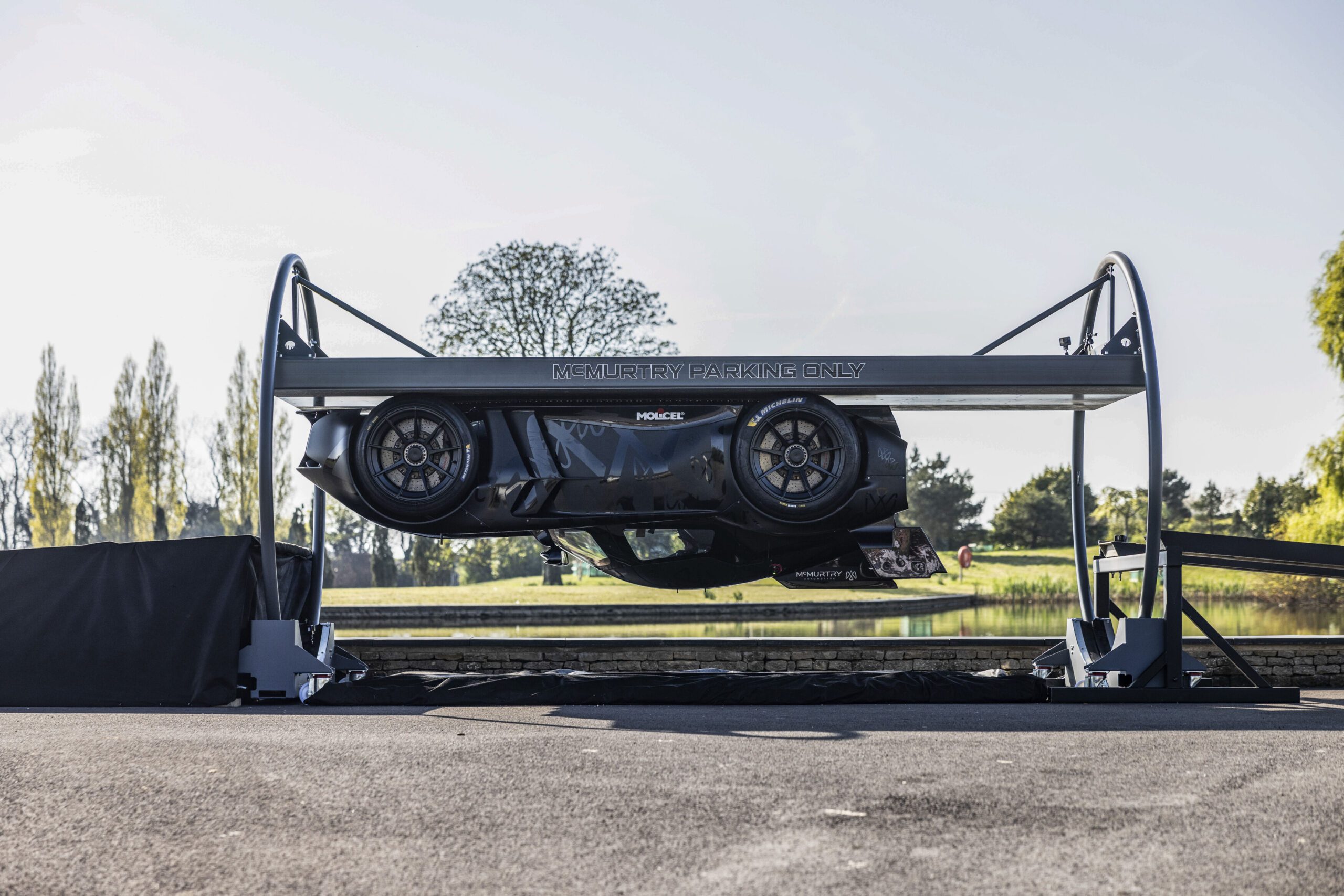
Here’s what makes this spectacle possible: downforce. Typically, racecars produce massive downforce at high speeds thanks to clever aerodynamics. The difference with the Spéirling? Its revolutionary fan system generates 2,000 kg of downforce even at a complete standstill. Where other cars must hit high velocity before they stick to the tarmac, the Spéirling can literally ‘vacuum-seal’ itself to any surface, including a ceiling, at zero mph. That innovation alone eclipses decades of motorsport engineering, essentially making traditional aerodynamics look quaint by comparison.
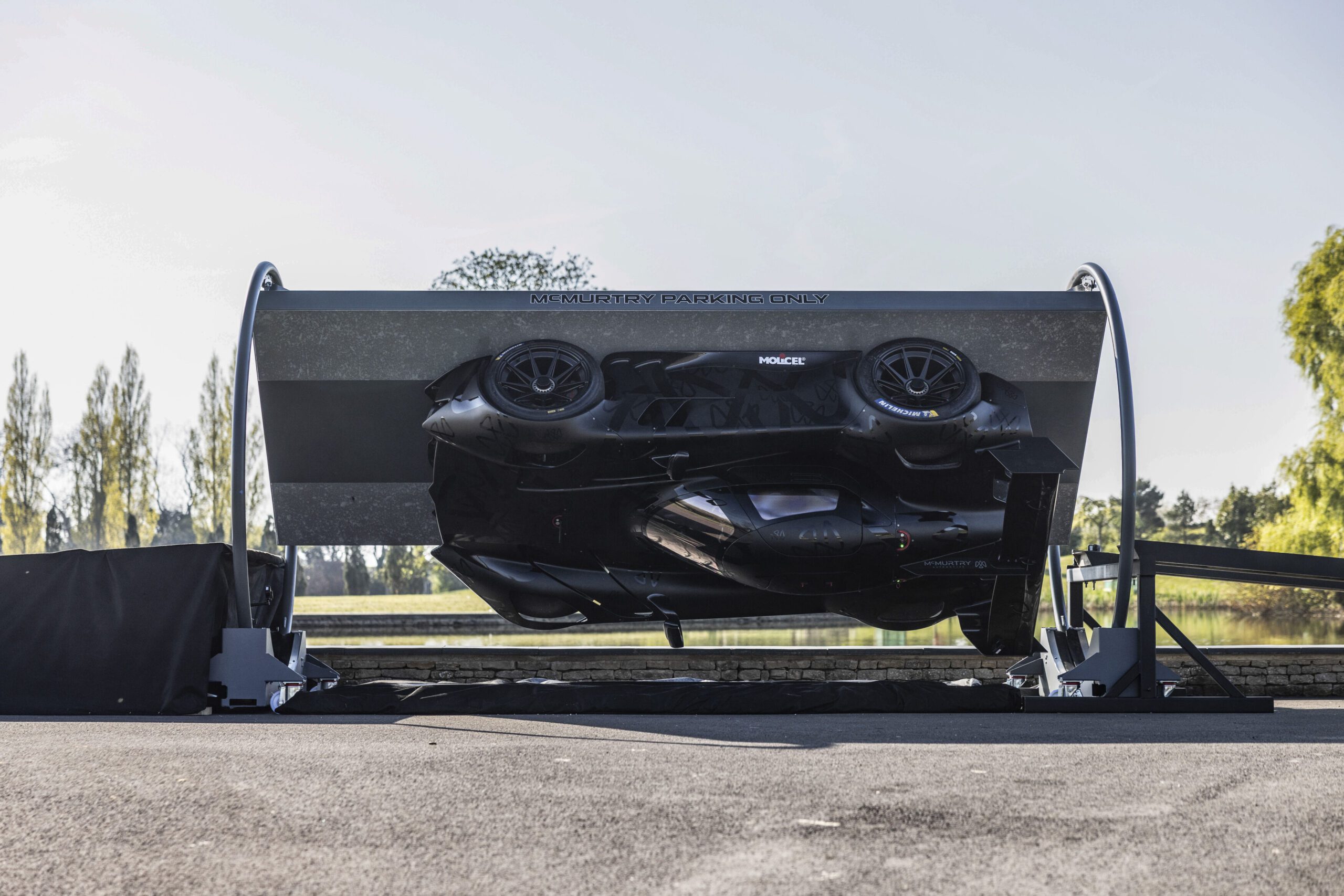
The journey to this upside-down milestone wasn’t just a stunt; it was science-meets-artistry. Executed on a purpose-built rig rigged for inversion, the test served as a proof of concept for a project the team insists is far from finished. “What’s next? Perhaps a tunnel?” Yates teased. While the event had the air of a daredevil stunt, it also highlighted the safety and stability underpinning the Spéirling. Built to Le Mans Prototype 1 (LMP1) motorsport safety standards, this 1,000-plus horsepower, single-seater electric powerhouse is as much the brainchild of rigorous engineering as it is of audacious vision.
For a hypercar sporting top-tier motorsport credentials, the Spéirling is no stranger to smashing records. Enthusiasts will recognise it as the car that blitzed the Goodwood Festival of Speed Hillclimb with an outright record, vanquished the Laguna Seca “Corkscrew” Hillclimb, and, as of this week, obliterated the Top Gear Test Track record—besting a 2004 V10 Renault R24 Formula 1 car by a staggering 3.1 seconds. Alongside these achievements, it’s poised to make history yet again as customer production ramps up for 2026, with only 100 units planned for this precision-engineering marvel.
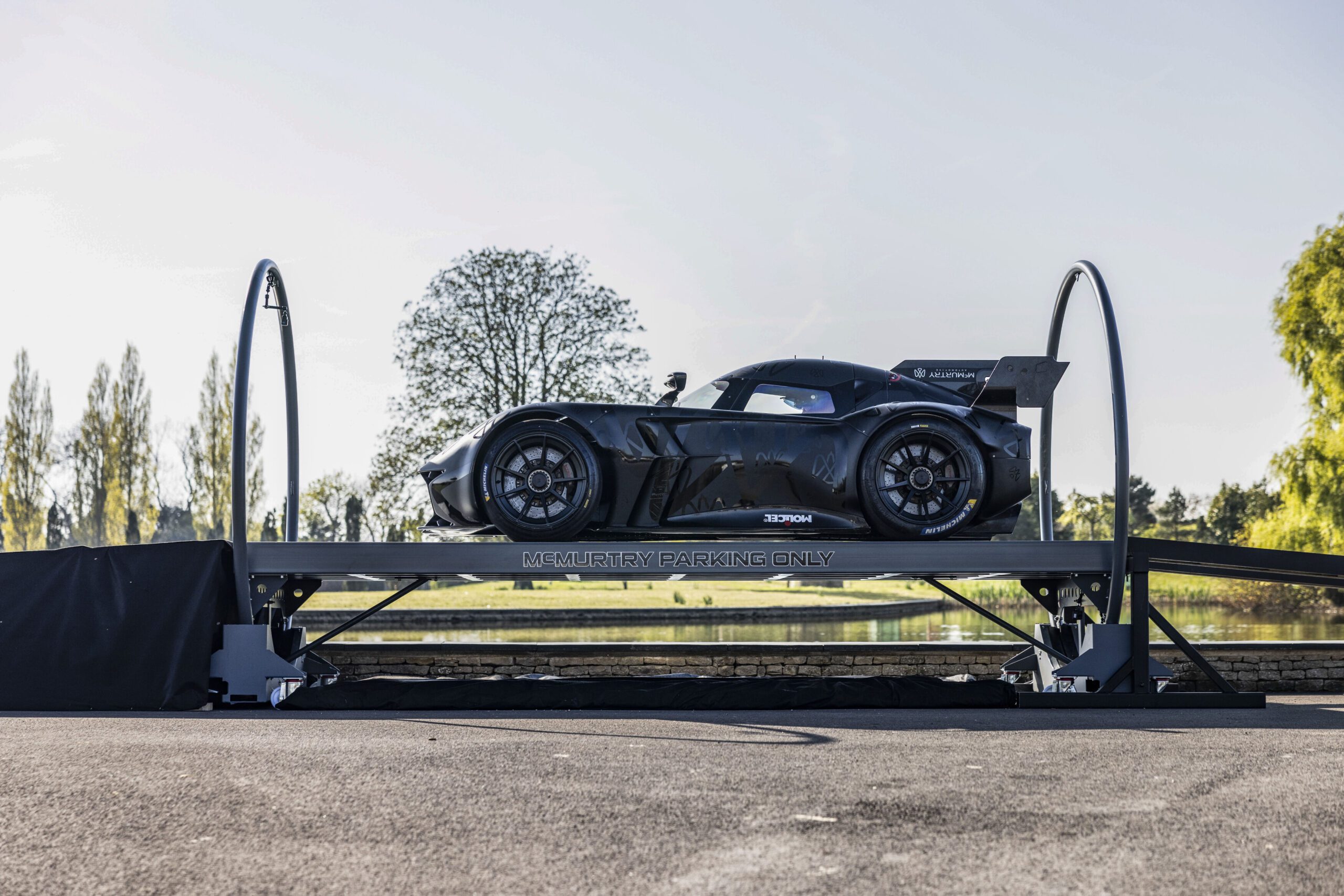
At the heart of the Spéirling is an homage to McMurtry Automotive’s founder, Sir David McMurtry, a billionaire and inventor whose vision birthed this audacious endeavor before his passing. Guided today by the passion of its small yet elite team of engineers, McMurtry Automotive continues to bridge the gap between pioneering innovation and practical application, with no shortage of flair. The Spéirling PURE, the production version of the prototype, will ship with improvements such as a remarkable 100 kWh battery pack capable of delivering “GT3 pace” for 20 minutes and sustaining record-breaking hot laps. Truly, this isn’t just a car—it’s a revolution.
And when the car’s not busy rewriting physics textbooks, it’s doing so in style. For the inverted drive, the Spéirling sported a special black ‘falcon camouflage’ livery, a nod to McMurtry’s logo and the peregrine falcon—the fastest creature on Earth. Even the underbody was adorned with graphics optimised for inverted viewing, because of course it was. It’s not enough to break records; you do it with panache.
In an industry obsessed with bigger, faster, and louder, the Spéirling serves as a poignant reminder that sometimes it’s the smallest, quirkiest, and most radically ambitious players that redefine the rules of the game. Sir David McMurtry’s legacy has left us with not just a hypercar, but a glimpse into an exhilarating automotive future where anything—really, anything—is possible.
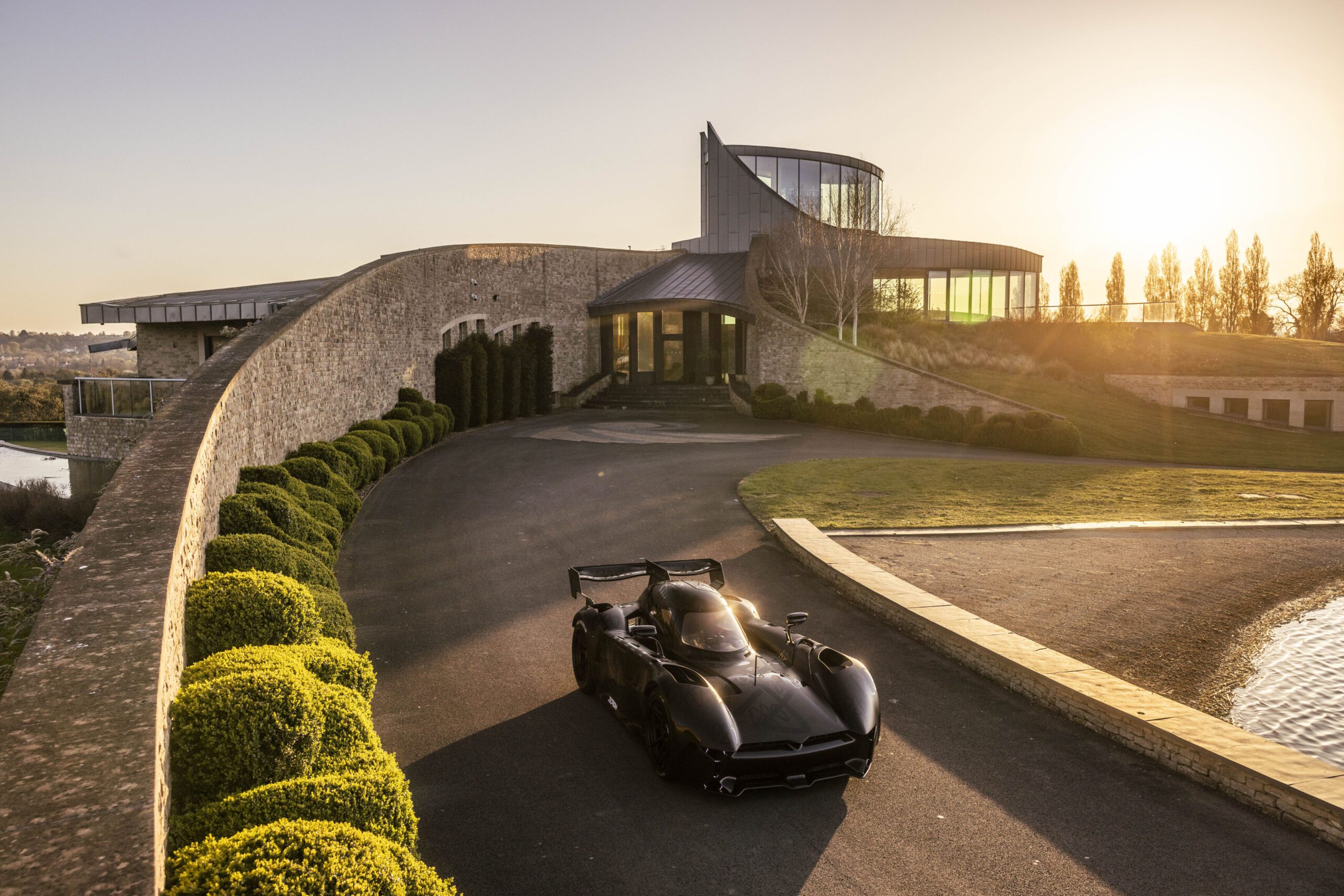
So what’s next for McMurtry Automotive and the Spéirling? Driving through tunnels, pushing aerodynamic performance further, or simply continuing to break the limits of human creativity? Whatever it is, one thing’s certain: gravity doesn’t stand a chance.