Navigating the urban jungle can be a masterclass in stress management. From tight laneways and unpredictable cyclists to jaywalking pedestrians and cars suddenly pulling out of parks, city driving demands constant, unwavering focus. It’s a cognitive load that can leave even the most experienced driver feeling frazzled. Now, Nissan is proposing a solution, not by taking you out of the driver’s seat, but by putting a seasoned, AI-powered skilled human driver right there beside you.
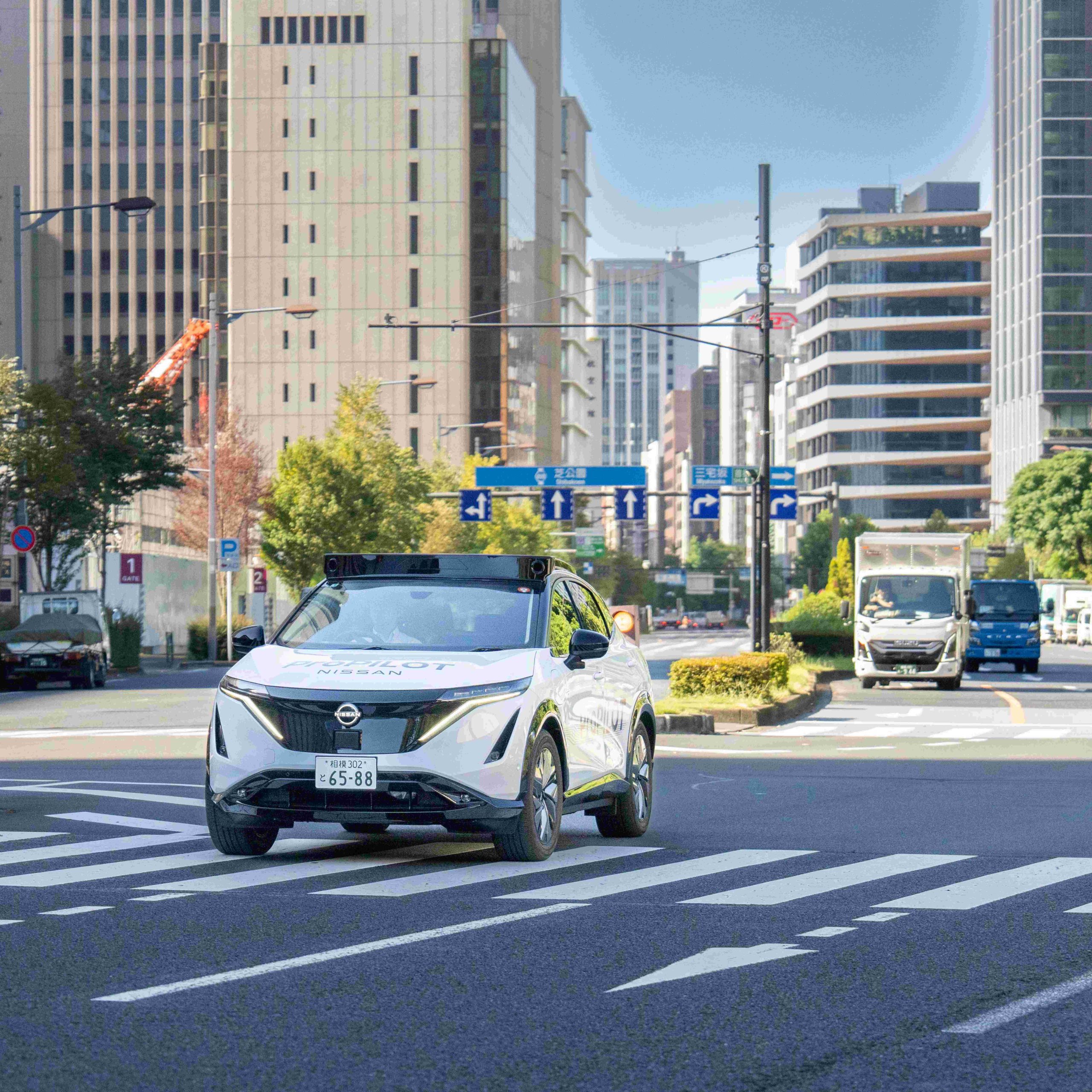
Nissan has officially begun demonstrating its next-generation ProPILOT technology on the complex, chaotic streets of central Tokyo. Using a fleet of all-electric Ariya prototypes, the automaker is showcasing a system that promises to set new standards for driver assistance, aiming to deliver a level of confidence and peace of mind previously unattainable on tricky urban roads. The ambitious goal is to have this advanced system ready for select production vehicles in Japan starting in the 2027 fiscal year. But how does it work, and what makes it so different from the systems we have today?
The AI “Sixth Sense”: Meet Wayve
The core of this new system isn’t just more sensors or faster processors; it’s a fundamentally different approach to artificial intelligence. Nissan has partnered with UK-based tech company Wayve to integrate its “Wayve AI Driver” software, a platform built on cutting-edge embodied AI.
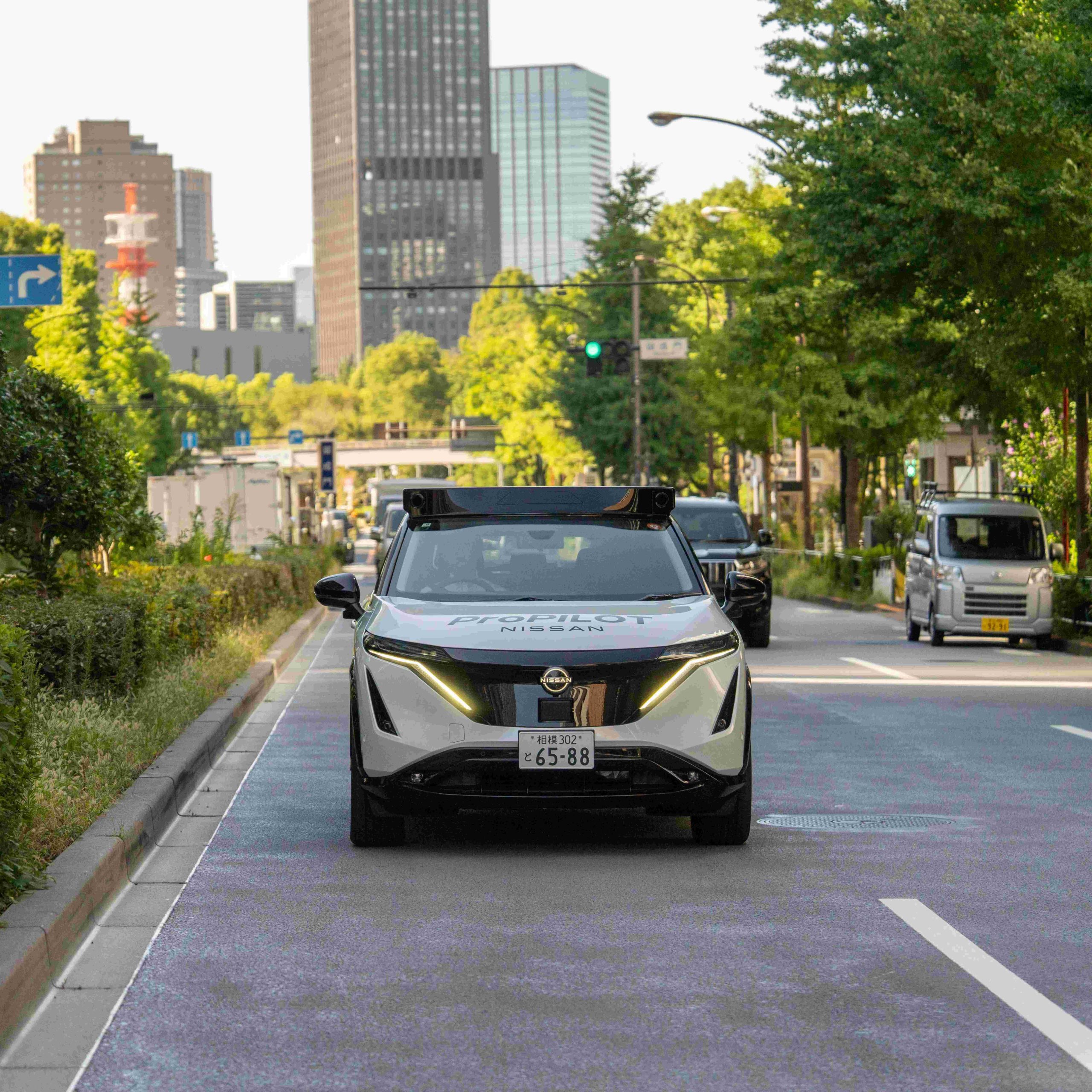
Unlike traditional systems that rely on rigid, hand-coded rules to react to specific objects, Wayve’s AI is inspired by how people learn. It processes image data from the vehicle’s cameras and learns to understand the entire driving scene as it evolves. Think of it as the difference between a student driver who only sees the car directly in front, and an experienced driver who instinctively understands the flow of traffic, anticipates a pedestrian’s intention to cross the street, and notices subtle cues that suggest a car is about to change lanes. By learning the rhythm and patterns of its environment, the system can adapt to a huge variety of real-world scenarios and make accurate decisions, even in situations it has never encountered before. This allows it to drive safely and smoothly in harmony with its surroundings, much like a person would.
Superhuman Senses: Ground Truth Perception
While the Wayve software provides the “brain,” Nissan has equipped the car with a formidable set of “eyes and ears.” The Ariya prototypes are fitted with a comprehensive hardware suite that includes 11 cameras, 5 radar sensors, and the star of the show: a next-generation, high-performance LiDAR sensor mounted on the roof.
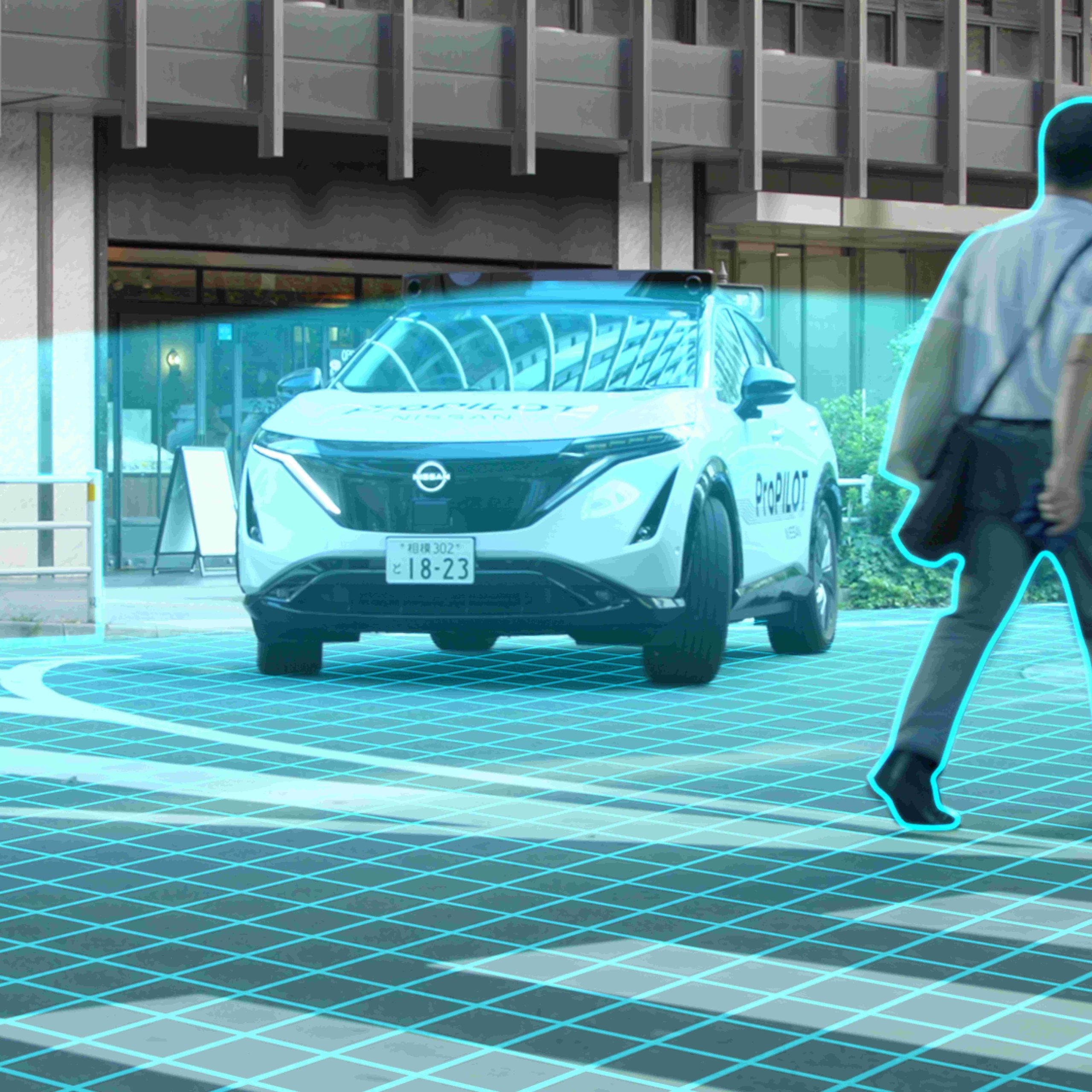
This LiDAR is a key component of Nissan’s own “Ground Truth Perception” technology. LiDAR (Light Detection and Ranging) works by firing out pulses of laser light to create an incredibly precise, three-dimensional map of the car’s surroundings. Its major advantage over cameras is its ability to accurately detect the shape and distance of objects much farther away, and it’s unaffected by darkness or the glare of headlights. This significantly boosts safety during high-speed driving and at night, providing a layer of perception that goes beyond human capability. When combined with the data from cameras and radar, it gives the AI brain an exceptionally detailed and reliable understanding of the world around it.
From Highway to High Street: The Final Frontier
This development represents a major technological leap for Nissan’s ProPILOT system. The first generation of ProPILOT brought single-lane assistance to highway driving, and ProPILOT 2.0 expanded that to support multi-lane highway navigation. Now, Nissan is tackling the final frontier for driver-assist systems: complex urban roads.
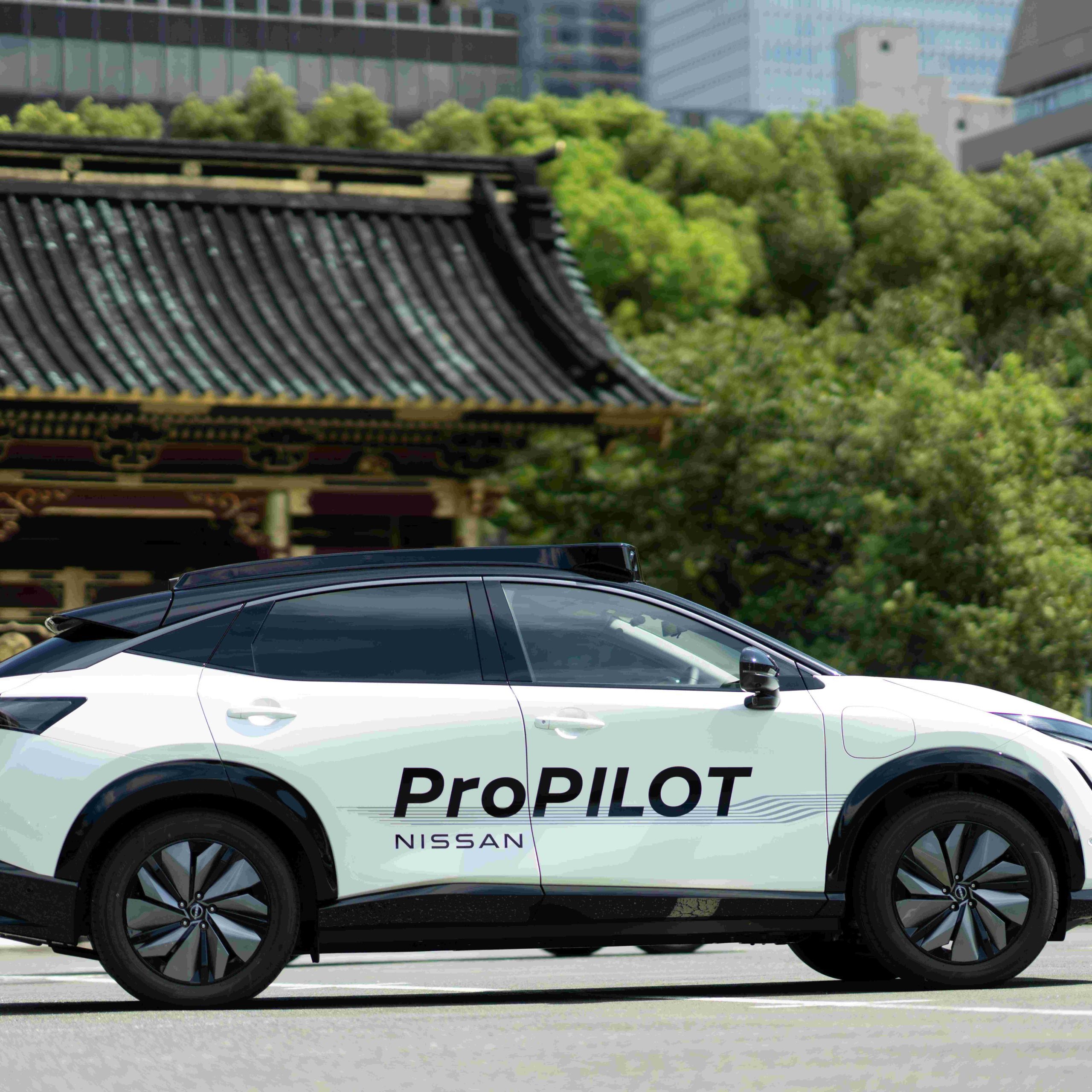
As Nissan’s Chief Technology Officer, Eiichi Akashi, explains, the goal is to create a system that delivers “the feeling that a skilled human driver is behind the wheel”. It’s about more than just staying in a lane; it’s about navigating intersections, yielding to traffic, and moving with a fluidity that enhances confidence for the driver and safety for everyone on the road.
Important: You’re Still the Captain
It’s crucial to understand that this is not a fully autonomous, “take a nap in the back” vehicle. The system is classified as SAE Level 2 autonomous driving. This means that while the car can manage steering, acceleration, and braking in many situations, the driver must remain fully attentive, with their hands on the wheel and eyes on the road, ready to take immediate control at any moment. The driver is always legally and practically responsible for the vehicle’s operation. Think of it as the most advanced co-pilot imaginable, one that shoulders the cognitive burden of city driving but still relies on you as the ultimate authority.

This initiative is a cornerstone of Nissan’s long-term vision to become a leader in the future of mobility by making it cleaner, safer, and more accessible. While the initial launch is slated for the Japanese market in FY27, breakthrough technologies like this often pave the way for global rollouts in the years that follow. For drivers everywhere, it’s a tantalizing glimpse into a future where the daily drive is no longer a source of stress, but a safer, more peaceful experience.